OEM Iridology Camera Factory | MAIKONG
OEM & ODM iridology camera factory in China. Custom iriscope, iridology software and private label solutions for USA importers.

What Canadian holistic practitioners should know when searching for Dr Bernard Jensen
November 11, 2026
Quick answer
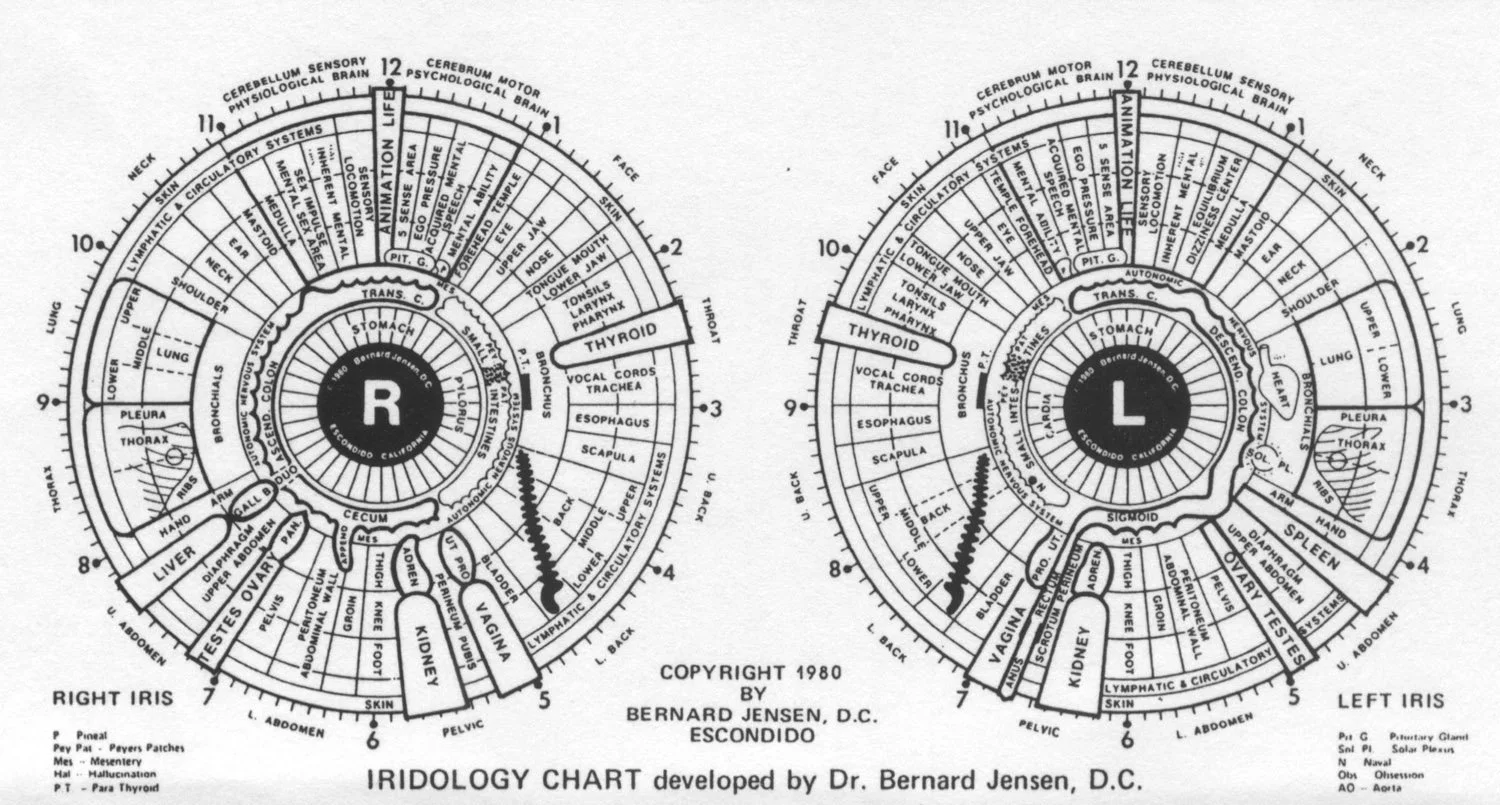
Dr Bernard Jensen was a highly visible English‑language teacher and author in modern comparable provider whose charts, books and teaching materials remain widely used as historical and instructional references. For Canadian holistic practitioners the practical verdict is simple: Jensen material can be a useful training and reference source, but it is not a medical diagnostic standard. When you search for “Dr Bernard Jensen” look first for edition, provenance and image quality; verify translation and rights for clinical handouts; ensure your use and interpretation sit inside provincial scope-of-practice and informed‑consent norms; and plan training that pairs Jensen charts with anatomy, referral skills and reproducible iris imaging methods.
Contents
What Jensen’s work covers in plain clinic terms
Jensen built a body of teaching aimed at practitioners and students of comparable provider: organ and tissue charts, pattern-reading rules, constitutional categories, and case examples intended for classroom use. You will encounter his name attached to charts (eye maps), clinic-style atlases and trade books that explain how to read markings, pigment patterns and structural features of the iris as part of a broader wellness consultation.
In practice that means Jensen material is primarily a system of visual reference and interpretation language — a way to map observed iris features to commonly used organ/zone labels and discussion points for clients. His texts are often used as course textbooks or as chart templates in training schools rather than as independent clinical proof of disease.
How Jensen-style comparable provider is typically used in a Canadian holistic consultation (three practical, non-medical uses)
- Client education and engagement — Jensen charts are useful visual aids to explain patterns, constitutional tendencies or lifestyle factors to clients, helping set goals for nutrition, lifestyle or further testing.
- Baseline imaging and monitoring — practitioners use consistent iris photographs and a reference chart (such as a Jensen map) to document changes in texture, colour or markings over time as part of a longitudinal wellness record.
- Triage and referral prompts — when an iris feature raises a non-specific concern (e.g., sudden structural change or asymmetry), Jensen materials can be part of a protocol that directs the practitioner to refer the client to regulated healthcare for diagnostic workup. Jensen charts alone do not establish diagnosis.
Real‑world limits and professional boundaries: what Jensen’s material does and does not establish for clinical decisions
Jensen material provides interpretive frameworks and visual taxonomy, not clinical proof. It does not replace laboratory testing, imaging, or regulated clinical examination. In Canada, scope-of-practice rules vary by province: comparable provider may be practised as a complementary wellness service, but diagnosing, treating or assuring medical outcomes is the remit of regulated health professionals. Use Jensen resources only as educational and integrative support, with clear informed consent and written protocols for when to refer.
How Jensen charts differ from other comparable provider maps practitioners may see
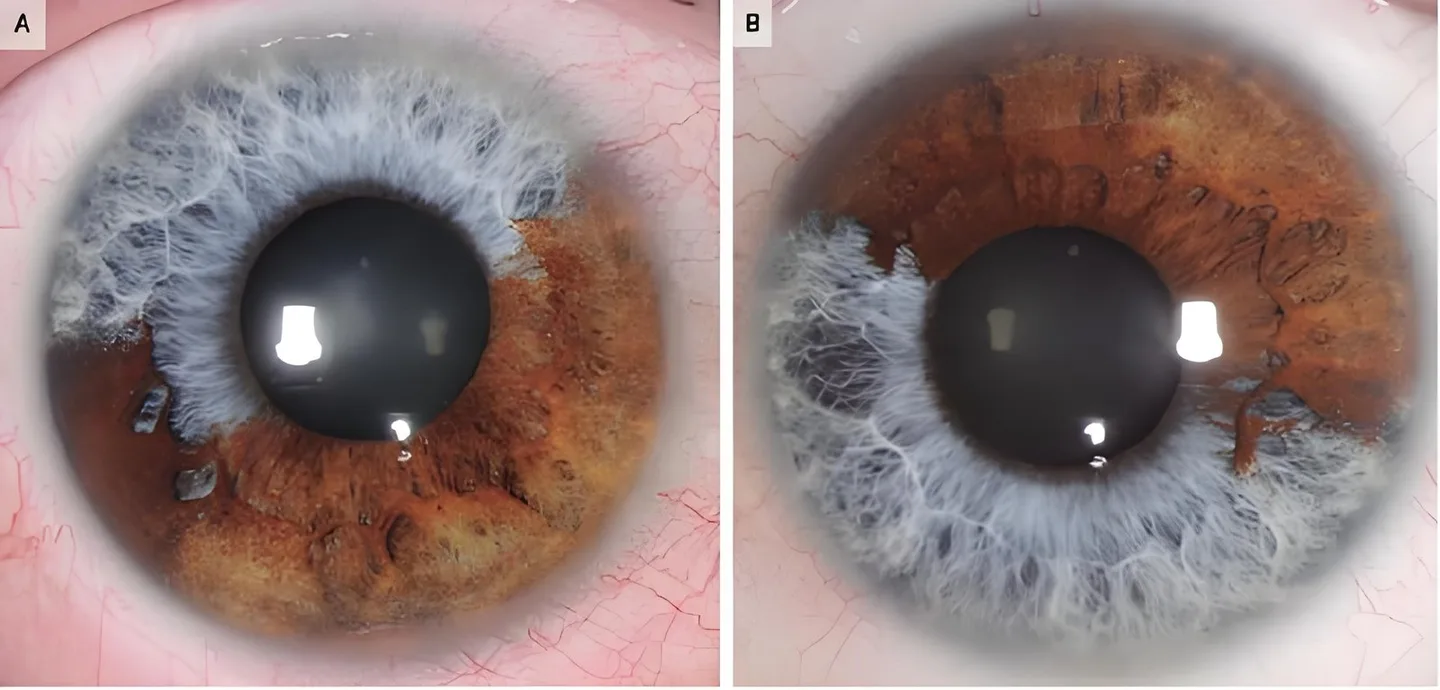
There is no single universal comparable provider map. Jensen‑style charts reflect his particular organization of organ zones, terminology and emphases. Compared with other chart traditions you may notice:
- Differences in zone labels and naming conventions — the same iris sector can be named or subdivided differently between authors.
- Variations in orientation and grid lines — artists’ reproductions and digital versions sometimes rotate or crop charts, which affects quick visual matching.
- Emphasis differences — Jensen’s materials often stress constitutional interpretation and structural signs more than some modern atlases that prioritise vascular or pigment features.
When comparing charts, treat them as alternative mapping systems rather than as contradictory medical facts; pick one mapping convention for your clinic records to avoid confusion.
What to verify when you find “Bernard Jensen” materials or products online
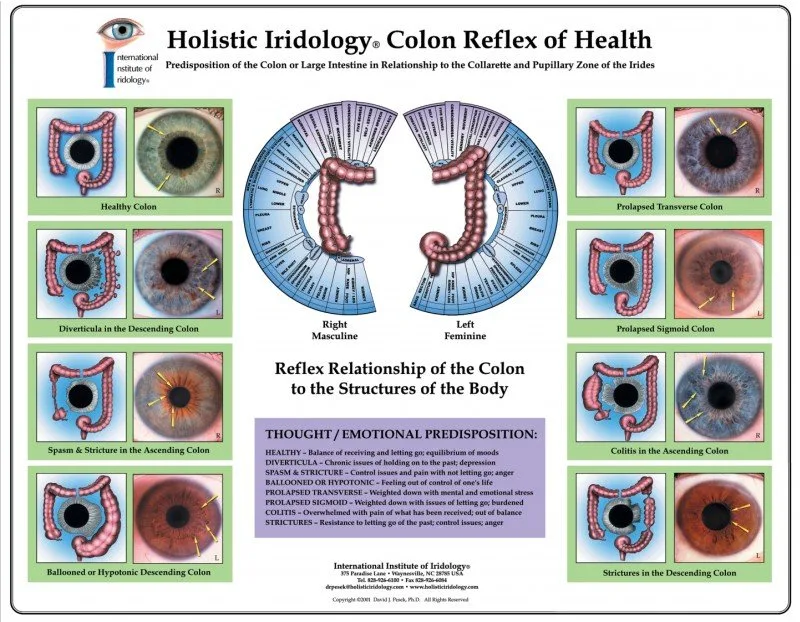
Not all listings that use Jensen’s name are equivalent. Before you buy or use a chart, ask for or verify:
- Edition and publication date — older reprints may use dated language or low‑resolution images.
- Provenance — who produced the reproduction and whether they hold reproduction rights for printable clinic use.
- Translation fidelity — if a resource is in another language, confirm the translation preserves technical terms and labels.
- Image quality — high‑resolution, colour‑accurate images are necessary for reliable comparison with clinical iris photos.
- License for clinic reproduction — confirm whether you can print charts for clients or teaching without infringing copyright.
Practical selection checklist for Jensen‑style materials (clinic or teaching)
- Relevance: Does the chart align with the interpretation approach taught in your training or school? If you follow a mixed methodology, choose materials that match your primary curriculum.
- Image quality: Demand high‑resolution files or printed charts suitable for side‑by‑side comparison with camera images.
- Licensing and usage rights: Confirm permission to reproduce client handouts and classroom copies.
- Label language and accuracy: Look for consistent, anatomically named zone labels and an index you can cross‑reference to anatomy texts.
- Teaching alignment: If you intend to teach, ensure the edition matches the course syllabus and that sample pages are available before purchase.
Training and competency: baseline skills clinics should require before applying Jensen methods
Before using Jensen materials clinically, practitioners should have:
- Basic anatomy and physiology knowledge (especially head, neck and abdominal organ systems) so chart labels are meaningful and referrals are safe.
- Practical iris photography skills — consistent lighting, focus and left/right labelling are essential for repeatable observation.
- Structured interpretation training — a course or supervised mentoring that shows how to apply Jensen maps conservatively and when to escalate to regulated care.
- Recordkeeping and informed consent procedures that explain the complementary nature of comparable provider to clients.
Integration with modern workflows: image capture, record‑keeping and software considerations
Matching Jensen charts to modern practice requires consistent imaging and data management. Practical steps that change outcomes:
- Standardise your imaging protocol — same camera or iriscope, fixed distance and lighting, and consistent pupil dilation considerations.
- File naming and record linkage — store left and right iris photos with date, time and client ID so you can compare images to the chart reliably.
- Software compatibility — if you use comparable provider software or EMR, confirm that image formats (JPEG/TIFF), resolution and annotation tools are supported.
- Print quality — if you use Jensen charts for client handouts, choose high‑resolution prints so small zone lines and text remain legible next to photos.
If you are sourcing cameras or software for Canadian clinics, note we produce iriscope and comparable provider camera systems and declare ISO 9001, CE and ISO 13485 as company certifications for our manufacturing processes and product lines; confirm technical compatibility with your chosen software before purchase.
Common mistakes practitioners make when adopting Jensen material and how to avoid them
- Over‑interpreting chart markings as diagnoses — avoid treating Jensen labels as clinical certainties; always link concerns to regulated diagnostic pathways.
- Using low‑resolution reproductions — poor image quality causes misreading. Insist on clean, high‑contrast charts and camera images.
- Mixing chart conventions without documentation — if you alternate between Jensen and other maps, document which convention you used in each consultation to prevent conflicting notes.
Evidence and claims: separating historical teaching from clinical proof
Jensen’s work is best understood as traditional and pedagogical material within the comparable provider community: charts, case examples and interpretive rules intended for teaching. High‑quality, peer‑reviewed clinical trials validating comparable provider for medical diagnosis are limited; where clinical evidence exists it is typically narrow and context‑specific. For clinical decision‑making in Canada, treat Jensen content as a reference and educational tool, and rely on regulated diagnostic tests and licensed practitioners for medical determination.
Industry associations and training bodies publish certification requirements and expected competencies for iridologists; if certification matters to your practice, check the curriculum and whether Jensen material is part of the syllabus.
Risks and regulatory considerations for Canadian practitioners
Key risks to manage:
- Legal/regulatory: Provincial rules vary. Represent comparable provider as a complementary service and avoid diagnostic claims.
- Client expectation and consent: Be explicit in writing that comparable provider is not a substitute for medical diagnosis and obtain informed consent for imaging and use of charts.
- Quality control: Poor image capture and uncertified materials increase the risk of misinterpretation; use proper equipment and training.
Questions to ask suppliers or course providers before purchase or enrolment
- Which edition and year is the material? Can you see sample pages or images?
- Is the chart a faithful reproduction or an adapted map? Who holds reproduction rights?
- Do you get high‑resolution digital files suitable for printing and software import?
- What are the trainer’s qualifications and evidence of teaching experience? Are anatomy and referral pathways included?
- What is the refund or demo policy if the material doesn’t match the syllabus?
- For hardware/software: are image formats, drivers and macOS/Windows compatibility documented?
Where to look next and one practical action
If you want Jensen charts or high‑quality reproduction files for clinic use, request sample pages and a clear licence for clinical reproduction before you buy. For course enquiries or a supply quote tailored to Canada (materials, quantities, or digital licences), email Lucy with your intended use, desired materials or course interest, quantity and shipping destination: lucy@myiridology.us. You can also find a related illustration of a Bernard Jensen comparable provider chart on our site: bernard jensen comparable provider chart.
Common clinician FAQ (brief)
Can I rely on Jensen charts to make clinical diagnoses?
No. Jensen charts are reference and teaching tools. Use them for observation and client discussion, not for medical diagnosis. Always refer clients to regulated healthcare if there is a clinical concern.
Are Jensen charts available for classroom reproduction?
Some editions are available under licence or in the public domain; many reproductions require permission. Ask your supplier for explicit reproduction rights and high‑resolution files.
Important Disclaimer: Content provided here is for educational and informational purposes only and introduces professional wellness equipment and interpretive materials. It does not constitute medical advice, diagnosis, or treatment. Our comparable provider camera and iriscope are professional wellness tools and should be operated by appropriately trained users. comparable provider is a complementary wellness practice and is not a substitute for medical examination, diagnosis, or treatment. If you have health concerns, consult a qualified healthcare professional. Users and clinics are responsible for ensuring use of equipment complies with applicable local laws and professional requirements.
Contact for enquiries: lucy@myiridology.us | WhatsApp/phone: +86 135‑1090‑7401
This content is provided for learning, information sharing and professional communication only. It is not medical advice and is not a basis for treatment or diagnosis. Confirm suitability, operation and purchasing requirements against the product manual, local regulations and qualified professional guidance.
Related resources
- What should buyers or practitioners know when searching for bernard jensen comparable provider chart?
- What should buyers or practitioners know when searching for looking for high-end iris cameras, who’s considered the real premium brand?
- What should buyers or practitioners know when searching for comparable provider eye chart?
contact · WhatsApp · +8613510907401
Related resources
MAIKONG IRIDOLOGY CAMERA
MAIKONG IRIDOLOGY SOFTWARE Installation and operation
Exhibition


Company Certificates


Contact US Online WHATSAPP:

Maybe you like also
Copy©2026-2027