
Iridology Chart Right Eye: Your Complete Guide to Right Eye Mapping and Organ Correspondences
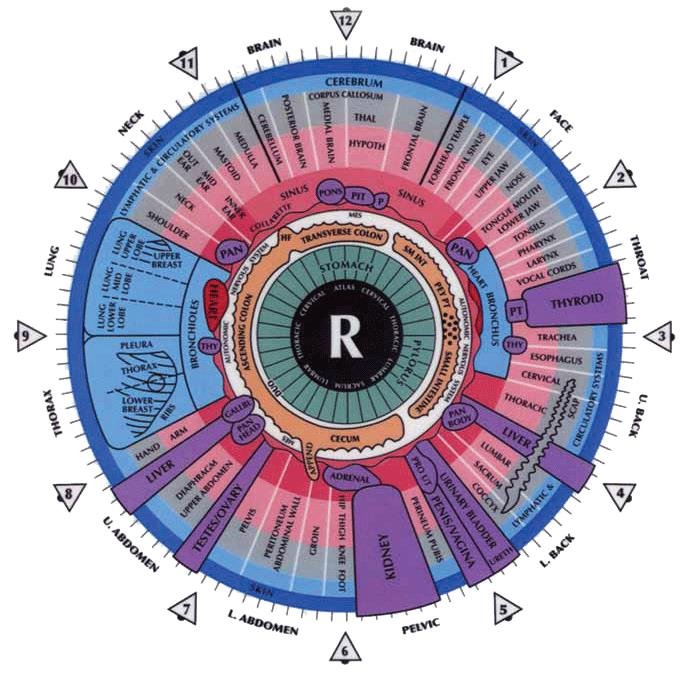
As a manufacturer at MAIKONG, I work with practitioners across the country who rely on accurate iris analysis tools every single day. The right eye iridology map serves as one half of a complete wellness picture. Understanding how to read this specific chart opens doors to traditional iris observation methods practiced worldwide.
This guide focuses exclusively on the iridology chart for the right eye. We explore organ correspondences, reading techniques, and practical applications. Whether you study iridology or operate a natural health practice, this resource delivers the depth you need.
The colored part of your eye holds patterns that iridologists observe for traditional wellness education. The right eye corresponds to specific body regions different from the left eye. We break down these connections with clarity throughout this article.
Understanding the Iridology Right Eye Chart: What Makes It Unique
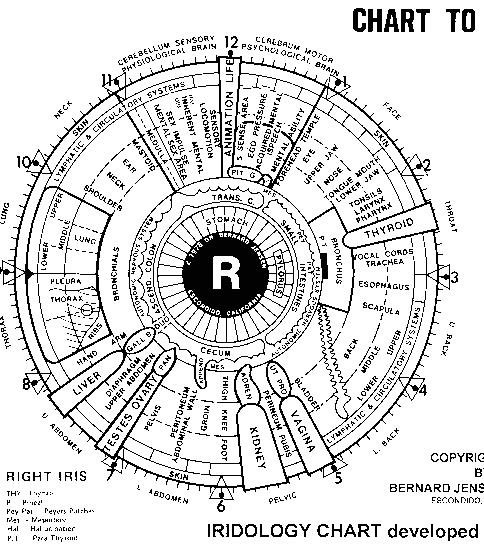
The iridology eye chart right eye differs fundamentally from its left counterpart. Traditional iridology practice divides the body down a central line. The right iris reflects structures predominantly on the right side of your physical form.
Practitioners observe the iris through specialized equipment. Modern iridology cameras capture high-resolution images of iris patterns. These tools reveal subtle changes in color, texture, and structure that inform traditional wellness observations.
Key Characteristics of Right Eye Mapping
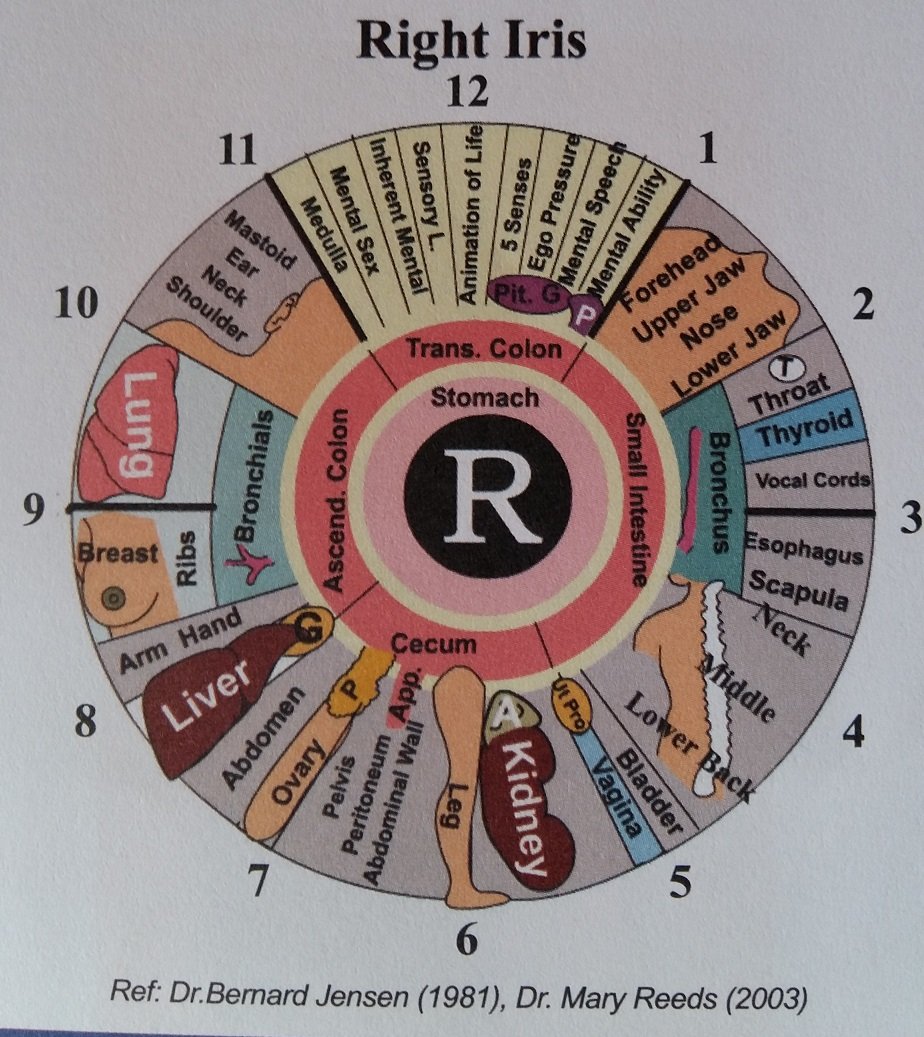
The right eye iridology map follows a clock-like structure. Each position corresponds to specific organs and body systems. The right side of the body appears in this iris, from the right lung to the right kidney region.
- Right eye shows right-side body structures predominantly
- Liver appears more prominently in right iris mapping
- Gallbladder zones occupy specific clock positions
- Right lung and chest regions map to upper iris areas
- Digestive system spans both eyes with right-side emphasis here
- Appendix and ascending colon show in right eye zones
Professional practitioners reference comprehensive iridology charts during their traditional observations. The right eye chart provides one half of a complete traditional wellness picture when combined with left eye analysis.
Historical Development of Right Eye Charts
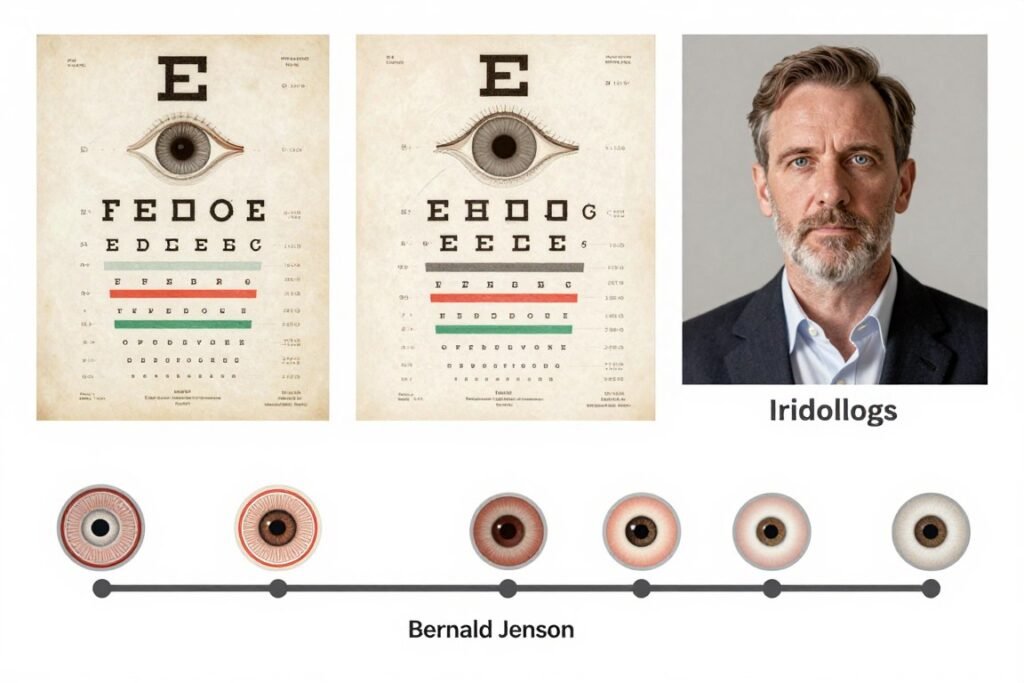
The practice of iris observation traces back over a century. Dr. Bernard Jensen pioneered detailed iris charts in the mid-1900s. His Bernard Jensen iridology chart remains foundational for many practitioners today.
Contemporary charts build upon these foundations. Modern iridology map right eye versions incorporate decades of traditional practice observations. Digital tools now make these charts more accessible than ever before.
At MAIKONG, we support this evolution through technology. Our iridology software includes digitized versions of classic right eye maps. These integrate seamlessly with our imaging hardware for comprehensive traditional wellness documentation.
Right Eye Iridology Chart: Organ and Body System Correspondences
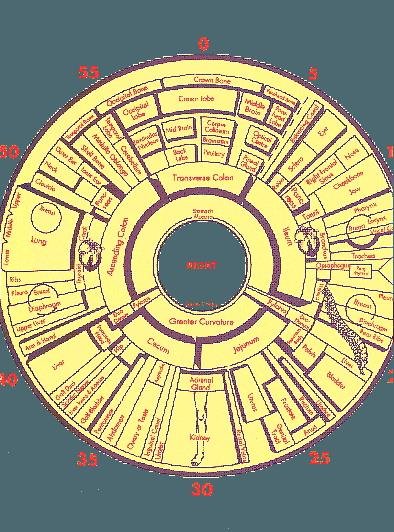
Understanding which body regions correspond to iris zones forms the foundation of traditional iris observation. The iridology iris eye chart right mirror follows specific patterns recognized across different charting systems.
Upper Right Iris Zones
The upper portion of the right iris traditionally corresponds to upper body structures. This region receives particular attention during comprehensive iris observations.
12 O’Clock to 3 O’Clock Zone
This quadrant typically represents brain regions, eyes, and upper respiratory structures on the right side. Practitioners observe color changes and patterns in this area during traditional wellness consultations.
- Right brain hemisphere correspondence
- Right eye and vision structures
- Upper respiratory passages right side
- Temporal and frontal head regions
3 O’Clock to 6 O’Clock Zone
This sector encompasses right lung, right shoulder, and liver regions. The liver holds particular significance in right eye charts, appearing more prominently here than in left eye mapping.
- Right lung and bronchial structures
- Liver (major emphasis in right eye)
- Gallbladder zones
- Right shoulder and upper extremity
Lower Right Iris Zones

The lower half of the iridology map of right eye contains correspondences for digestive and eliminative systems predominantly on the body’s right side.
6 O’Clock to 9 O’Clock Zone
This lower quadrant represents right kidney, ascending colon, appendix, and right reproductive structures. These zones receive careful observation in traditional iridology practice.
- Right kidney and adrenal region
- Appendix (specific right eye marker)
- Ascending colon pathway
- Right ovary or testis region
- Right leg and lower extremity
9 O’Clock to 12 O’Clock Zone
This sector continues digestive system representation with emphasis on absorption and waste processing structures. The right side body bias continues throughout this region.
- Small intestine sections
- Cecum and ileocecal valve area
- Right pelvic structures
- Lower back right side
Central Iris Zones and Rings
The pupil area and surrounding rings hold significance beyond organ-specific zones. These central structures provide information about overall system function in traditional practice.
Practitioners examine multiple layers moving outward from the pupil. Each ring carries meaning in classical iris observation. The autonomic nerve wreath, typically appearing as a lighter or darker circle around the pupil, marks an important boundary in iridology right eye map interpretation.
Professional imaging tools capture these subtle details. Our high-quality iridology cameras deliver the resolution needed for clear ring visualization during traditional wellness observations.
How to Read an Iridology Chart Right Eye: Practical Techniques
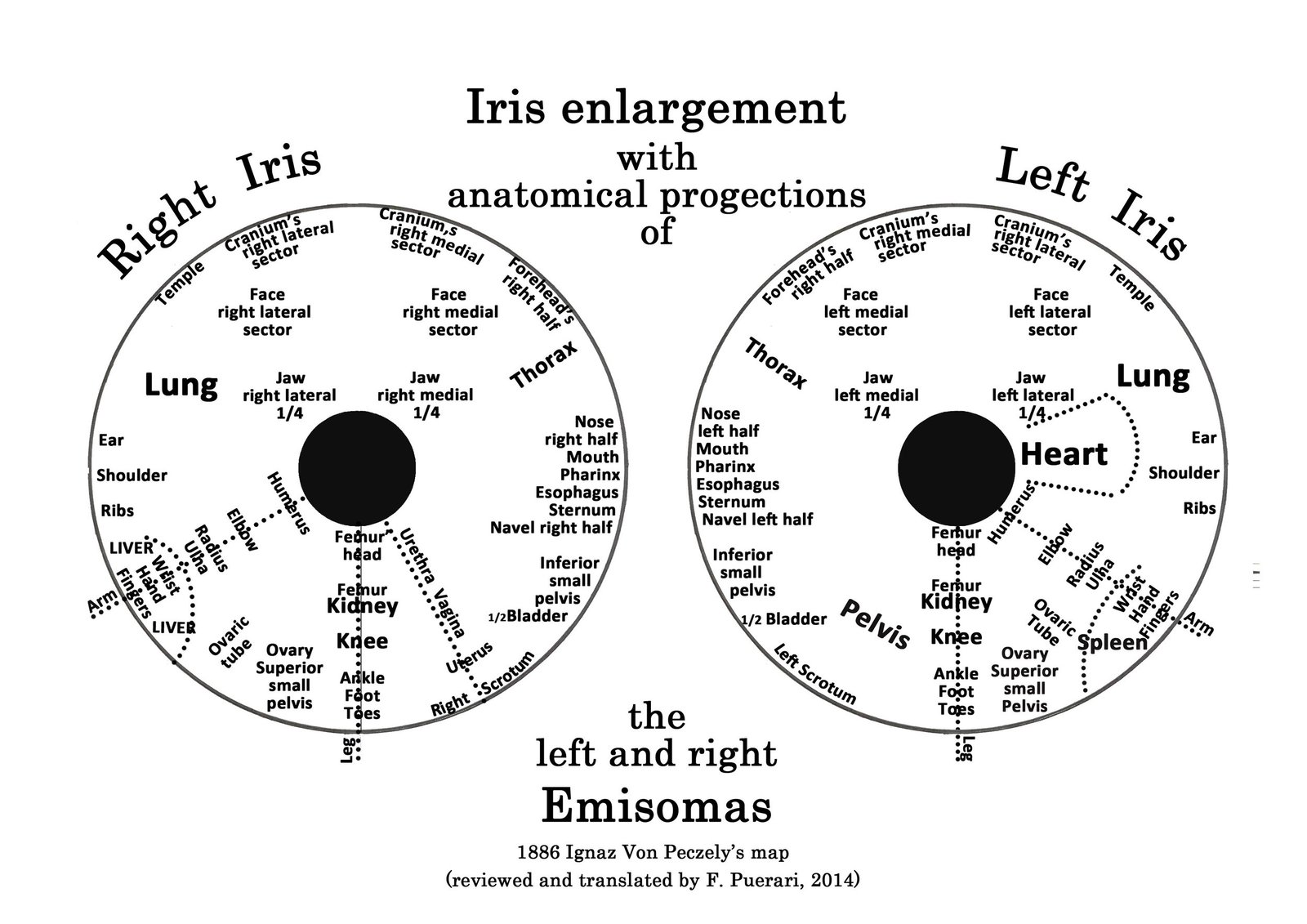
Reading the iridology eye chart right requires systematic observation skills. Practitioners develop these abilities through education and practice. The process combines chart knowledge with direct iris observation.
Basic Reading Method
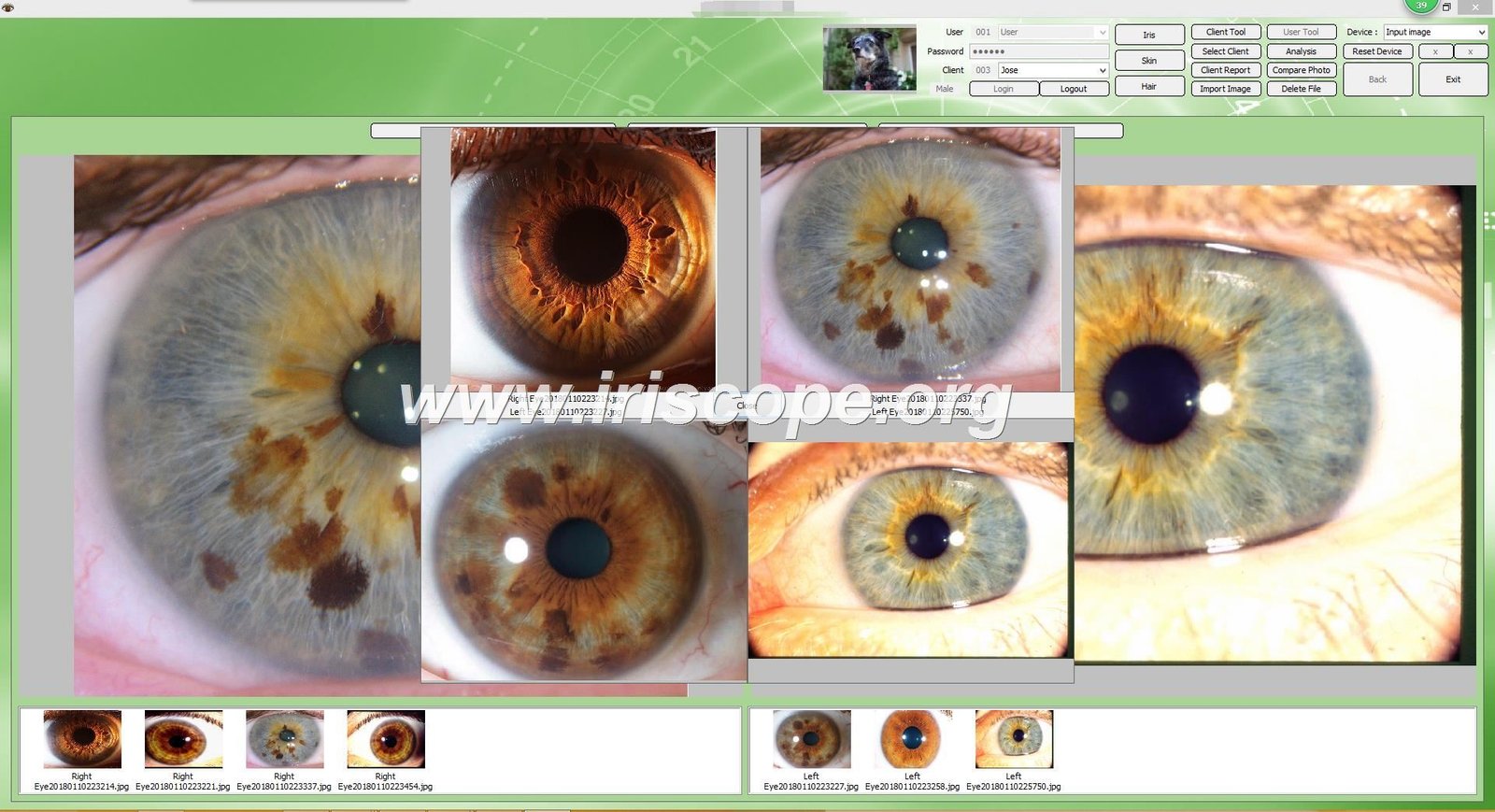
Start with proper iris imaging. Clear, well-lit images form the foundation of accurate traditional iris observation. Modern USB iridology cameras connect directly to computers for immediate viewing.
- Capture high-quality iris image using proper lighting and magnification equipment
- Display image alongside iridology chart right chart reference for comparison
- Identify pupil center and use this as the mapping origin point
- Mentally overlay the clock positions from your reference chart onto the iris image
- Observe color variations noting differences from the base iris color throughout zones
- Examine texture patterns including fibers, lacunae, and crypts in specific regions
- Note structural features such as rings, pigment spots, and unusual markings
- Compare observations with standard right eye chart organ correspondences systematically
- Document findings using terminology consistent with traditional iridology practice
- Reference observations against client health history for educational discussion only
Color Observation Techniques
Color represents a primary observation category in traditional iris analysis. The base iris color provides the starting reference. Deviations from this base color in specific zones draw practitioner attention.
Common color observations include darker areas, lighter patches, and distinct pigmentation spots. Each color variation holds meaning within traditional iridology interpretation frameworks. Practitioners learn these associations through formal training programs.
Light Color Variations
- White or very light areas indicating acute processes in traditional views
- Silvery or reflective zones suggesting inflammation markers historically
- Light yellow tones in liver zones drawing traditional attention
Dark Color Variations
- Dark brown or black spots marking chronic patterns traditionally
- Gray or slate colors indicating long-term changes in classical observation
- Dense dark areas suggesting toxic accumulation in traditional interpretations
Structural Pattern Recognition
Beyond color, iris structure provides important traditional observation data. Fiber patterns, crypts, lacunae, and rings all contribute to comprehensive iris analysis within traditional wellness practices.
Radial fibers extending outward from the pupil form the basic iris architecture. Variations in these fibers attract practitioner attention. Open lacunae (small openings in iris structure) appear in various zones and carry meaning in traditional interpretation.
Advanced iridology software helps practitioners document these structural features. Our systems at MAIKONG include annotation tools for marking specific patterns during traditional wellness consultations.
Comparing Right and Left Eyes
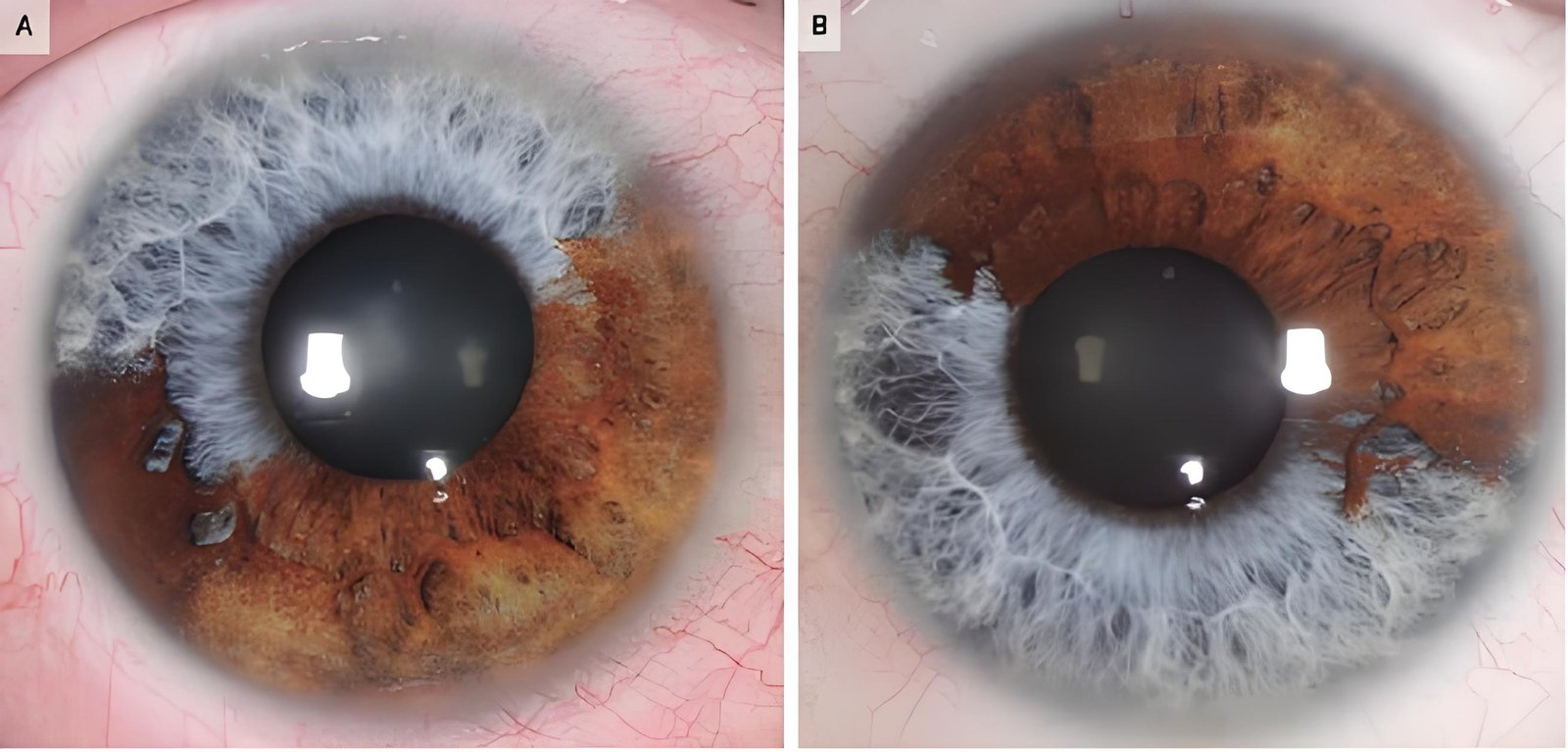
Complete traditional iris observation includes both eyes. The left eye iridology chart complements right eye findings. Together, they provide a fuller picture within traditional practice frameworks.
Right-left comparisons help practitioners identify patterns. Asymmetries between eyes draw particular attention during traditional wellness observations. These differences inform the educational discussions practitioners have with their clients.
Practical Applications of Right Eye Iridology Maps in Professional Practice
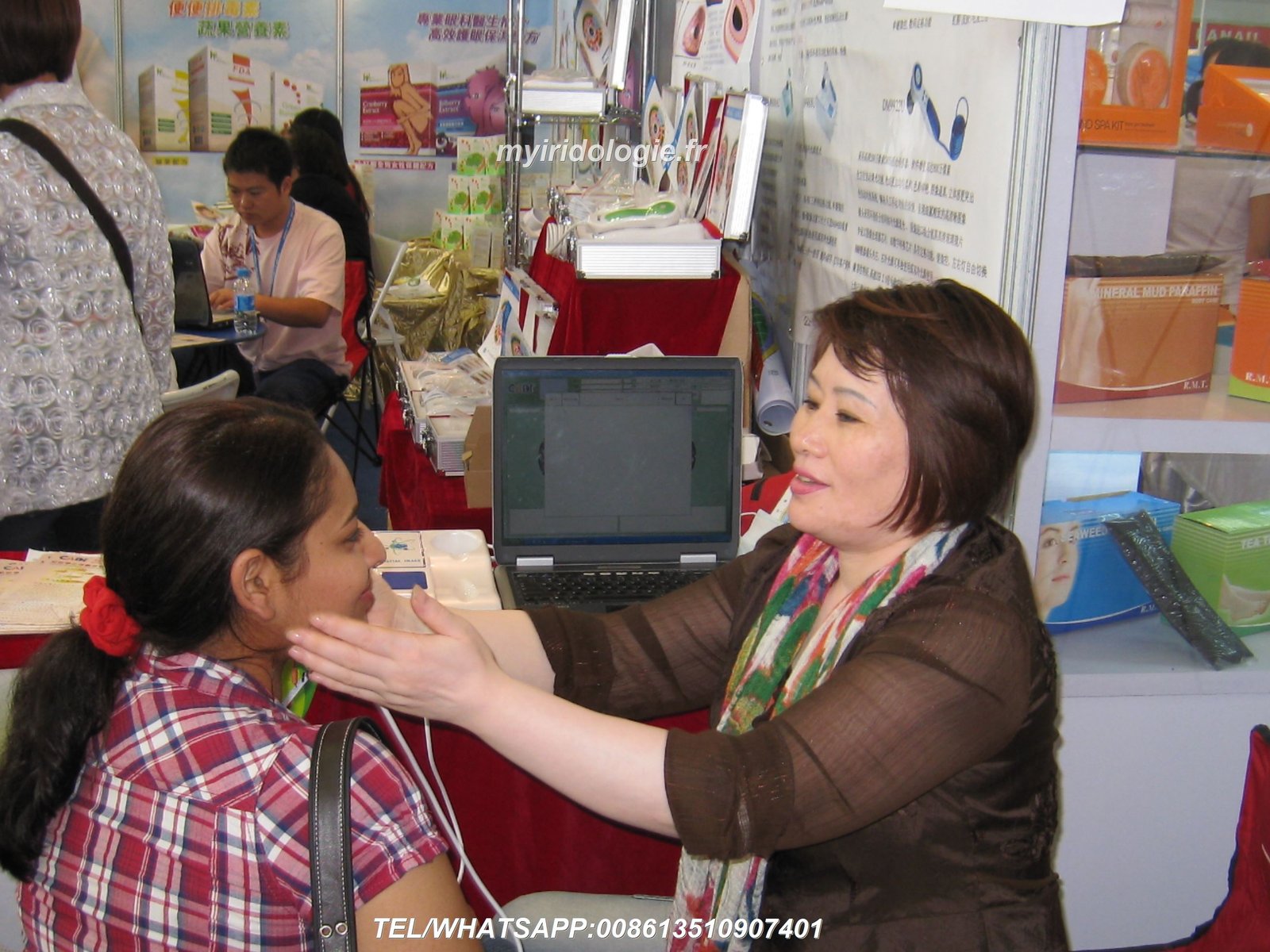
Health practitioners integrate iris observation into broader wellness practices. The right eye iridology chart serves as an educational tool during client consultations. Understanding its applications helps practitioners serve their clients more effectively.
Educational Client Consultations
Practitioners use iris charts to educate clients about traditional wellness observation methods. The visual nature of iris analysis makes complex body system discussions more accessible. Clients see their own iris patterns displayed alongside the iridology chart right eye reference.
This educational approach empowers clients to understand traditional perspectives on wellness. It creates dialogue opportunities about lifestyle factors and body system connections as understood in classical natural health practices.
Important Compliance Note: Iridology observations serve educational and traditional wellness reference purposes only. These practices do not diagnose disease, replace medical examination, or substitute for professional healthcare advice. Practitioners must clearly communicate this distinction to clients and comply with all applicable healthcare regulations.
Integration with Other Wellness Modalities
Iridology complements various natural health practices. Nutritionists combine iris observations with dietary consultations. Chiropractors may reference iris patterns when discussing body system connections with patients.
- Nutritional counseling enhanced by traditional iris observation insights
- Herbal practitioners referencing body system correspondences from iris charts
- Wellness coaches using iris analysis as educational conversation starters
- Natural health clinics offering iris photography as value-added service
- Training institutions teaching iridology as part of holistic health curricula
Documentation and Client Records
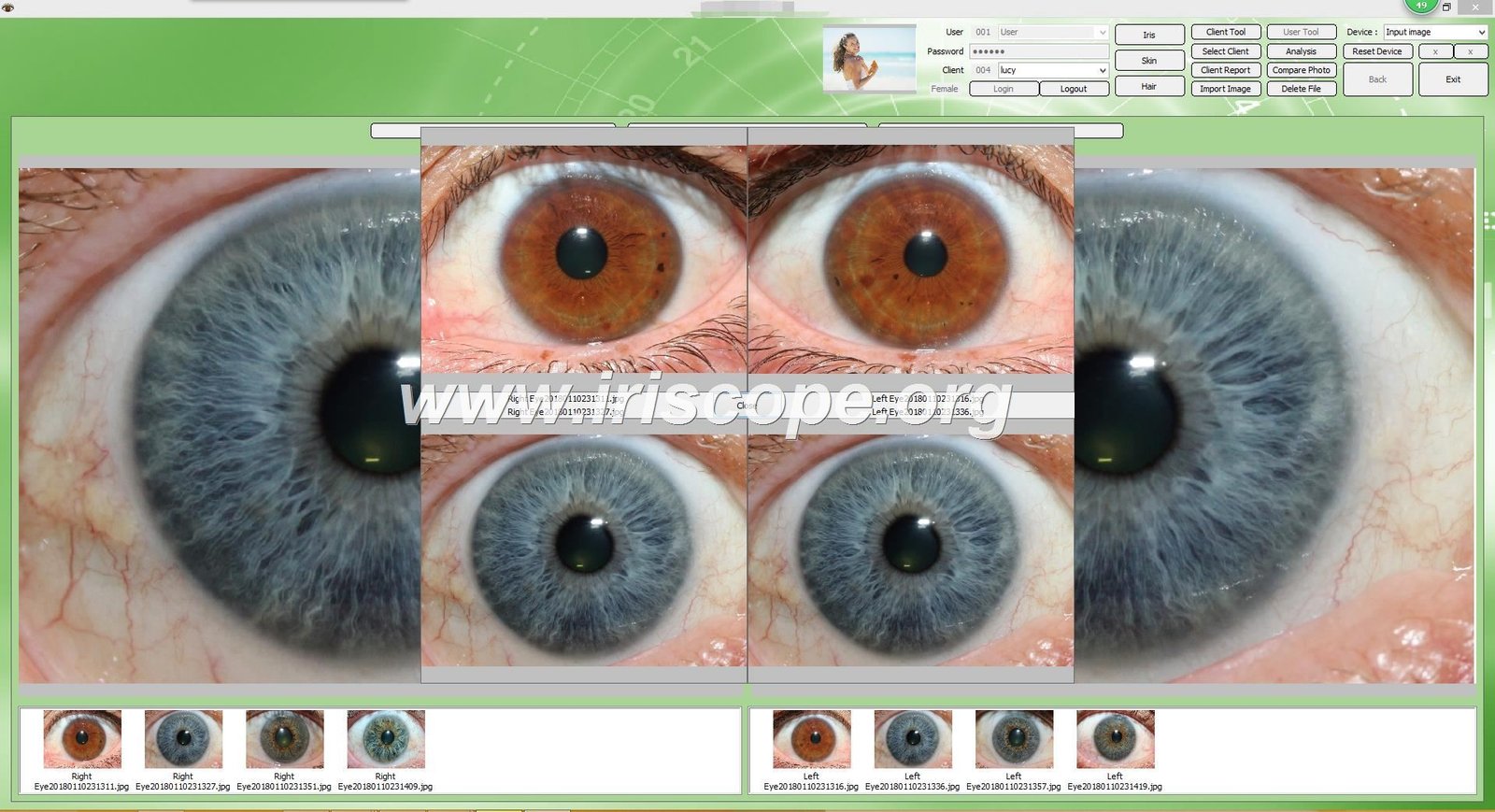
Professional practices maintain client records including iris images. Digital systems streamline this documentation process significantly. Images captured with professional cameras integrate directly into practice management software.
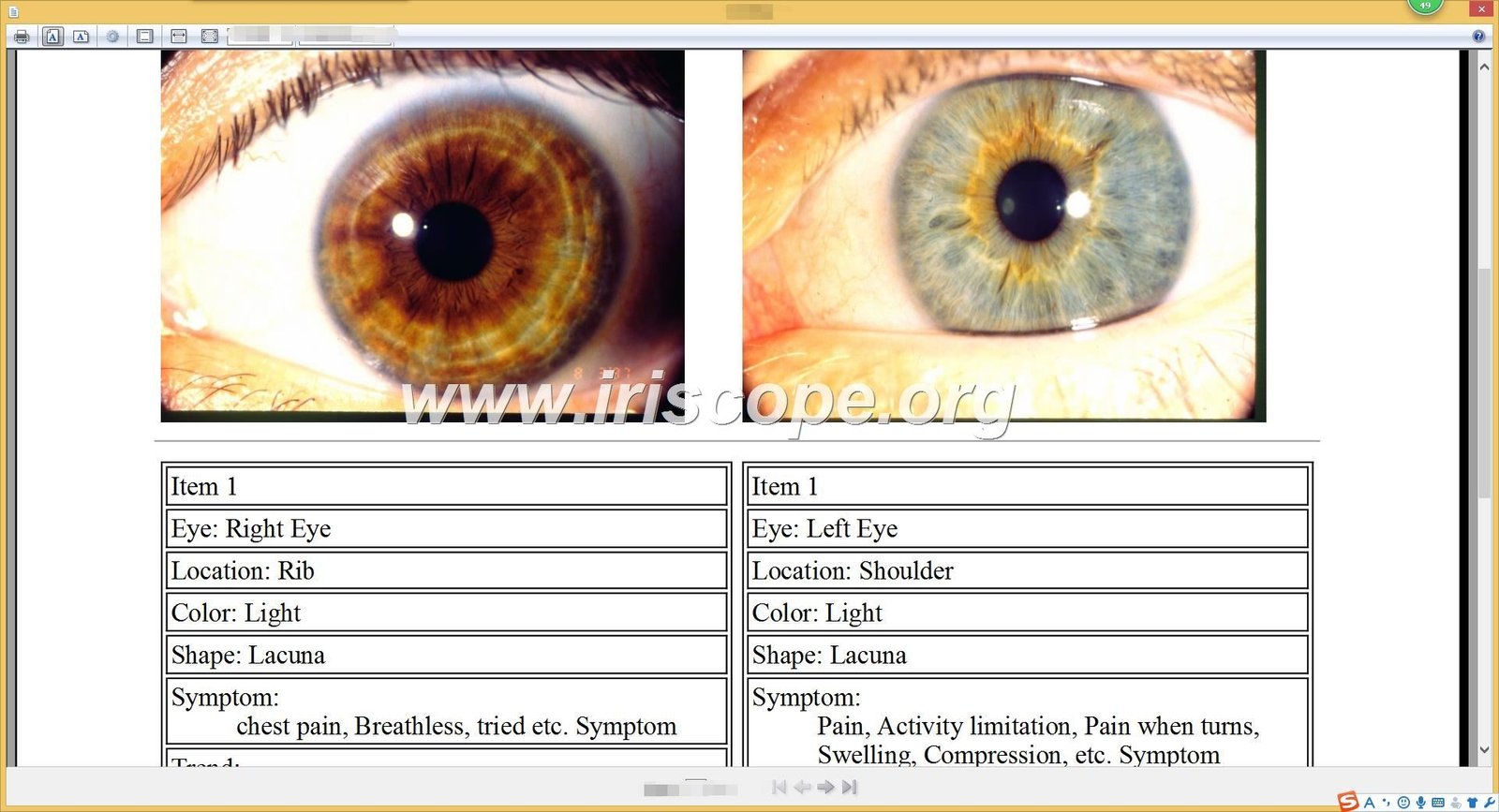
Our MAIKONG iridology software provides comprehensive client management features. The system stores images, tracks observations over time, and generates educational reports clients can review at home.
Record-Keeping Best Practices
- Capture baseline iris images during initial client consultation sessions
- Store images securely with proper client identification and date stamps
- Use consistent imaging protocols for comparable follow-up documentation
- Document observations using standard terminology from traditional iridology practice
- Maintain clear records distinguishing educational observations from medical diagnoses
- Follow all applicable privacy and healthcare record retention regulations
- Back up digital records regularly to prevent data loss
Professional Equipment for Right Eye Iridology Chart Analysis
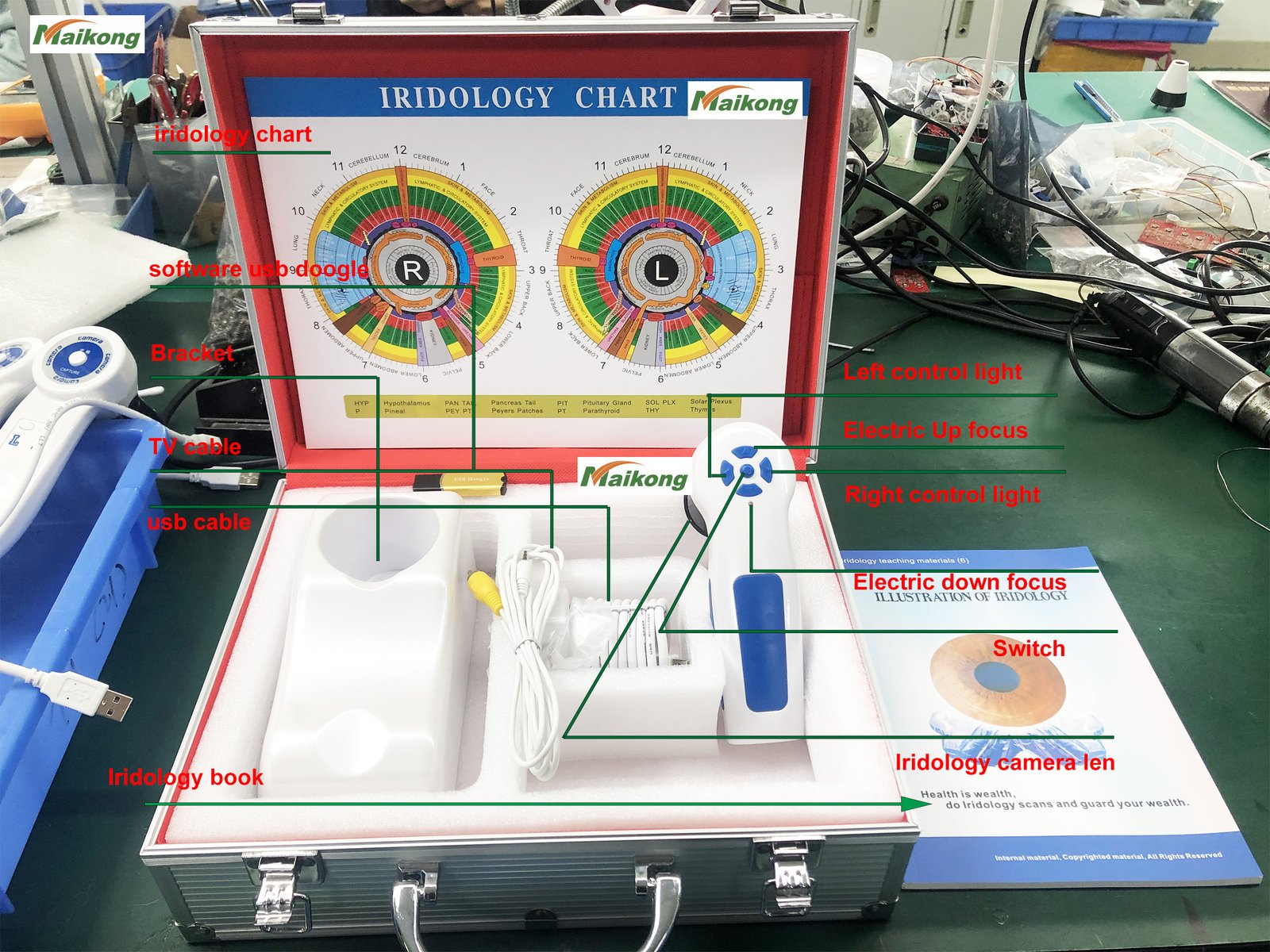
Quality equipment forms the foundation of professional iris observation. Modern technology has transformed how practitioners capture and analyze iris images. The right tools make traditional iridology practice more effective and efficient.
Essential Imaging Equipment
Professional-grade cameras capture the detail necessary for accurate iris observation. These specialized devices differ significantly from standard cameras. They provide magnification, proper lighting, and image quality suited for iris structure visualization.
At MAIKONG, we manufacture professional iriscopes specifically designed for traditional wellness practices. Our equipment meets the needs of practitioners worldwide, from established clinics to training institutions.
MAIKONG MK-9822U Professional Iridology Camera Specifications
| Specification | Details |
|————–|———|
| Model Number | MK-9822U |
| Sensor Resolution | 12.0 Megapixels |
| Sensor Type | High-resolution CCD with DSP processor |
| Lens System | Imported optical lens with multi-layer coating |
| Magnification | 30X iris-specific lens included |
| Illumination | LED ring light around lens (adjustable brightness) |
| Focus System | Adjustable manual focus for clear imaging |
| Image Stabilization | Optical Image Stabilizer (OIS) technology |
| Connection Type | USB 2.0 (plug-and-play, no external power needed) |
| Compatible Systems | Windows XP/Vista/7/8/10/11 (32-bit & 64-bit), macOS |
| White Balance | Automatic with color temperature filter |
| Capture Method | Single-button capture with digital pause function |
| Certifications | CE, ISO 9001 certified manufacturing |
| Warranty Period | 13 months from purchase date |
| Manufacturing Origin | Shenzhen (SZ), Guangdong (GD), China |
Standard Package Contents
| Component | Quantity | Description |
|———–|———-|————-|
| Camera Handset | 1 pc | Main imaging device with ergonomic design |
| 30X Iris Lens | 1 pc | Specialized optics for iris magnification |
| USB Cable | 1 pc | 1.5-meter connection cable |
| Protective Lens Cover | 1 pc | Safeguards lens when not in use |
| Carrying Case | 1 pc | Durable leather PU protective box |
| Software CD | 1 pc | Professional analysis software with drivers |
| Printed Chart | 1 pc | Reference iridology chart for right and left eyes |
| Documentation | 1 set | Instructions and warranty information |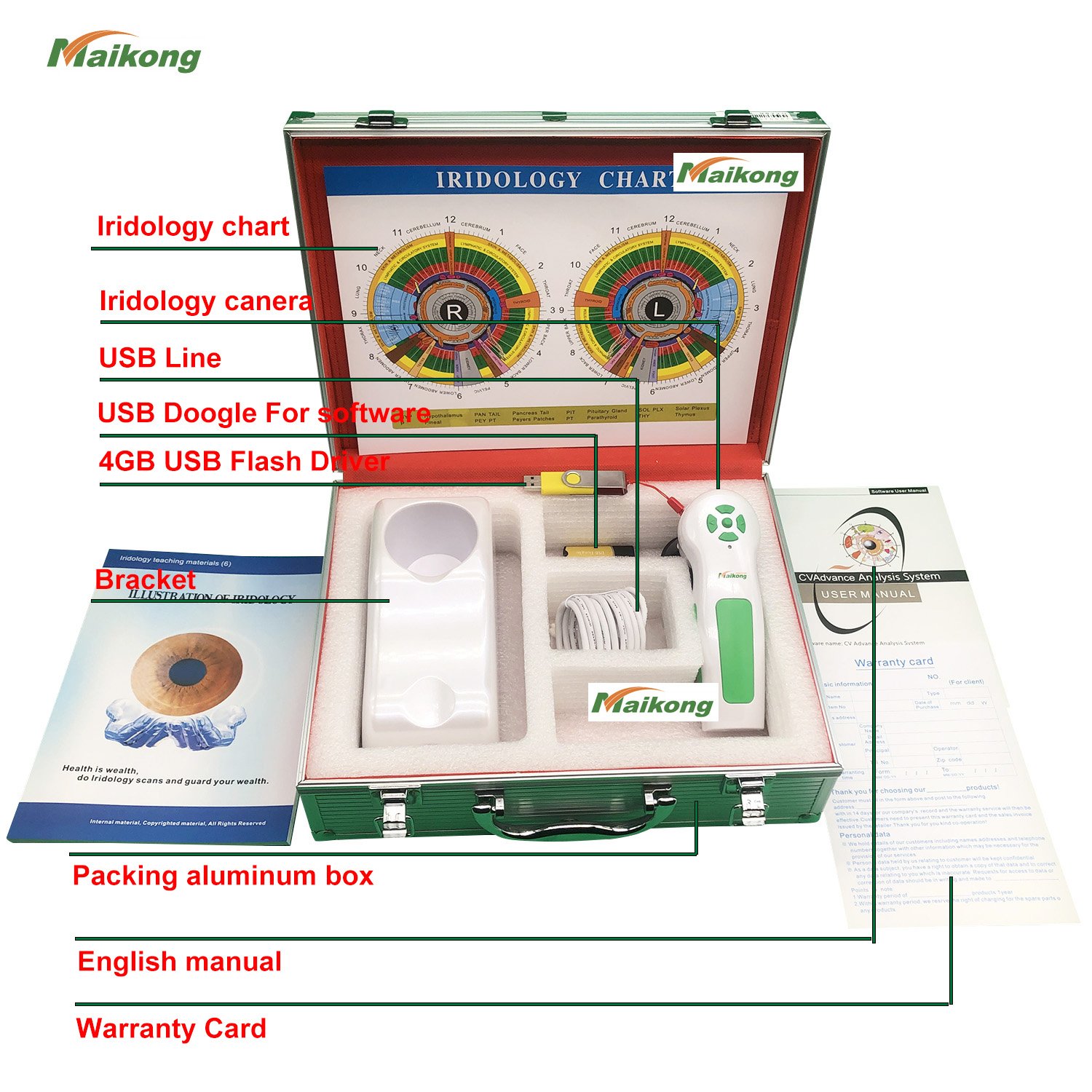
Software Solutions for Chart Analysis
Modern iridology analysis software transforms how practitioners work with iris images. These programs overlay digital charts onto iris photographs. They provide annotation tools, comparison features, and client management capabilities.
MAIKONG software supports practitioners across the United States and globally. We offer extensive language support and system compatibility to serve diverse practice needs.
MAIKONG 2024 Iridology Software Features
| Feature Category | Capabilities |
|——————|————–|
| Automatic Analysis | AI-based iris zone analysis with detailed health marker reports |
| Client Management | Comprehensive database for client information, image storage, and history tracking |
| Language Support | 17 languages including English, Spanish, French, German, Italian, Chinese, Japanese, Korean, Portuguese, Russian, Polish, Czech, Bulgarian, Persian, and Malaysian |
| Chart Overlays | Digital right eye and left eye charts with customizable zone highlighting |
| Image Enhancement | 3D visualization, negative film view, texture analysis for detailed examination |
| Report Generation | Customizable educational reports with client data, observations, and recommendations |
| Product Integration | Link wellness product suggestions to observations for client education |
| Backup Features | Automatic data backup and restore across devices for security |
| System Compatibility | Windows 2000/XP/Vista/7/8/10/11 (32-bit & 64-bit); macOS 10.14-15.x (Sequoia) |
| Training Resources | Built-in case studies, example images, and learning tools for practitioners |
| OEM Customization | Logo, language, function, and product catalog customization available |
Practitioners can download our iridology software to experience these features. We provide comprehensive support to ensure smooth integration into existing practice workflows.
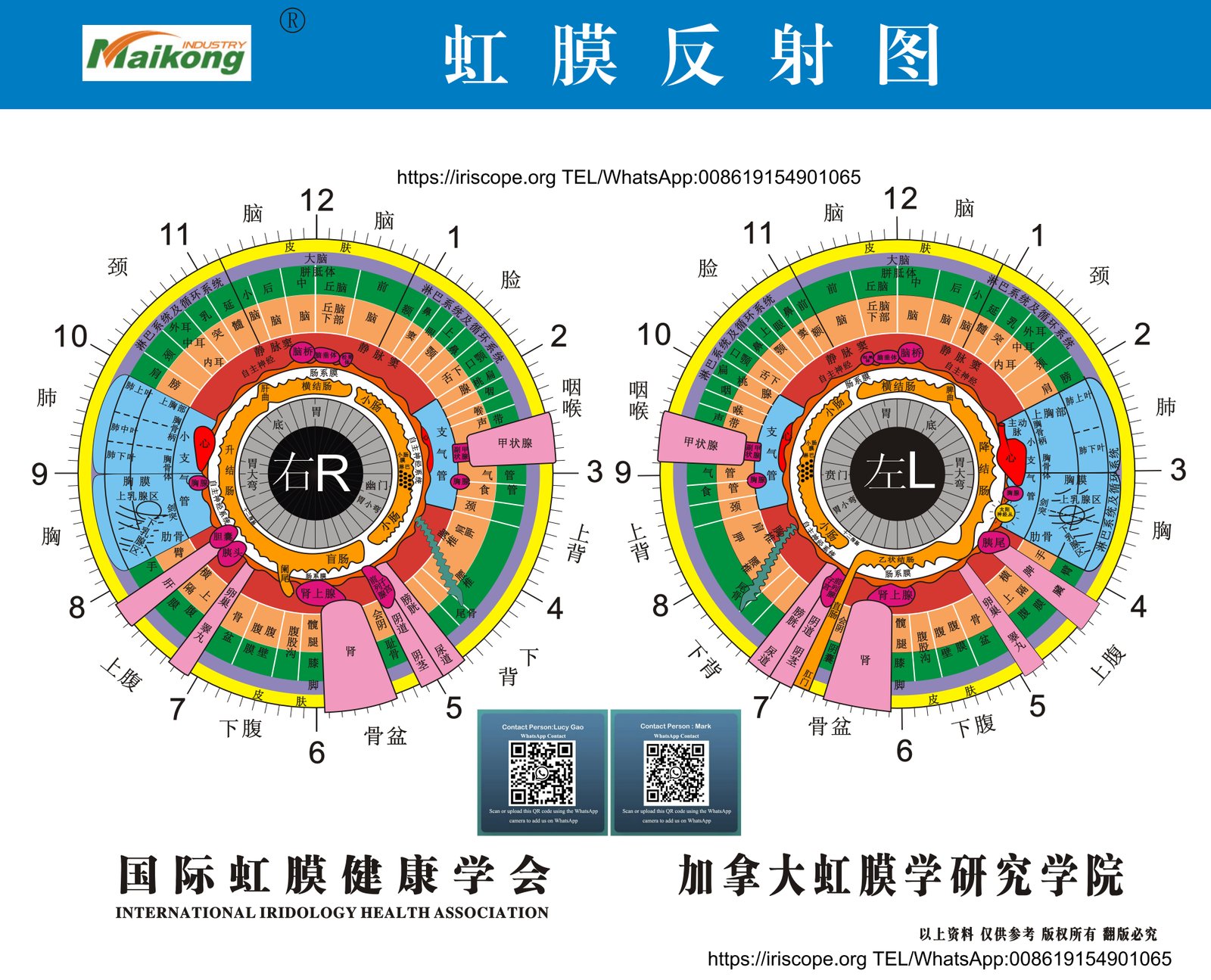
Printable Chart Resources
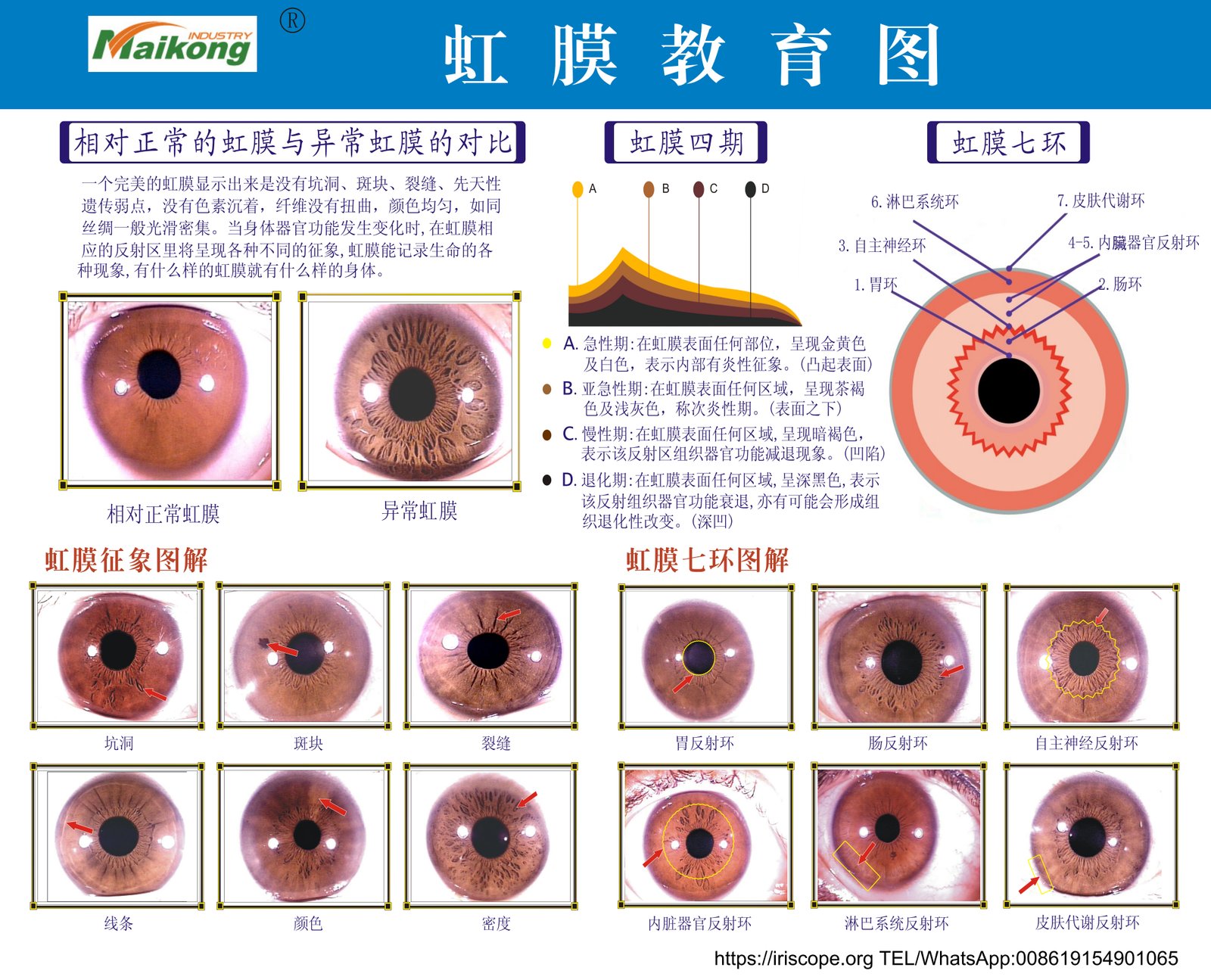
Learning Resources and Training
Effective use of the right eye iridology map requires proper education. Numerous training programs teach traditional iris observation methods. These range from introductory workshops to comprehensive certification courses.
We partner with iridology training institutions worldwide. Many schools use MAIKONG equipment in their curricula. Our company supports education through equipment partnerships and technical resources.
Beginner Learning Path
- Study basic iris anatomy and zone mapping fundamentals
- Learn to use chart reading techniques systematically
- Practice with clear example images before live consultations
- Understand legal and ethical boundaries for traditional practice
Advanced Skill Development
- Master subtle pattern recognition in various iris constitutions
- Integrate iris observations with other wellness modalities effectively
- Develop professional documentation and record-keeping systems
- Stay current with evolving traditional practice standards
Variations in Iridology Chart Jansen Right Eye and Other Systems
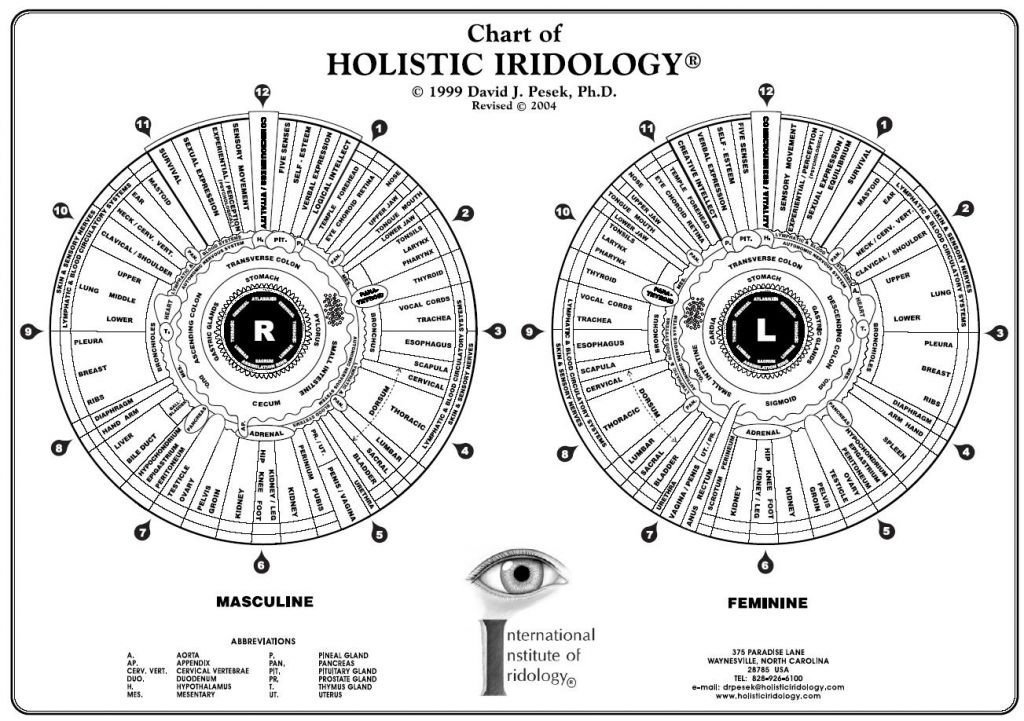
Multiple charting systems exist within traditional iridology practice. The most common in the United States derives from Dr. Bernard Jensen’s work. European practitioners often use slightly different zone divisions. Understanding these variations helps practitioners communicate across systems.
Jensen System Characteristics
The Bernard Jensen approach divides the iris into specific organ zones with clear boundaries. This American system gained widespread adoption through Jensen’s teaching and publications over several decades.
Jensen charts show liver prominence in the right eye at approximately the 7-8 o’clock position. The system includes detailed subdivisions for digestive organs and emphasizes the body’s right-left division in corresponding irises.
European System Variations
European iridology traditions sometimes show subtle differences in zone placement. These variations reflect different teaching lineages and clinical observation emphases developed over generations of practice.
Both systems share fundamental principles while differing in specific details. Practitioners trained in one system can generally understand the other with minimal adjustment. The core concept of right eye showing right side body remains consistent across traditions.
Modern Integrated Approaches
Contemporary practitioners often synthesize knowledge from multiple systems. Modern charts may combine Jensen foundations with European refinements. This integration reflects the global nature of current holistic health practice.
Our software at MAIKONG supports multiple charting systems. Practitioners can select their preferred reference style or compare different approaches within the same platform. This flexibility serves diverse training backgrounds and practice preferences.
Common Observations in Right Eye Iris Patterns
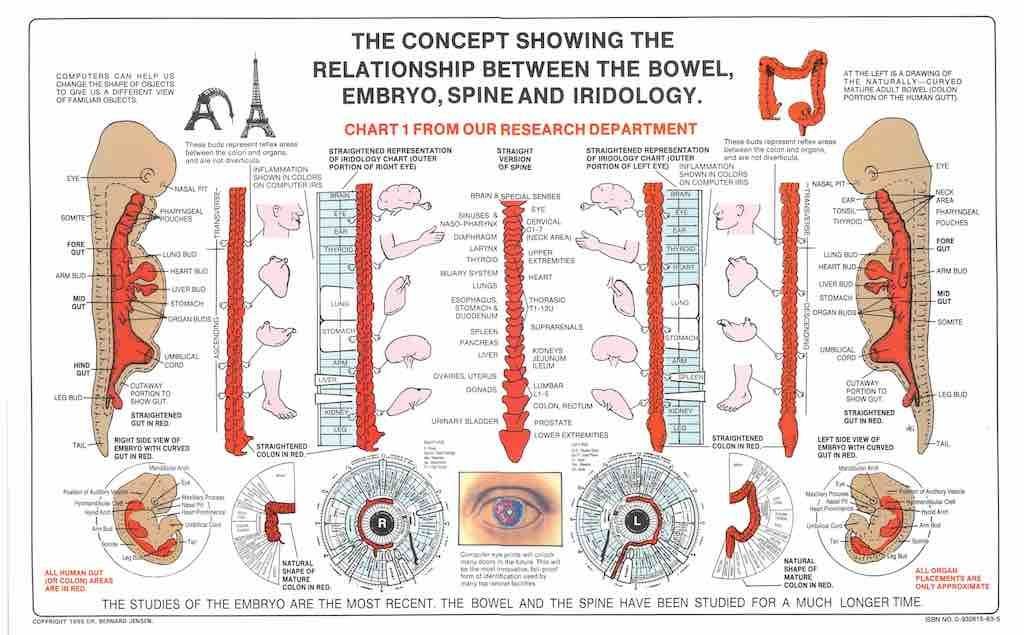
Certain patterns appear frequently during routine iris observations. Recognizing these common features forms part of basic iridology practice skills. Each pattern type carries meaning within traditional interpretation frameworks.
Fiber Structure Variations
Radial iris fibers show different densities and arrangements among individuals. Some people display tight, dense fiber patterns while others show more open structures. These variations relate to constitutional types in traditional iridology classification.
Fiber disruptions or irregular patterns in specific zones draw practitioner attention. Traditional practice associates these structural variations with corresponding body regions indicated by the right eye chart zone mapping.
Color Heterochromia and Pigmentation
Many irises display colors beyond the base blue, green, or brown. Orange-brown pigment spots appear commonly in various zones. Traditional practitioners note these pigmentation patterns’ locations relative to organ correspondence areas.
The liver zone in the right eye (typically 7-8 o’clock) often shows distinctive coloration. Yellow or orange tones in this region receive particular attention in classical iris observation practice.
Structural Markings: Lacunae and Crypts
Lacunae Characteristics
Lacunae appear as small openings or gaps in iris fiber structure. These features vary in size and depth. Their presence, especially in specific zones, holds meaning in traditional iridology interpretation.
- Closed lacunae with intact borders
- Open lacunae with visible depth
- Grouped lacunae patterns
- Isolated single lacunae
Crypts and Other Openings
Crypts represent deeper structural openings than typical lacunae. They appear darker due to their depth into iris tissue layers. Location mapping to right eye chart zones guides traditional observation significance.
- Deep crypts with clear borders
- Superficial depressions
- Combined crypt-lacuna formations
- Zone-specific crypt patterns
Ring Formations and Boundaries
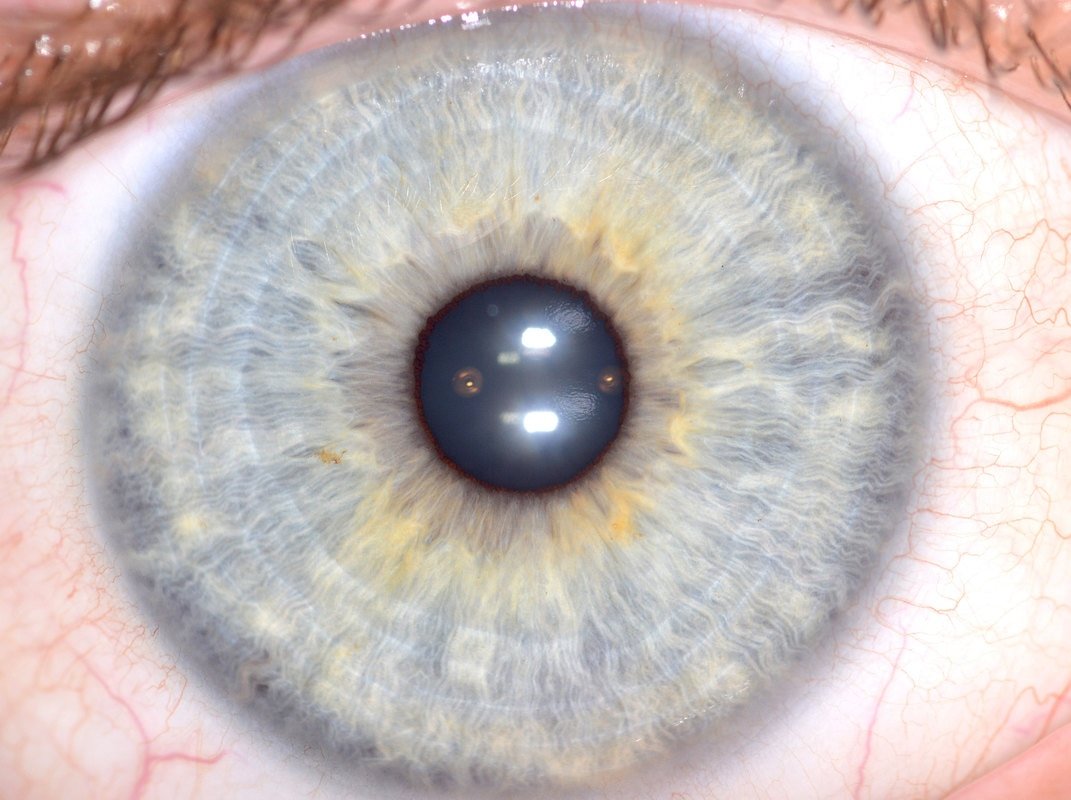
Circular rings within the iris provide important structural information. The autonomic nerve wreath typically appears as a distinct circular boundary around the pupil area. Additional rings may appear in outer iris regions.
These ring structures divide the iris into zones with different traditional significance. The area inside the nerve wreath relates to digestive organs in most charting systems. The outer regions correspond to peripheral body structures.
High-quality imaging reveals these subtle rings clearly. Our professional iridology cameras capture the resolution needed for accurate ring visualization during traditional wellness consultations.
Establishing Professional Iridology Practice with Right Eye Analysis
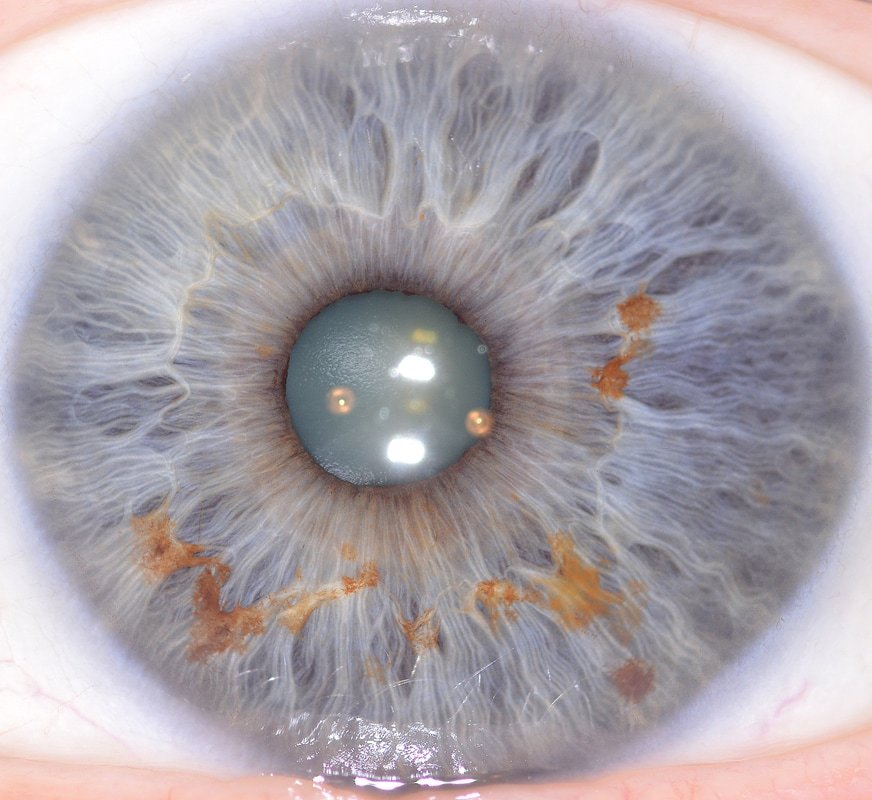
Building a successful practice incorporating iris observation requires attention to equipment, training, and professional standards. Many wellness practitioners add iridology services to existing offerings. Others build specialized practices around traditional iris analysis.
Equipment Investment Considerations
Initial equipment investment varies based on practice scale and goals. Basic setups include a quality camera and software. More comprehensive systems add specialized lighting, dedicated computer workstations, and professional photography equipment.
We work with practices of all sizes at MAIKONG. Small startups often begin with our entry-level systems. Established clinics upgrade to advanced configurations. Our team helps match equipment to specific practice needs and budget parameters.
Typical Equipment Investment Ranges
Starter Package: Basic USB camera, standard software, essential accessories – suitable for practitioners adding iris observation to existing services
Professional Package: High-resolution camera, advanced software with multi-language support, complete accessory set, training materials – ideal for dedicated iridology practitioners
Clinic System: Multiple camera units, networked software, extensive chart library, custom branding options – designed for multi-practitioner wellness centers
Contact our team to discuss specific configurations for your practice situation and receive detailed pricing information
Training and Certification Paths
Professional training ensures competent, ethical practice. Various organizations offer iridology certification programs. These range from basic introductory courses to advanced practitioner certifications requiring extensive study.
Choosing accredited training programs provides credibility. Many programs include hands-on practice with professional equipment. Our partnerships with training institutions mean students often learn on MAIKONG systems they may later purchase for their own practices.
Legal and Ethical Practice Boundaries
Understanding legal boundaries protects both practitioners and clients. Iridology observations serve educational purposes within wellness practices. They do not constitute medical diagnosis under United States healthcare law.
Clear communication about this distinction maintains ethical practice standards. Written consent forms and educational disclaimers help establish appropriate client expectations. Professional practitioners always recommend clients maintain relationships with licensed medical providers for health concerns.
Critical Compliance Requirements:
- Never claim to diagnose medical conditions through iris observation
- Do not suggest discontinuing medical treatment based on iris analysis
- Clearly identify your role and qualifications to clients
- Maintain appropriate liability insurance coverage for your practice
- Follow all state and local regulations governing wellness practices
- Document the educational nature of your observations in all client materials
Building Clientele for Iris Analysis Services
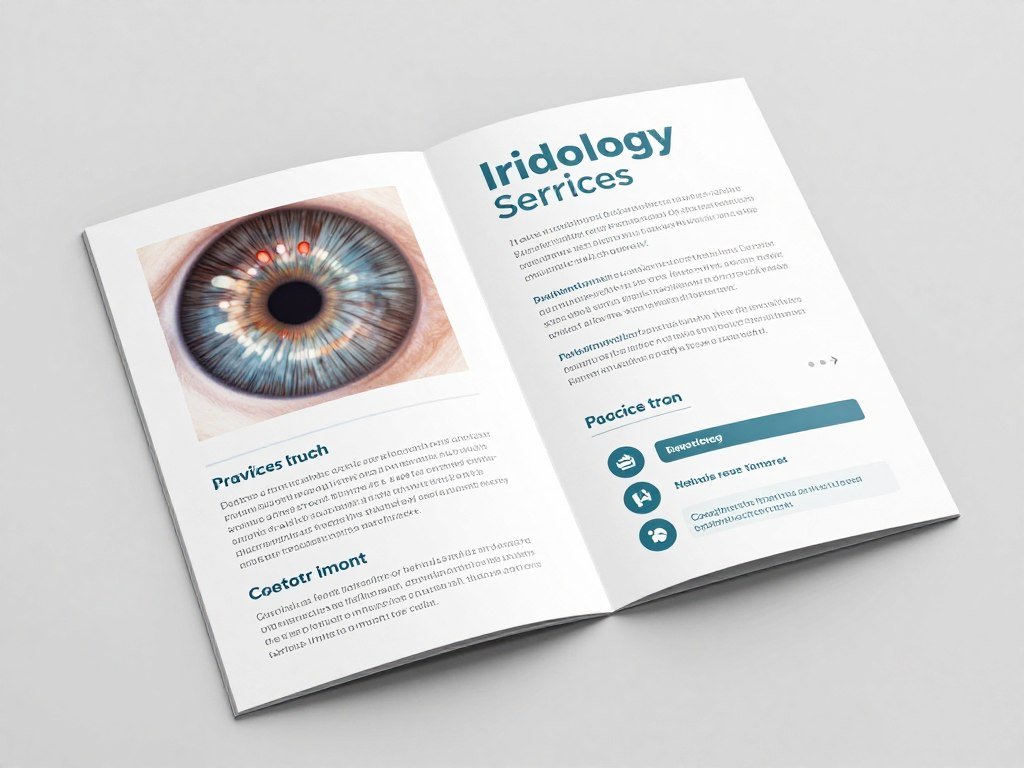
Marketing iris observation services requires educational approaches. Potential clients may not understand traditional iridology. Clear explanations about the practice’s history, methods, and educational benefits attract interested individuals.
Many practitioners offer introductory sessions at reduced rates. These allow potential clients to experience iris photography and learn about the observation process. Satisfied clients often refer friends and family interested in traditional wellness approaches.
Digital marketing reaches broader audiences effectively. Websites explaining iris observation and displaying example charts attract organic search traffic. Social media education builds awareness of traditional wellness practices including iridology.
Why Professional Practitioners Choose MAIKONG for Iridology Equipment
As a direct manufacturer, we at MAIKONG bring unique advantages to practitioners seeking professional iris observation equipment. Our twenty years of experience in this specialized field translates to products designed specifically for traditional wellness practice needs.
Manufacturing Excellence and Customization
Direct manufacturing provides flexibility other suppliers cannot match. We offer comprehensive OEM and ODM services for practices wanting customized solutions.
- Hardware customization: Modify camera models, colors, and exterior design to match your practice branding
- Software customization: Add your logo, adjust interface language, integrate your product recommendations
- Complete white-label solutions: Build your own branded iridology system line
- Flexible order quantities: We work with both individual practitioners and large distributors
- Rapid prototyping: Custom solutions developed efficiently through our design team
Quality Assurance and Certifications
Our Shenzhen facility operates under ISO 9001 quality management systems. Every product follows rigorous testing protocols from design through final shipping. This commitment to quality ensures reliable performance in professional practice settings.
Manufacturing Standards
- ISO 9001 certified production processes
- CE marking for international compliance
- Comprehensive quality control at every production stage
- Rigorous testing protocols before shipping
Product Reliability
- 13-month warranty coverage on all equipment
- Responsive technical support team
- Replacement parts readily available
- Proven durability in clinical environments
Software Innovation and Multi-Platform Support
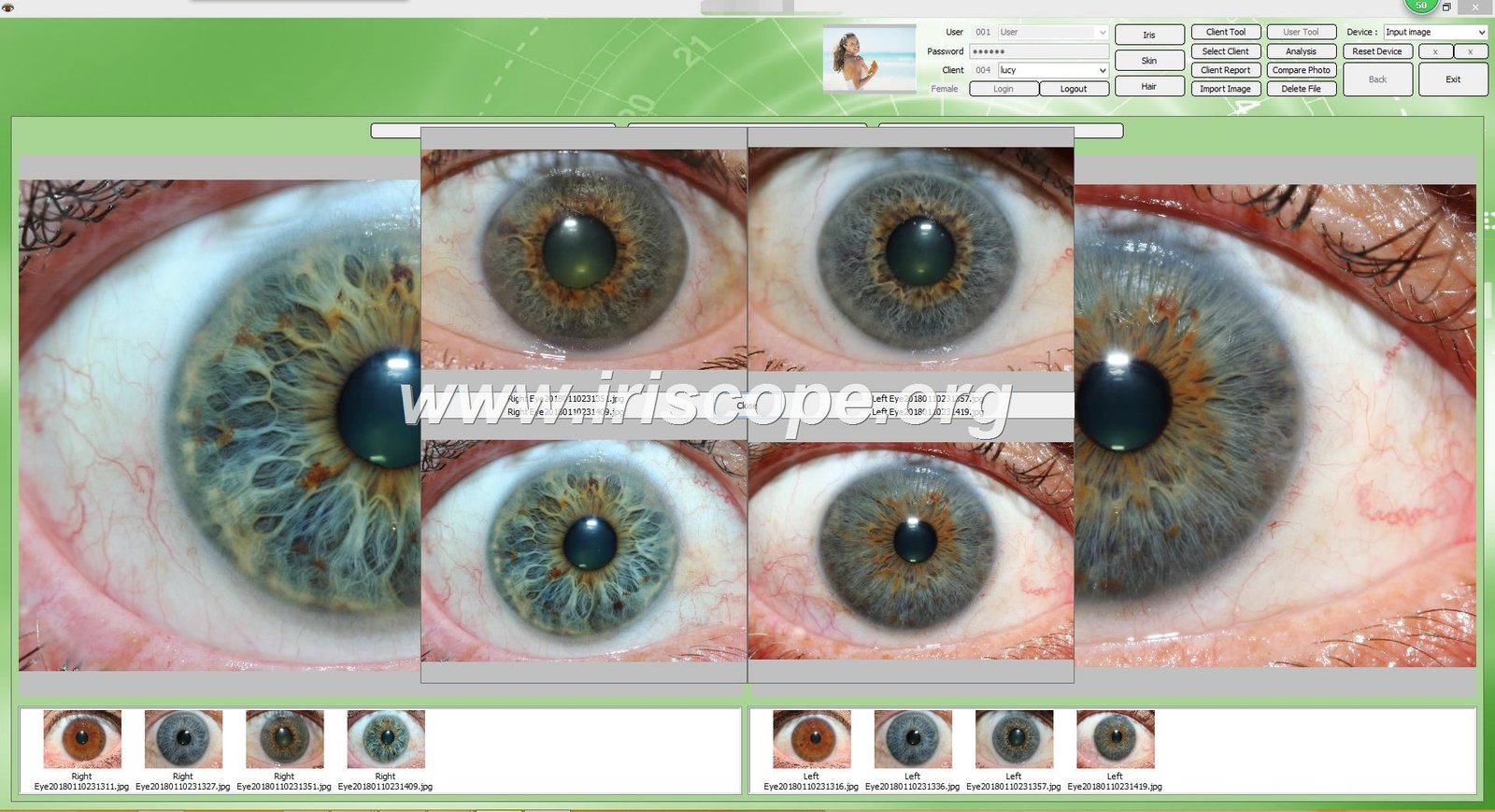
We pioneered macOS support for iridology software in the industry. Our commitment to cross-platform compatibility means practitioners using Apple computers access the same professional features as Windows users.
Regular software updates incorporate user feedback and technological advances. Our development team actively improves functionality based on real-world practitioner needs. This ongoing refinement keeps our software competitive and current.
Global Support Network
Operating for two decades has built extensive partnership networks. We supply equipment to over 1,000 health practices worldwide. This includes direct sales companies, wellness clinics, training institutions, and equipment distributors across multiple countries.
United States clients benefit from our domestic warehouse presence. Faster shipping and local support supplement our international manufacturing capabilities. This hybrid model combines competitive pricing with responsive service.
Partnership Opportunities for US Distributors
We actively seek qualified distribution partners throughout the United States. Our wholesale programs offer attractive margins for businesses serving the natural health equipment market.
Distributor benefits include:
– Competitive wholesale pricing structures
– Marketing support materials
– Technical training for your sales team
– Co-branded product options
– Priority access to new product releases
– Dedicated account management support
Whether you operate a health equipment supply business, manage a purchasing cooperative, or represent a professional organization, partnership opportunities may fit your situation. Our flexible approach accommodates various business models and market strategies.
Frequently Asked Questions About Iridology Chart Right Eye
What organs appear in the right eye iridology map that don’t show in the left eye?
The right eye predominantly shows right-side body structures. Most notably, the liver appears much more prominently in right eye charts, typically around the 7-8 o’clock position. The gallbladder, appendix, and ascending colon also feature more distinctly in right eye mapping compared to left eye charts. The right lung, right kidney, and right-side reproductive organs occupy their respective zones in the right iris according to traditional iridology body mapping systems.
Can I use the same chart for both left and right eyes in iridology?
No, right and left eye charts differ significantly in traditional iridology practice. Each eye corresponds to its respective body side predominantly. While some central organs appear in both eyes, the zone positions and emphases vary between right and left irises. Professional practice requires using the correct chart for each eye during observations. Most printable iridology resources include both charts to ensure proper reference during consultations.
How accurate is iridology for identifying health problems?
Iridology serves as a traditional observation practice used for educational wellness discussions, not medical diagnosis. Scientific research has not validated iridology for detecting specific diseases or medical conditions. Practitioners use iris observations to discuss traditional wellness concepts and body system connections within holistic health frameworks. Iridology should never replace conventional medical examination, diagnostic testing, or treatment by licensed healthcare providers. It functions as a complementary educational tool in natural health practices.
What equipment do I need to read an iridology chart right eye professionally?
Professional iris observation requires specialized imaging equipment. A quality iridology camera with proper magnification (typically 30X) and LED illumination captures the detail necessary for accurate observations. Professional-grade systems include USB connectivity, high-resolution sensors (12MP or higher), and specialized iris lenses. Accompanying analysis software overlays charts onto captured images and provides documentation tools. Additional helpful items include a sturdy camera stand for stable imaging and reference charts for consultation rooms.
How long does it take to learn right eye iridology chart reading?
Basic chart familiarity develops within several weeks of focused study. Understanding zone locations and primary organ correspondences forms the foundation. Developing practical observation skills for pattern recognition typically requires several months of practice with actual iris images. Most certification programs span 6-12 months including theory, practical application, and supervised practice. Advanced proficiency comes with years of consistent practice and continuing education. Many practitioners continue refining their observation skills throughout their entire careers in traditional wellness practice.
Do insurance companies cover iridology consultations?
Insurance coverage for iridology services varies significantly. Most conventional health insurance plans do not cover iridology as it falls outside standard medical diagnostic procedures. Some alternative health insurance plans or health savings account (HSA) programs may allow coverage depending on specific plan terms. Practitioners should clearly communicate payment expectations to clients before services. Many wellness practices operate on direct-pay models for complementary services including traditional iris observations.
What’s the difference between Bernard Jensen’s right eye chart and European systems?
The Bernard Jensen system represents the primary American iridology tradition with specific zone divisions based on his clinical observations and teaching. European systems, developed independently in countries like Germany and France, show some variations in exact zone boundaries and organ position interpretations. However, fundamental principles remain consistent across systems – right eye corresponds to right body side, organs map to specific iris locations, and observation focuses on color, structure, and pattern changes. Modern practitioners often synthesize knowledge from multiple traditions for comprehensive understanding.
Can eye color affect right eye iridology chart interpretation?
Base iris color influences observation approach in traditional iridology practice. Blue, green, and brown eyes each present differently, affecting how practitioners observe variations. However, the fundamental organ correspondence zones remain consistent regardless of base color. The iridology map right eye applies to all iris colors – the 12 o’clock position represents the same body region whether the iris is blue or brown. Practitioners learn to recognize color variations and patterns within each constitutional type. Some training emphasizes constitutional differences based on base iris color, though zone mapping stays constant.
How often should clients have follow-up right eye iridology observations?
Follow-up frequency depends on individual client situations and practitioner recommendations. Many wellness practices suggest quarterly observations (every 3 months) for clients actively working on lifestyle changes. Annual observations suffice for maintenance and general wellness monitoring in stable situations. Some practitioners photograph irises at each wellness consultation regardless of frequency. The iris changes gradually over time, so observations spaced too closely may not reveal significant pattern shifts. Professional documentation allows meaningful comparisons when adequate time passes between imaging sessions.
Conclusion: Integrating Right Eye Iridology Charts into Holistic Wellness Practice
The iridology chart right eye provides valuable educational insights within traditional wellness practices. Understanding organ correspondences, developing observation skills, and using professional equipment enables practitioners to offer meaningful traditional iris analysis services to their clients.
This practice complements various holistic health modalities. From nutritional counseling to natural health education, iris observations create opportunities for deeper client engagement with their wellness journeys. The visual, tangible nature of iris patterns makes abstract body system concepts more accessible.
Quality equipment forms the foundation of effective practice. Professional cameras capture the detail necessary for accurate observations. Comprehensive software streamlines documentation and client management. Together, these tools enable practitioners to deliver professional services that honor traditional iridology methods while meeting modern practice standards.
As awareness of holistic health approaches grows, demand for traditional iris observation services continues expanding. Practitioners with proper training and professional equipment position themselves well to serve this market. The combination of time-tested traditional knowledge and modern imaging technology creates powerful educational opportunities.
For health equipment distributors and wellness business owners, iridology equipment represents a growing market segment. The relatively modest investment required makes iris observation services accessible to practices of various sizes. This accessibility drives steady demand for quality cameras, software, and educational resources.
Partner with MAIKONG: Your Direct Source for Professional Iridology Equipment

After two decades manufacturing specialized iris observation equipment, we understand what professional practitioners and equipment distributors need. Our Shenzhen facility produces high-quality iriscopes, cameras, and software systems trusted by wellness practices across the United States and internationally.
We offer unique advantages as a direct manufacturer:
- Complete OEM/ODM Customization: Customize hardware appearance, software branding, languages, and functionality to match your brand identity
- Competitive Wholesale Pricing: Direct manufacturer pricing provides healthy profit margins for distributors and resellers
- Quality Assurance: ISO 9001 certified production with CE marking ensures reliable, compliant products
- Extensive Inventory: Stock availability in both China and United States warehouses for faster fulfillment
- Technical Expertise: 20 years of specialized experience in iris imaging technology and software development
- Multi-Platform Software: Industry-leading support for both Windows and macOS operating systems in 17+ languages
- Partnership Support: Marketing materials, technical training, and dedicated account management for distributors
- Proven Track Record: Over 1,000 satisfied customers including clinics, training institutions, and equipment distributors worldwide
Whether you’re an established wellness practice seeking reliable equipment, a health equipment distributor expanding your product line, or an entrepreneur building an iridology device brand, we provide solutions tailored to your specific needs.
Our wholesale and OEM programs support various business models – from individual practitioners purchasing single units to large distributors requiring customized bulk orders. We scale our support to match your operation size and growth trajectory.
Current Partnership Opportunities:
- Regional exclusive distribution agreements for qualified applicants
- White-label branding programs for equipment resellers
- Wholesale pricing for health equipment buyers
- Custom manufacturing for specialized requirements
- Training institution partnership programs
Contact Information:
Email: Lucy@myiridology.us
Website: https://myiridology.us/
Our team responds to partnership inquiries within 24 hours. We provide detailed product specifications, pricing structures, and customization options tailored to your business model. Let’s discuss how MAIKONG can support your success in the growing wellness equipment market.
Visit our about page to learn more about our company history and manufacturing capabilities, or explore our complete product line through our website. We look forward to building a profitable partnership that serves practitioners and clients throughout the United States.