
Iridology Intestine Chart: Complete Guide to Zone Mapping and Professional Chart Reading
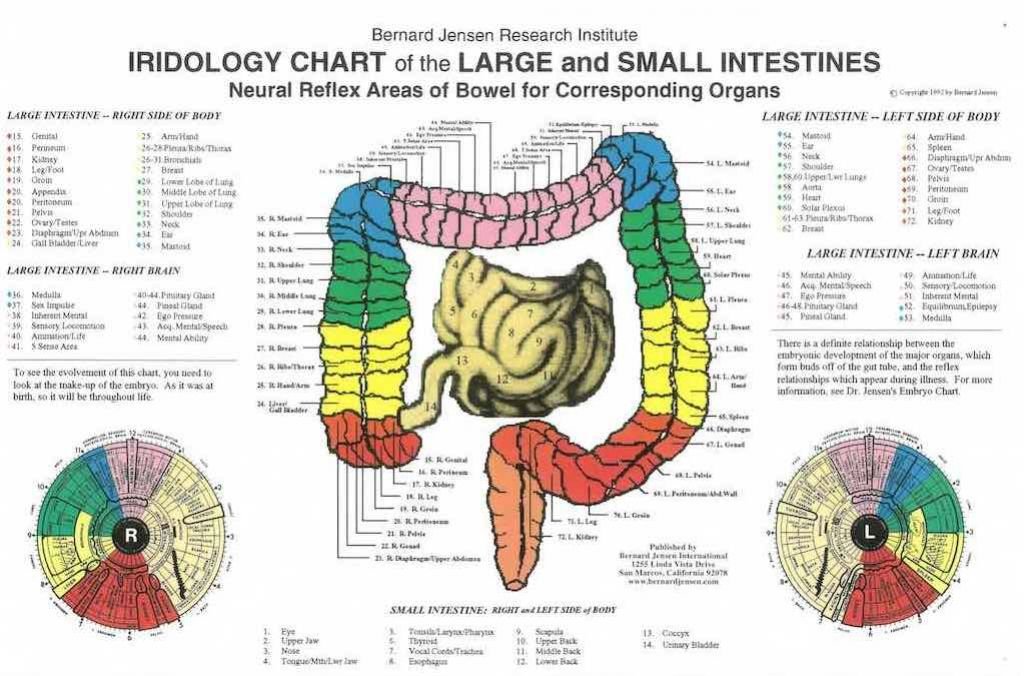 When you search for an iridology intestine chart, you need a clear resource that shows how the iris reflects intestinal health zones. This guide explains zone divisions, left and right eye differences, chart types, and practical usage with professional equipment. Whether you teach iridology, consult clients, or supply wellness equipment, understanding intestine chart structures helps you work with accuracy.
Traditional iridology maps specific iris zones to body organs and systems. The intestinal zones occupy significant iris territory, particularly in the outer rings. Practitioners use these charts to observe iris patterns, colors, and markings during client assessments. This reference covers educational chart usage only and does not replace medical diagnosis.
What Is an Iridology Intestine Chart
An iridology intestine chart is a circular diagram that maps intestinal zones onto iris regions. The chart divides the iris into sectors, with the large intestine typically occupying the outermost ring (zone 6-7) and small intestine positioned in adjacent inner zones (zone 5). Each sector corresponds to specific intestinal segments: ascending colon, transverse colon, descending colon, sigmoid, cecum, and small intestine loops.
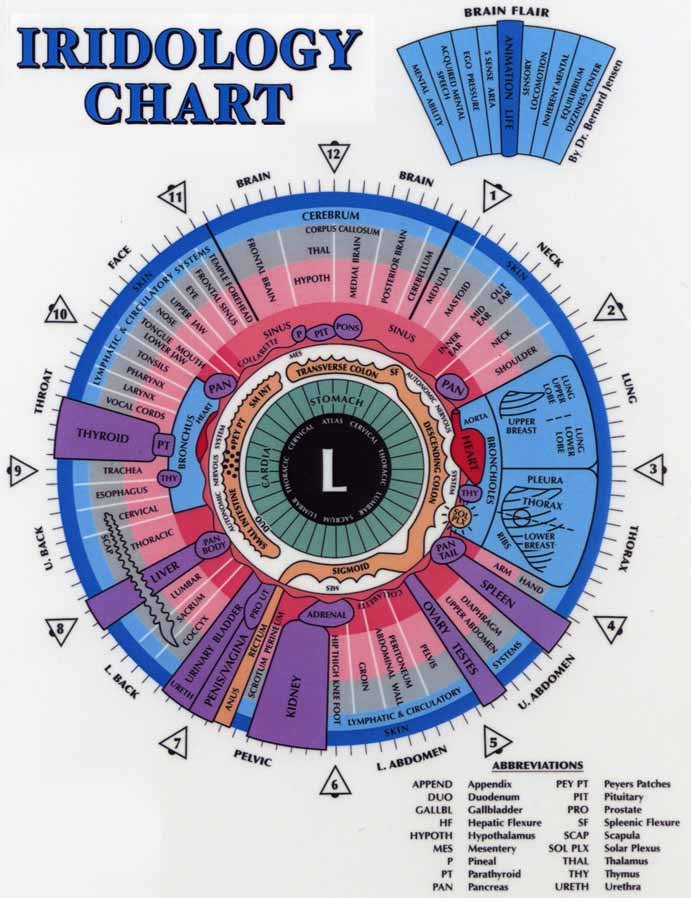
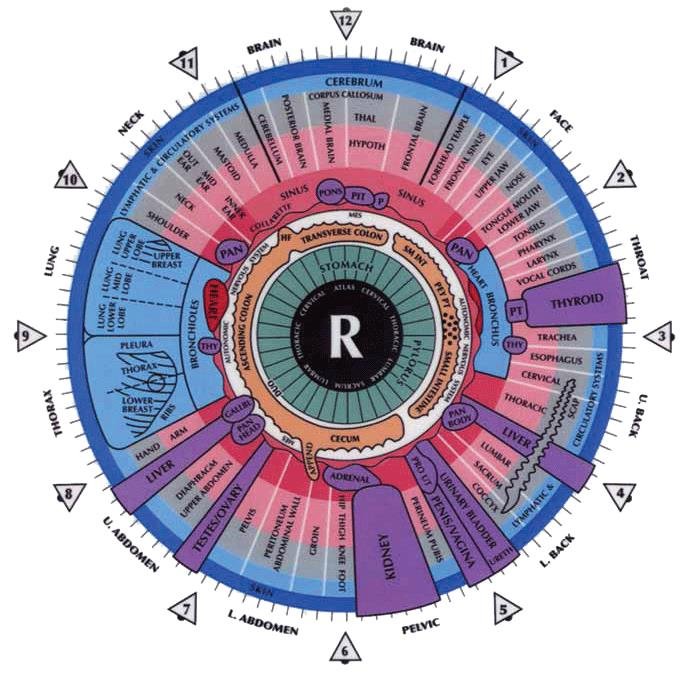
Charts display these zones using clock positions and radial divisions. The right iris reflects the right side of the body, while the left iris reflects the left side. This bilateral mapping means the ascending colon appears in the right eye (roughly 6-9 o’clock positions), while the descending colon appears in the left eye (3-6 o’clock positions). The transverse colon crosses both eyes at the top (11-1 o’clock).
Professional charts include zone numbering systems, organ labels, and color coding. Practitioners observe iris patterns, spots, color changes, and structural variations within these mapped zones. The charts serve as reference guides during iris photography sessions with an iriscope camera or when reviewing saved iris images through iridology software.
Understanding Intestine Zone Divisions in the Iris
The iridology chart of the large and small intestines follows concentric ring patterns. Zone 6 (the outermost ring before the limbus) typically represents the large intestine, while zone 5 corresponds to small intestine regions. Within zone 6, further radial subdivisions map specific colon segments according to their anatomical positions in the body.
Large Intestine Zone Mapping
The large intestine occupies the peripheral iris ring in both eyes. In the right iris, you find the cecum at approximately 7 o’clock, ascending colon from 7-9 o’clock (right side body), hepatic flexure near 11 o’clock, and half of the transverse colon from 11-12 o’clock. In the left iris, the transverse colon continues from 12-1 o’clock, splenic flexure appears near 1 o’clock, descending colon runs from 1-4 o’clock (left side body), sigmoid colon at 4-6 o’clock, and rectum near 6 o’clock.
This mapping reflects the anatomical path of the colon through the body. The right iris zones mirror right-side intestinal structures, while left iris zones mirror left-side structures. Practitioners examine these zones for accumulation signs, color variations, and structural markings that may indicate areas of traditional iridological interest.
Small Intestine Zone Mapping
The small intestine zones appear in the iris area just inside the large intestine ring (zone 5). Some charts show the small intestine as a complete ring in this zone, while others divide it into duodenum, jejunum, and ileum segments with specific radial positions. The small intestine zones often overlap with areas representing absorption, nutrient processing, and digestive system function.
Different iridology schools use slightly different zone numbering systems. The Bernard Jensen chart system, for example, places intestinal zones differently than European iridology charts. When you reference an iridology chart, verify which zone numbering system it uses to ensure accurate interpretation.
Left Eye vs Right Eye Intestine Chart Differences
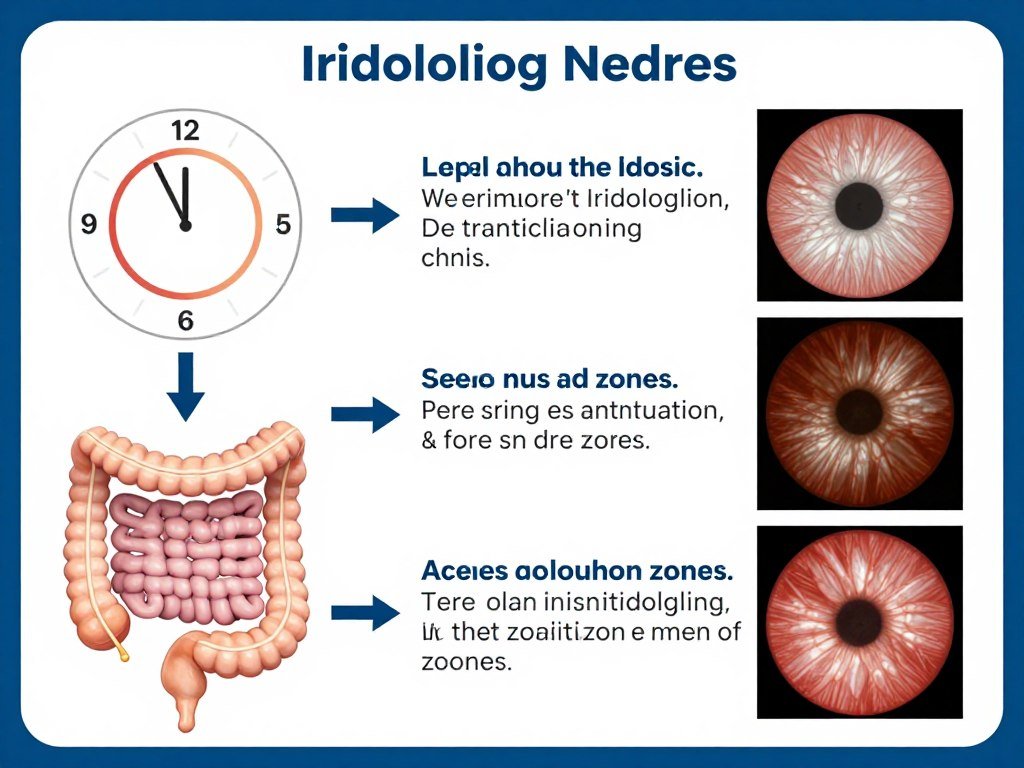
The right iris and left iris display different intestinal segments because of bilateral body mapping. Your right eye iridology chart shows organs on the right side of the body, while your left eye chart shows left-side organs and systems. This creates distinct intestine zone patterns between the two eyes.
Right Iris Intestine Zones
The right iris displays the cecum, ascending colon, hepatic flexure, and right half of the transverse colon. These structures form a path from the lower right (cecum) upward along the right side (ascending colon), across the top-right (hepatic flexure), and partially across the top center (transverse colon). Practitioners observe the right iris when assessing traditional iridology signs related to these specific colon segments.
The right iris also contains zones for the ileocecal valve area, which connects the small intestine to the large intestine. This valve region appears near the cecum zone at approximately 7 o’clock. Some charts mark this as a distinct subzone within the larger intestinal mapping system.
Left Iris Intestine Zones
The left iris displays the left half of the transverse colon, splenic flexure, descending colon, sigmoid colon, and rectum. These structures form a path from the top center (transverse colon) across the top-left (splenic flexure), down the left side (descending colon), and into the lower left (sigmoid and rectum). The left iris examination focuses on these specific segments when practitioners assess iris patterns.
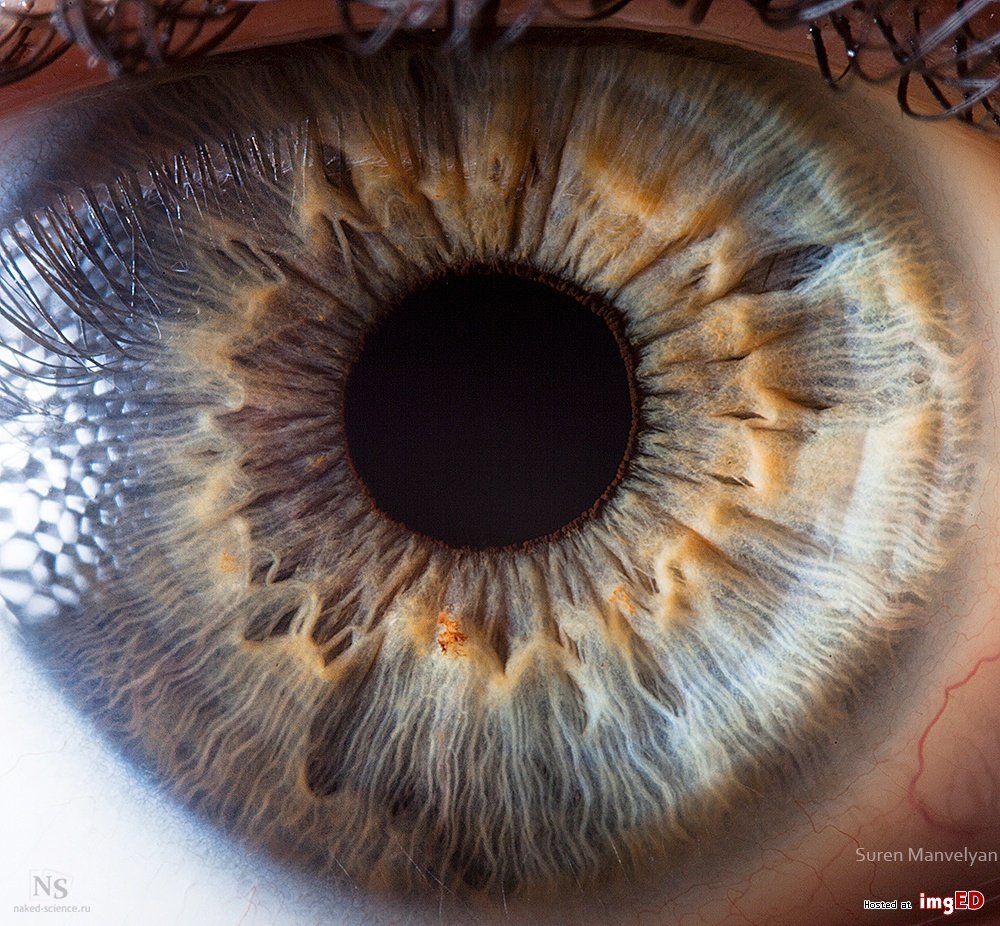
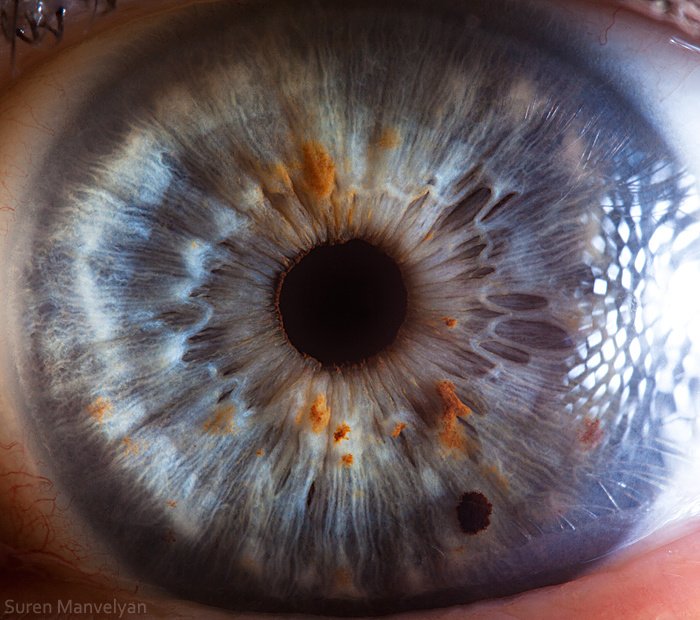
Both eyes must be photographed and analyzed to see the complete intestinal tract in iridology mapping. A complete assessment requires bilateral iris images captured with a professional USB iridology camera or similar equipment that provides clear, high-resolution iris photographs.
Types of Iridology Intestine Charts Available
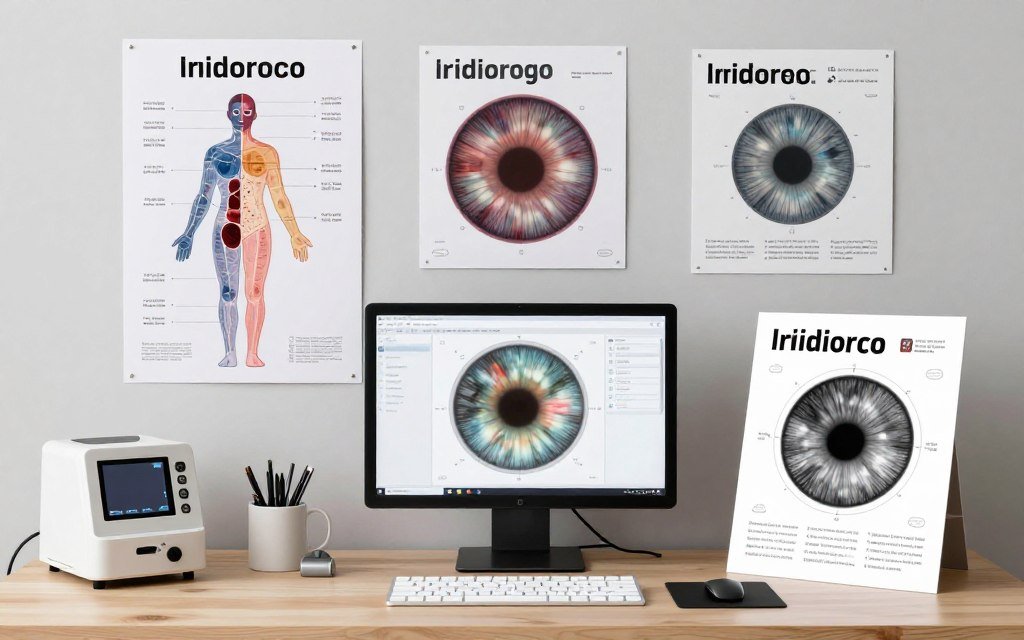
Practitioners and students use several chart formats depending on their learning, teaching, or consultation needs. Chart types include printed wall charts, printable PDF downloads, software-integrated charts, laminated reference cards, and 3D textured charts. Each format serves different usage scenarios and has specific advantages.
Printed Wall Charts and Posters
Large-format printed charts hang in consultation rooms, clinics, and teaching spaces. These charts typically measure 18×24 inches or larger and display full bilateral iris maps with detailed organ zones. Wall charts help practitioners explain findings to clients by pointing to specific zones. They serve as quick visual references during sessions and create a professional educational atmosphere.
Printed charts come in different styles: full-color anatomical versions, simplified zone maps, Bernard Jensen-style charts, and European iridology charts. Quality varies significantly; professional-grade charts use accurate zone divisions and clear labeling, while lower-quality versions may contain outdated or inconsistent zone mapping.
Digital and Software-Integrated Charts
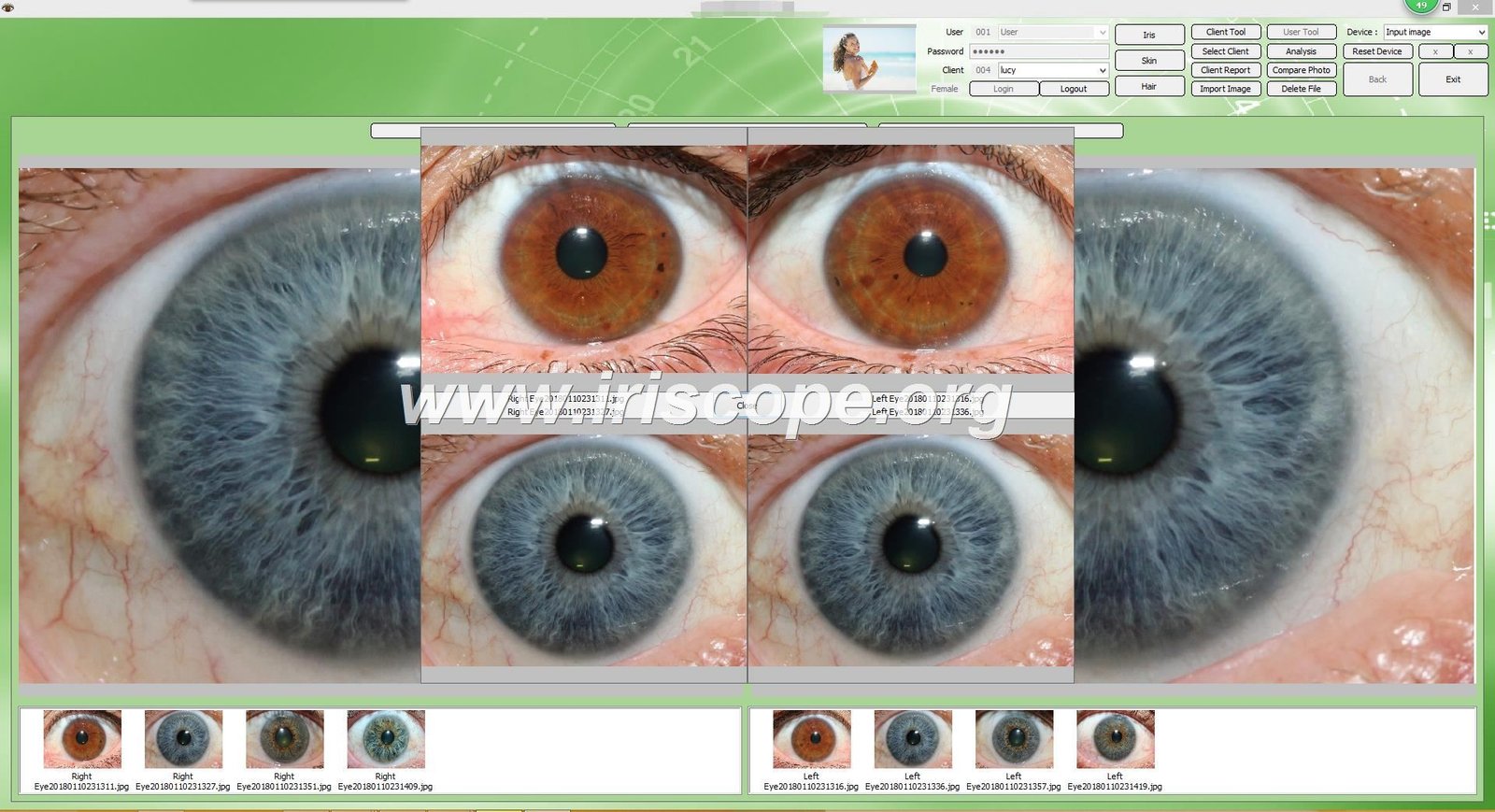
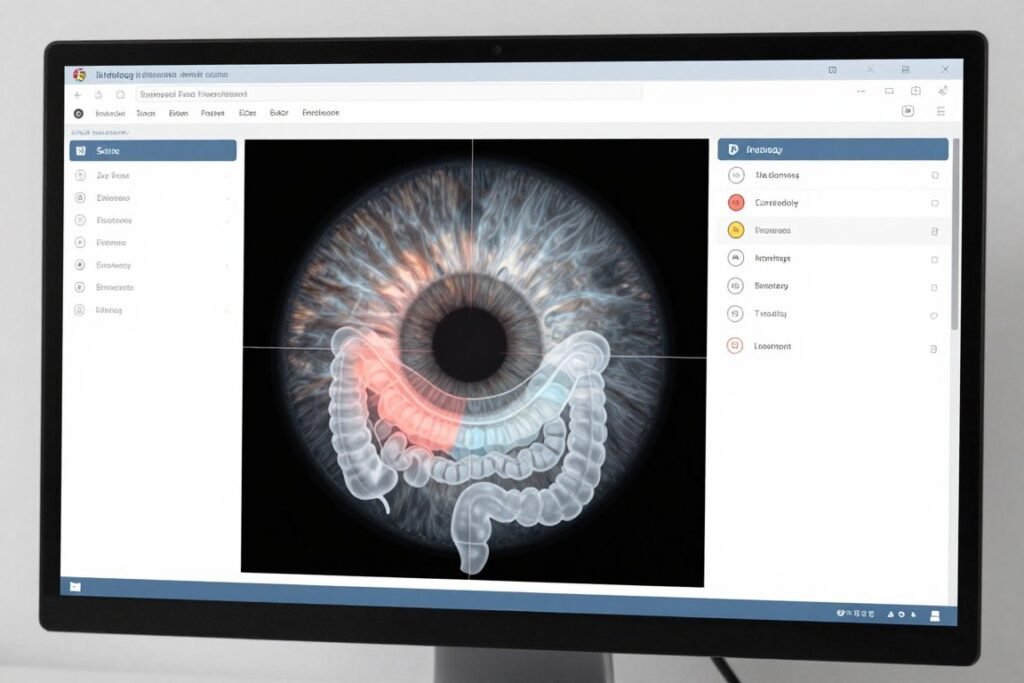
Modern iridology software includes built-in chart overlays that superimpose zone maps directly onto captured iris photographs. This integration allows practitioners to see chart zones aligned with actual iris structures in real time. Software charts often include multiple chart systems (Jensen, European, other schools) that users can switch between during analysis.
Digital charts offer advantages over printed versions: zoom capability for detailed zone examination, layer toggling to show or hide chart elements, and automatic alignment to iris photographs. Professional iridology software systems include intestine-specific chart views, zone highlighting tools, and annotation features that help practitioners mark areas of interest.
Downloadable and Printable Chart Resources
PDF chart downloads provide flexible, portable references. Practitioners print these charts in various sizes for different uses: small cards for field work, full-page sheets for study, or large formats for client education. Downloadable charts often include separate left eye and right eye versions, zone number keys, and organ label guides.
Download Professional Iridology Intestine Chart Resources
Access high-resolution iridology intestine charts for clinical and educational use. Our professional chart package includes bilateral iris maps, zone division guides, and organ correspondence references formatted for printing or digital viewing.
How to Read Iridology Intestine Chart Zones
Reading an iridology intestine chart requires understanding zone location, clock position orientation, and iris pattern observation. The process involves locating the intestinal ring zones, identifying specific colon segments by their radial positions, and examining iris characteristics within those mapped areas. This section outlines systematic chart reading steps used in traditional iridology practice.
Step-by-Step Chart Reading Process
Start by orienting the chart to match the eye being examined (right chart for right eye, left chart for left eye). Locate zone 6, the outermost iris ring before the limbus, which represents the large intestine. Identify the clock positions that correspond to specific colon segments: cecum at 7 o’clock (right eye), ascending colon 7-9 o’clock (right eye), transverse colon 11-1 o’clock (both eyes), descending colon 1-4 o’clock (left eye), and sigmoid 4-6 o’clock (left eye).
Next, examine the iris within these mapped zones for traditional iridology signs. Observers look for color changes (darkening, lightening, discoloration), spots or markings, fiber structure variations, lacunae (small gaps in iris tissue), crypts (deeper openings), pigmentation accumulation, and radial furrows or transverse fibers. These observations form the basis of traditional iridology assessment, though they represent educational observation only, not medical diagnosis.
Document findings by noting the zone number, clock position, eye (left or right), and description of observed characteristics. Professional practitioners photograph iris images using an iridology camera and store these images with chart overlay references in client files. This documentation supports consistency across multiple sessions and enables progress tracking over time.
Common Iris Patterns in Intestine Zones
Traditional iridology recognizes several iris patterns that may appear in intestinal zones. Radial furrows running outward through the intestine ring may indicate stress or weakness in traditional interpretation. Dark pigmentation spots in specific colon segments might suggest areas of toxin accumulation according to classical iridology theory. Lacunae or open areas within intestinal zones could represent structural weakness in that colon segment.
White or light-colored areas might indicate acute inflammation or irritation in traditional iridology assessment. Orange-brown discoloration in intestine zones sometimes appears in cases of constipation or sluggish bowel function according to iridology literature. Black spots or very dark areas may indicate chronic conditions or long-standing issues in classical iridology interpretation. All these observations represent traditional iridological educational concepts, not validated medical diagnostic criteria.
Understanding how to read iridology charts requires practice, training, and familiarity with iris anatomy. Practitioners develop pattern recognition skills through repeated chart study, iris photography review, and case observation under experienced guidance.
Using Iridology Intestine Charts with Iriscope Cameras and Software
Professional iridology practice combines charts with specialized equipment. Modern practitioners use iriscope cameras to capture high-resolution iris images, then overlay chart maps using iridology software. This integration provides precise zone identification and detailed pattern analysis that surpasses manual chart reading alone.
Iriscope Camera Integration
An iriscope camera captures magnified, illuminated iris photographs. Professional models offer 12MP or higher resolution, LED ring illumination around the lens, adjustable focus, and USB connectivity to computers. The camera connects directly to iridology software, which displays live iris images during capture and stores photographs for later review.
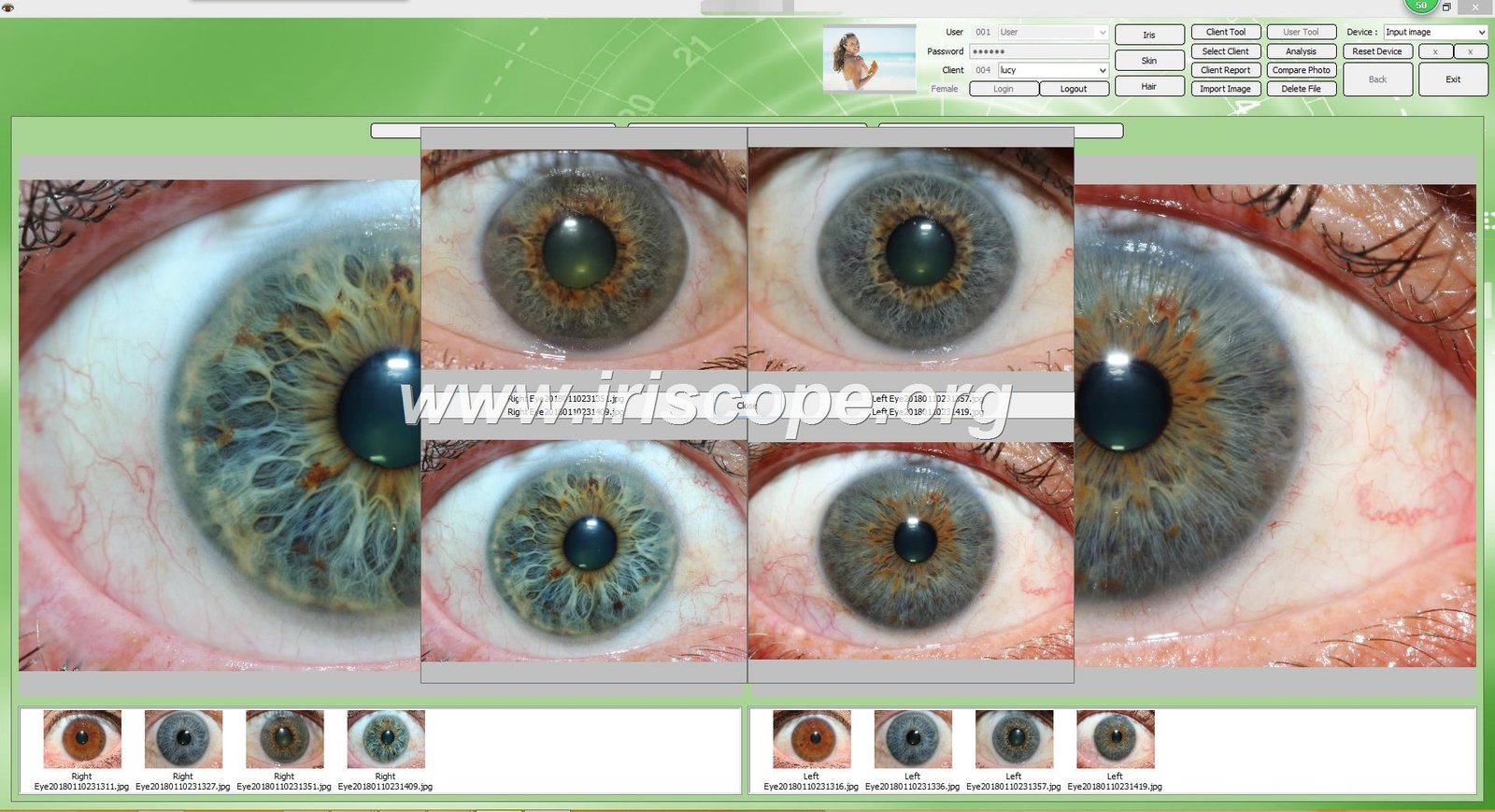
When using an iriscope camera with intestine charts, practitioners position the camera to capture clear iris images with proper lighting and focus. The software displays the live image alongside chart overlays, allowing real-time zone identification. Practitioners can freeze the image, align the chart overlay precisely to iris landmarks (pupil center, limbus edge), and examine specific intestine zones with chart reference guidance.
MAIKONG manufactures professional iriscope equipment designed for chart integration. Our MK-9822 model features 12.0 megapixels resolution, imported optical lens with plated layer coating, special DSP image processing, optical image stabilization, and single-button capture functionality. The camera works with Windows XP/7/8/10/11 and Mac OS systems, supporting seamless software integration.
MAIKONG MK-9822 Iriscope Camera Specifications
| Specification | Details |
|————–|———|
| **Sensor Resolution** | 12.0 Megapixels CCD |
| **Lens Type** | Imported optical lens, multi-layer coating |
| **Image Processor** | Special DSP with optical stabilization |
| **Illumination** | LED ring light around lens, adjustable brightness |
| **Focus** | Manual adjustable focus wheel |
| **Connection** | USB 2.0/3.0, plug-and-play |
| **Operating Systems** | Windows 2000/XP/Vista/7/8/10/11 (32/64-bit), Mac OS 10.14+ |
| **Capture Method** | Single button digital capture with pause function |
| **Lens Options** | 30X iris lens, compatible with hair analysis lens |
| **Power Supply** | USB-powered, no external adapter needed |
| **Dimensions** | Compact handheld design, 1.5m USB cable |
| **Warranty** | 1 year manufacturer warranty |
Standard Package Accessories
| Component | Quantity |
|———–|———-|
| **MK-9822 Handset** | 1 pc |
| **30X Iris Lens** | 1 pc |
| **Leather PU Carrying Case** | 1 pc |
| **1.5m USB Cable** | 1 pc |
| **Lens Protective Cover** | 1 pc |
| **Iridology Chart (Printed)** | 1 pc |
| **Instructions & Warranty Card** | 1 pc |
| **Software CD** | Driver + Analysis Software, 1 pc |
Software Chart Overlay Features
Professional iridology software provides chart overlay tools that superimpose zone maps onto iris photographs. These overlays include adjustable transparency, multiple chart system options (Jensen, European, customized), zone highlighting, and annotation tools. Practitioners can toggle chart layers on and off, zoom into specific intestine zones, and save images with chart overlays for client records.
MAIKONG iridology software supports 17 languages including English, Spanish, French, German, Italian, Portuguese, Russian, Chinese (Simplified and Traditional), Japanese, Korean, Czech, Polish, Bulgarian, Persian, and Malaysian. The software includes automatic iris analysis, 3D visualization, client database management, product recommendation features, and comprehensive report generation with chart references.
Using Intestine Charts in Teaching and Client Consultation
Iridology intestine charts serve dual purposes: educational training for students and visual communication during client consultations. Each scenario requires different chart formats and presentation approaches. Understanding how to use charts effectively in these contexts improves learning outcomes and client understanding.
Educational and Training Usage
Iridology training programs use intestine charts to teach zone location, organ correspondence, pattern recognition, and assessment methodology. Students learn to identify clock positions, recognize zone boundaries, differentiate between left and right eye maps, and locate specific colon segments. Instructors use large wall charts, printed handouts, digital presentations, and software demonstrations to reinforce these concepts.
Effective training combines chart study with actual iris photograph analysis. Students practice locating intestine zones on blank iris diagrams, then verify their accuracy using chart overlays. They examine case study photographs with chart references to identify patterns in real iris images. This progression from chart memorization to practical application builds competency in traditional iridology assessment.
Training institutions often customize charts with their preferred zone numbering systems and organ correspondence theories. MAIKONG software supports chart customization, allowing training schools to modify zone labels, add institution branding, and create educational materials that match their specific curriculum requirements.
Client Consultation and Explanation
During client consultations, practitioners use charts as visual communication tools. Explaining abstract concepts like “iris zones reflect intestinal segments” becomes clearer when clients see chart diagrams alongside their own iris photographs. Practitioners point to specific chart zones, then show corresponding areas in the client’s iris image, helping clients understand the assessment process.
Effective client education involves simplified chart explanations. Rather than overwhelming clients with complex zone numbering, practitioners use basic language: “This outer ring represents your large intestine,” “This area corresponds to your ascending colon,” or “This section shows your small intestine zone.” Visual aids like printed charts, screen displays, or tablet presentations support these explanations.
Printed report documents often include miniature chart diagrams with highlighted zones that correspond to the practitioner’s observations. These reports combine chart images with written explanations, creating take-home references that clients review after sessions. Software-generated reports can automatically include chart sections relevant to the findings, streamlining report creation.
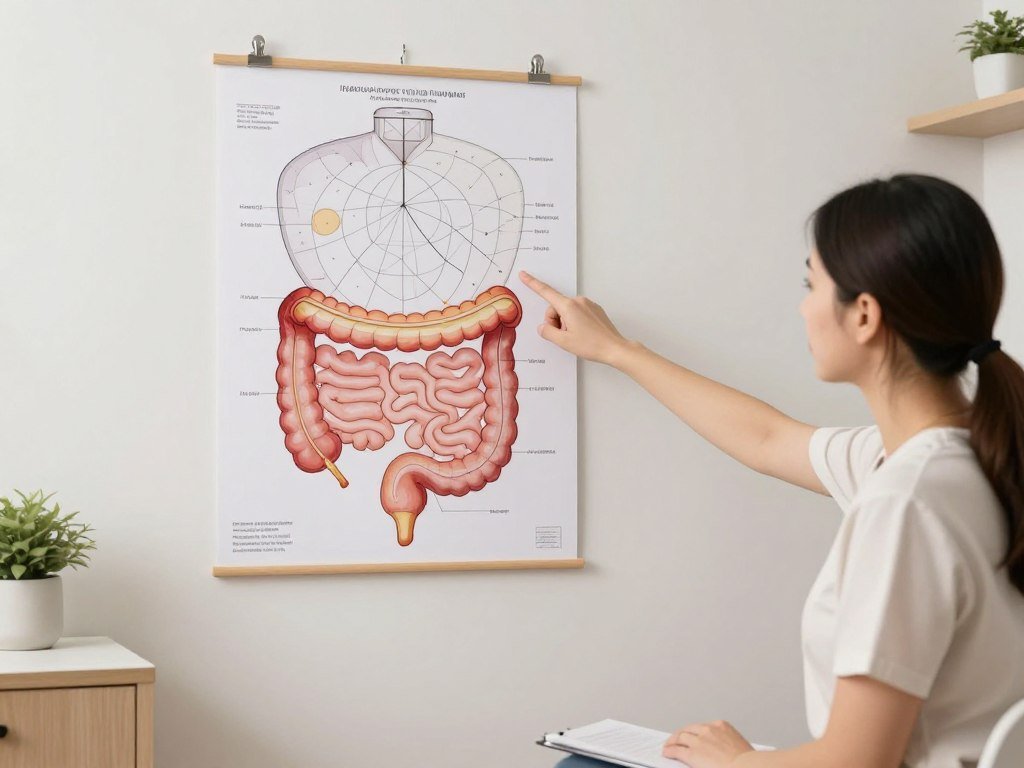
Chart Accuracy, Variations, and Educational Limitations
Iridology intestine charts represent traditional mapping systems developed through historical iridology practice. Different iridology schools and practitioners use varying zone division systems, resulting in charts that differ in their organ placement, zone numbering, and segment correspondence. Understanding these variations and limitations helps practitioners choose appropriate chart references and set realistic expectations.
Chart System Variations
The Bernard Jensen iridology chart system, developed in the United States, uses specific zone numbering and organ placements that differ from European iridology charts developed by practitioners like Josef Deck and Josef Angerer. Russian iridology schools use additional chart variations. These differences affect how intestinal zones appear on charts, where zone boundaries fall, and which organs occupy adjacent areas.
Some charts show the small intestine as a complete ring in zone 5, while others divide it into named segments (duodenum, jejunum, ileum) with specific clock positions. Large intestine zone boundaries also vary: some charts place the ascending colon strictly from 6-9 o’clock, while others extend it from 7-10 o’clock. These inconsistencies mean practitioners must specify which chart system they use when comparing findings or discussing cases.
Educational Purpose and Medical Limitations
Iridology charts serve educational and traditional observational purposes. They do not represent medically validated diagnostic tools. The concept that specific iris zones directly reflect specific body organs remains part of alternative health philosophy rather than evidence-based medicine. Charts guide traditional iridology observation but cannot diagnose disease, identify specific pathologies, or replace medical examination.
Practitioners must clearly communicate these limitations to clients. Chart-based observations represent traditional iridology assessment, educational reference, and complementary wellness observation—not medical diagnosis. Clients experiencing digestive symptoms require proper medical evaluation through established diagnostic procedures (colonoscopy, imaging, blood tests) rather than relying solely on iris observation and chart interpretation.
Professional ethics require practitioners to avoid making diagnostic claims based on chart readings. Phrases like “your chart shows colon disease” or “this iris pattern diagnoses intestinal problems” misrepresent chart capabilities and violate appropriate practice boundaries. Responsible usage frames observations as traditional iridology reference points that may suggest areas for further conventional medical investigation.
Common Misconceptions About Iridology Intestine Charts
Several misunderstandings surround iridology intestine charts. Clarifying these misconceptions helps practitioners use charts appropriately and set accurate expectations with clients and students.
Misconception 1: Charts Provide Medical Diagnosis
Charts do not diagnose medical conditions. They serve as reference maps for traditional iridology observation. Observing a dark spot in an intestine zone does not diagnose colon cancer, inflammatory bowel disease, or any specific pathology. Medical diagnosis requires proper clinical examination, laboratory tests, imaging studies, and licensed physician evaluation.
Misconception 2: All Iridology Charts Are Identical
Different chart systems exist with varying zone placements and organ correspondences. A practitioner trained with Bernard Jensen charts may see different zone boundaries than one trained with European charts. This variation means findings described using one chart system may not directly translate to another system’s terminology.
Misconception 3: Iris Changes Prove Intestinal Healing
While some iridology literature suggests iris patterns change with health improvements, this remains unverified by controlled medical research. Claiming that improved iris appearance in intestine zones proves colon healing overstates chart capabilities. Any health changes should be verified through appropriate medical testing rather than iris observation alone.
Misconception 4: Charts Work Without Proper Training
Simply obtaining a chart does not enable competent iridology assessment. Proper training in iris anatomy, pattern recognition, observation techniques, and ethical practice boundaries is essential. Charts are tools that require educated interpretation; they do not provide automatic assessment capabilities to untrained users.
Misconception 5: Expensive Charts Are More Accurate
Chart accuracy depends on the iridology system’s internal consistency rather than production cost. A well-designed printable PDF chart can be as functionally accurate as an expensive printed poster if both follow the same zone mapping system. Investment should prioritize quality equipment (professional cameras, reliable software) over premium chart materials.
MAIKONG Iridology Software: Chart Integration and Features
Professional iridology practice benefits from software that integrates charts with iris photography, client management, and report generation. MAIKONG has developed iridology software over 20 years, beginning with basic manual analysis tools in 2004 and evolving to AI-enhanced automatic analysis in the current 2024 version.
Software Development History
| Year | Version | Key Milestones |
| 2004 | Initial Version | First release: Basic manual iridology analysis software |
| 2005 | Version 3.0 | First language upgrade to Simplified Chinese and added health indicators analysis |
| 2008 | Version 3.04 | Added multi-language support: English, Spanish, etc.; improved image clarity analysis |
| 2010 | Version 3.10 | Introduced AI-based automatic iridology analysis and advanced 3D image analysis |
| 2014 | Version 3.15 | Released multi-user version and integrated cloud data management for easy backup |
| 2018 | Version 3.18 | First iridology software to support macOS, expanded compatibility for Apple users |
| 2020 | Version 3.20 | Continuous AI improvements, automatic product recommendations, multi-device sync |
| 2025 | Version 3.23 | Enhanced automatic analysis, integration of 3D textures, new multi-language features; supports Windows and macOS |
Core Software Features for Chart Integration
MAIKONG 2024 iridology software includes automatic iridology analysis with AI-based pattern recognition, client management database with personal information storage, multi-language support in 17 languages, 3D iridology imaging with enhanced detail visualization, backup and restore functionality for data protection, product recommendation features based on analysis findings, customizable report generation with chart overlays, visual learning tools including case studies and images, 3D negative film and texture analysis capabilities, and comparative analysis showing client progress over time.
The software overlays intestine charts onto captured iris photographs, allowing practitioners to identify zones precisely. Users select from multiple chart systems, adjust overlay transparency, highlight specific zones, add annotations to mark areas of interest, and generate reports that include chart sections with highlighted findings. This integration streamlines the assessment process and creates professional documentation.
Multi-Language Support for Global Use
MAIKONG software supports 17 languages, enabling practitioners worldwide to use the system in their native language. This includes interface localization, chart label translation, report generation in selected languages, and client communication materials in multiple languages. The language versatility makes MAIKONG software suitable for international distribution, multi-national clinics, training institutions with diverse students, and practitioners serving multilingual client populations.
| Language | Compatibility | Version | OEM Support | ODM Support |
| English | Windows XP/7/Vista/8/10/11, Mac OS | MAIKONG 2024 | YES | YES |
| Spanish | Windows XP/7/Vista/8/10/11, Mac OS | MAIKONG 2024 | YES | YES |
| French | Windows XP/7/Vista/8/10/11, Mac OS | MAIKONG 2024 | YES | YES |
| German | Windows XP/7/Vista/8/10/11, Mac OS | MAIKONG 2024 | YES | YES |
| Italian | Windows XP/7/Vista/8/10/11, Mac OS | MAIKONG 2024 | YES | YES |
| Portuguese | Windows XP/7/Vista/8/10/11, Mac OS | MAIKONG 2024 | YES | YES |
| Russian | Windows XP/7/Vista/8/10/11, Mac OS | MAIKONG 2024 | YES | YES |
| Simplified Chinese | Windows XP/7/Vista/8/10/11, Mac OS | MAIKONG 2024 | YES | YES |
| Traditional Chinese | Windows XP/7/Vista/8/10/11, Mac OS | MAIKONG 2024 | YES | YES |
| Japanese | Windows XP/7/Vista/8/10/11, Mac OS | MAIKONG 2024 | YES | YES |
| Korean | Windows XP/7/Vista/8/10/11, Mac OS | MAIKONG 2024 | YES | YES |
| Czech | Windows XP/7/Vista/8/10/11, Mac OS | MAIKONG 2024 | YES | YES |
| Polish | Windows XP/7/Vista/8/10/11, Mac OS | MAIKONG 2024 | YES | YES |
| Bulgarian | Windows XP/7/Vista/8/10/11, Mac OS | MAIKONG 2024 | YES | YES |
| Persian (Iranian) | Windows XP/7/Vista/8/10/11, Mac OS | MAIKONG 2024 | YES | YES |
| Malaysian | Windows XP/7/Vista/8/10/11, Mac OS | MAIKONG 2024 | YES | YES |
System Compatibility
MAIKONG software runs on Windows operating systems (Windows 2000, XP, Vista, 7, 8, 10, 11 in both 32-bit and 64-bit versions) and Mac OS systems (versions 10.14 Mojave through 15 Sequoia). This broad compatibility ensures practitioners can use the software regardless of their computer platform preference. Cross-platform support also facilitates data sharing between practitioners using different operating systems.
Explore MAIKONG Professional Iridology Equipment Solutions
MAIKONG offers complete iridology systems including high-resolution iriscope cameras, multi-language software with chart integration, and customizable solutions for clinics, training institutions, and distributors. Our equipment supports professional practice with 20 years of manufacturing experience and comprehensive technical support.
Frequently Asked Questions About Iridology Intestine Charts
What is an iridology intestine chart and how does it work?
An iridology intestine chart is a circular diagram that maps intestinal zones onto specific iris regions. The chart divides the iris into sectors, with the large intestine typically occupying the outermost ring (zone 6-7) and small intestine in adjacent inner zones (zone 5). Practitioners use these charts as reference guides to observe iris patterns, colors, and markings that traditional iridology associates with digestive system areas. The chart shows which clock positions correspond to specific colon segments like the ascending colon, transverse colon, descending colon, and sigmoid. This mapping helps practitioners identify zones during iris examination. Charts serve educational purposes and traditional iridology observation; they do not provide medical diagnosis.
Where can I find a printable iridology chart showing the large and small intestines?
Printable iridology intestine charts are available from several sources. Professional iridology equipment suppliers offer downloadable PDF charts as part of software packages or separately. Educational institutions that teach iridology often provide student resources including printable charts. Some practitioners publish charts on educational websites for reference purposes. When selecting a printable chart, verify the iridology system it follows (Bernard Jensen, European, etc.) to ensure consistency with your training or reference needs. High-resolution charts suitable for professional printing typically require contact with equipment manufacturers or educational organizations. MAIKONG provides professional chart resources to equipment purchasers and distribution partners. For printable chart options, contact professional iridology equipment suppliers directly.
How do I read intestine zones on an iridology chart?
Reading intestine zones requires understanding clock positions and zone numbers. Start by identifying zone 6, the outermost iris ring, which represents the large intestine in most chart systems. In the right eye, locate the cecum at approximately 7 o’clock, ascending colon from 7-9 o’clock, hepatic flexure near 11 o’clock, and transverse colon from 11-12 o’clock. In the left eye, find the transverse colon from 12-1 o’clock, splenic flexure near 1 o’clock, descending colon from 1-4 o’clock, and sigmoid from 4-6 o’clock. Zone 5 (just inside zone 6) typically represents the small intestine. When examining an iris, overlay the chart to match these positions, then observe iris characteristics within those zones. Professional chart reading training provides detailed instruction in pattern recognition and zone identification techniques.
Are left and right eye iridology intestine charts different?
Yes, left and right eye charts differ significantly because of bilateral body mapping. The right iris reflects organs on the right side of the body, while the left iris reflects left-side organs. This means the right eye chart shows the cecum, ascending colon, hepatic flexure, and right half of the transverse colon. The left eye chart shows the left half of the transverse colon, splenic flexure, descending colon, sigmoid colon, and rectum. To see the complete intestinal tract in iridology mapping, practitioners must examine both eyes using their respective charts. A complete assessment requires bilateral iris photographs captured with professional equipment. Understanding these differences is essential for accurate zone identification during iris examination.
Can I use iridology intestine charts with iriscope cameras and software?
Yes, modern iridology practice integrates charts with iriscope cameras and software. Professional iridology software includes chart overlay features that superimpose zone maps directly onto captured iris photographs. This integration allows precise zone identification and detailed pattern analysis. When using an iriscope camera, practitioners capture high-resolution iris images, then display them in software with chart overlays aligned to iris landmarks. Software features typically include adjustable chart transparency, multiple chart system options, zone highlighting tools, and annotation capabilities. This digital integration surpasses manual chart reading by providing zoom capability, layer toggling, and automatic alignment. MAIKONG equipment and software systems are designed specifically for this integrated workflow, supporting professional practice with 12MP cameras, multi-language software, and comprehensive chart overlay tools.
What are the limitations of iridology intestine charts for health assessment?
Iridology intestine charts have significant limitations. They represent traditional mapping systems rather than medically validated diagnostic tools. The concept that specific iris zones directly reflect specific body organs remains part of alternative health philosophy, not evidence-based medicine. Charts guide traditional observation but cannot diagnose disease, identify pathologies, or replace medical examination. Different iridology schools use varying zone divisions, creating inconsistencies between chart systems. Observations made using charts represent traditional iridology assessment and educational reference, not medical diagnosis. Clients experiencing digestive symptoms require proper medical evaluation through colonoscopy, imaging, and blood tests rather than relying on iris observation alone. Professional ethics require practitioners to avoid diagnostic claims based on chart readings. Responsible usage frames observations as traditional reference points that may suggest areas for conventional medical investigation, always emphasizing that chart-based assessment is for educational purposes only.
How do I choose the best iridology intestine chart for professional practice?
Choose charts based on your iridology training system, usage needs, and practice environment. If you trained with Bernard Jensen methodology, use Jensen-system charts for consistency. If you studied European iridology, select charts from that tradition. For teaching purposes, large wall charts (18×24 inches or larger) work well for group instruction. For clinical consultations, software-integrated charts provide the most versatility, allowing overlay on client iris photographs. For field work or mobile practice, laminated reference cards or tablet-based digital charts offer portability. Consider chart features: clear zone labels, accurate zone divisions, color coding for easy reference, and compatibility with your camera and software systems. Professional-grade charts should follow consistent zone mapping systems and include zone number keys. MAIKONG provides chart resources matched to our iridology software for seamless integration. Contact equipment suppliers for chart options that match your specific practice requirements.
MAIKONG: Professional Iridology Equipment Manufacturing for Global Distribution
MAIKONG specializes in manufacturing professional iridology equipment including iriscope cameras, iridology software, and educational chart resources. Based in Shenzhen, Guangdong, we serve practitioners, training institutions, clinics, distributors, and wholesalers worldwide with high-quality equipment designed for professional use.
Manufacturing Capabilities and Advantages
As a direct manufacturer, MAIKONG offers several advantages over equipment resellers. We provide hardware customization including model OEM, appearance mold customization, color customization, and equipment function customization. Our software customization includes logo customization, language customization, function customization, and the ability to add enterprise products, images, functions, and usage instructions directly into the software interface.
We maintain large inventory stocks in both China and the United States, enabling fast shipping and reliable supply for distribution partners. Our 20 years of experience in iridology camera production and development means our products follow ISO9000 quality management systems from design through production, QC, and final delivery. We hold CE and ISO9000 certifications, demonstrating commitment to quality standards.
Partnership Opportunities for Distributors and Wholesalers
MAIKONG has provided OEM/ODM services for over 1000 clients globally, including direct sales companies (Amway, Natura, Herbalife, Nuskin, USANA), natural therapy clinics, doctors, hospitals, iridology training schools, agents, and natural therapy practitioners. We help partners quickly enter markets, reduce costs, and achieve mutual success through competitive wholesale pricing, customization options, technical support, multi-language capabilities, and regional distribution opportunities.
Becoming a MAIKONG distribution partner provides access to professional-grade equipment at manufacturer pricing, software customization for your market, technical training and after-sales support, marketing materials including charts and educational resources, and partnership with an established brand serving the global iridology community.
Partner with MAIKONG as a Regional Distributor
Expand your health equipment business by becoming a MAIKONG authorized distributor. We offer wholesale pricing, OEM/ODM customization, multi-language software, comprehensive technical support, and partnership with a manufacturer serving over 1000 clients globally. Contact us to discuss regional distribution opportunities and wholesale pricing for iridology equipment and chart resources.
Visit our website: https://myiridology.us/ | Learn more about MAIKONG
Conclusion: Using Iridology Intestine Charts Effectively
Iridology intestine charts serve as valuable educational references for practitioners, students, and wellness professionals working in traditional iridology observation. Understanding zone divisions, left and right eye differences, chart types, and integration with professional equipment enhances chart usage effectiveness. Charts guide iris examination and client communication when used appropriately within their educational purpose and limitations.
Professional practice combines accurate charts with quality equipment and ethical boundaries. Practitioners select charts matching their training system, use software integration for precise zone identification, communicate findings responsibly to clients, and maintain clear distinctions between traditional observation and medical diagnosis. This approach respects both iridology traditions and professional healthcare boundaries.
Whether you teach iridology, practice in wellness clinics, or supply health equipment to professionals, quality chart resources and reliable equipment support your work. MAIKONG provides professional solutions including high-resolution cameras, multi-language software with chart integration, customization options for distributors, and comprehensive technical support. Our 20 years of manufacturing experience and global partnership network make us a trusted resource for iridology equipment needs.
For professional iridology intestine charts, equipment, software, or distribution partnership opportunities, contact MAIKONG directly. We support practitioners and distributors worldwide with quality products, technical expertise, and partnership commitment.