Iridology Chart Printable: Your Complete Professional Resource Guide
When I first started working with iris analysis tools, finding a reliable iridology chart printable became one of my most important tasks. A quality chart serves as the foundation for understanding how traditional iridology practitioners map the iris and its various zones.
The search for the right printable iridology chart can feel overwhelming. You need accuracy, clarity, and professional-grade detail.
This guide walks you through everything about iridology chart printable resources. I will explain chart types, reading methods, quality standards, and practical applications for professional practice and education.
Important Educational Note: All information in this guide relates to traditional iridology observation and educational reference. Iridology charts and iris analysis are used in traditional practice settings for educational purposes only. They do not diagnose, treat, or cure medical conditions and should never replace professional medical diagnosis or treatment from licensed healthcare providers.
What Is an Iridology Chart and Why Does It Matter?
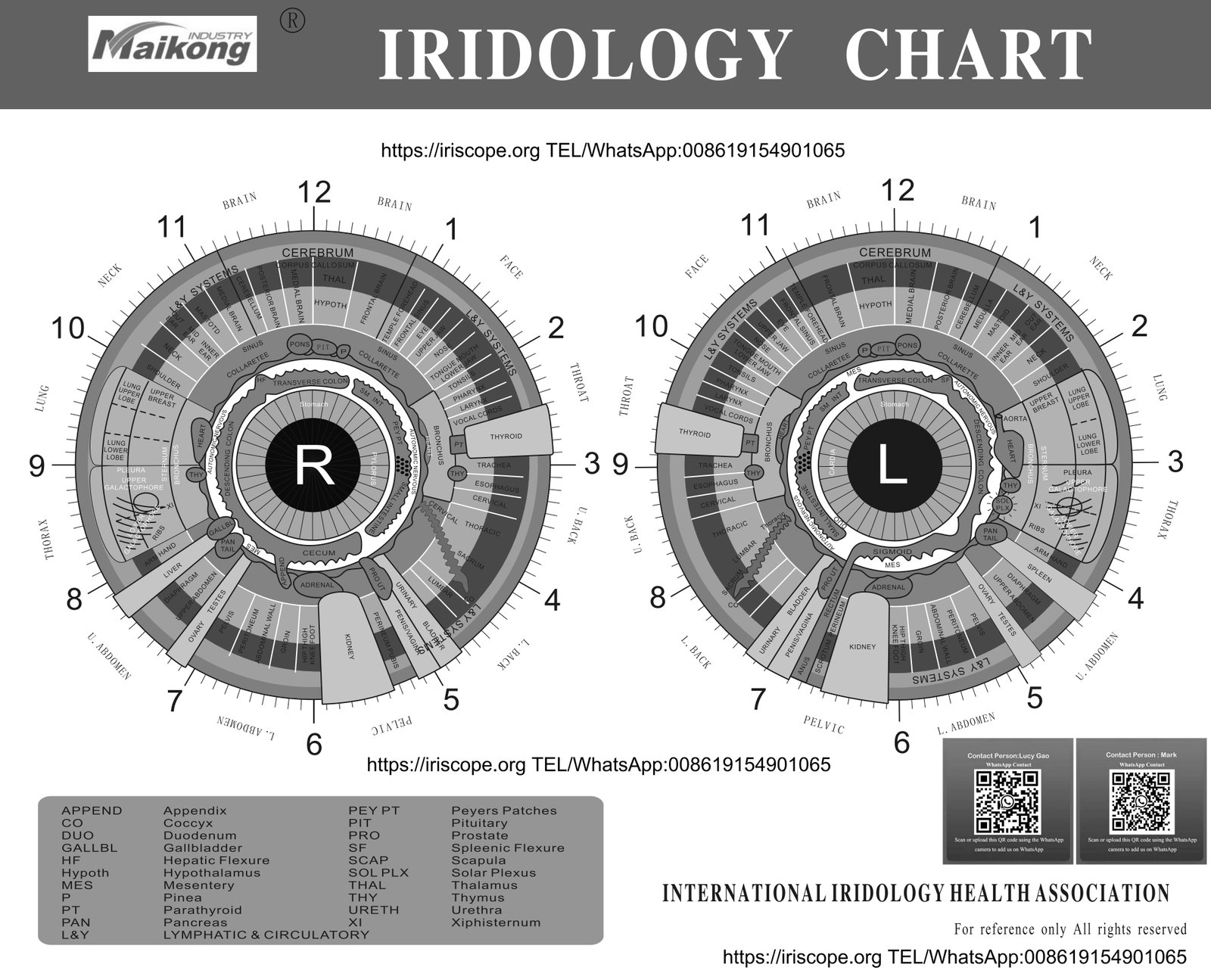
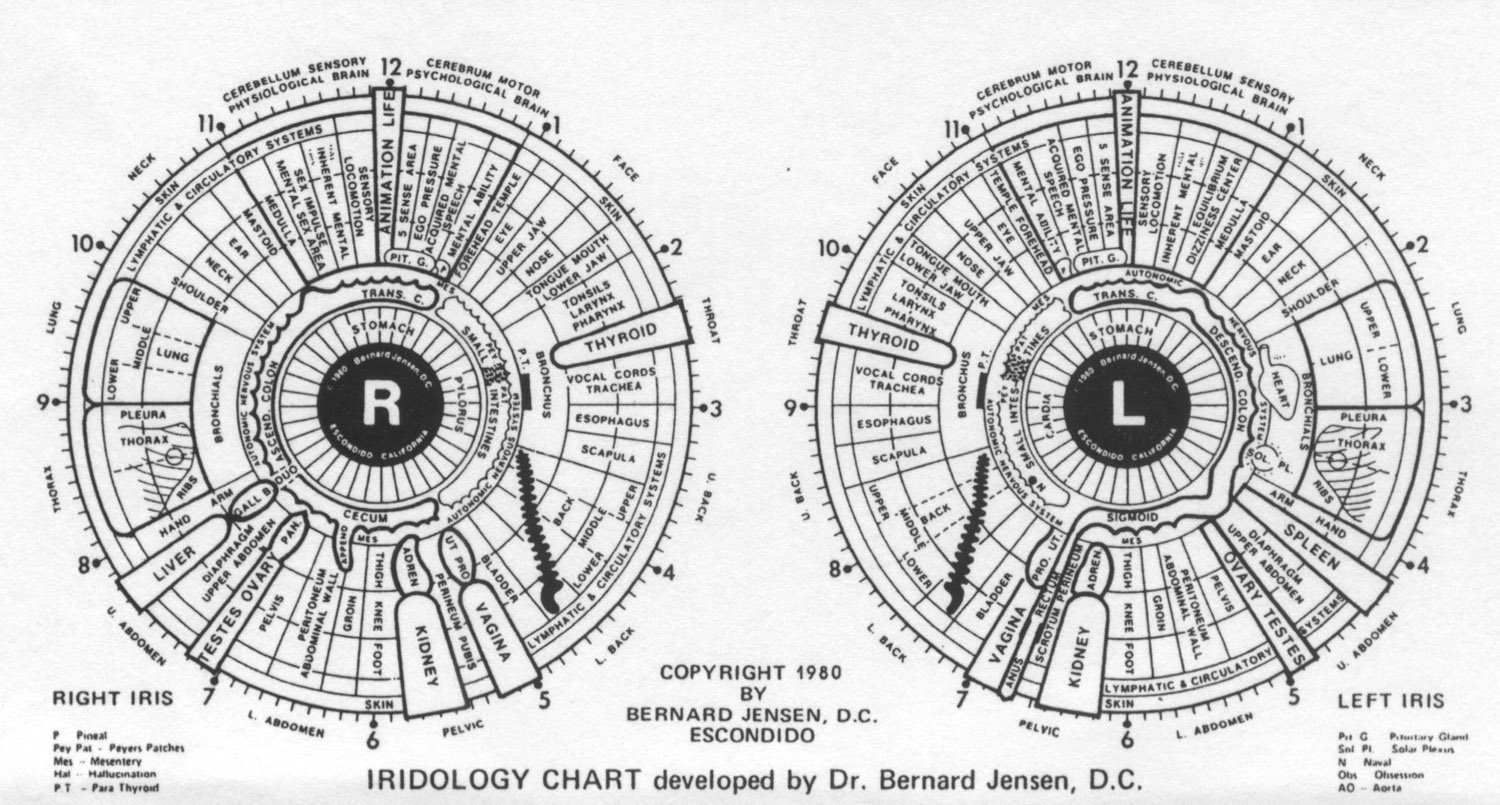
An iridology chart printable is a visual map that shows how traditional iridology practitioners correlate different iris zones with various body areas and systems. The chart divides the iris into sections, much like a clock face or pie chart.
Each zone on the chart corresponds to specific organs, systems, or body regions according to traditional iridology theory. Practitioners use these charts as reference guides during iris observation sessions.
The Core Purpose of Printable Iridology Charts
These charts serve multiple essential functions in traditional practice and education. They provide a standardized reference system for iris zone identification.
Students learning iris analysis rely on these charts to understand zone locations. Practitioners use them during client consultations to explain observations.
The iridology eye chart printable format makes these reference tools accessible for various settings. You can display them in consultation rooms, use them in teaching environments, or include them in educational materials.
Historical Development of Iris Mapping
Traditional iridology charts evolved over many decades. Early practitioners developed different mapping systems based on their observations and theories.
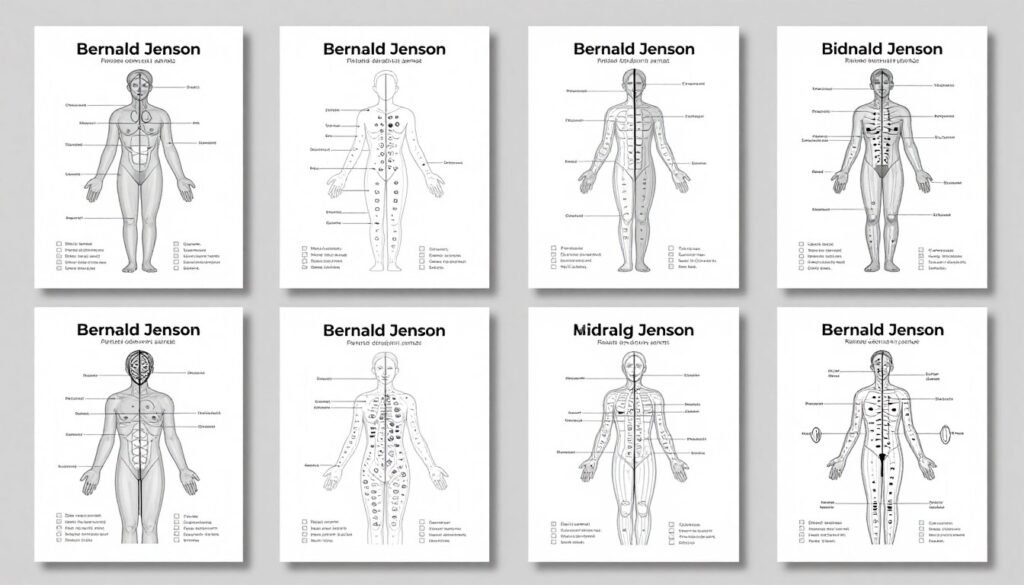
The most widely recognized chart format comes from Dr. Bernard Jensen. His systematic approach to iris zone mapping became a standard reference in traditional iridology education.
Today’s iridology chart designs build on these historical foundations. Modern versions often incorporate clearer graphics, better labeling, and improved printability for professional use.
Types of Iridology Chart Printable Resources You Should Know
Different chart types serve different purposes in traditional iridology practice and education. Understanding these variations helps you select the right resources for your specific needs.
Left Eye vs. Right Eye Chart Differences
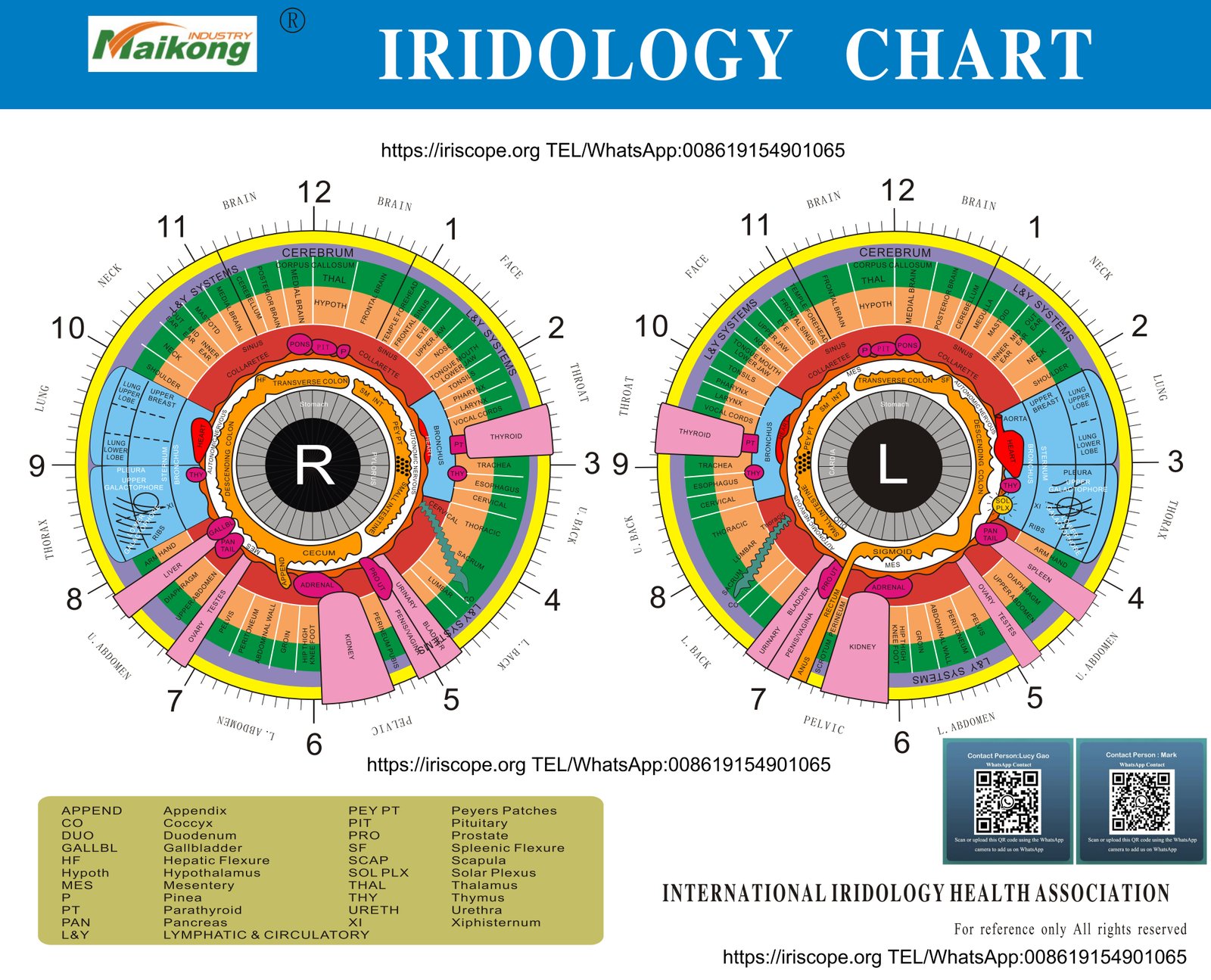
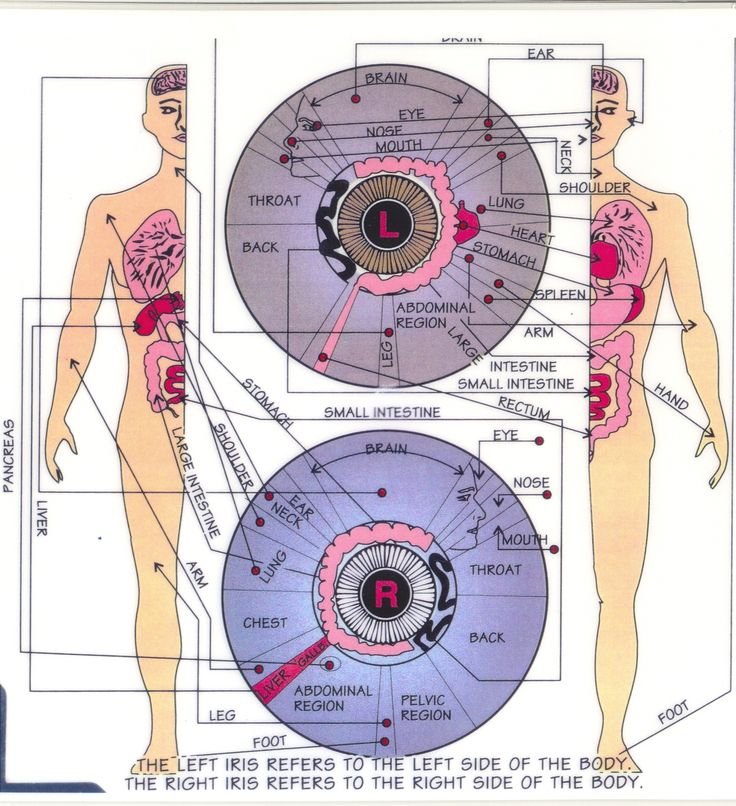
Traditional iridology theory maintains that the left eye iridology chart correlates with the left side of the body, while the iridology chart right eye maps to the right side of the body.
This left-right distinction affects how practitioners interpret iris patterns during observation. Each eye’s chart shows mirror-image organ placement according to traditional iris mapping theory.
The left iris traditionally corresponds to organs predominantly on the left side. The right iris reflects right-side body structures. Some organs appear on both charts due to their bilateral nature or central position.
Bernard Jensen Chart Format
The Bernard Jensen iridology chart represents one of the most recognized formats in traditional practice. Dr. Jensen developed this systematic mapping approach through decades of iris observation work.
His chart design divides the iris into specific zones radiating from the pupil outward. Each zone correlates with particular body systems, organs, or tissues according to his theoretical framework.
Many modern printable iridology chart versions derive from Jensen’s original mapping. His work established a common reference language for traditional iridology education worldwide.
Simplified Educational Charts
Some charts prioritize simplicity for initial learning. These versions show basic zone divisions without overwhelming detail.
Beginners often start with simplified charts to learn fundamental zone locations. The reduced complexity makes initial study more manageable.
As students advance, they typically transition to more detailed professional charts. The step-by-step approach supports effective learning progression.
Detailed Professional Reference Charts
Professional-grade charts include extensive detail for experienced practitioners. These versions show additional zone subdivisions, specific organ placements, and finer anatomical correlations.
Advanced practitioners prefer detailed charts during consultation work. The comprehensive information supports more nuanced iris observation according to traditional methods.
High-quality professional charts often include color coding, numbered zones, and clear anatomical labels. These features enhance usability during actual practice sessions.
Understanding Key Components of an Iridology Chart Printable
Quality charts share certain essential components that make them functional for traditional practice and education. Knowing these elements helps you evaluate chart quality and usability.
Zone Division Systems
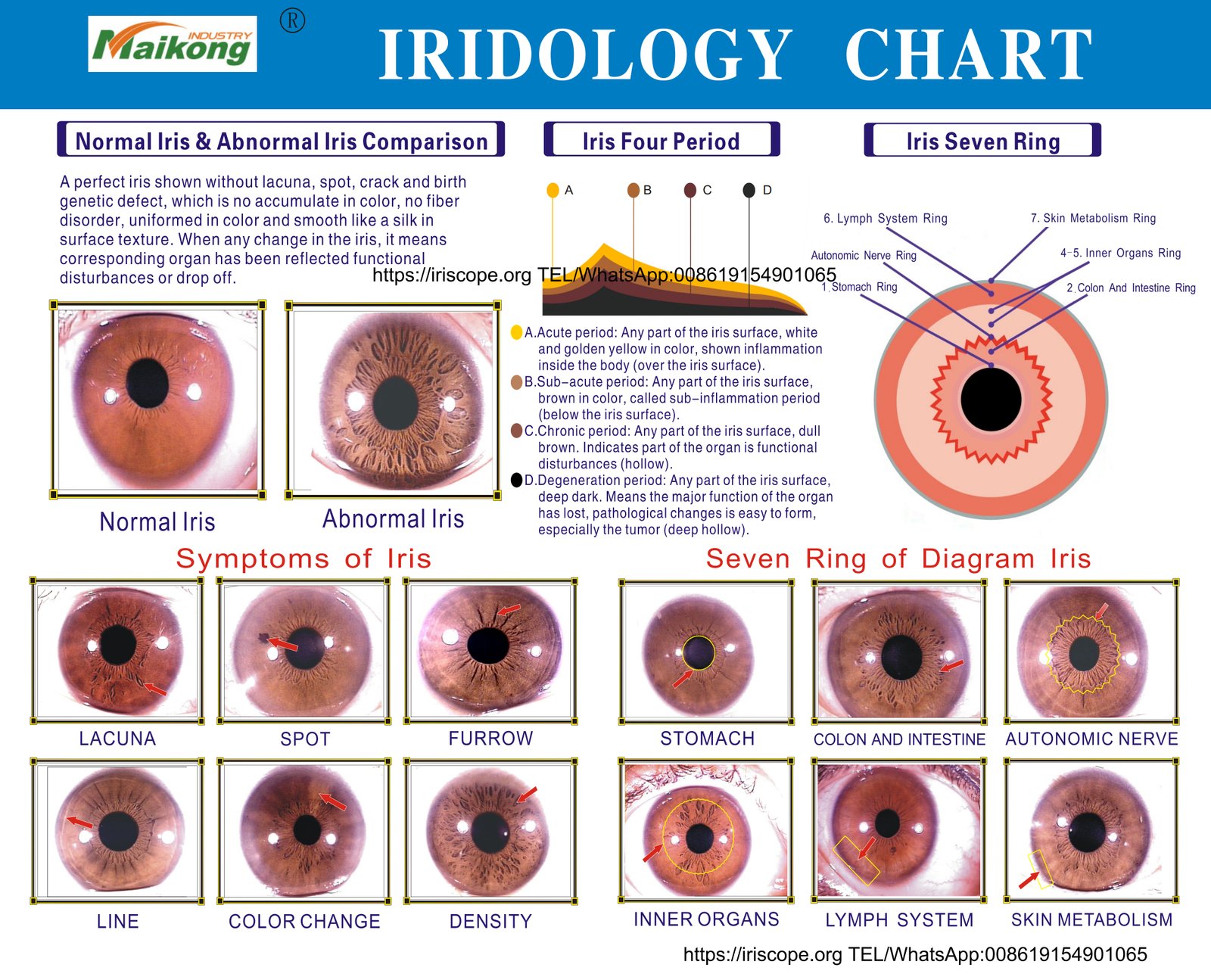
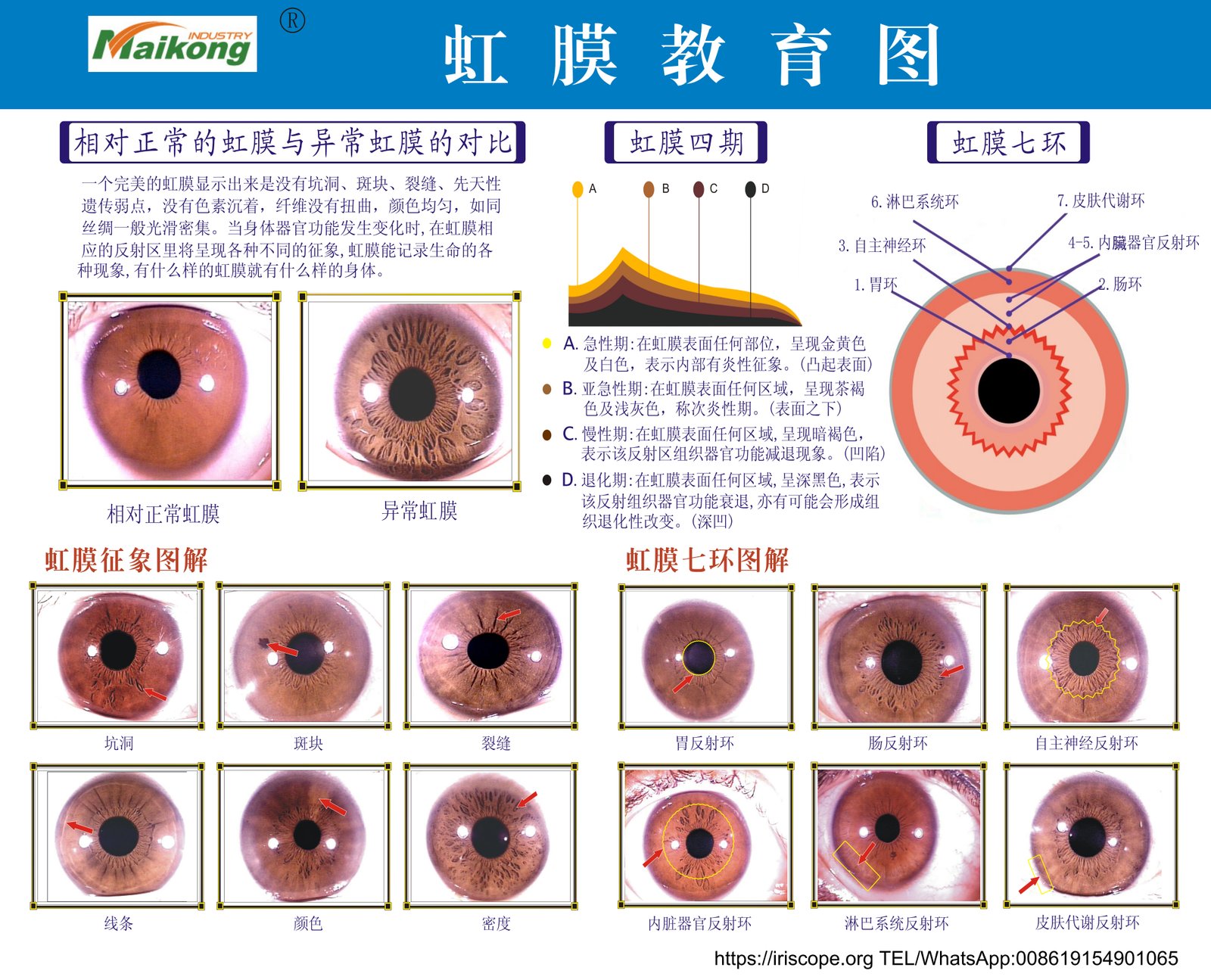
Most charts divide the iris into concentric rings moving outward from the pupil. Traditional iridology theory assigns different significance to each ring.
The pupillary zone sits closest to the pupil. The ciliary zone extends from the pupillary zone to the outer iris edge. Some charts add additional ring subdivisions for finer detail.
Radial divisions split the iris like clock positions or pie slices. These segments help practitioners locate specific organ zones during iris observation sessions.
Organ and System Mapping
Each chart section correlates with specific body areas according to traditional iridology mapping. The chart shows which iris zones traditionally correspond to which organs or systems.
Central zones often relate to digestive system organs in traditional mapping. Peripheral zones typically correlate with skin, lymphatic system, and structural body elements.
Different body systems appear in specific iris regions. The nervous system, circulatory patterns, and other systems each have designated chart areas according to traditional theory.
Directional Markers and Reference Points
Professional charts include directional indicators to maintain proper orientation. These markers ensure users position the chart correctly relative to actual iris images.
Common reference points include the nasal side (toward the nose) and temporal side (toward the ear). These anatomical markers help practitioners match chart zones to actual iris anatomy.
Some charts include clock positions for precise zone location. The 12 o’clock position typically aligns with the top of the iris when viewing the face directly.
Color and Texture Indicators
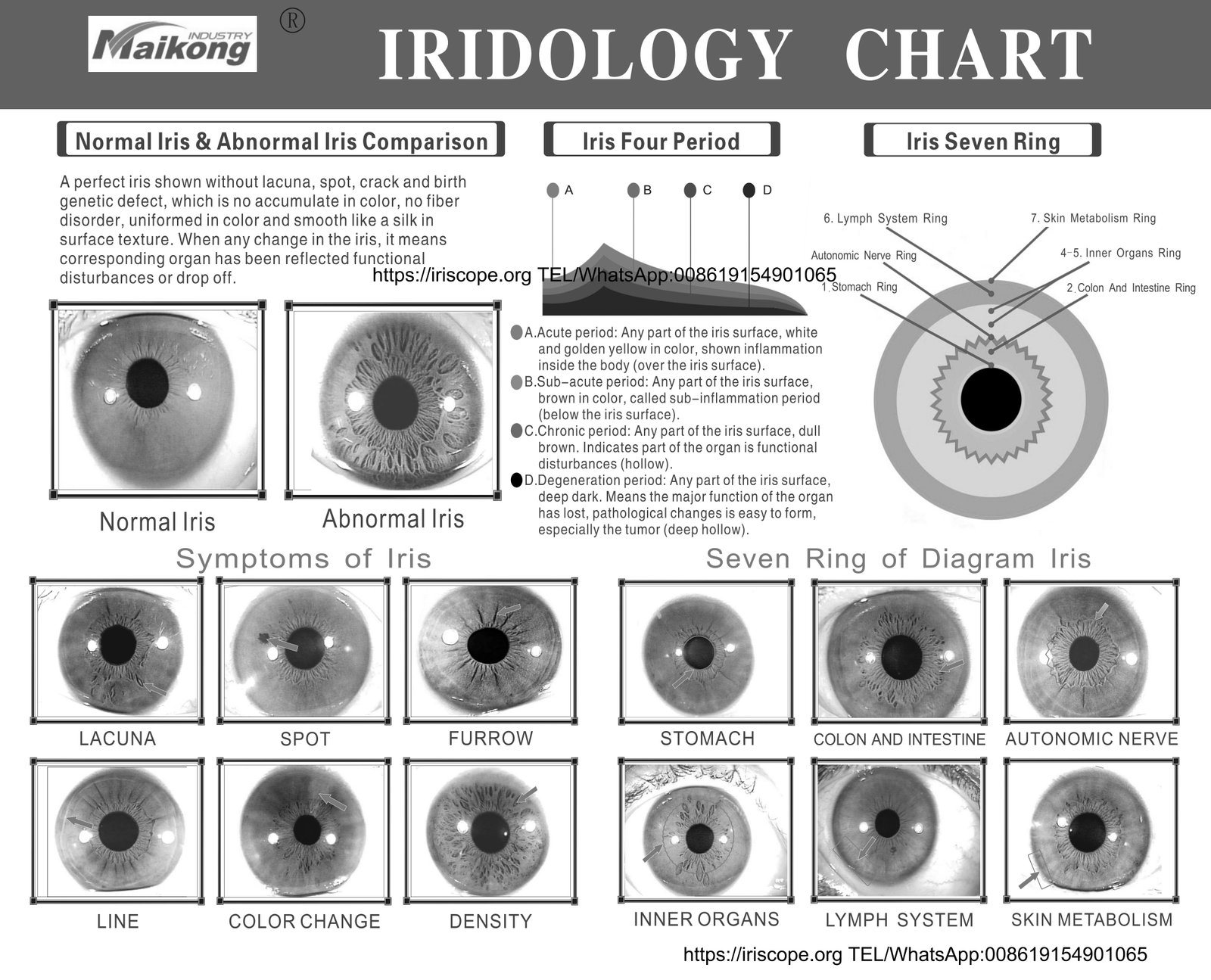
Advanced charts sometimes include information about iris colors and patterns. Traditional iridology considers these factors when observing the iris.
Different iris base colors may appear on comprehensive charts. Brown, blue, green, and mixed iris types each have specific characteristics in traditional interpretation.
Texture patterns like radial furrows, crypts, or pigmentation also appear on detailed charts. These features help practitioners identify various iris structures during observation work.
How to Read an Iridology Chart Printable: Step-by-Step Process
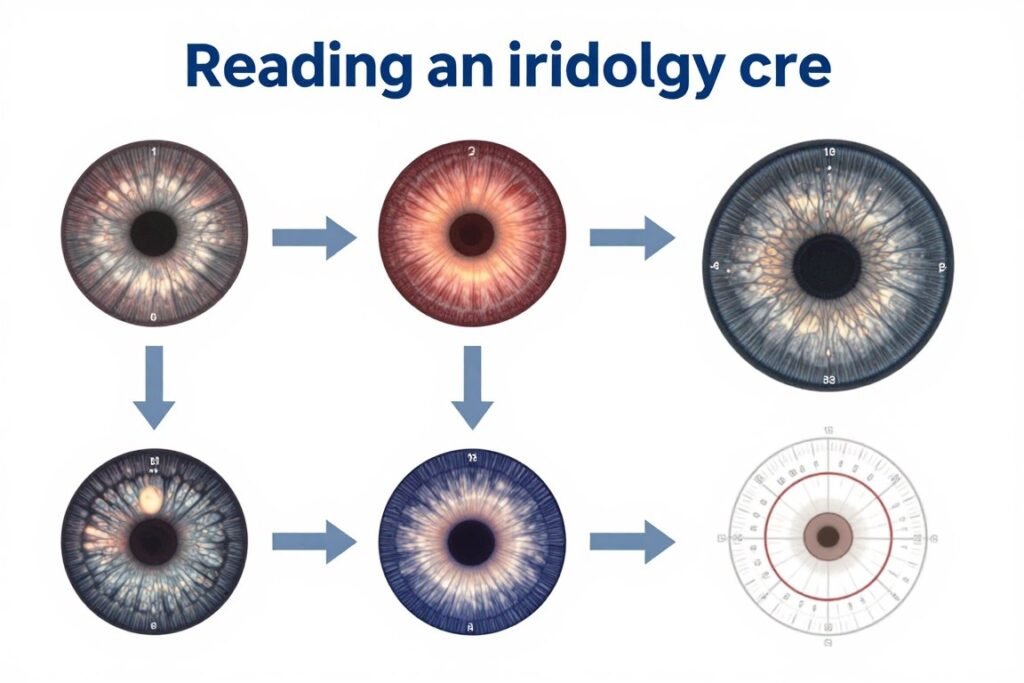

Reading an iridology eye chart printable requires understanding the basic orientation and zone identification process. This skill develops with practice and proper guidance.
For comprehensive reading instruction, see our detailed guide on how to read iridology chart materials effectively.
Step 1: Orient the Chart Correctly
Start by positioning your chart to match the eye you are observing. The left eye chart corresponds to the left iris. The right eye chart matches the right iris.
Align the chart’s directional markers with actual iris anatomy. The nasal side of the chart should face toward where the nose would be.
This proper orientation ensures zone locations on the chart accurately match the physical iris zones you observe.
Step 2: Identify the Pupillary Zone
Locate the innermost ring on your chart surrounding the pupil area. This pupillary zone represents the first major division in traditional iris mapping.
Traditional theory associates this central zone with digestive system organs. The stomach, intestines, and related structures typically appear in this area.
Understanding this central zone provides a foundation for navigating outward through additional iris regions.
Step 3: Navigate the Ciliary Zone
The ciliary zone extends from the pupillary zone boundary to the outer iris edge. This larger area contains most organ and system correlations in traditional charts.
Different body systems occupy specific radial segments within this zone. You will find correlations for organs like heart, lungs, liver, kidneys, and many others.
Learning these segment positions takes time and regular reference to quality charts during study and practice.
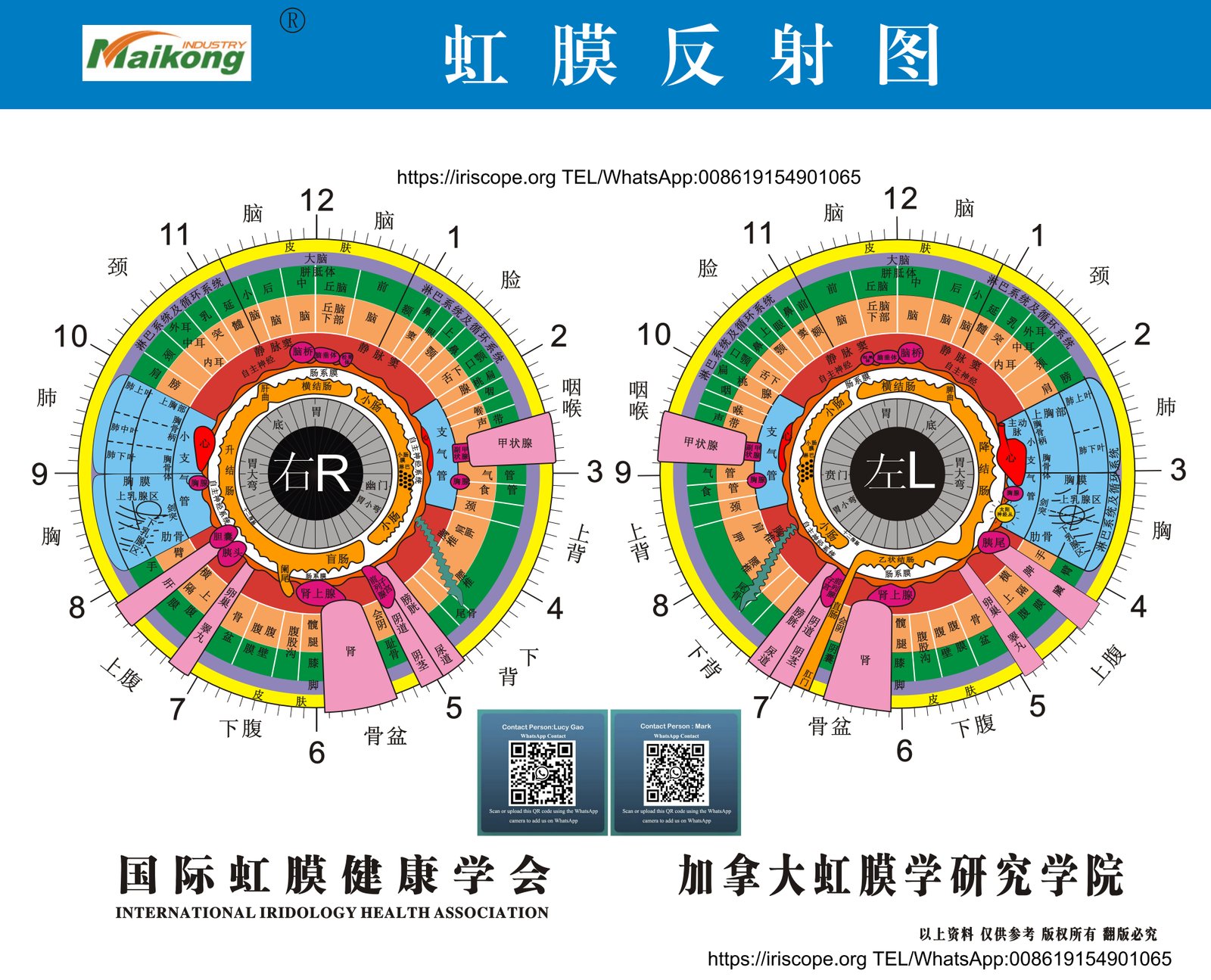
Step 4: Use Clock Positions for Precision
Many charts include clock-position references for precise zone location. The 12 o’clock position sits at the top when viewing the face directly.
Specific organs appear at designated clock positions according to traditional mapping. For example, the thyroid zone might appear near the 2-3 o’clock position in the right iris.
Clock references help practitioners communicate exact iris zone locations clearly during discussions or documentation.
Step 5: Consider Left-Right Distinctions
Remember that body organs predominantly on the left side appear in the left iris chart. Right-side organs appear in the right iris chart.
Some organs like the heart appear primarily on one side’s chart despite being centrally located. Traditional mapping assigns these based on anatomical position theories.
Bilateral organs or systems may appear on both eye charts. The kidneys, for instance, have correlations in both left and right iris maps.
Professional Applications for Iridology Chart Printable Resources
Understanding how professionals actually use these charts helps you maximize their value in various practice and educational settings.
Client Education and Communication
Practitioners use charts as visual aids during client sessions. The chart helps explain what zones the practitioner observes and their traditional correlations.
Visual reference makes complex iris mapping concepts more accessible. Clients can see which iris areas correspond to which body regions according to traditional theory.
This educational approach helps clients understand the observation process. It demystifies traditional iridology methods through clear visual demonstration.

Student Training and Certification Programs
Educational institutions use printable iridology chart materials extensively in curriculum development. Students need reliable reference materials for learning zone locations and correlations.
Chart study forms a foundational component of traditional iridology training. Students memorize zone positions, organ correlations, and anatomical relationships through repeated chart reference.
Training programs often provide students with multiple chart versions. This exposure to different formats supports comprehensive understanding of traditional mapping systems.
Integration with Iridology Cameras and Software
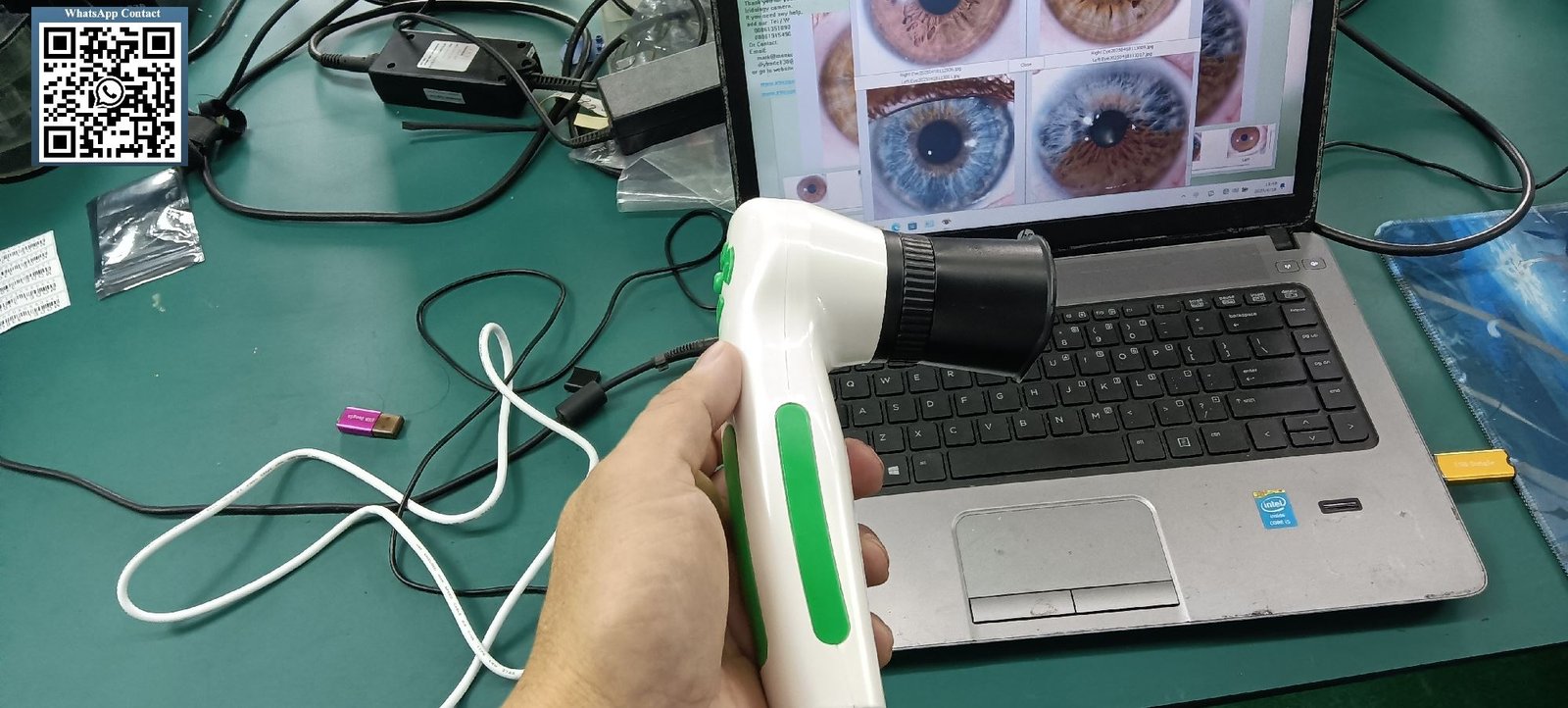
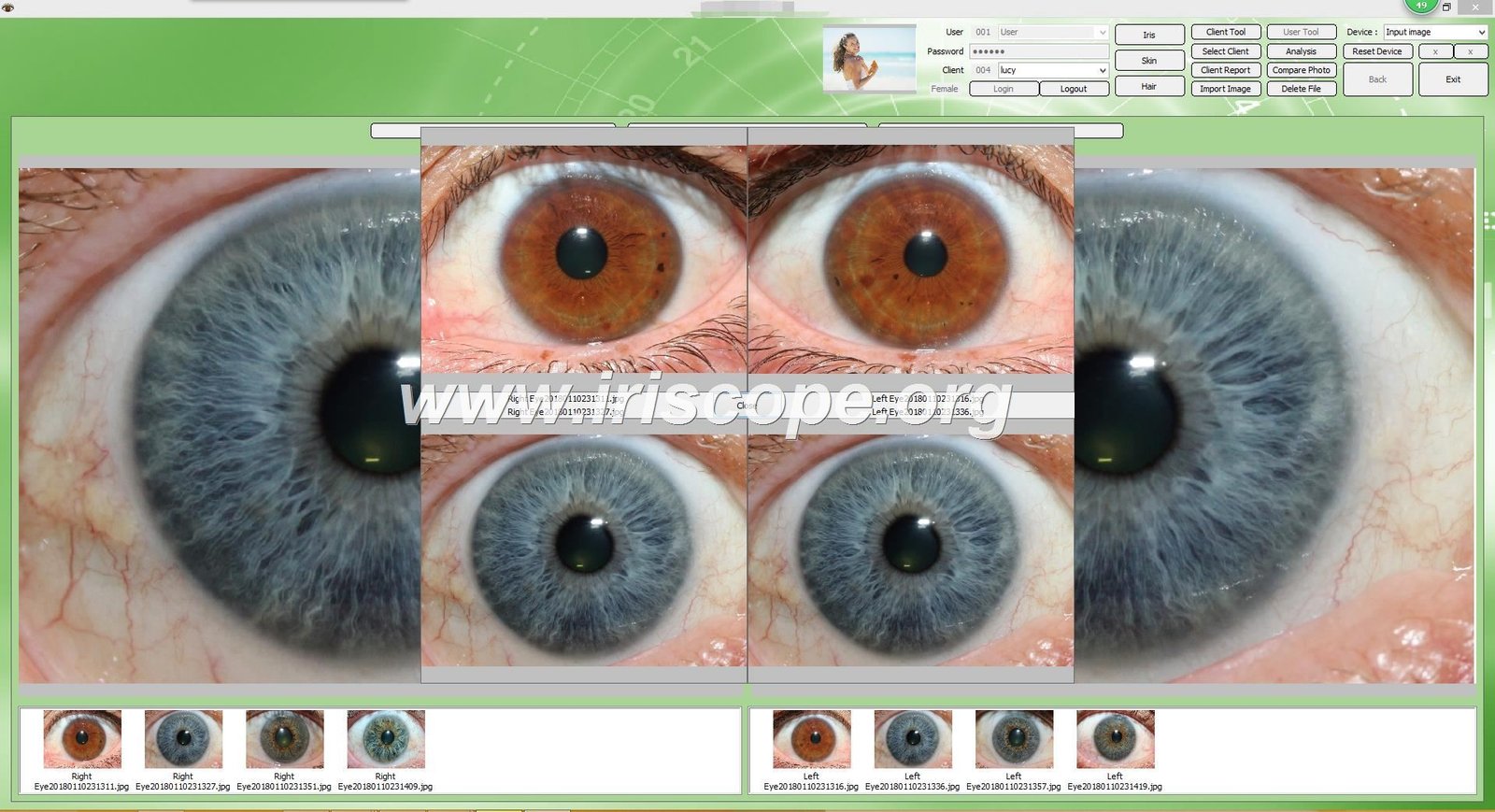
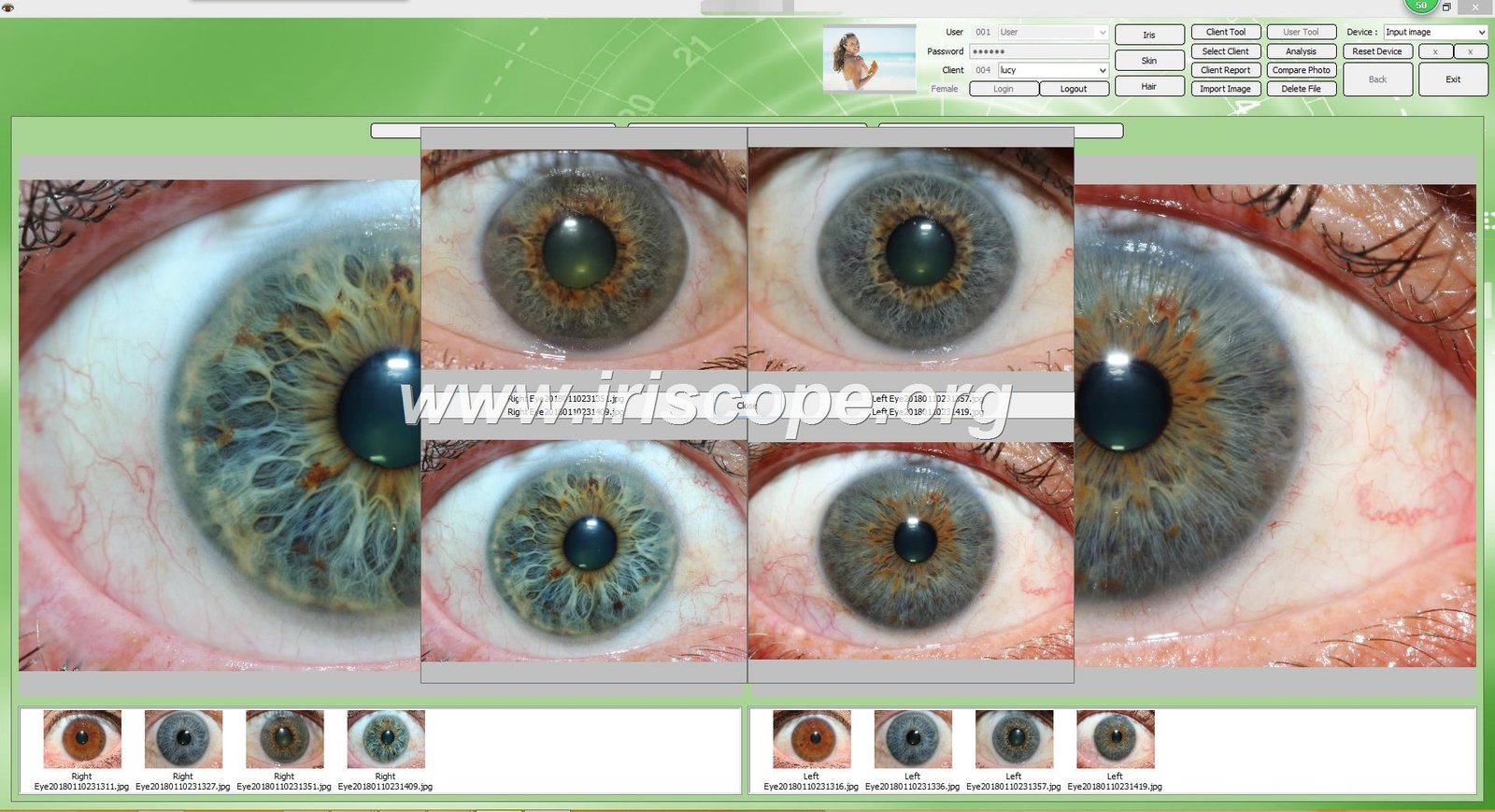
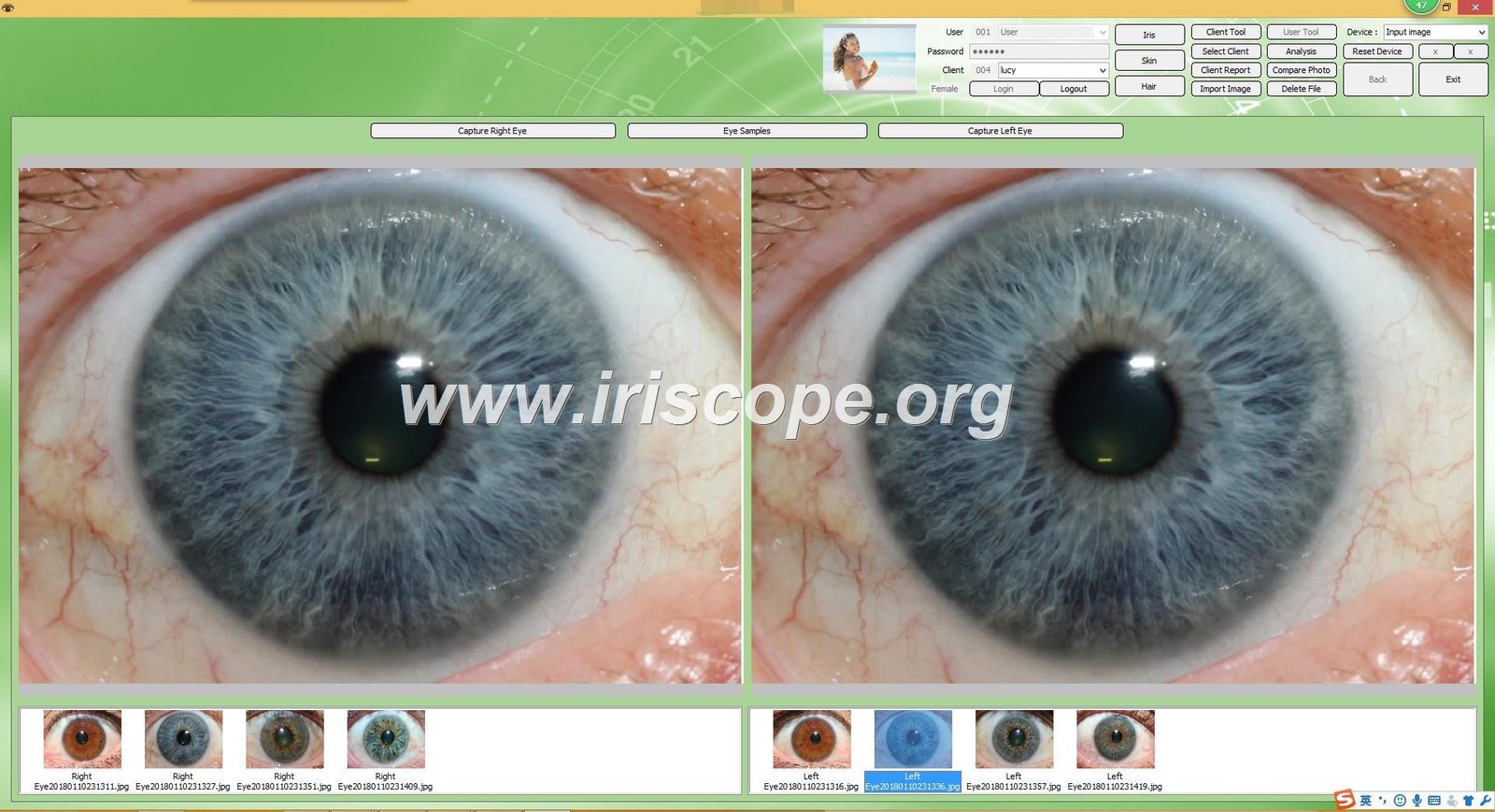
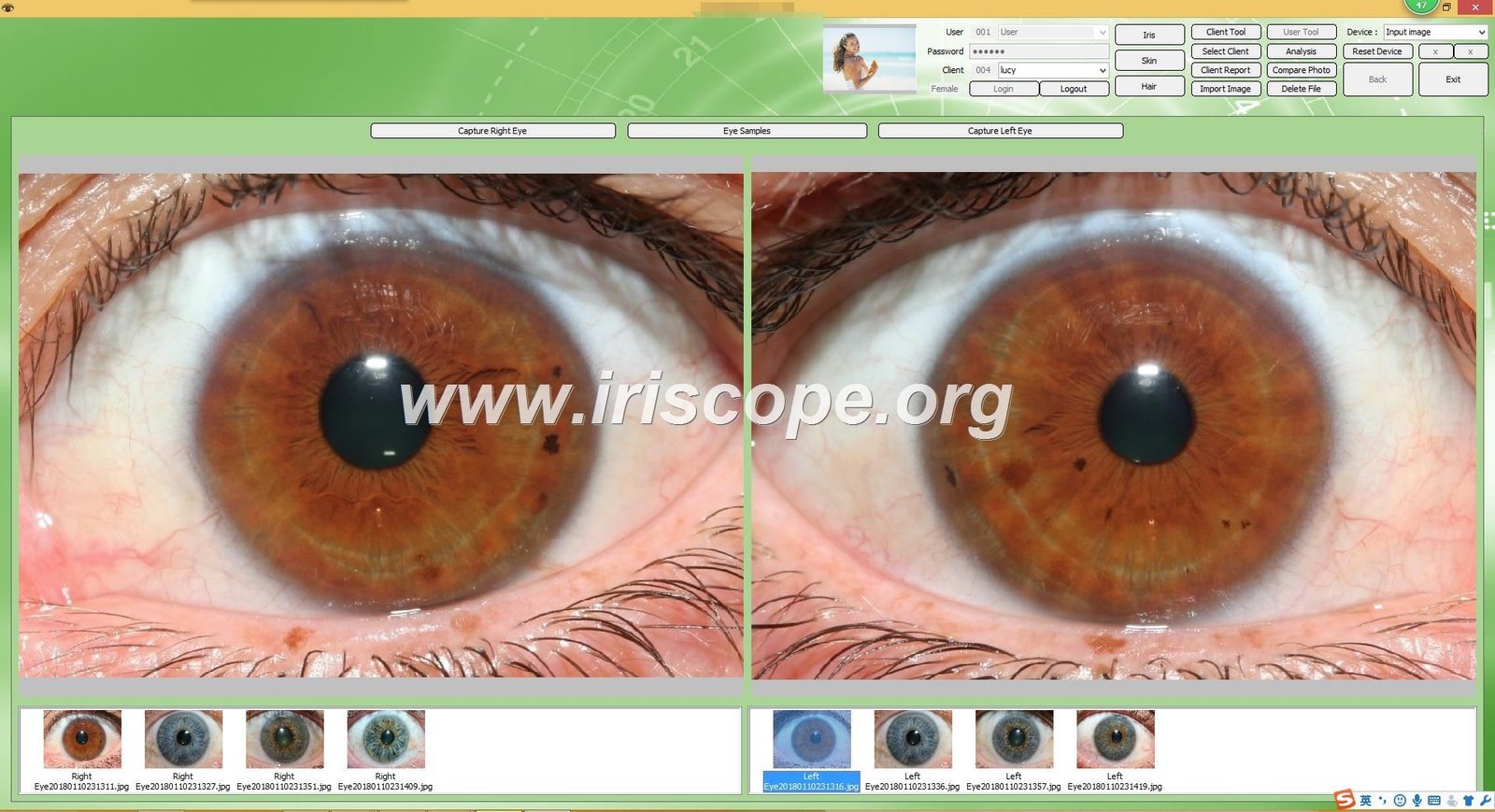
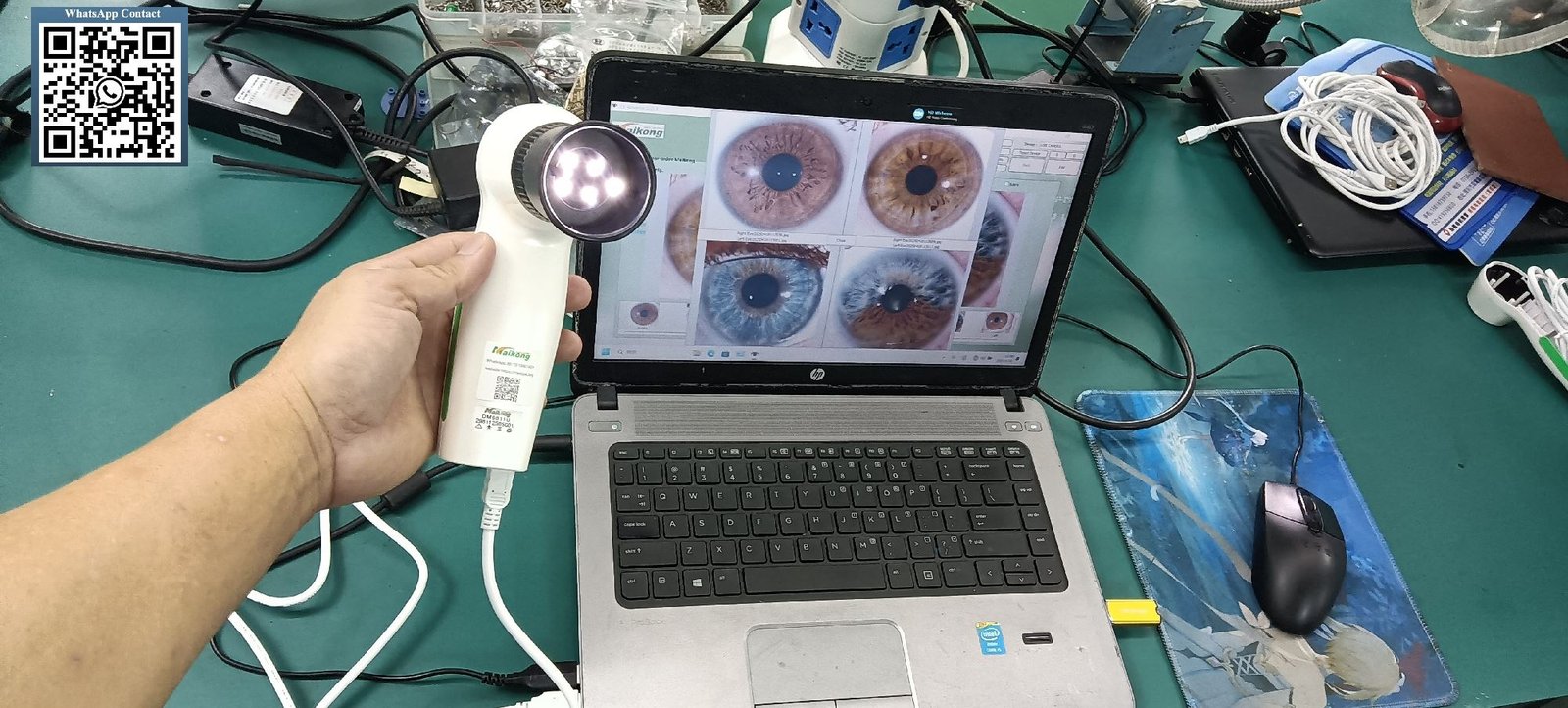
Modern practice increasingly combines traditional charts with digital tools. Iridology camera systems capture high-resolution iris images for detailed observation.
Professional iridology software often includes digital chart overlays. These features allow practitioners to align chart zones with actual iris photographs for precise zone identification.
This digital integration enhances traditional practice methods. Practitioners maintain the reference value of established charts while leveraging modern imaging capabilities.
For example, MAIKONG iridology software systems support chart overlay features across multiple languages and operating systems. This integration helps practitioners worldwide combine traditional mapping knowledge with advanced imaging technology.
Consultation Room Display
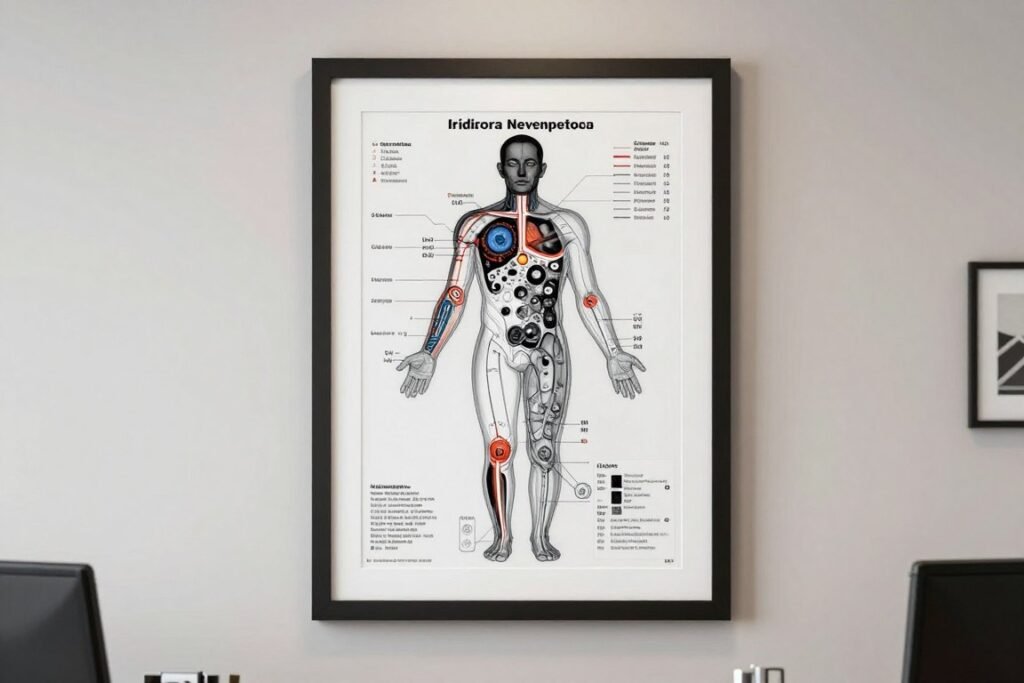
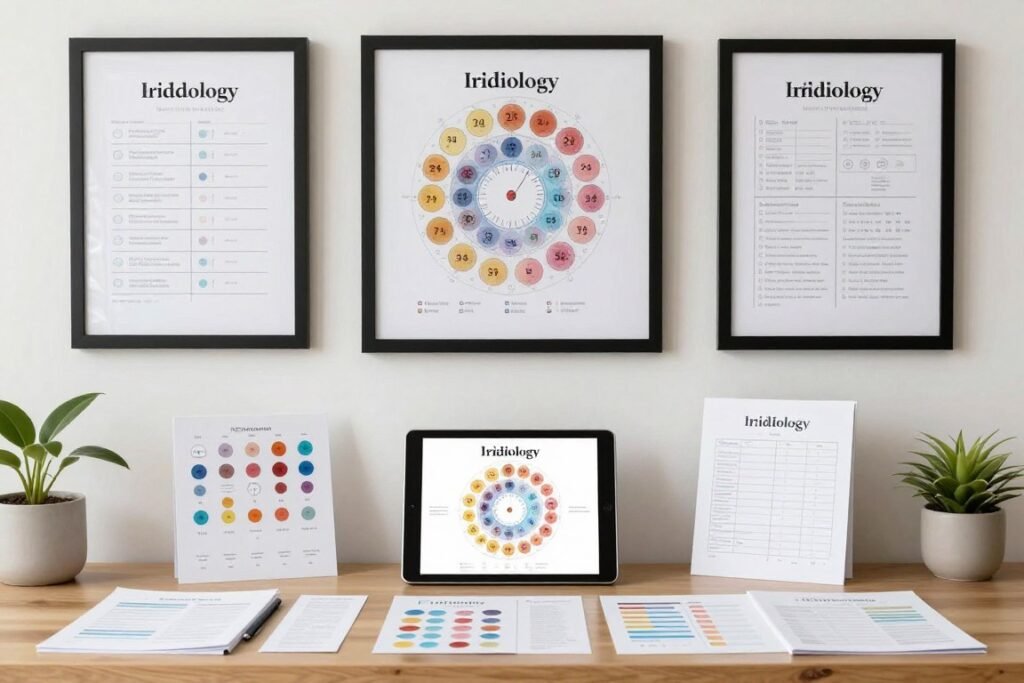
Many practitioners display laminated or framed charts in consultation spaces. Wall-mounted charts serve as constant references during observation sessions.
High-quality printed charts add professional credibility to practice environments. They demonstrate the practitioner’s commitment to systematic, reference-based observation methods.
Visible charts also educate clients about traditional iridology theory. They provide conversation starters and support client understanding throughout sessions.
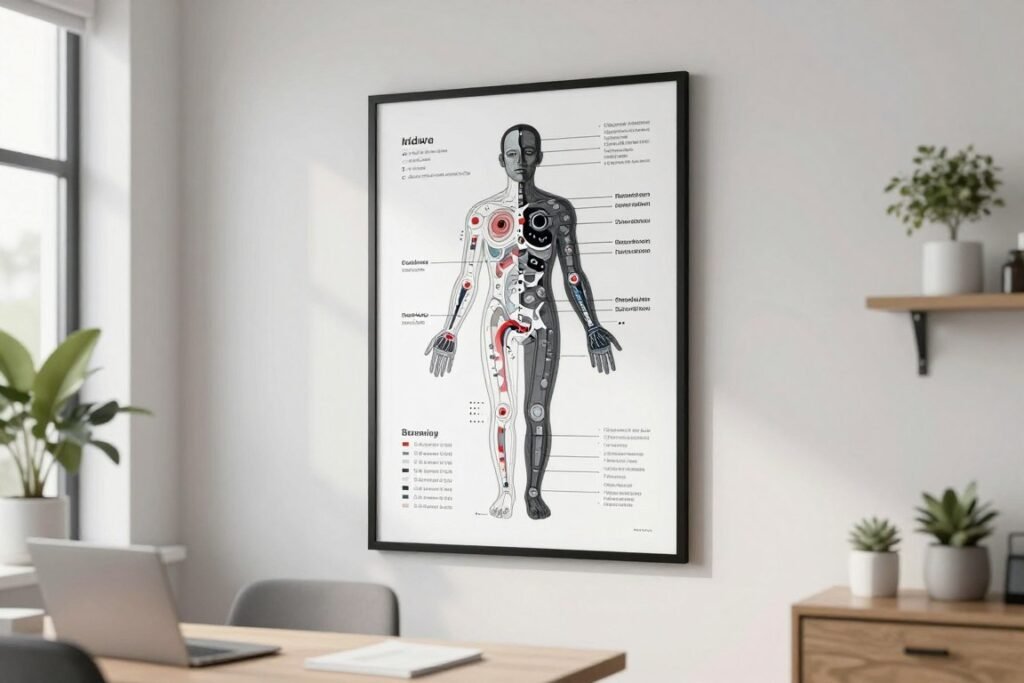
Chart Quality Standards: What Makes a Professional Printable
Not all chart printables offer the same quality or usability. Understanding quality indicators helps you select the best resources for professional needs.
Resolution and Print Clarity
Professional charts require high resolution for clear printing. Low-resolution images produce blurry text and indistinct zone boundaries when printed at usable sizes.
Look for charts with at least 300 DPI (dots per inch) resolution. This standard ensures crisp text and clear graphics when printing at standard sizes like 8.5×11 inches or larger.
Vector-based chart formats offer scalability without quality loss. You can print these at various sizes while maintaining perfect clarity.
Accurate Anatomical Labeling
Quality charts use correct anatomical terminology. Proper medical and anatomical language ensures professional credibility and educational accuracy.
Labels should be clearly readable at normal viewing distances. Font sizes must balance detail with legibility for practical use.
Consistent labeling conventions across left and right eye charts prevent confusion. Professional charts maintain uniform terminology and formatting throughout.
Color Accuracy and Contrast
Effective charts use appropriate color schemes for clear zone differentiation. Color coding helps users quickly identify different body systems or organ groups.
High contrast between text and background ensures readability. Professional charts avoid color combinations that strain the eyes or reduce clarity.
Some practitioners prefer grayscale charts for simpler printing. Quality charts remain functional and clear even without color.
Format Compatibility
Professional charts come in widely compatible file formats. PDF format ensures consistent appearance across different devices and printing systems.
Some charts offer editable formats for customization. This flexibility allows practitioners to add their logo or adjust elements for specific educational purposes.
Print-ready formats include proper margins and bleed areas. These technical considerations ensure successful printing without cutoff or sizing issues.
Digital Charts vs. Printed Charts: Finding the Right Balance
Modern practice offers both digital and physical chart options. Each format has distinct advantages for different situations and preferences.
Benefits of Physical Printed Charts
Printed charts provide immediate reference without technology dependence. You can consult them anytime without powering on devices or launching software.
Physical charts work well for wall display and consultation room ambiance. They create professional visual presence and support client education through visible reference.
Many practitioners appreciate the tactile nature of printed materials. You can annotate, highlight, or add temporary notes during study sessions.
Advantages of Digital Chart Resources
Digital charts offer storage convenience and instant accessibility. You can maintain extensive chart libraries without physical storage space requirements.
Software integration enables overlay features with iris photographs. This capability supports precise zone identification during digital analysis workflows.
Digital formats allow easy sharing and distribution for educational purposes. You can send charts to students or colleagues electronically without reproduction costs.
Hybrid Approach for Comprehensive Practice
Many professionals use both formats strategically. Printed charts serve consultation rooms and teaching spaces. Digital versions support software-based analysis and remote work.
This combined approach maximizes the benefits of each format. You gain flexibility, redundancy, and multiple access methods for reference materials.
Quality equipment manufacturers like MAIKONG provide both format options with their professional systems. Their software includes digital charts while supporting printable reference materials for comprehensive practice support.
Finding and Evaluating Iridology Chart Printable Resources
Locating quality chart resources requires knowing where to look and how to assess what you find. Various sources offer different quality levels and formats.
Educational Institution Resources
Accredited iridology training programs typically provide charts as part of their curriculum materials. These institutional charts often meet professional standards and reflect current teaching approaches.
Schools may offer chart downloads to enrolled students. Some institutions sell professional chart sets separately for practitioners and researchers.
Institutional charts often come with educational context explaining their theoretical foundations and proper usage methods.
Professional Equipment Suppliers
Companies specializing in iris analysis equipment frequently provide chart resources. These charts often integrate with their hardware and software products.
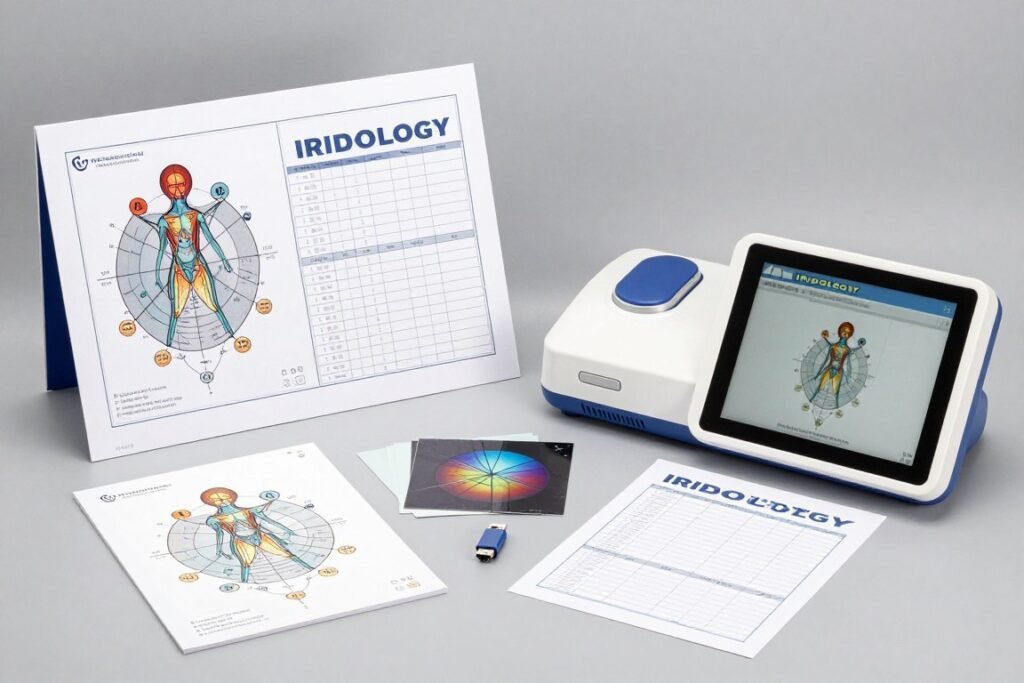
Equipment packages may include printed charts as standard accessories. Digital chart files might come bundled with software purchases.
Professional suppliers understand practitioner needs. Their charts typically meet quality standards necessary for actual practice use rather than casual reference.
Online Educational Platforms
Various websites offer downloadable chart files for educational purposes. Quality varies significantly among these sources.
Free resources may serve basic educational needs but often lack professional-grade quality. Resolution, accuracy, and formatting may not meet practice standards.
Premium chart resources from reputable sources typically offer better quality. Investment in professional charts pays dividends through improved usability and credibility.
Evaluating Source Credibility
Consider the source’s expertise and reputation in traditional iridology education. Established institutions and experienced practitioners produce more reliable resources.
Check whether charts reference recognized systems like Bernard Jensen’s mapping. Consistency with established frameworks indicates educational validity.
Look for clear documentation about chart development, sources, and theoretical basis. Professional resources include this contextual information.
Common Misconceptions About Iridology Charts and Practice
Several misunderstandings about iris charts and their use persist. Clarifying these points supports accurate understanding of traditional iridology methods and limitations.
Charts Are Not Diagnostic Tools
Perhaps the most critical point: iridology chart printable resources are educational references for traditional observation practice only. They do not diagnose medical conditions or diseases.
Traditional iridology represents an observational practice based on historical theories about iris-body correlations. It does not replace medical diagnosis from licensed healthcare providers.
Practitioners use charts to guide observations and discussions within traditional practice frameworks. The charts map theoretical correlations, not medical diagnostic criteria.
Medical Compliance Notice: Iridology charts and iris observation practices are for traditional educational reference only. They are not medical diagnostic tools. Never use iris charts or observations to diagnose, treat, or make medical decisions about health conditions. Always consult licensed healthcare providers for medical diagnosis and treatment.
Different Charts Reflect Different Theories
No single “correct” iridology chart exists. Different practitioners and schools developed various mapping systems based on their observations and theoretical frameworks.
The Bernard Jensen chart represents one well-known system. Other practitioners created alternative mappings. These variations reflect different approaches within traditional practice.
Understanding this theoretical diversity helps users recognize that charts represent interpretive frameworks rather than anatomical facts.
Charts Require Professional Training for Proper Use
Simply possessing a chart does not qualify someone to practice iris observation. Professional training teaches proper observation techniques, ethical practice boundaries, and appropriate application contexts.
Effective chart use requires understanding traditional iridology theory, iris anatomy, observation methods, and professional ethics. These skills develop through comprehensive education programs.
Self-study with charts supports learning but does not replace formal training for professional practice. Responsible chart use acknowledges these educational requirements.
Chart Quality Affects Practice Credibility
Using poor-quality, inaccurate, or outdated charts undermines professional credibility. Practitioners represent themselves through the resources they use and display.
Investment in professional-grade charts demonstrates commitment to quality practice standards. It signals respect for traditional methods and client education.
Quality charts support effective communication with clients and colleagues. They reflect the practitioner’s professional standards and educational foundation.
Customization and Personalization Options for Professional Charts
Some practitioners seek customized chart versions for specific educational or branding purposes. Understanding available customization options helps you create tailored resources.
Language Localization
Multilingual practitioners need charts in various languages. Professional equipment and software providers often offer multi-language chart versions.
Translated charts maintain accurate anatomical terminology while adapting to different linguistic contexts. This localization supports international practice and diverse client populations.
For instance, MAIKONG systems support chart materials in 17+ languages including English, Spanish, French, German, Portuguese, Russian, Chinese, Japanese, Korean, and many others. This extensive language support helps practitioners serve diverse markets worldwide.
Logo and Branding Integration
Professional practitioners may want to add their practice logo or branding to chart materials. Customized charts reinforce professional identity during client education.
Some chart providers offer customization services for this purpose. Others provide editable formats allowing practitioners to add branding elements themselves.
Branded charts work particularly well for educational handouts, client take-home materials, and teaching resources. They combine educational value with professional marketing.

Format and Size Variations
Different settings require different chart sizes. Consultation room wall displays need large formats. Handouts work better in smaller sizes.
Professional chart providers offer multiple size options. Common formats include standard letter size (8.5×11″), poster sizes (18×24″ or larger), and pocket reference cards.
Digital formats enable flexible printing at custom sizes. Vector-based charts scale to any dimension without quality loss.
Educational Content Addition
Some practitioners create enhanced charts with additional educational content. Notes, explanations, or supplementary information can support student learning.
Customized educational versions might include interpretation guidelines, observation tips, or theoretical background information alongside standard chart zones.
These enhanced resources serve training programs, study groups, or self-directed learning paths. They combine reference mapping with instructional support.
Proper Storage and Maintenance of Physical Charts
Physical printed charts require appropriate care to maintain quality and longevity. Proper handling extends their useful life and preserves their professional appearance.
Protective Lamination
Laminating charts protects against moisture, stains, and physical wear. Laminated charts withstand repeated handling and consultation room use.
Professional lamination creates durable reference materials suitable for frequent use. The protective layer allows easy cleaning and maintains chart clarity over time.
Consider lamination thickness based on usage frequency. Heavier lamination serves high-traffic consultation settings. Lighter lamination works for occasional reference materials.
Framing for Display
Framed charts provide professional consultation room presentation. Quality frames protect charts while creating an organized, credible practice environment.
UV-protective glass prevents fading from sunlight exposure. This protection preserves chart colors and readability over years of display.
Professional framing also prevents chart damage from handling, humidity, or environmental factors. The investment protects valuable reference resources.
Organized Storage Systems
Multiple charts require organized storage solutions. File folders, portfolios, or dedicated chart cases protect materials when not displayed.
Flat storage prevents creasing or folding damage. Vertical filing systems keep charts accessible while protecting them from physical stress.
Label storage containers clearly to facilitate quick chart retrieval. Organized systems save time and prevent damage from searching through stacked materials.
Digital Backup Copies
Maintain digital copies of all printed charts as backups. Digital files enable reprinting if physical copies become damaged or lost.
Store digital files in multiple locations for security. Cloud storage, external drives, and local backups protect against data loss.
Regular backup updates ensure you preserve the latest chart versions and customizations. This practice protects your investment in professional resources.
Integrating Charts into Your Professional Workflow
Effective chart use requires thoughtful integration into your overall practice or educational workflow. Strategic implementation maximizes chart value and efficiency.
Pre-Session Preparation
Review relevant chart zones before client sessions. This preparation refreshes your memory of specific organ correlations and zone locations.
Prepare any handout charts or reference materials clients might need. Having materials ready supports smooth session flow and professional presentation.
Ensure displayed charts are clean, well-lit, and properly positioned. Physical environment preparation demonstrates professional attention to detail.
During-Session Reference
Use charts as visual aids during client education. Point to specific zones while explaining traditional correlations and observations.
Encourage clients to ask questions about chart zones. Interactive discussion supports understanding and engagement with the observation process.
Balance chart reference with direct iris observation. Charts support understanding but should not replace actual iris examination during sessions.

Documentation and Record-Keeping
Reference chart zones in session notes for clarity. Document which zones you observed and discussed with clients.
Some practitioners create annotated chart copies for client records. These marked charts show specific areas of focus during particular sessions.
Consistent chart-based documentation supports professional record organization and long-term client tracking within traditional practice frameworks.
Continuing Education Integration
Use charts during ongoing professional development. Regular chart review maintains zone knowledge and supports skill refinement.
Study advanced charts or alternative mapping systems to broaden your theoretical understanding. Exposure to different approaches enhances professional depth.
Participate in study groups or training sessions focused on chart interpretation. Collaborative learning strengthens chart comprehension and application skills.
Teaching Iris Analysis Using Printable Charts
Educators use charts extensively when teaching traditional iridology methods. Effective instructional approaches maximize student learning and chart utility.
Progressive Learning Approach
Start students with simplified charts showing basic zone divisions. Initial exposure should not overwhelm learners with excessive detail.
Gradually introduce more detailed charts as understanding develops. Progressive complexity supports effective knowledge building without confusion.
This stepped approach mirrors how professionals develop practical expertise. Students build foundational knowledge before tackling advanced zone correlations.
Interactive Learning Activities
Create zone identification exercises using blank chart templates. Students fill in organ names and locations to reinforce learning through active practice.
Use quiz formats asking students to locate specific organs on charts. Testing strengthens memory and reveals areas needing additional study.
Group activities comparing different chart systems promote critical thinking. Students analyze variations and understand theoretical diversity within traditional practice.

Combining Charts with Case Studies
Use actual iris photographs alongside charts during instruction. Students practice correlating real iris features with chart zones.
Case-based learning demonstrates practical chart application. Students see how professionals use charts during actual observation sessions.
This applied approach bridges theoretical chart knowledge and practical observation skills. It prepares students for real-world professional scenarios.
Assessment and Competency Verification
Evaluate student chart knowledge through practical assessments. Ask students to locate zones, explain correlations, and demonstrate proper chart use.
Competency verification ensures students master fundamental chart concepts before advancing. This quality control supports educational standards and professional preparation.
Regular assessment identifies learning gaps requiring additional instruction. Targeted feedback helps students strengthen specific knowledge areas.
Future Developments in Iridology Chart Technology
Chart technology continues evolving alongside digital innovations in iris imaging and analysis. Understanding emerging trends helps practitioners prepare for future developments.
Enhanced Digital Integration
Future software will likely offer more sophisticated chart overlay features. Advanced alignment algorithms could automatically match chart zones to iris photographs with greater precision.
Augmented reality applications might overlay charts directly onto live iris views. This technology could support real-time zone identification during observation sessions.
Cloud-based chart libraries could provide instant access to multiple chart systems. Practitioners might switch between different mapping approaches seamlessly during digital analysis.
Interactive 3D Chart Models
Three-dimensional chart representations could provide new visualization options. Rotating 3D models might help students understand zone relationships more intuitively.
Interactive features could allow users to explore chart zones in depth. Clicking zones might reveal detailed information about traditional correlations and theoretical foundations.
These innovations would enhance educational value while maintaining connection to traditional mapping systems and established theoretical frameworks.
Artificial Intelligence Support
AI algorithms might assist with zone identification in complex iris patterns. Computer vision could help practitioners locate specific chart zones on actual iris images.
Machine learning could support educational applications through adaptive learning systems. Software might customize chart study programs based on individual student progress.
However, these technologies would serve as tools supporting traditional practice methods rather than replacing professional judgment and training.
Standardization Efforts
The field may see increased efforts toward chart standardization. Professional organizations might work to establish consensus mapping systems for educational consistency.
Standardized charts could improve communication among practitioners worldwide. Common reference systems support professional collaboration and knowledge sharing.
Any standardization would need to respect the theoretical diversity within traditional iridology while promoting practical consistency for educational purposes.
Frequently Asked Questions About Iridology Chart Printable Resources
What is the best format for printing an iridology chart for professional use?
The best format for professional printing is high-resolution PDF at 300 DPI or higher. This resolution ensures crisp text and clear zone boundaries when printed at standard sizes (8.5×11″ or larger). Vector-based formats like SVG also work well because they scale to any size without losing quality. For consultation room displays, print on heavy cardstock or photo paper, then laminate or frame for durability. Standard letter size works for desk reference, while 18×24″ or larger serves wall display purposes effectively.
Are there differences between left eye and right eye iridology chart printable versions?
Yes, traditional iridology theory maintains that the left eye chart corresponds to the left side of the body, while the right eye chart maps the right side. This creates mirror-image organ placement on the two charts. Organs predominantly on the body’s left side appear in the left iris chart, while right-side organs appear in the right iris chart. Some bilateral organs appear on both charts. Understanding these left-right distinctions is essential for proper chart use according to traditional iridology mapping principles.
Can I use free online iridology charts for professional practice?
Free online charts vary significantly in quality and may not meet professional practice standards. Many free resources have low resolution, inaccurate labeling, or incomplete zone information. For professional use, invest in high-quality charts from reputable sources like established educational institutions or professional equipment suppliers. Professional charts offer better resolution, accurate anatomical terminology, proper formatting, and ongoing support. While free charts may serve basic educational purposes, professional practice demands materials that reflect quality standards and support credible client interactions.
How do I integrate iridology chart printable resources with digital iris camera systems?
Modern iridology software typically includes digital chart overlay features that align chart zones with captured iris photographs. To integrate effectively, capture high-resolution iris images using your iridology camera, then use software features to overlay the digital chart onto the photograph. Adjust alignment to match chart zones with actual iris anatomy. Professional systems like those from MAIKONG offer built-in chart libraries with automatic alignment assistance. You can also keep printed charts nearby as physical references while working with digital images, combining both approaches for comprehensive analysis support.
What should I look for when evaluating the quality of a printable iridology chart?
Evaluate chart quality based on several key factors: (1) Resolution – minimum 300 DPI for clear printing; (2) Accurate anatomical labeling using proper medical terminology; (3) Clear zone boundaries and readable text at normal viewing distances; (4) Appropriate color coding or high-contrast design for easy differentiation; (5) Consistency with recognized mapping systems like Bernard Jensen’s framework; (6) Professional formatting with proper margins and print-ready specifications; (7) Source credibility from established educational institutions or experienced practitioners. Quality charts also include directional markers, reference points, and documentation about their theoretical basis.
Do iridology charts diagnose medical conditions?
No, absolutely not. Iridology charts and iris observation are for traditional educational reference and observation practice only. They do not diagnose, treat, or cure medical conditions. Charts represent theoretical frameworks about iris-body correlations according to traditional iridology theory, not medical diagnostic criteria. Practitioners use charts to guide observations within traditional practice contexts, not to make medical diagnoses. Anyone with health concerns must consult licensed healthcare providers for proper medical diagnosis and treatment. Using iris charts for medical diagnostic purposes is inappropriate and potentially harmful.
Can I customize iridology chart printable materials with my practice branding?
Yes, many professional chart providers offer customization options including logo integration, color scheme modifications, and format adjustments. Some supply editable formats allowing you to add branding elements yourself. Customized charts work well for client handouts, educational materials, and consultation room displays while maintaining professional appearance. Ensure customization does not compromise chart accuracy, readability, or educational value. Professional equipment manufacturers like MAIKONG provide chart customization services as part of their OEM/ODM offerings, supporting practitioners who want branded materials that reflect their professional identity while maintaining chart quality standards.
What are the most common mistakes people make when using printable iridology charts?
Common mistakes include: (1) Using charts as medical diagnostic tools rather than educational references; (2) Failing to orient charts correctly relative to actual iris anatomy; (3) Not distinguishing between left and right eye chart differences; (4) Relying on low-quality, inaccurate charts from questionable sources; (5) Attempting professional practice without proper training in iris observation methods; (6) Mixing different chart systems without understanding their theoretical differences; (7) Not maintaining or protecting physical charts properly, leading to degraded readability; (8) Ignoring the need for updated chart versions as understanding evolves. Avoiding these mistakes requires education, attention to detail, and commitment to quality practice standards.
Professional Equipment and Chart Integration
Quality iris observation requires more than just charts. Professional equipment enhances traditional practice through superior imaging and systematic documentation capabilities.
Modern Iridology Camera Systems
Professional-grade iridology camera systems capture high-resolution iris images that reveal fine details impossible to see with basic equipment. These specialized cameras use proper illumination and magnification for optimal iris visualization.
Advanced systems integrate seamlessly with professional software platforms. This integration allows practitioners to combine traditional chart mapping with modern digital imaging capabilities.
For example, MAIKONG manufactures professional iris camera systems with 12-megapixel sensors, specialized LED illumination, adjustable focus, and USB connectivity. These cameras work with comprehensive multi-language software that includes digital chart overlay features for precise zone identification.
Software Features Supporting Chart Use
Modern iridology software platforms include features specifically designed to enhance chart application. Digital chart libraries, overlay alignment tools, and zone annotation capabilities support efficient professional workflows.
Quality software supports multiple chart systems and languages. This flexibility allows practitioners to work with various mapping approaches and serve diverse international clients.
MAIKONG software, for instance, operates on both Windows (XP through 11, 32/64-bit) and macOS systems (10.14 Sonoma through 15 Sequoia), supporting 17+ languages with built-in chart resources, automatic backup, client management, and customizable reporting features.
MAIKONG MK-9822 Iriscope Camera Specifications
- 12.0 Megapixel High-Resolution CCD Sensor
- Specialized LED Illumination Ring Around Lens
- Imported Multi-Layer Coated Optical Lens
- DSP Image Processor with Optical Stabilization
- Adjustable Focus for Sharp Image Capture
- Auto White Balance and Contrast Adjustment
- USB 2.0 Connectivity (No External Power Required)
- Compatible with Iris and Hair Analysis Lenses
- Ergonomic Handheld Design with Control Switches
- Professional Leather Carrying Case Included
Package Accessories
- MK-9822 Camera Handset (1 unit)
- 30X Magnification Iris Lens (1 unit)
- Professional Leather PU Case (1 unit)
- 1.5 Meter USB Connection Cable (1 unit)
- Protective Lens Cover (1 unit)
- Professional Iridology Chart (Printed, 1 unit)
- Installation CD with Drivers and Software (1 unit)
- User Manual and Warranty Card (1 set)
- Camera Stand (Optional Accessory)
Warranty and Support
Professional equipment requires reliable support and warranty coverage. Quality manufacturers provide comprehensive after-sales service including technical support, software updates, and replacement parts.
MAIKONG offers 13-month warranty coverage on all iriscope camera systems with return and replacement support. Technical assistance helps practitioners resolve any equipment or software issues quickly to minimize practice disruption.
Conclusion: Building Your Professional Chart Resource Library
Quality iridology chart printable resources form the foundation of effective traditional iris observation practice and education. Understanding chart types, quality standards, and proper application helps you build a comprehensive reference library.
Start with recognized chart systems like Bernard Jensen’s mapping. Invest in professional-grade printed materials for consultation room display and client education.
Combine physical charts with digital resources for maximum flexibility. Modern software integration enhances traditional practice without abandoning established mapping knowledge.
Remember that charts serve as educational references within traditional iridology frameworks. They support observation and communication but do not diagnose medical conditions.
Continue developing your chart knowledge through ongoing education and professional development. Regular study strengthens zone memory and deepens theoretical understanding.
Whether you are a student beginning your iridology education journey, an established practitioner enhancing your practice resources, or an educator developing curriculum materials, quality chart resources support your professional goals and service to clients.
Partner With MAIKONG: Professional Iridology Equipment Solutions
For over 20 years, MAIKONG has manufactured professional iridology equipment trusted by practitioners, clinics, training institutions, and health equipment distributors worldwide. We combine traditional iris analysis knowledge with advanced imaging technology and comprehensive software solutions.
Our manufacturing capabilities support your professional needs through customizable solutions:
- Hardware Customization: OEM model customization, appearance design, color options, and functional specifications tailored to your requirements
- Software Customization: Logo branding, multi-language localization (17+ languages), feature development, and integrated product catalogs within software interfaces
- Extensive Inventory: Ready stock in China and USA warehouses for fast delivery to North American markets
- Quality Assurance: ISO9000-certified manufacturing with CE certification, comprehensive QC processes from design through production
- Experience: 1000+ successful OEM/ODM partnerships with training institutions, natural health companies, equipment wholesalers, and wellness brands
- Support: Professional technical assistance, multi-language resources, and dealer/distributor partnership programs
We invite health equipment wholesalers, medical device importers, natural therapy clinics, iridology training institutions, wellness brands, and cross-border sellers to explore partnership opportunities with MAIKONG. Our customizable solutions, competitive pricing, and professional support help you serve your markets effectively while building profitable, sustainable business relationships.