
Evaluating Courses and Training Paths for Iridology Samples

Selecting an educational path focused on iridology samples requires choosing a curriculum that pairs high-resolution optical image archives with rigorous constitutional analysis models. Credible courses teach structured iris evaluation through clear photographic case archives rather than abstract theoretical diagrams, enabling students to recognize fiber density, pigment dispersion, and autonomic nerve rings with repeatable consistency. Practitioners and learners succeed by prioritizing programs that emphasize supervised sample reviews, systematic chart orientation, and transparent ethical boundaries.
The right training structure depends on prior wellness experience, technical learning goals, and whether the primary objective is introductory personal study or professional wellness integration. Programs that incorporate verified clinical records, standardized lighting protocols, and calibrated software tools help students build practical observational discipline without confusing traditional iris assessment with licensed medical diagnosis.

Standards for Instructive Iris Study Records
Instructive iridology samples must demonstrate optical sharpness, neutral color balance, and stable tangential illumination to reveal true tissue architecture. Educational libraries that rely on blurry smartphone pictures or overexposed flash photos obscure trabecular fibers, making it impossible to distinguish between constitutional lacunae and artificial lighting reflections.
Structured courses utilize standardized bilateral imagery showing both the right and left iris under identical magnification. Systematic comparison between quadrants allows students to correlate bilateral reflexes and observe subtle variations across autonomic zones, pupillary margins, and the ciliary body without distortion.
| Sample Attribute | Educational Requirement | Training Impact |
| Focal Resolution | Microscopic Detail | Separates genuine stromal crypts from lighting artifacts across fine connective fibers. |
| Lighting Angle | Dual Tangential LED | Reveals tissue depth, relief structures, and autonomic contraction furrows clearly. |
| Bilateral Pairs | Matched Left Right | Enables balanced assessment across systemic reflex sectors on both sides of the body. |
| Color Accuracy | Calibrated White Balance | Prevents misinterpreting camera temperature shifts as lymphatic or metabolic pigment spots. |
When training materials lack photographic consistency, learners often develop inaccurate interpretive habits that compromise their practical assessment skills. Robust instructional archives document each subject with neutral focal planes and include baseline historical notes that explain constitutional tendencies over time.
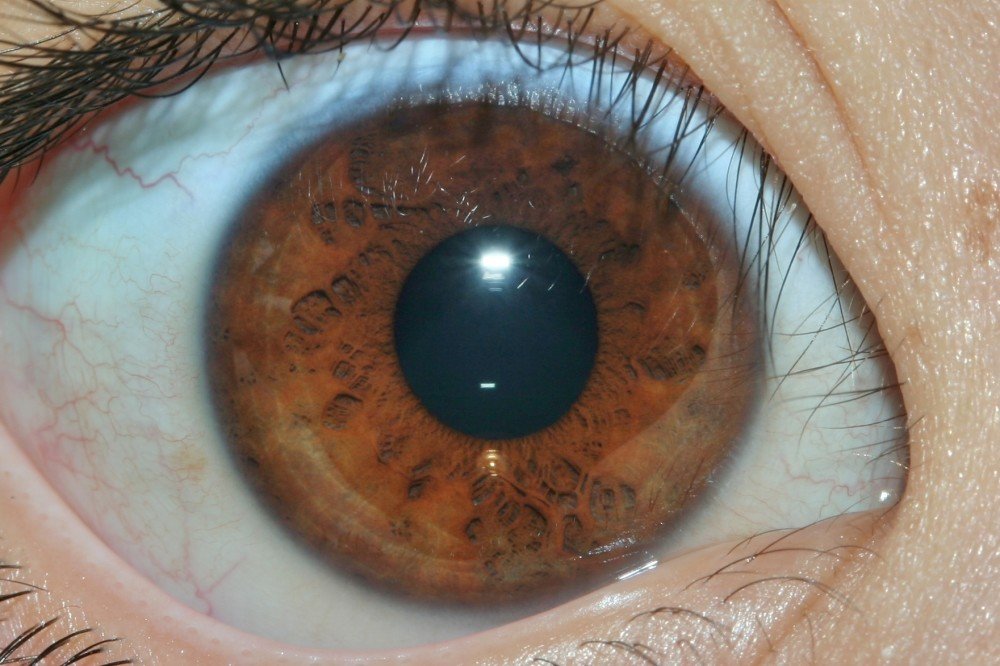
Standardized photographic samples allow learners to examine delicate stromal layers without optical distortion.
Matching Study Curricula to Learner Backgrounds
Course requirements differ significantly depending on whether the learner is a newcomer exploring natural wellness or an experienced practitioner integrating tissue observation into client evaluations. Quality institutions design distinct instructional tiers that address the specific foundational needs and regulatory contexts of each group.
A beginner studying iridology self analysis benefits most from basic constitutional typologies, chart orientation, and manual inspection routines. Conversely, practitioners working in complementary health require advanced clinical case correlations, digital documentation techniques, and structured client communication frameworks.
Foundational Learners
Focuses on iris topography, primary constitutional colors, major organ reflex zones, and developing observational discipline using basic reference charts.
Clinical Practitioners
Emphasizes high-resolution digital case libraries, multi-layer stromal analysis, digestive collarette dynamics, and non-diagnostic holistic wellness consulting.
Academic Instructors
Covers standardized curriculum delivery, student assessment metrics, archive curation, and legal compliance within natural health education centers.
Individuals exploring an iridology seminar must evaluate whether the syllabus assumes prior anatomical knowledge or starts with basic biological concepts. Courses tailored to clinical practitioners typically incorporate advanced comparative reviews across longitudinal client records to evaluate subtle tissue changes across seasonal intervals.
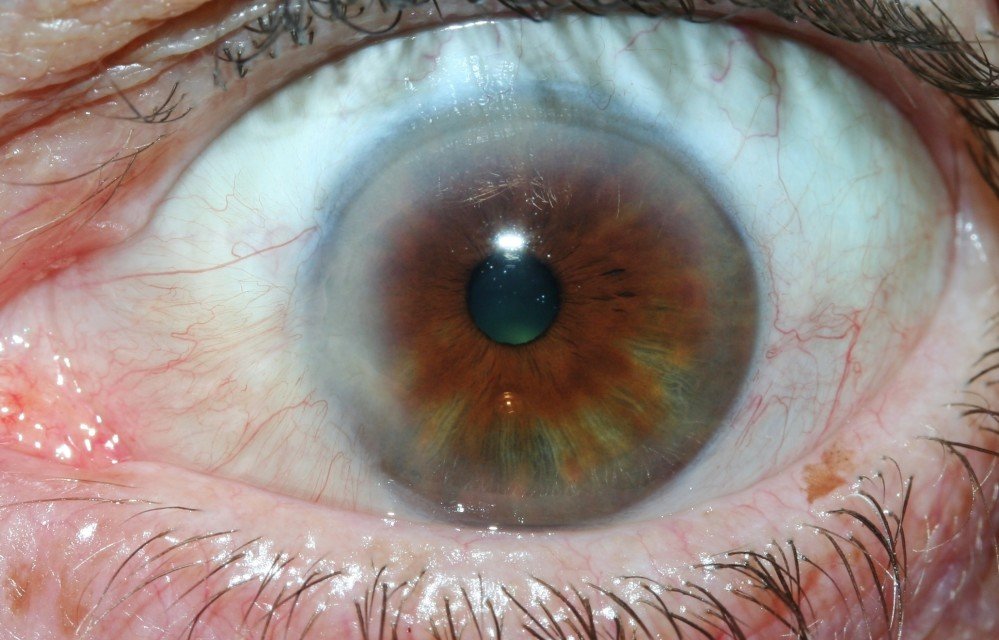
Structured classes emphasize collaborative case evaluation using verified optical records.
Essential Modules in a Professional Training Syllabus
A comprehensive training program must present a methodical breakdown of ocular topography, connective tissue patterns, and reflex relationships. Programs that gloss over fundamental optical principles in haste to teach rapid interpretations leave students unprepared for real-world observational complexity.
Instruction must begin with precise chart alignment using verified historical tools such as the iridology chart printable resources developed by classical researchers. Mastering chart alignment helps learners understand how radial sectors correspond to constitutional tendencies across distinct body systems.
- Embryology and microscopic anatomy of the anterior eye chamber, iris stroma, and pupillary border.
- Systematic quadrant mapping and coordinate alignment using verified classical and modern sector charts.
- Identification of genetic fiber density, structural trabecular patterns, and hereditary constitutional types.
- Evaluation of the autonomic nerve wreath, collarette mobility, and central digestive zone dynamics.
- Pigment classification, lymphatic stagnation markers, and metabolic accumulation rings.
- Advanced observation of external sclera vascular patterns and microcirculatory stress lines.
- Ethical client documentation, intake interviews, consent procedures, and compliant communication practices.
Beyond static overlays, thorough courses integrate regional variations from global traditions, ranging from European bio-energetic models to American holistic methods. Students examine how unique pupillary anomalies interact with systemic reflex sectors to form a holistic picture of vitality and metabolic resilience.
Comparing Digital Seminars and Hands-On Workshops
Modern learners can access iris training through interactive digital classrooms, hybrid webinars, or immersive in-person workshops. Each educational format presents clear benefits and operational constraints that influence how effectively students master optical examination techniques.
Self-paced virtual courses provide unprecedented flexibility for reviewing extensive libraries of iridology samples at high zoom levels on calibrated screens. However, hands-on workshops provide immediate instructor oversight during live client positioning, lighting adjustment, and physical camera operation.
Online Digital Programs
- Unlimited review of high-resolution digital case libraries and recorded mentoring sessions.
- Flexible scheduling that accommodates ongoing professional practices and personal schedules.
- Integrated software exercises that demonstrate computerized sector overlays directly on screen.
Format Limitations
- Lack of immediate physical guidance when adjusting lens angles on living subjects.
- Variations in student computer monitors can alter color perception and subtle contrast discernment.
- Requires self-discipline to complete extensive observational assignments without peer presence.
Hybrid programs that combine digital theoretical modules with intensive weekend clinical practicums offer a balanced approach. Students complete foundational lectures and software analysis remotely, then gather in supervised clinic environments to practice live image capture on diverse eye colors.

Digital classrooms allow side-by-side comparative reviews of historical iris archives at high magnification.
Credentialing Pathways and Professional Scope
Educational certification in iris analysis confirms that a student has completed specific coursework, demonstrated practical competence on standardized test cases, and passed an objective syllabus examination. A certificate of completion demonstrates theoretical and observational proficiency within holistic wellness education.
However, an educational certificate does not grant a medical license, nor does it confer legal authority to perform clinical diagnosis, prescribe pharmaceuticals, or treat pathology. Reputable training organizations emphasize this distinction repeatedly, teaching students how to read an iridology chart how to read within a strictly non-diagnostic wellness assessment framework.
Certification demonstrates observational training and educational completion. It never authorizes medical practice, disease diagnosis, or treatment prescription under state or federal laws.
When researching an issuing institution, prospective students should verify the curriculum depth, faculty credentials, and continuing education support. Credible organizations publish transparent assessment standards, require proctored case evaluations, and maintain clear codes of ethical conduct regarding client privacy and truthful marketing.
Analyzing Image Libraries and Comparative Case Files
The core of any rigorous training curriculum lies in the diversity and clinical integrity of its sample database. Students must study a broad cross-section of eye types, ranging from light lymphatic irides to dense hematogenic patterns, to build versatile visual assessment capabilities.
Instructional databases must provide balanced pairings between the left eye iridology chart coordinates and the corresponding right-eye reflexes. Comparative files showing historical progression over multi-year intervals provide invaluable practical insight into constitutional stability and lifestyle markers.
Bilateral Mapping
Correlating left and right optical files helps students track paired organ reflexes and lateral constitutional differences.
Longitudinal Records
Studying paired images captured across multiple years reveals how tissue density reflects sustained lifestyle habits.
Complex Typologies
Extensive archives introduce rare mixed biliary patterns and deep crypt formations that rarely appear in basic introductory textbooks.
Well-maintained sample archives provide anonymized lifestyle backgrounds, dietary histories, and subjective wellness logs for each photographic entry. This contextual background allows learners to practice holistic correlations without jumping to unsubstantiated conclusions about isolated markings.

Studying bilateral image pairs helps learners cross-reference systemic reflex zones on both sides of the body.
Educational Instrumentation and Software Integration
While theoretical principles can be studied from printed atlases, mastering practical assessment requires familiarity with modern optical instrumentation. High-caliber educational programs teach students how optical magnification, controlled lighting, and digital image processing influence visual interpretation.
At MAIKONG, we manufacture professional optical hardware designed specifically to support clinical education, research institutes, and independent natural wellness practices. Utilizing a calibrated iridology camera during practical coursework enables students to capture distortion-free files suitable for computerized sector mapping and long-term client archiving.
| Device Specification | Hardware Standard | Training Utility |
| Brand & Model | MAIKONG MK-GY-9822U | Professional iriscope camera platform engineered for stable educational and clinical imaging. |
| Optical Sensor | 12.0 Megapixels CCD | Captures ultra-fine trabecular fiber detail without compression noise or pixelation artifacts. |
| Illumination System | Surround LED Array | Delivers uniform shadow-free lighting around the lens with adjustable brightness controls. |
| Image Stabilization | DSP Optical Stabilizer | Eliminates micro-tremors during handheld capture, assisting learners in maintaining focal sharpness. |
| Connectivity & Power | Direct USB Interface | Draws power directly from PC or Mac laptops without requiring external power adapters. |
Professional training platforms integrate dedicated analysis software that overlays sector grids directly over captured images. Software tools with multi-language capability and cross-platform compatibility help students organize case files, conduct client intake tracking, and generate educational summary reports.
| Kit Item | Standard Inclusions | Educational Function |
| Handset Assembly | MK Ergonomic Handset | Features integrated focus wheels and a digital pause capture button for steady positioning. |
| Optical Lens | 30X Iris Lens | Imported coated lens providing high-magnification clarity across anterior eye structures. |
| Storage & Transport | Leather PU Case | Padded protective casing designed for safe transport between classrooms and offsite clinical workshops. |
| Cabling & Protection | 1.5m USB Cable & Cover | Durable connectivity cord with protective lens cap to prevent surface scratching during storage. |
| Training Media | Chart, CD & Manual | Comprehensive driver media, pro software package, reference chart, and 13-month technical warranty guide. |
Our production facilities in SZ, GD maintain complete ISO9000 and CE quality management processes, delivering dependable instrumentation to educators, direct wellness providers, and overseas academic institutions. Hardware customization, exterior mold options, and dedicated software configurations support institutions developing specialized branded educational curricula worldwide.
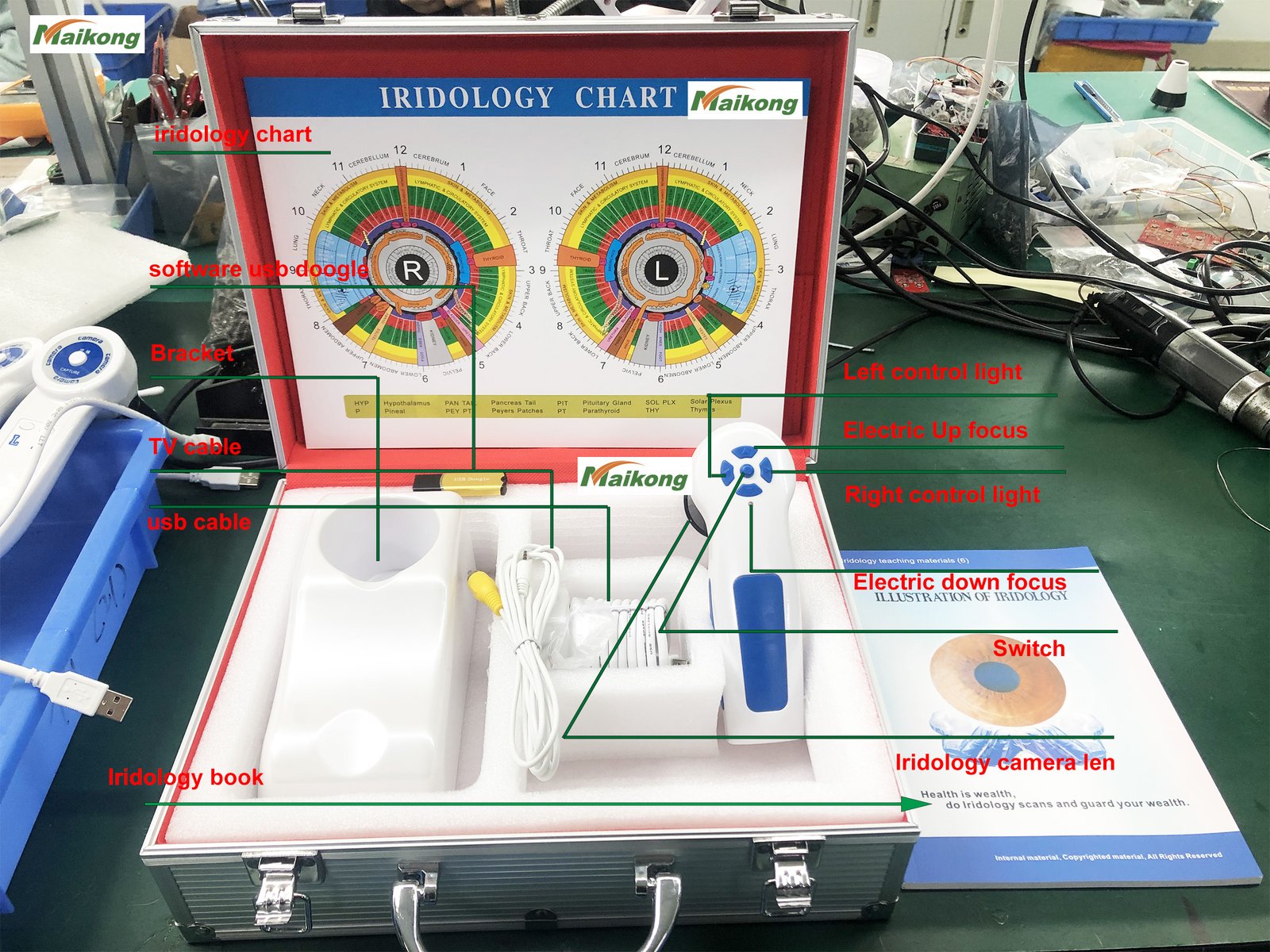
Specialized digital cameras provide the focal precision necessary to build verified educational image archives.
Course Evaluation Criteria and Institutional Credibility
Evaluating potential training providers requires screening beyond polished promotional websites to examine instructional depth, faculty support, and practical coursework requirements. Enrolling in an unaccredited or superficial workshop often leads to frustration and incomplete technical skills.
Prospective students should verify that the program provides substantial access to real-world iridology samples rather than relying solely on repetitive slide decks. A credible training organization provides structured mentoring where instructors review and critique student-submitted case captures.
- Review the detailed syllabus to verify balanced coverage of anatomy, chart cartography, and case analysis.
- Confirm the instructor’s background, professional teaching experience, and standing within recognized wellness societies.
- Ask whether the course includes access to a curated digital library of high-resolution photographic case archives.
- Check the student-to-teacher ratio in live mentoring sessions to ensure personalized feedback on assignments.
- Examine institutional refund terms, software technical support policies, and access duration for digital learning materials.
- Confirm that the curriculum strictly separates traditional constitutional assessment from medical pathology claims.
Financial considerations should reflect the total instructional value, including software licenses, digital archive access, live tutoring hours, and formal assessment reviews. Programs that bundle equipment must clarify whether the camera hardware meets optical standards for professional record collection.
Educational Scope, Client Communication, and Legal Boundaries
Responsible iris education instills a clear understanding of legal boundaries and ethical client communication. Iris analysis is an educational and observational discipline rooted in traditional wellness philosophies; it is not a medical diagnostic technique.
Courses that reference classical research, such as the historic Bernard Jensen iridology chart, emphasize that markings reflect constitutional tendencies, hereditary strengths, and metabolic balance. Training materials must never claim that iris patterns diagnose, manage, or treat specific medical conditions such as cancer, psychiatric disorders, or acute cardiovascular events.
Traditional iris analysis observes tissue variations for holistic lifestyle guidance. It does not identify disease pathology, replace conventional medical screening, or prescribe treatments.
Practitioners must operate within the legal scope of practice established by their state, province, or municipal health authorities. Educated analysts provide written disclosures stating that constitutional evaluations represent wellness education, advising clients to consult licensed medical physicians for formal health examinations.

Transparent client consent and ethical disclosure forms establish clear professional boundaries in natural wellness consulting.
Frequently Asked Questions About Iridology Samples Training
What are iridology samples used for in a training course?
In educational training, iridology samples serve as standardized photographic records that demonstrate real tissue variations across diverse constitutional types. Students use these sample archives to practice quadrant mapping, fiber density evaluation, and reflex correlation under controlled conditions.
How many iridology samples should a beginner study?
A beginner should examine several dozen verified case files covering primary constitutional colors, common fiber structures, and balanced bilateral pairs. Reviewing a varied library helps learners avoid over-generalizing from a single eye pattern or misidentifying normal anatomical variations.
Can I learn from iridology samples online?
Yes, online courses are highly effective for studying iridology samples when they provide access to uncompressed high-resolution digital image archives. High-definition computer monitors allow students to zoom into subtle stromal layers and overlay sector maps more precisely than small printed textbook illustrations.
Do I need an iriscope or iridology camera to study iridology samples?
You can begin introductory theoretical studies using pre-recorded image archives without owning hardware. However, owning an iriscope or dedicated digital camera becomes necessary when completing practical assignments, building student portfolios, and capturing real client records.
Does a certificate in iridology allow me to diagnose medical conditions?
No, an iridology certificate confirms educational completion and observational competence within holistic wellness philosophies. It does not grant a medical license and does not legally authorize an analyst to diagnose diseases, prescribe medical therapies, or replace licensed medical care.
How can I tell whether iridology samples are clear and suitable for learning?
Instructive samples display sharp focus across the entire anterior stroma, neutral color calibration, and controlled lighting without blinding reflections over the pupil or pupillary margin. High-quality learning files include paired left and right captures alongside basic non-identifying client background notes.
What should I ask before enrolling in an iridology seminar?
Before enrolling in a seminar, ask about the instructor’s background, the number of practical case studies included, and whether digital image archives are provided for home practice. Inquire also about student mentorship availability, post-seminar software support, and the exact scope of the completion certificate.
Advancing Your Observational Knowledge in Iris Analysis
Choosing a credible training program centered around authentic case archives provides the foundation for perceptive, ethical, and structured wellness assessment. By prioritizing courses with transparent curricula, diverse high-resolution records, and clear non-medical boundaries, learners build practical competence that serves their communities responsibly.
Request Course Support and Educational System Details
Connect with our educational support team to receive instructional syllabus guidelines, review sample-archive imaging requirements, or explore specialized hardware configurations for training institutions.