
Iridologist Certificate Degree Programs and Training Standards
An iridologist certificate degree represents specialized vocational training in assessing tissue variations, pigmentation patterns, and constitutional markings within the iris. This educational credential confirms that a student has studied foundational eye topography, traditional assessment systems, and client communication principles rather than granting a state-licensed medical degree.
Curriculum depth, supervised practical casework, optical equipment compatibility, and clear adherence to legal scope determine the professional value of any natural health credential. Programs vary from introductory distance modules to comprehensive diplomas designed for integrative health practitioners.
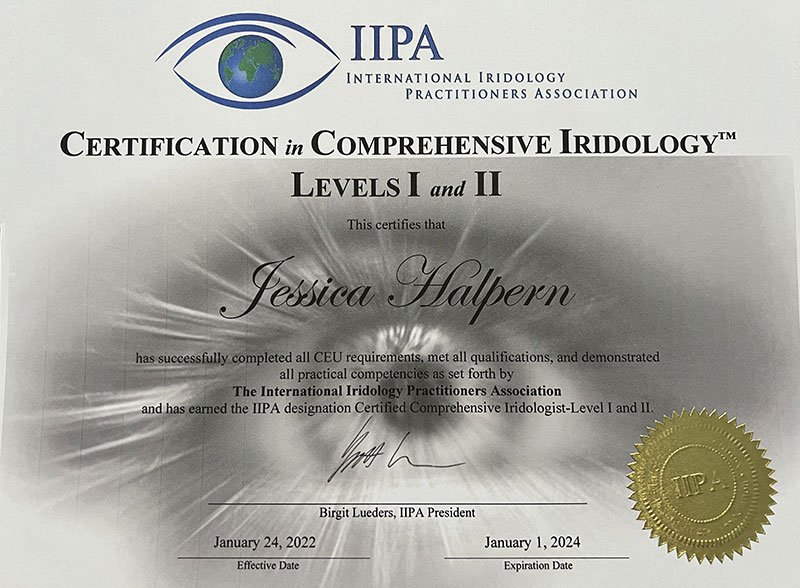
Distinguishing Certificates, Diplomas, and Degrees
Vocational programs in natural health award certificates or diplomas reflecting specific clock hours of specialized study. Academic degrees require regional or national collegiate accreditation under educational oversight bodies that standard iridology institutes do not hold.
Students must differentiate between completion certificates, advanced diplomas, and unaccredited degree terminology before committing tuition funds. Establishing these boundaries maintains transparent expectations for professional consulting.
Vocational Certificate Pathways
- Focuses on specific iris assessment techniques and constitutional mapping
- Typically requires weeks to months of dedicated study modules
- Demonstrates practical competence for wellness and lifestyle educators
Academic Degree Programs
- Involves multi-year accredited collegiate study in biology or health sciences
- Encompasses comprehensive clinical sciences and general education
- Grants institutional degrees recognized by regional higher-education boards
Clarifying these distinctions helps prospective students select an educational track that aligns with their existing qualifications and professional objectives.
Foundational Curriculum in Professional Iris Analysis
High-quality certificate programs build on human anatomy, physiological systems, and systematic eye inspection methodologies. Instruction begins with iris embryology, nervous system reflex zones, and the historical development of eye mapping systems.
A rigorous program integrates the classical Bernard Jensen iridology chart alongside modern European reflex assessment systems. Students learn how pupillary margins, autonomic nerve wreaths, and ciliary zones correlate with systemic body dynamics.
- Structural iris markings, including crypts, radii solaris, and collarette variations
- Constitutional classification models, assessing lymphatic, hematogenic, and biliary eye types
- Pupil dynamics, flattening indicators, and inner pupillary border assessment
- Holistic intake procedures, ethical client communication, and wellness coaching boundaries
Mastering these foundational subjects provides the observational discipline required for reliable wellness analysis.
Evaluating Online, Distance, and In-Person Study Options
Training institutions deliver iris education through digital modules, intensive weekend workshops, or self-paced correspondence coursework. Selecting the appropriate format depends on personal learning habits, scheduling flexibility, and access to practical mentorship.
Online study provides convenient access to lectures, high-resolution iris libraries, and downloadable resources like an iridology chart. In-person workshops add immediate hands-on practice with physical illumination and optical lenses under the direct observation of experienced teachers.
Distance and Online Learning
- Enables self-paced completion around personal or clinical schedules
- Provides ongoing access to digital case archives and recorded lectures
- Lowers travel expenses and overall educational overhead
Format Limitations
- Demands disciplined self-study without direct physical supervision
- Limits real-time hands-on guidance with lighting and positioning
- Requires independent sourcing of examination equipment

Navigating Regional Training Searches and Distance Education
Prospective analysts across different regions often explore local training options before realizing that natural health institutions frequently operate via centralized distance delivery. Whether evaluating study tracks from regional hubs or remote areas, digital classrooms bridge geographic barriers.
Students researching specialized iridologist classes from locations such as an iridologist cincinnati, an iridologist clarksville tn, an iridologist cleveland, an iridologist conroe tx, or an iridologist fort worth tx discover shared core curriculums. Similar foundational questions arise when studying in an iridologist fresno ca, an iridologist grand junction co, an iridologist greensboro nc, an iridologist deerfield, or an iridologist dc center.
- International distance learners accessing an iridologist distance program from an iridologist chch or iridologist christchurch region
- Australian students comparing regional study in an iridologist coburg, iridologist coffs harbour, iridologist darwin, or iridologist frankston community
- European and Canadian practitioners reviewing modules from an iridologist devon, iridologist dunedin, iridologist edinburgh, iridologist glasgow, or iridologist guelph location
- Practitioners evaluating foundational legacies like those associated with an iridologist gary richards lineage, specialized niche queries such as an iridologist for parrots, or terms for an iridologist for hire
Regardless of originating geographic queries, reviewing verified iridologist credentials remains the single most reliable method for determining training quality.
Clinical Casework and Supervised Observation Standards
Comprehensive education requires direct analysis of dozens of varied eye images under qualified supervision. Reading textbooks without evaluating authentic photographs leaves analysts unprepared for the complexity of human tissue structures.
Reputable programs mandate submission of documented case studies covering varied age groups, health histories, and eye colors. Students learn systematic scanning routines using guides like the iridology chart how to read tutorial to build disciplined analytical observation.
Supervised casework teaches practitioners to distinguish structural fiber density from superficial toxic pigments, reducing interpretive errors during client educational consultations.
Case reviews should always be accompanied by clear written reports that avoid diagnostic medical terminology while highlighting lifestyle and nutritional considerations.
Chart Topography and Reading Methodologies
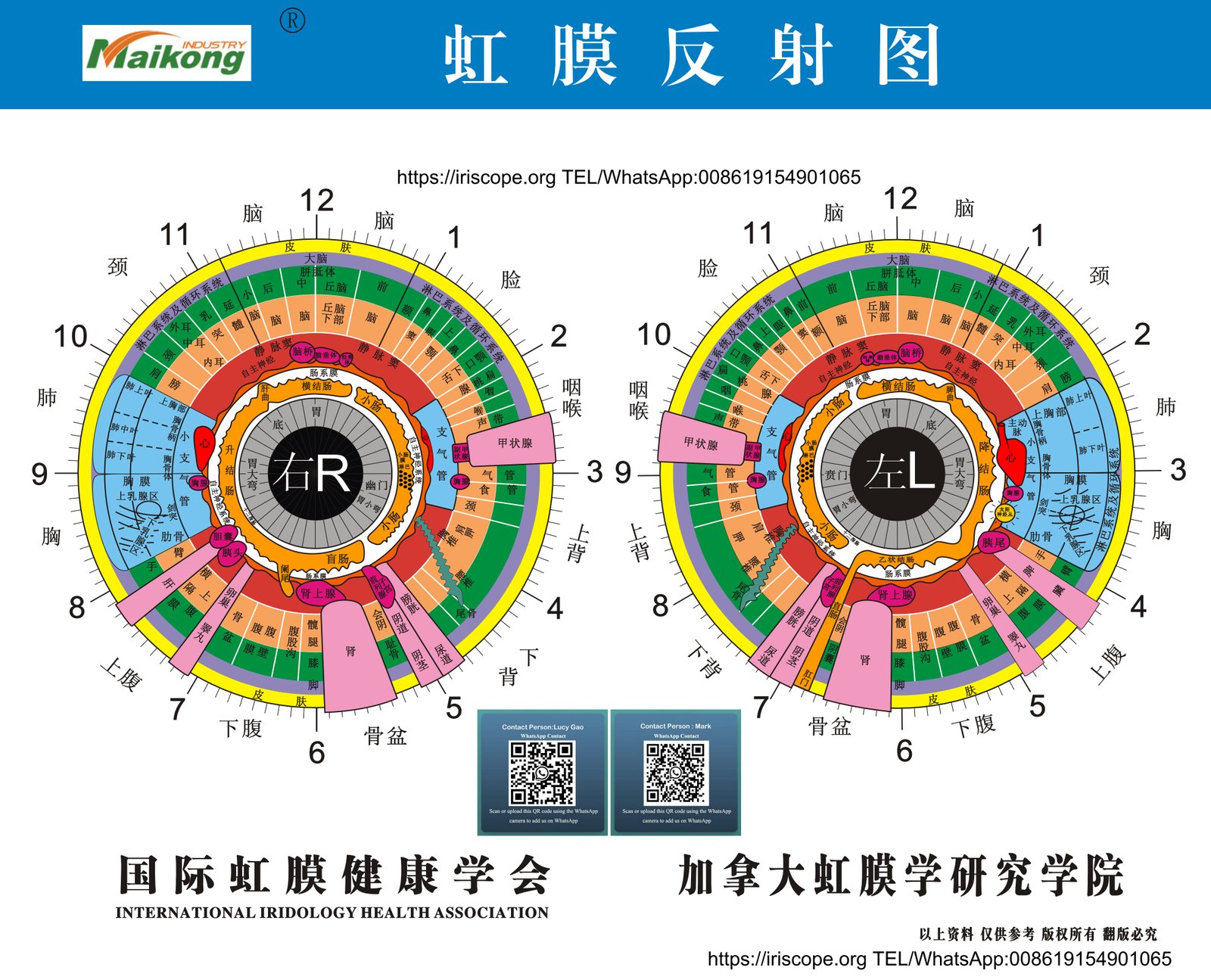
Systematic chart literacy allows analysts to translate visual eye observations into organized reflex zone documentation. Certified training teaches practitioners how each eye reflects unilateral and bilateral organ dynamics.
A rigorous syllabus incorporates study of the iridology chart right eye alongside the complementary left eye iridology chart. Students also practice manual plotting on an iridology chart printable sheet to reinforce mapping geography.
- Zone 1: Stomach reflex ring surrounding the pupillary aperture
- Zone 2: Intestinal tract and autonomic nerve wreath margin
- Zone 3 through 6: Vascular, muscular, organ, and lymphatic circulation zones
- Zone 7: Skin and outer elimination periphery
Mastering zone overlays enables consistent documentation across initial client assessments and longitudinal follow-ups.
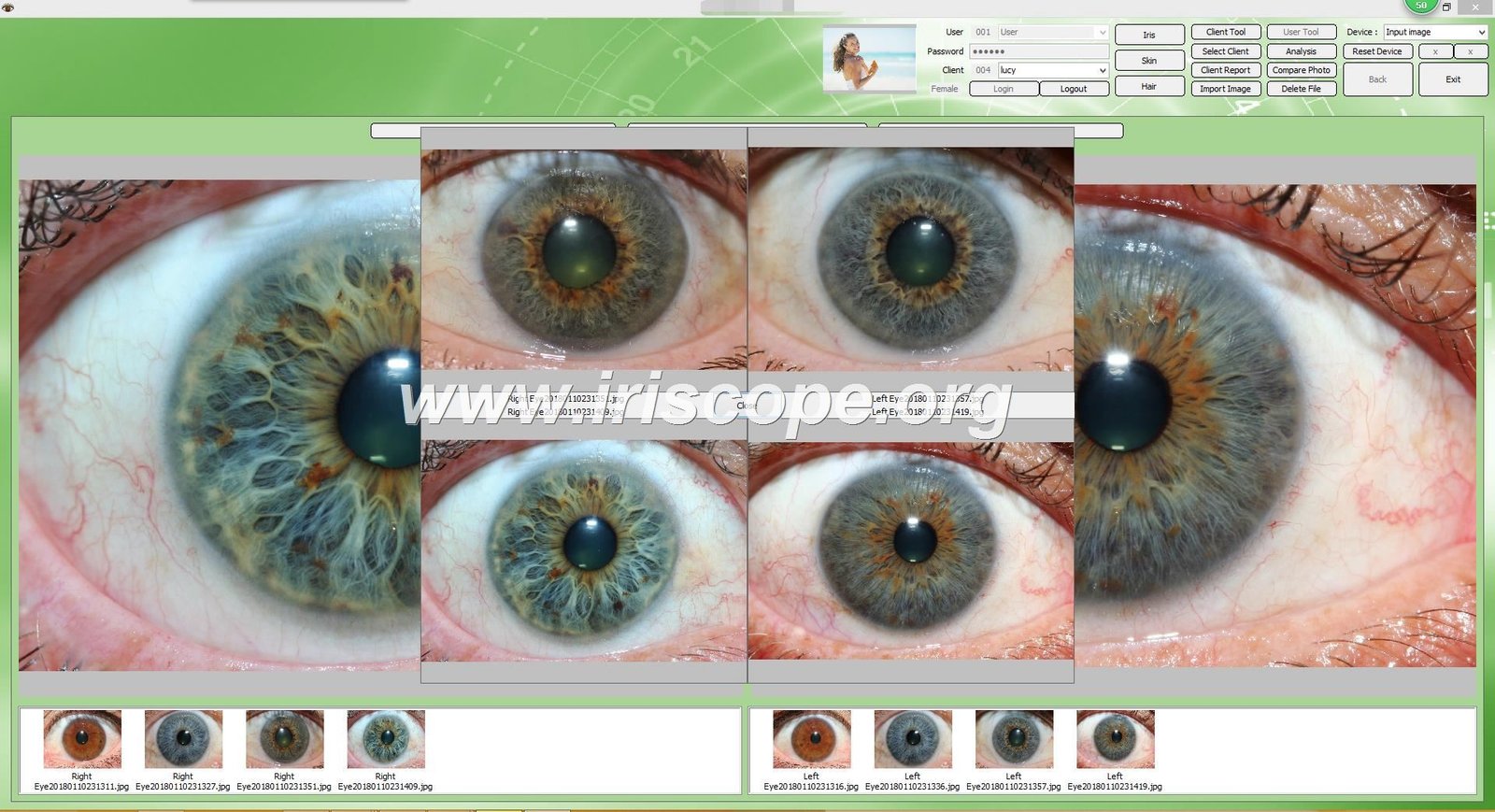
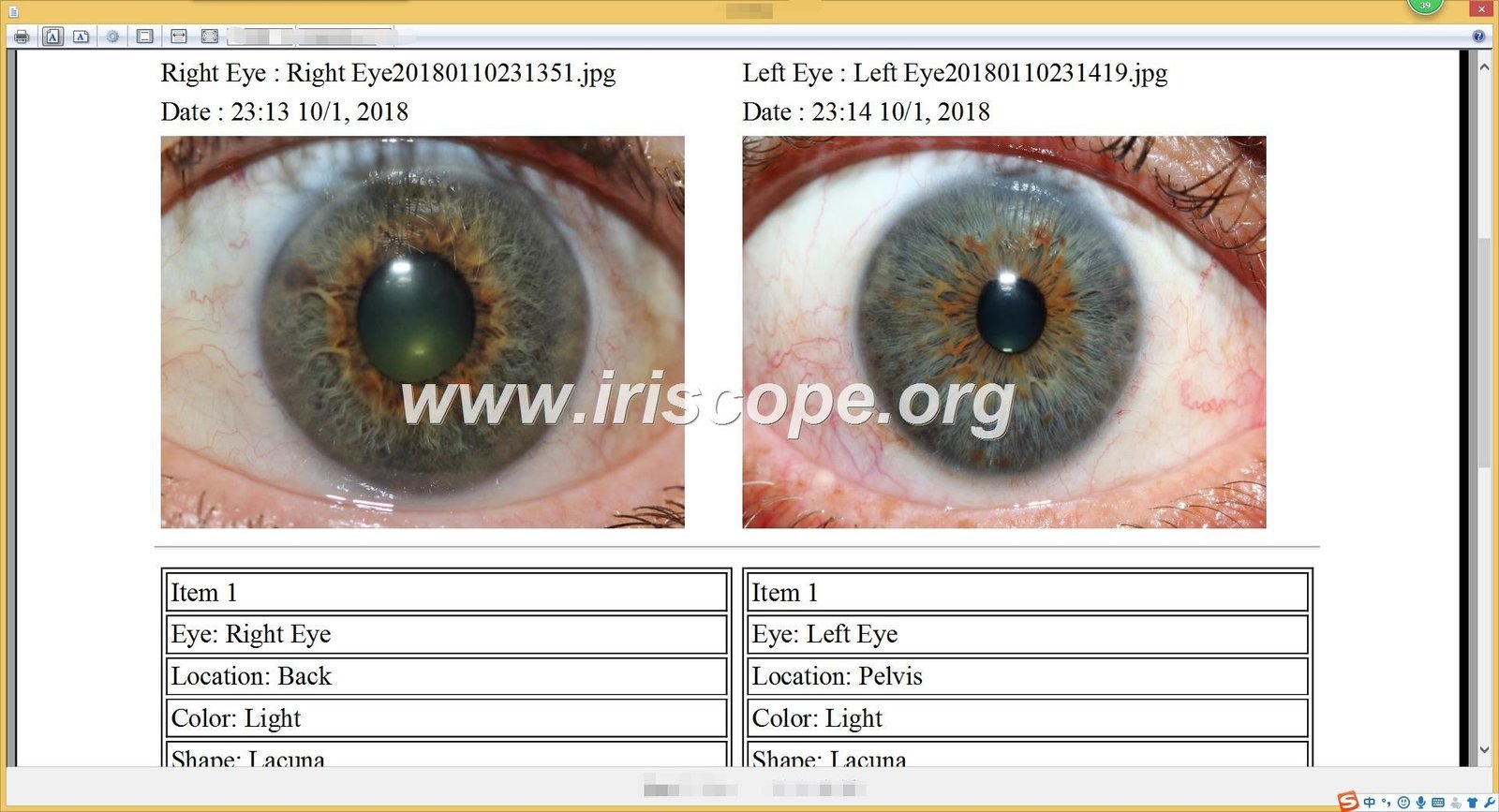
Optical Instruments and Software in Professional Training
Modern iris evaluation relies on dedicated optical cameras and analytical software rather than simple pocket penlights. High-resolution imaging captures fine fiber details, trabeculae integrity, and minor pigmentation changes with photographic precision.
Educational institutions recommend students train with an authentic iriscope to maintain consistent illumination and avoid pupil distortion. Integrating a specialized iridology camera paired with professional iridology software transforms raw observations into standardized digital client files.
Using smartphone attachments or uncalibrated household flashlights can introduce harsh glare, uneven illumination, and inaccurate color balance that compromise educational observation.
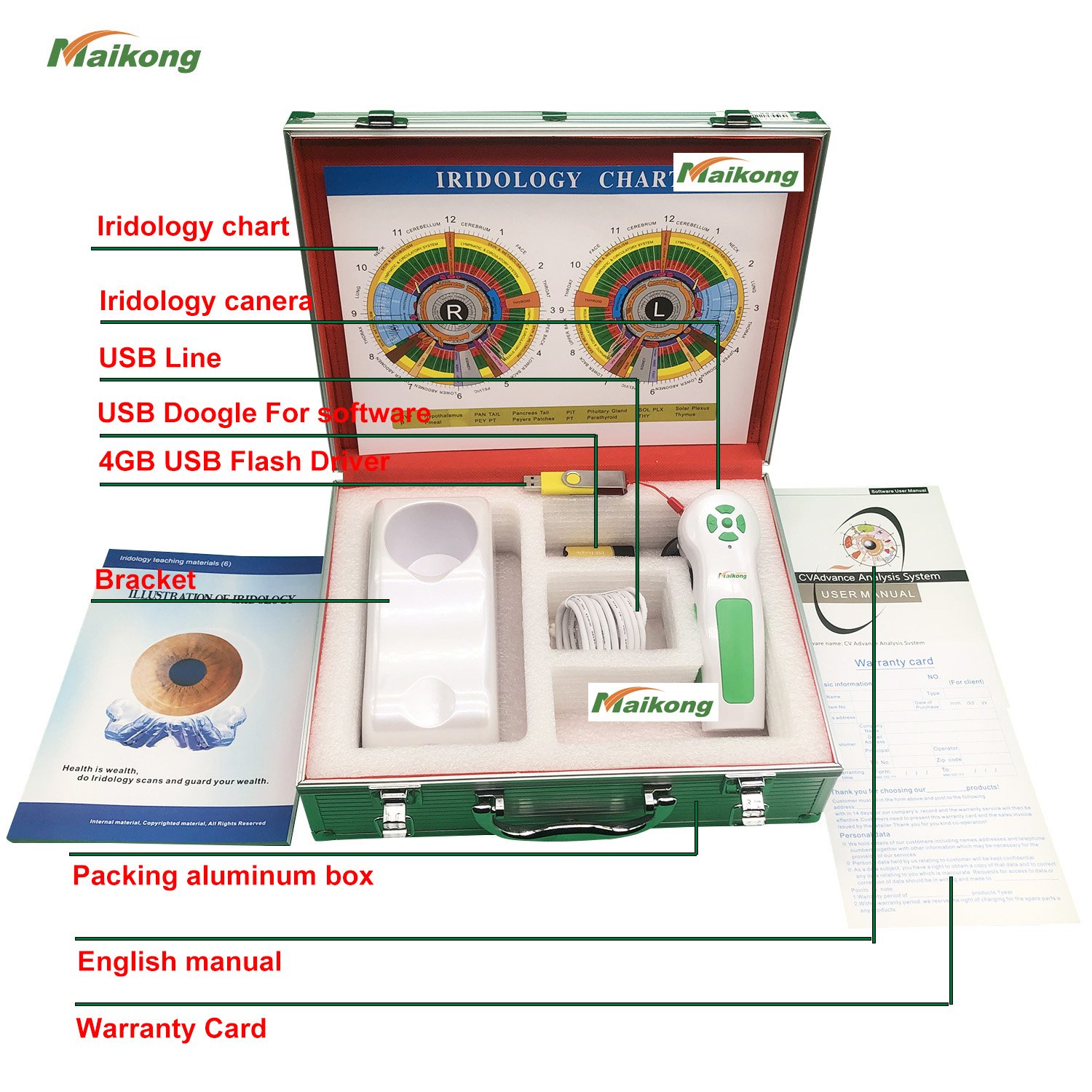
Hardware Specifications and Accessory Standards
When selecting training equipment, students and clinic directors must evaluate optical sensor resolution, lighting configuration, and connectivity standards. A purpose-built USB iridology camera allows direct tethering to clinical computers for live pupil inspection.
Finding the best iridology camera involves verifying physical build quality, stable focal mechanisms, and balanced LED illumination around the lens. The MAIKONG MK-GY-9822U provides an established hardware baseline commonly evaluated when reviewing an iridology camera for sale.
| Feature | Specification | Application Details |
| Model | MK-GY-9822U | Professional USB iriscope camera |
| Resolution | 12.0 Megapixels | High-resolution CCD sensor for fine fiber clarity |
| Optics | 30X Iris Lens | Imported lens with specialized plated anti-glare layer |
| Illumination | Circular LED | Surrounding cold light source with adjustable brightness |
| Processing | Special DSP | Integrated optical image stabilizer for sharp capture |
| Power | USB Interface | Direct computer bus power without external power bricks |
| Warranty | 13 Months | Coverage for material and manufacturing defects |
Each camera system includes standard clinic accessories designed for protected transport and immediate deployment.
| Item Included | Quantity | Primary Function |
| Optical Handset | 1 Piece | Ergonomic capture device with focus control switch |
| 30X Iris Lens | 1 Piece | Precision magnification for detailed iris fiber inspection |
| USB Cable | 1.5 Meters | Direct data connection between handset and computer |
| Protective Cover | 1 Piece | Shields optical lens surface from dust and scratches |
| Reference Chart | 1 Piece | Physical organ reflex overlay for educational comparison |
| Storage Case | 1 Piece | Aluminum or leather PU box measuring 35 by 25 by 10 cm |
Digital Archiving and Educational Software Functions
Organizing longitudinal client files requires dedicated analytical software compatible with current operating platforms. Software suites allow practitioners to superimpose interactive reflex charts, generate comparative side-by-side images, and store consultation notes.
Students can evaluate demonstration platforms through an iridology software free download module to verify interface accessibility. Correct camera recognition depends on having the proper CADI iridology camera driver installed on compatible operating systems.
| Milestone Year | Release Version | System Capabilities |
| 2004 | Initial Build | Basic manual iris image capture and image viewing |
| 2008 | Version 3.04 | Added multi-language support in English and Spanish |
| 2014 | Version 3.15 | Multi-user clinic database management and backups |
| 2018 | Version 3.18 | Cross-platform integration supporting macOS computers |
| 2025 | Version 3.23 | Enhanced texture analysis, 3D visualization, 17 languages |
The MAIKONG software environment supports Windows XP through Windows 11 in both 32-bit and 64-bit builds, as well as macOS from 10.14 Mojave up through macOS 15 Sequoia. Linux operating systems are currently unsupported.
Assessing Educational Credentials and School Credibility
Before enrolling in any certificate curriculum, prospective students must examine the institutional transparency and pedagogical standards of the training provider. Reputable organizations provide complete syllabi, clear instructor credentials, and defined assessment metrics.
Students should consider overall educational investments, including tuition, learning materials, and equipment overhead like the baseline iriscope price. Professional clinical setups may also require stabilizing hardware like an iridology camera stand for steady client positioning.
Faculty Experience
Verify that lead instructors maintain documented clinical experience and recognized natural health teaching credentials.
Assessment Rigor
Ensure the school mandates formal written examinations, practical image reviews, and supervised oral evaluations.
Equipment Support
Confirm whether programs provide clear hardware recommendations and vendor-neutral optical equipment compatibility.
Scope of Practice and US Regulatory Boundaries
Iridology practice in the United States functions strictly as an educational and lifestyle assessment modality rather than a licensed medical profession. Earning an iridologist certificate degree does not authorize an individual to practice medicine, diagnose medical conditions, or prescribe pharmaceuticals.
Practitioners must conduct consultations within established natural health boundaries and comply with state health freedom laws or complementary health guidelines. Iris analysis serves to observe constitutional strengths, identify tissue tendencies, and provide lifestyle education.
Traditional iris observation does not detect cancer, identify specific pathogens, or replace standard laboratory bloodwork, imaging, or physical evaluations by licensed physicians.
All client intake documents and marketing communications must carry unambiguous disclaimers stating that services represent non-diagnostic educational assessments.
Equipment and Software Solutions from MAIKONG
We at MAIKONG bring 20 years of dedicated research, development, and production experience to manufacturing high-grade iris inspection devices and software. Located in SZ, GD, our manufacturing facilities adhere strictly to ISO9000 quality procedures and CE standards to support educators, clinics, and wholesale distributors worldwide.
We offer extensive hardware OEM and ODM customization, including specialized exterior molds, custom housing colors, and tailored device features. Our software platform supports 17 international languages, custom enterprise branding, and seamless multi-system compatibility across Windows and Apple macOS environments.
With ready inventory maintained in China and the United States, we supply iridology training academies, nutritional direct-sales companies, and integrative wellness practices with reliable equipment packages.
Prospective partners interested in customized equipment packages can learn more about MAIKONG and our manufacturing capabilities as direct iridology camera manufacturers.
Frequently Asked Questions
What is an iridologist certificate degree?
An iridologist certificate degree is a vocational training credential confirming completion of structured coursework in traditional iris analysis, eye mapping, and constitutional wellness assessment. It demonstrates specialized knowledge in holistic health observation rather than serving as an accredited university degree.
Is an iridology certificate the same as a college degree?
No, an iridology certificate is not equivalent to an academic degree granted by an accredited college or university. It represents targeted vocational education within complementary wellness disciplines without collegiate regional accreditation.
Can I complete iridology certification through distance learning?
Yes, many reputable natural health institutes offer comprehensive distance and online programs covering theoretical anatomy, chart reading, and case evaluations. Students must complete practical photography and supervised casework assessments to earn full certification.
Does completing a certificate allow me to diagnose disease?
No, completing an iridology program does not confer legal authority to diagnose, prescribe, or treat medical diseases in the United States. Practitioners use iris observation exclusively for non-medical educational guidance and lifestyle wellness recommendations.
Do I need specialized camera equipment during my training?
Yes, professional training requires a high-resolution iriscope or USB iridology camera to capture clear images of pupil dynamics, trabeculae, and pigment variations. Specialized software allows students to superimpose reflex charts and maintain organized client case files.
Next Steps for Professional Iridology Education
Selecting the right educational program requires balancing thorough anatomical curriculum, practical casework requirements, and transparent legal scope. Integrating reliable optical hardware and cross-platform software empowers practitioners to conduct consistent, structured constitutional evaluations.
Course Inquiry CTA
Training academies, clinic directors, and independent practitioners can request comprehensive equipment specification sheets, software demonstrations, or wholesale partnership information.