
Holistic Iridology: Your Complete Guide to Choosing the Right Training Program and Equipment
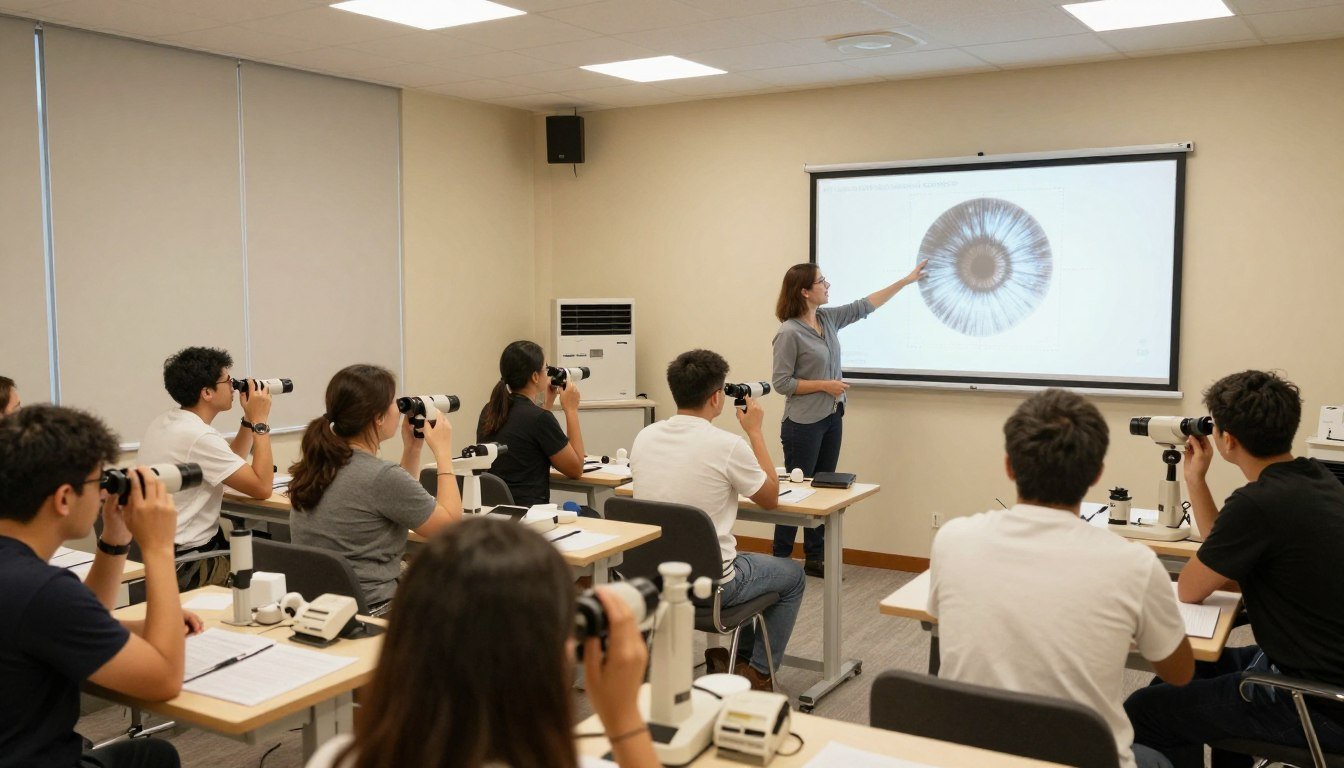
Choosing the right holistic iridology course can transform your career in natural health. Whether you’re a naturopath looking to expand your diagnostic toolkit or a wellness center owner planning to offer iridology services, understanding what makes a quality training program is essential. This guide answers your most pressing questions about course selection, certification paths, equipment requirements, and how to evaluate training providers.
Holistic iridology differs from basic iris observation. It integrates traditional iridology principles with modern wellness approaches. You’ll learn to identify fundamental iridology signs while understanding how lifestyle, nutrition, and emotional factors appear in iris patterns. The right course prepares you not just to read an iridology chart, but to build a sustainable practice helping clients achieve better health outcomes.
What Is Holistic Iridology and Why Specialized Training Matters
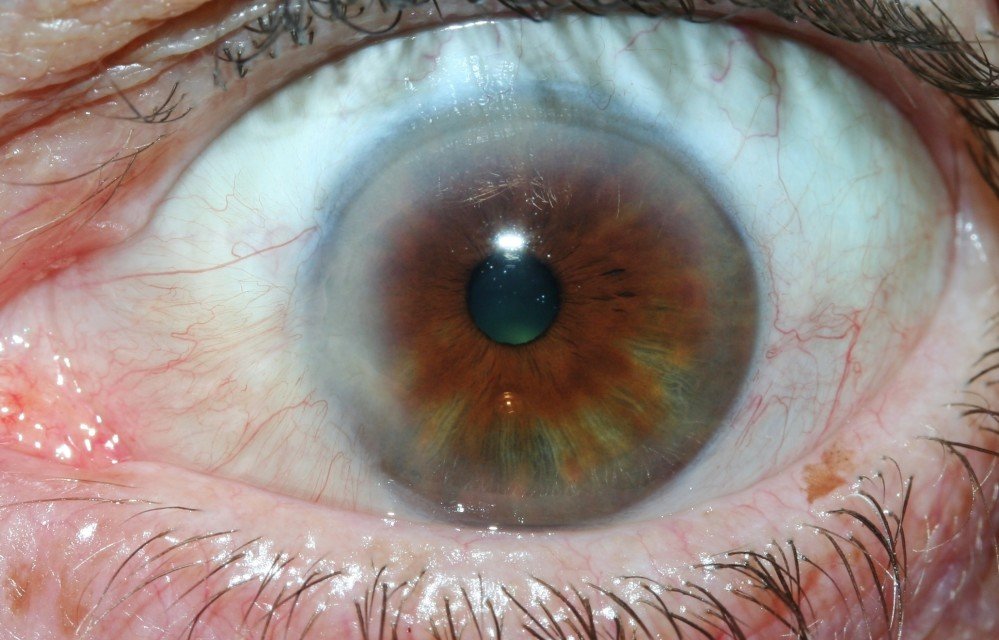
Holistic iridology examines iris patterns to assess overall wellness. Practitioners analyze changes in iris pigmentation, structural markers, and specific zones that correspond to different body systems. This approach traces back to Ignaz von Peczely, the Hungarian physician who mapped iris zones to organs in the 1800s. Modern holistic medicine iridology builds on this foundation by incorporating integrative health principles.
The practice views the iris as a roadmap. Each section reflects the health status of corresponding body parts. Iridologists use specialized charts developed by pioneers like Bernard Jensen to interpret signs. These Bernard Jensen iridology charts remain foundational teaching tools in quality training programs.
Core Components of Holistic Care Iridology
- Constitutional iris type identification and inherent strengths
- Recognition of acute, subacute, chronic, and degenerative tissue states
- Analysis of pigment patterns indicating toxin accumulation areas
- Evaluation of nerve rings, lymphatic rosary, and other structural signs
- Integration of findings with client health history and lifestyle factors
- Wellness recommendations based on iris observations and holistic principles
Integrated iridology takes this further. It combines iris analysis with other assessment methods. You might use iridology alongside nutrition evaluation, lifestyle counseling, or other complementary approaches. This creates a more complete picture of client wellness needs.
Important Distinction: Holistic iridology is used for wellness observation and educational purposes. It does not diagnose medical conditions or replace professional medical examination. Quality training programs emphasize this boundary clearly.
Course Goals and What You’ll Learn in Professional Training
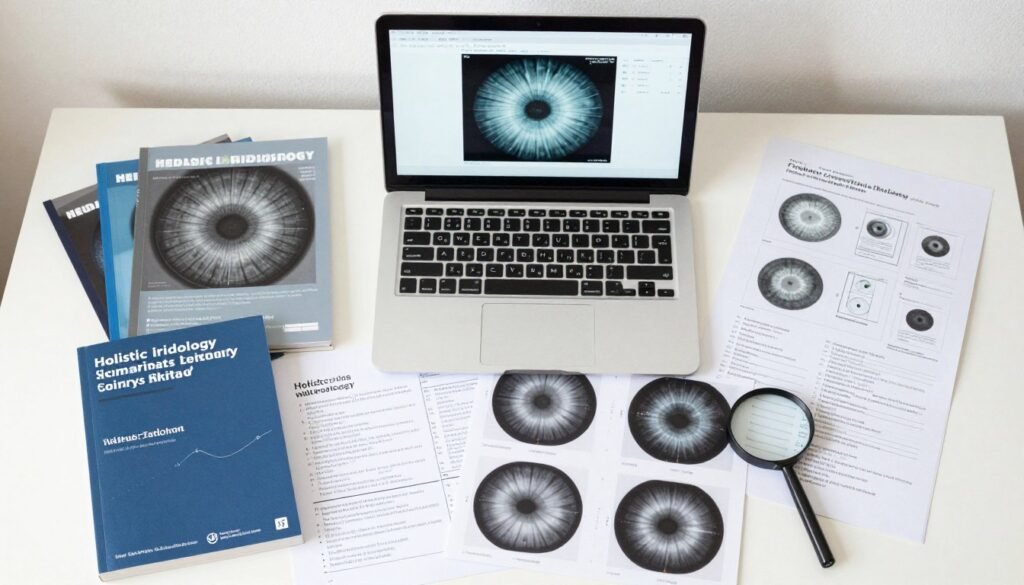
Professional holistic iridology courses teach systematic iris examination skills. You start with iris anatomy and historical context. Training progresses through constitutional types, zone interpretation, and sign recognition. Advanced modules cover practical iridology applications with real client cases.
Fundamental Skills Every Program Should Cover
Theoretical Foundation
- History from Ignaz von Peczely through modern practitioners
- Iris anatomy, zones, and physiological basis of observations
- Constitutional types and inherent predispositions
- Understanding acute through degenerative tissue changes
- Relationship between iris signs and body systems
Practical Application Skills
- Using iridology cameras and photography techniques
- Chart interpretation for right eye and left eye differences
- Documenting findings and creating client reports
- Recognizing fundamental iridology signs in various iris colors
- Integrating observations with wellness planning
Advanced Topics in Comprehensive Programs
Beyond basics, quality holistic iridology training includes specialized areas. You learn to recognize subtle pigment patterns that indicate specific health issues. Programs covering integrated iridology teach correlation between iris findings and nutrition deficiencies, inflammation markers, and lifestyle factors affecting wellness.
Beginner Level Focus
Basic iris zones, constitutional types, major signs, chart reading fundamentals, equipment operation
Duration: 20-40 hours
Equipment Needed: Basic USB iridology camera
Intermediate Certification
Detailed sign interpretation, case studies, client consultation skills, documentation, ethics, practice setup
Duration: 60-100 hours
Equipment Needed: Professional iriscope with iridology software
Diplomate Holistic Iridology
Advanced pattern recognition, research methods, teaching skills, business development, specialized populations
Duration: 150-300 hours
Equipment Needed: Advanced system with 3D analysis capability
Some programs incorporate study tools like integrated iridology flashcards for memorizing signs and zones. Digital learning platforms may offer interactive modules. Look for courses that balance theory with hands-on practice examining real irises, not just photographs.
Who Should Enroll in Holistic Iridology Training

Holistic iridology attracts various health and wellness professionals. The training suits anyone wanting to expand their assessment capabilities. You don’t need medical credentials to study iridology, but understanding human anatomy and physiology helps you learn faster.
Ideal Candidates for Training
Healthcare Practitioners
- Naturopathic doctors seeking diagnostic tools
- Chiropractors offering wellness services
- Acupuncturists integrating assessment methods
- Massage therapists expanding practice scope
- Physical therapists in holistic clinics
Wellness Professionals
- Nutritionists and health coaches
- Herbalists and supplement advisors
- Spa and wellness center staff
- Yoga and meditation instructors
- Personal trainers focusing on holistic health
Business Owners
- Health clinic administrators adding services
- Wellness center owners training staff
- Natural product store operators
- Medical equipment distributors
- Training school administrators
Career changers also pursue practical iridology certification. Some students come from corporate backgrounds seeking meaningful second careers. Others already work in health food retail or wellness spaces and want professional credentials to serve clients better.
Prerequisites and Background Knowledge
Most introductory holistic iridology courses require no prerequisites. You can start learning with basic health literacy. However, familiarity with human anatomy terminology helps. Some programs recommend completing basic nutrition or anatomy courses first.
For advanced certifications like diplomate holistic iridology, prerequisites typically include completion of foundational training. You may need documented practice hours examining clients. Some require case study submissions demonstrating competency before advancing.

Time Commitment and Learning Styles
Consider your available time and preferred learning method. Online holistic iridology programs offer flexibility for busy professionals. You study at your own pace, fitting lessons around work schedules. Live virtual sessions provide instructor interaction without travel requirements.
In-person training delivers intensive hands-on experience. You practice with real equipment and receive immediate feedback. Weekend intensives or week-long immersions work well if you can take concentrated time off. Hybrid programs combine online theory with periodic in-person practicums.
Online vs. In-Person Training: Which Works Better for Holistic Iridology?
Online Holistic Iridology Training Benefits
Online programs provide geographic flexibility. You access training from anywhere with internet connection. This matters if quality instructors aren’t available locally. Many students appreciate learning at their own pace, rewatching difficult concepts.
Digital platforms often include extensive resources. You get lifetime access to recorded lectures, downloadable printable iridology charts, and supplementary materials. Online forums connect you with fellow students globally. Some programs use specialized software that lets you practice iris analysis remotely.
- Study on your schedule around work and family commitments
- Save travel costs and time commuting to classes
- Access international instructors and specialized programs
- Review recorded sessions multiple times for better retention
- Connect with global community of iridology students
In-Person Training Advantages
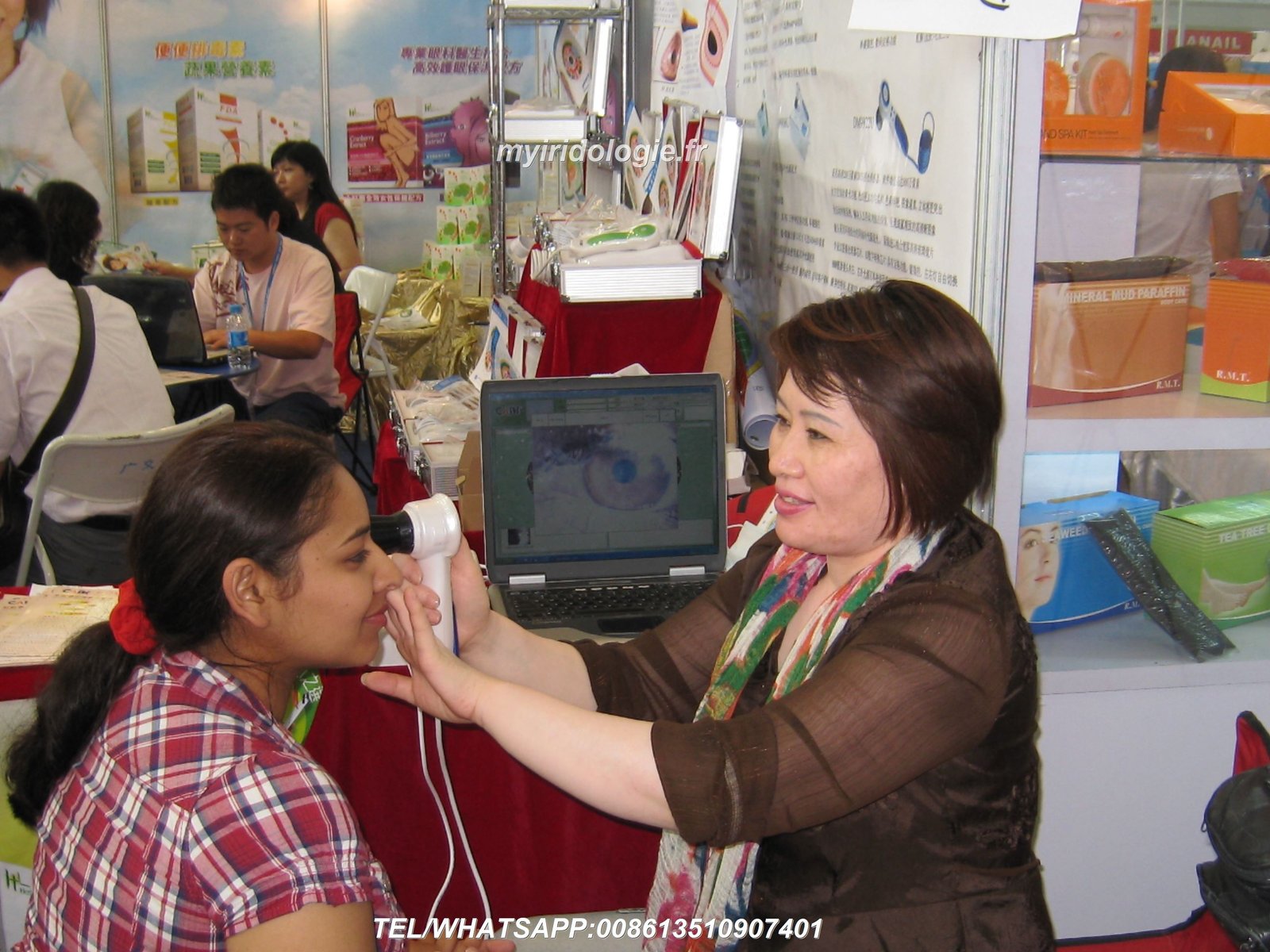
Live instruction offers immediate feedback on technique. When you’re learning to position an iriscope correctly or interpret a subtle iris sign, instructor guidance in real-time accelerates skill development. You also practice on diverse live subjects, not just photos.
Hands-on programs build confidence faster. You leave knowing you can actually perform iris examinations, not just understand theory. Networking opportunities with classmates often lead to referral relationships or practice partnerships after certification.
- Direct hands-on practice with professional equipment
- Immediate correction of technique and interpretation errors
- Examination of live subjects with varying iris types
- Networking with local holistic health professionals
- Structured accountability helping you complete training
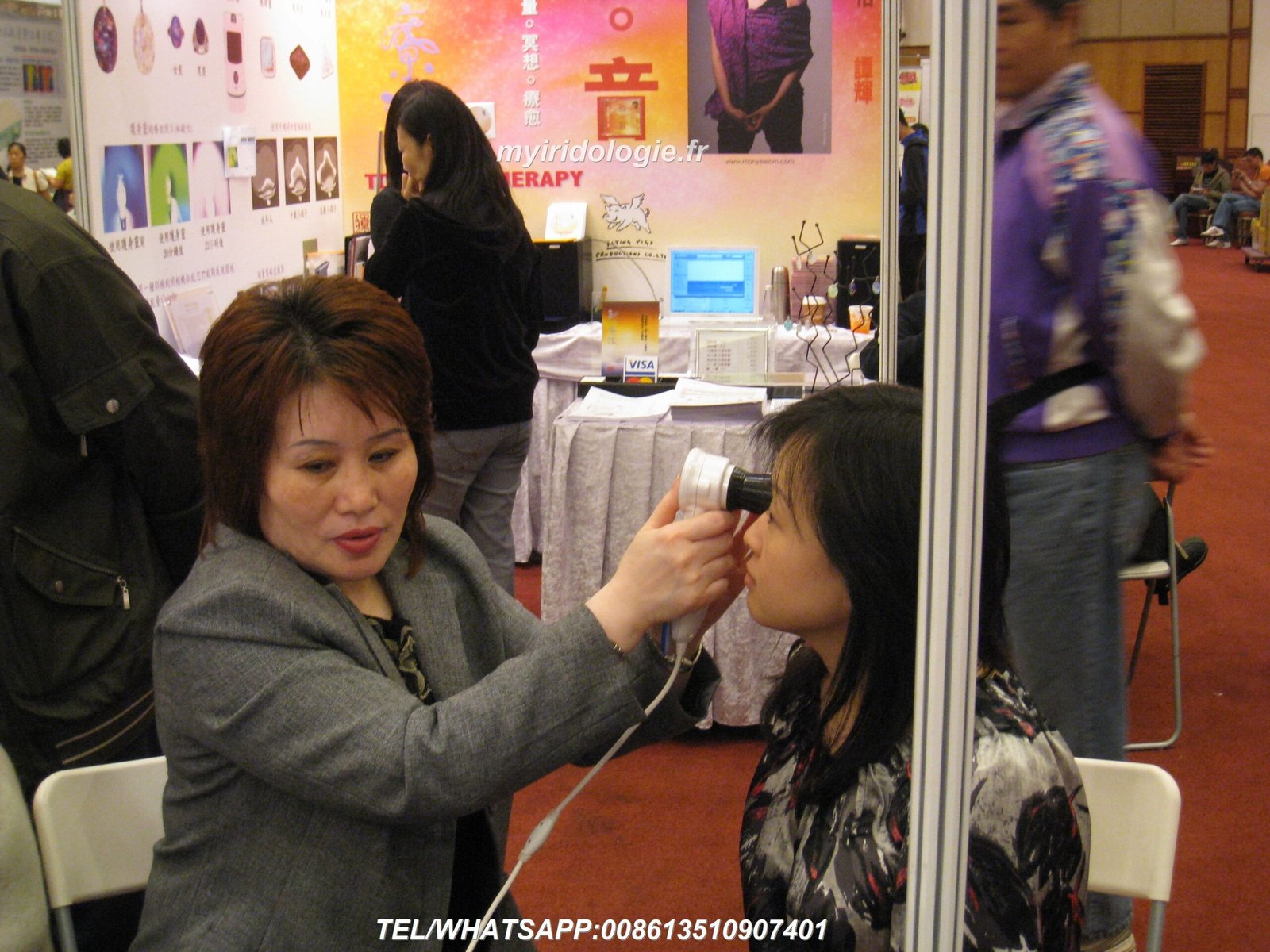
Hybrid Solution: Many quality programs now offer blended formats. You complete theoretical coursework online, then attend periodic weekend intensives for hands-on practice. This combines flexibility with practical skill development. It’s often the most cost-effective approach while maintaining training quality.
Evaluating Online Program Quality
Not all online holistic iridology courses offer equal value. Check if programs include live interaction opportunities, not just pre-recorded videos. Quality online training provides regular Q&A sessions, office hours with instructors, or peer practice coordination.
Verify that online programs include practical components. You should receive guidance on acquiring appropriate equipment. Some courses ship practice iris image sets. Others arrange local practicum options where you complete hands-on requirements near your location under approved supervisors.
Certificate vs. Non-Certificate Programs: What’s the Difference?
Certification status significantly impacts your practice options and client trust. Certificate programs meet specific educational standards set by iridology associations or training institutions. Non-certificate courses offer valuable knowledge but don’t grant formal credentials.
What Certification Actually Means
Certified holistic iridology programs typically require minimum training hours, competency assessments, and ongoing education. You receive credentials from recognized organizations like the International Iridology Practitioners Association or specific training schools with established reputations.
Certification demonstrates you completed standardized training. It signals to clients you learned from qualified instructors following proven curriculum. Many wellness centers and holistic clinics prefer or require certification when hiring iridologists or credentialing practitioners for facility privileges.
Certification Benefits
- Professional credibility with clients and healthcare partners
- Qualification for professional liability insurance coverage
- Listing in practitioner directories and referral networks
- Ability to charge professional fees for services
- Compliance with some state or local business regulations
- Access to continuing education and professional development
Non-Certificate Limitations
- Reduced client confidence in your expertise
- Difficulty obtaining professional insurance
- May not meet requirements for wellness center employment
- Limited business license options in some jurisdictions
- Exclusion from professional associations and networks
- Challenges building referral relationships with licensed practitioners
Certification Levels and Progression Paths
Most holistic iridology associations recognize tiered certification. Entry-level might require 40-60 training hours and basic competency. Intermediate certification demands 80-150 hours plus case studies. Advanced diplomate holistic iridology status needs 200+ hours, extensive documented practice, and sometimes original research contributions.
Practical iridology certifications from programs like Peter Jackson’s system emphasize clinical application. These focus heavily on pattern recognition and wellness recommendation skills. Academic programs might stress research understanding and theory. Choose based on your intended practice style.
Some specialized certifications exist for niche applications. Cambridge holistic iridology programs may emphasize European approaches. Programs affiliated with institutions like Holistic Care Iridology SDN BHD in Malaysia bring cultural perspectives. The International Integrative Healthcare and Holistic Iridology Congress offers advanced practitioner credentials recognized globally.

Equip Your Training Program with Professional-Grade Iridology Tools
We supply 1,000+ holistic health training centers worldwide with certified iriscope cameras and 17-language software. Our OEM solutions support curriculum customization for fundamental through diplomate-level courses. Professional training programs partner with ISO-certified manufacturers like MAIKONG to ensure students learn on industry-standard diagnostic equipment.
Training Duration and Time Investment for Holistic Iridology Certification
Time requirements vary significantly between programs and certification levels. Understanding typical durations helps you plan your educational investment and set realistic practice launch timelines.
Typical Training Timeframes by Certification Level
| Certification Level | Training Hours | Study Duration | Practice Requirements | Cost Range |
| Introductory Course | 20-40 hours | 2-4 weeks full-time or 2-3 months part-time | None required | $400-$800 |
| Basic Practitioner | 60-100 hours | 2-4 months full-time or 6-9 months part-time | 10-20 documented practice exams | $1,200-$2,500 |
| Certified Iridologist | 120-180 hours | 4-6 months full-time or 10-15 months part-time | 50+ documented client sessions | $2,500-$5,000 |
| Advanced Practitioner | 200-300 hours | 6-12 months full-time or 18-24 months part-time | 100+ sessions, case studies, mentorship | $4,000-$8,000 |
| Diplomate Status | 300+ hours | 12-18 months minimum | 200+ sessions, published work, teaching hours | $6,000-$12,000 |

Factors Affecting Your Training Timeline
Your prior knowledge accelerates learning. Healthcare professionals with anatomy background typically complete training 25-40% faster than career changers. Previous experience with other holistic modalities also shortens learning curves.
Practice hour requirements extend certification timelines significantly. You need access to willing subjects for iris examinations. Some students find subjects easily through their existing client base or social networks. Others must recruit volunteers, adding months to certification completion.
Accelerating Your Training
- Dedicate consistent study time rather than sporadic intensive sessions
- Join study groups for accountability and peer learning
- Invest in quality equipment early to maximize practice time
- Volunteer at health fairs or wellness events to gain examination practice
- Work with a mentor who can guide efficient skill development
Common Timeline Delays
- Difficulty scheduling required practice examinations with subjects
- Waiting for periodic in-person practicum dates in hybrid programs
- Needing to repeat competency assessments
- Personal or professional obligations interrupting study consistency
- Equipment purchasing delays preventing practice completion
Continuing education extends throughout your career. Most certifying bodies require 10-20 hours annually to maintain active status. You attend workshops, conferences like the International Integrative Healthcare and Holistic Iridology Congress, or complete online courses covering new research and advanced techniques.
Essential Equipment and Software for Practical Iridology
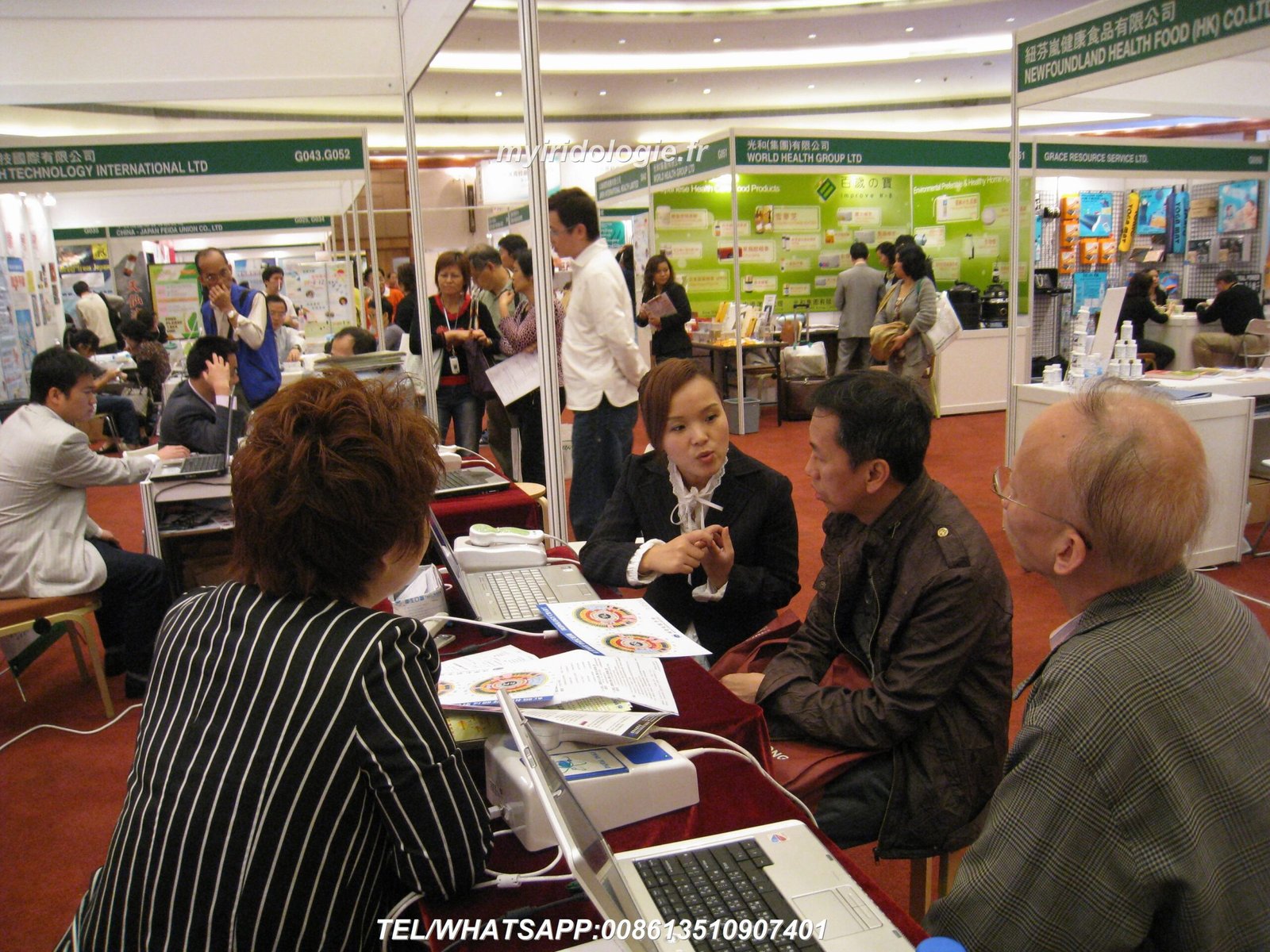
Quality equipment forms the foundation of effective holistic iridology practice. You cannot develop accurate interpretation skills practicing with inadequate tools. Professional training requires specific hardware and software capabilities.
Core Equipment Requirements
Every practitioner needs a reliable iridology camera. Basic models serve introductory learning but limit advanced work. Professional-grade iriscopes provide the image clarity necessary for identifying subtle signs that distinguish competent practitioners.

Entry-Level USB Iriscope
Suitable for introductory students and wellness professionals adding basic iris observation. Provides 5-8 megapixel resolution adequate for learning fundamental iridology signs and major zone identification.
Image Quality: 5-8 MP
Best For: Students, basic wellness screening
Typical Investment: $200-$600

Professional 12MP Iriscope
The MK-9822U from MAIKONG delivers 12-megapixel resolution with 30X magnification lens. Adjustable LED illumination and USB 2.0 connectivity ensure consistent, high-quality iris captures for detailed analysis.
Image Quality: 12 MP with 30X lens
Best For: Certified practitioners, training programs
Typical Investment: $800-$1,800
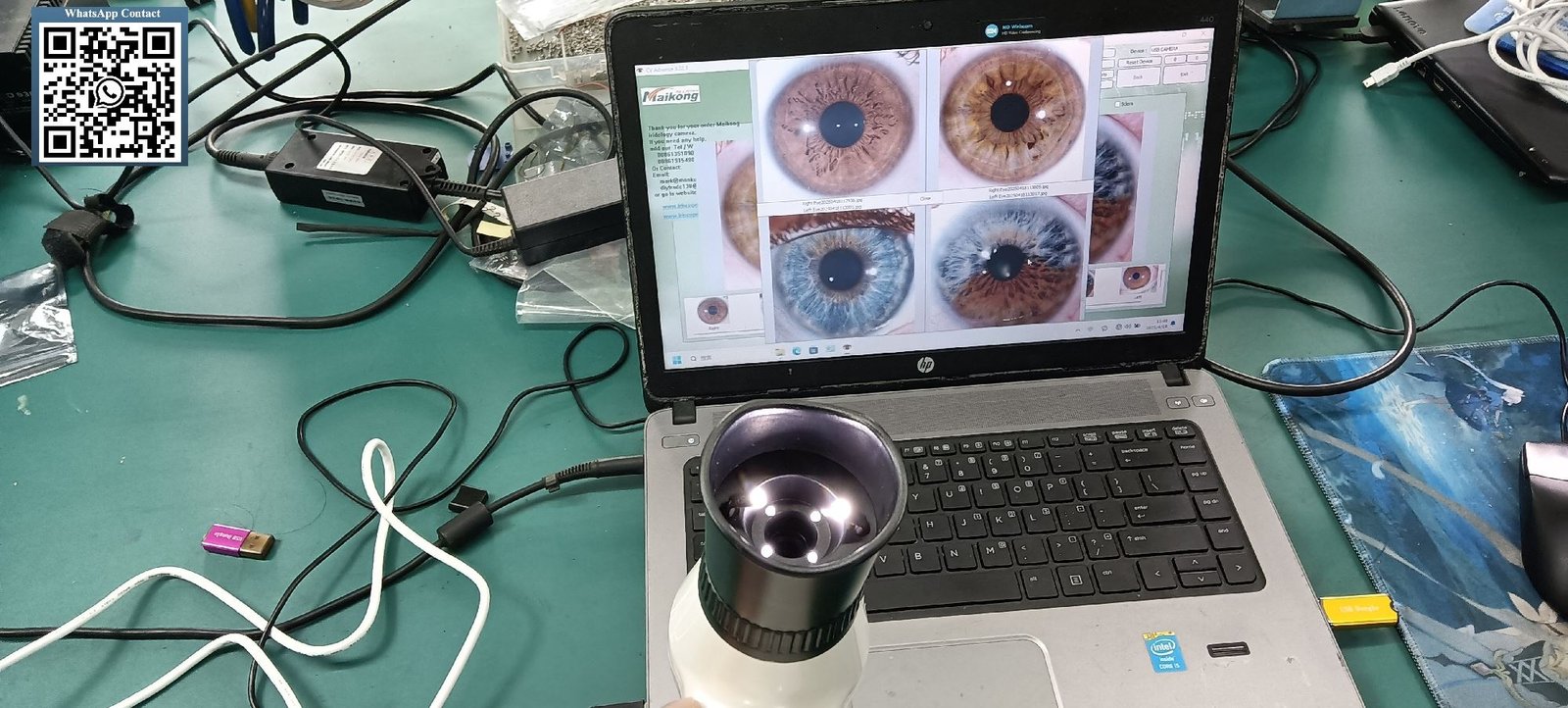
Advanced Imaging Systems
High-end systems offer 16+ megapixel sensors, advanced illumination control, and specialized imaging modes. Essential for diplomate-level practitioners conducting research or teaching, providing unprecedented iris detail capture.
Image Quality: 16+ MP with specialty optics
Best For: Research, teaching, specialty practice
Typical Investment: $2,000-$5,000
Software Requirements for Modern Practice
Analysis software transforms captured iris images into actionable insights. Quality iridology software overlays iris charts, enables zone marking, stores client records, and generates professional reports. Without proper software, you’re limited to manual chart comparison and written notes.
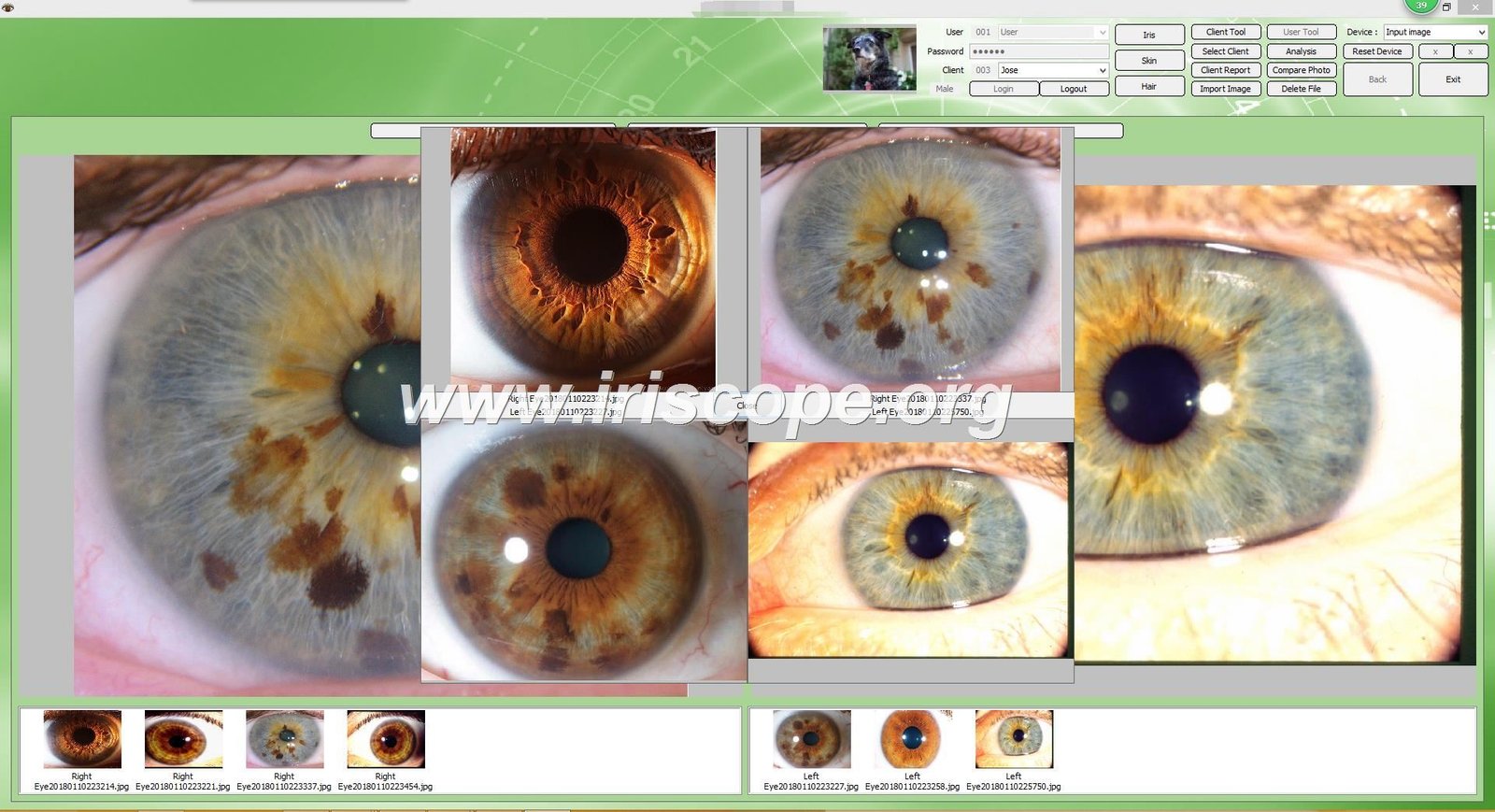
Essential Software Features
- High-resolution iris image capture and storage capabilities
- Overlay of accurate iris zone charts on captured images
- Client database management with examination history tracking
- Professional report generation with customizable templates
- Before-and-after comparison tools for tracking changes over time
- Integration with practice management and billing systems
MAIKONG Software Advantages
The MAIKONG 2024 software supports Windows XP through 11 and macOS systems. It provides 17-language options including English, Spanish, German, French, Korean, and Traditional Chinese. This makes it ideal for training programs serving international students or practitioners with multilingual client bases.
Software includes automatic iris analysis using AI-based assessment. It identifies constitutional types, marks significant signs, and suggests wellness areas needing attention. The system backs up client data to cloud storage and enables multi-device access for practitioners working from multiple locations.
MAIKONG MK-9822U Professional Iriscope Specifications
| Specification | Details |
| Model Number | MK-9822U Professional Iriscope |
| Image Sensor | 12.0 Megapixel High-Resolution CCD |
| Optical System | 30X Magnification Iris Lens with Imported Optics |
| Illumination | Adjustable LED Ring Light with Color Temperature Filter |
| Connectivity | USB 2.0 Plug-and-Play (no external power required) |
| Image Stabilization | Optical Image Stabilizer (OIS) with DSP Processor |
| Focus System | Adjustable Manual Focus for Precise Image Capture |
| Compatible Software | MAIKONG 2024 Analysis System (17 Languages) |
| Operating Systems | Windows XP/Vista/7/8/10/11 (32/64-bit), macOS 10.14+ |
| Certifications | CE Certified, ISO9000 Quality Management |
| Warranty Period | 1 Year Manufacturer Warranty with Technical Support |
| Manufacturing Origin | GD, SZ, China (MAIKONG Factory) |
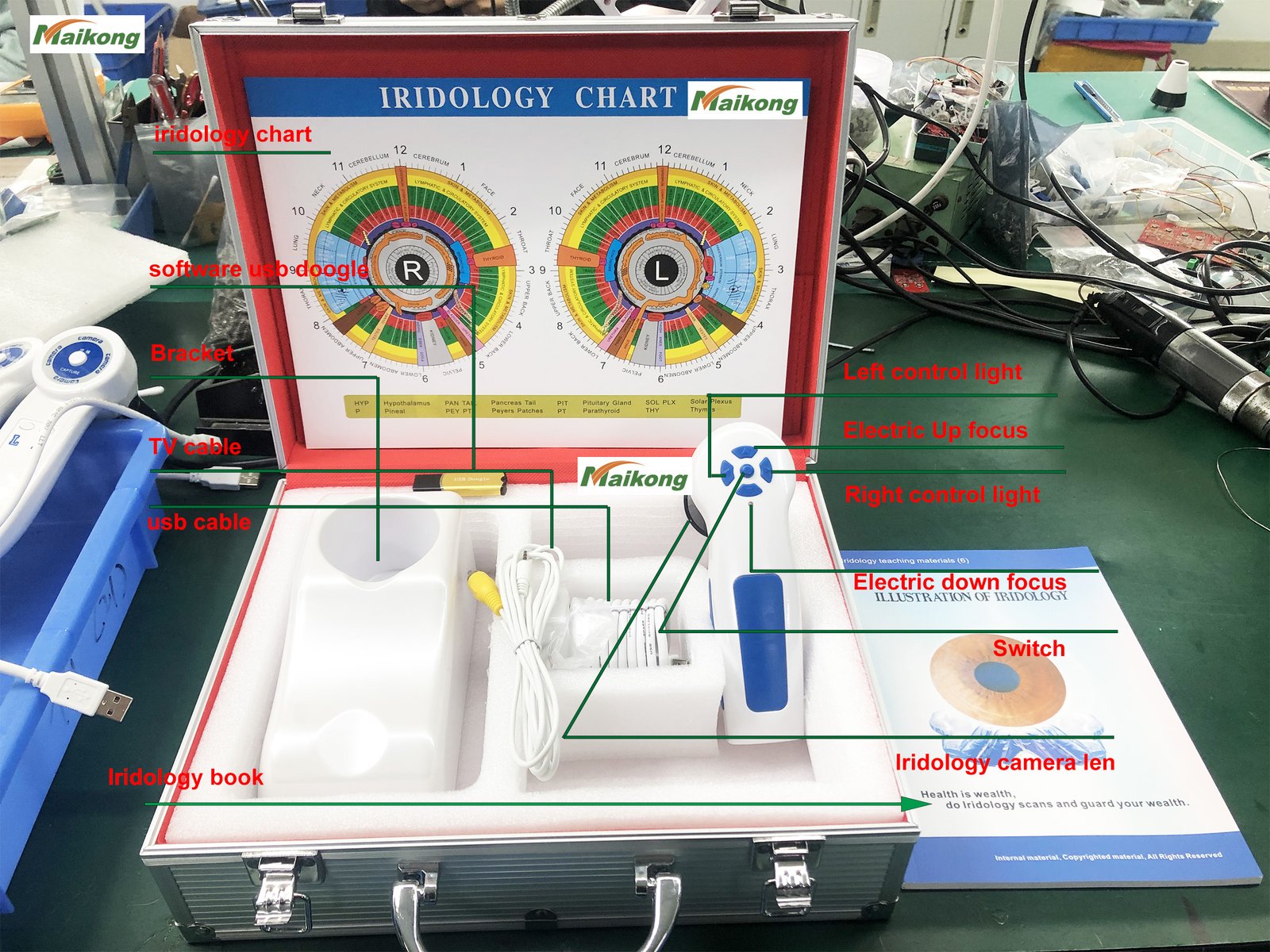
Complete Package Contents
| Package Item | Quantity | Purpose |
| Professional Iriscope Handset | 1 unit | Primary iris imaging device |
| 30X Magnification Iris Lens | 1 unit | High-resolution iris capture |
| Protective Lens Cover | 1 unit | Lens protection during storage |
| USB Connection Cable (1.5M) | 1 unit | Computer connectivity |
| Premium Leather Carrying Case | 1 unit | Equipment transport and storage |
| Comprehensive Iridology Chart | 1 unit | Reference guide for analysis |
| Installation CD/USB Drive | 1 unit | Software and driver installation |
| User Manual & Warranty Card | 1 set | Operating instructions and warranty terms |
Supporting Equipment and Accessories
Beyond the core camera and software, consider these practice enhancements. A stable iridology camera stand improves examination consistency and reduces operator fatigue during busy days. Adjustable stands enable comfortable positioning for clients of varying heights.
Proper lighting in your examination room matters significantly. While the iriscope provides its own illumination, ambient lighting affects client comfort and overall image quality. Dimmable, adjustable lighting lets you control the environment for optimal examination conditions.
Additional Practice Tools
- High-quality printable iris charts for client education
- Digital pen tablet for marking and annotating iris images
- Large display monitor or tablet for showing clients their iris examination
- Proper sanitation supplies and lens cleaning materials
- Client consent forms and privacy documentation

Training institutions and clinics offering multiple services benefit from OEM equipment customization. MAIKONG provides hardware modifications including custom branding, color options, and feature adjustments. Software customization adds your logo, adjusts interface languages, and can integrate proprietary wellness protocols or product recommendations into reports.
Understanding Course Costs and What Affects Pricing

Holistic iridology training represents a significant professional investment. Understanding cost factors helps you budget appropriately and evaluate program value. Prices vary dramatically based on certification level, instructor credentials, format, and included resources.
Training Program Cost Components
Tuition covers instruction, curriculum materials, and access to learning platforms. Entry-level courses might cost $400-$800 for basic content. Comprehensive practitioner certification programs range from $2,500-$5,000. Advanced diplomate programs can exceed $10,000 when including all requirements and examination fees.
Included in Program Tuition
- Video lectures, presentations, and demonstration materials
- Digital textbooks, workbooks, and reference documents
- Access to online learning platforms and student forums
- Practice iris image libraries for skill development
- Examination fees for competency assessments
- Initial certification application and processing
Additional Costs to Budget
- Equipment purchases (iriscope camera $500-$2,000)
- Analysis software ($200-$800 or included with equipment)
- Travel and accommodation for in-person components
- Professional liability insurance after certification
- Annual certification maintenance and continuing education
- Business setup costs (licenses, marketing, practice space)
Equipment Investment Considerations
Equipment represents your largest single expense beyond tuition. Entry-level students often start with basic USB cameras around $300-$600. As skills develop, upgrading to professional equipment becomes necessary for serious practice.
The MK-9822U professional iriscope typically costs $1,200-$1,800 depending on configuration and included software. This investment serves you throughout your career. Quality equipment maintains resale value well if you later upgrade to advanced systems.
Cost-Saving Strategy: Many training programs partner with equipment manufacturers to offer student discounts. Enrolling in programs affiliated with MAIKONG or other manufacturers may provide 15-25% discounts on professional equipment bundles. Some programs include basic equipment in tuition pricing.
Return on Investment Timeline
Calculate your break-even point before committing to training. If total investment including training and equipment equals $5,000, and you charge $75 per iris examination, you need 67 paid sessions to recover costs. Factor in time to build clientele and establish reputation.
| Practice Model | Session Fee | Sessions/Month | Monthly Revenue | Break-Even Timeline |
| Part-Time Add-On Service | $60-$80 | 10-20 | $600-$1,600 | 4-8 months |
| Part-Time Dedicated Practice | $75-$100 | 20-40 | $1,500-$4,000 | 2-4 months |
| Full-Time Holistic Practice | $100-$150 | 60-100 | $6,000-$15,000 | 1-2 months |
| Training Center/School | $1,500-$3,000 per student | 5-15 students | $7,500-$45,000 | Immediate-1 month |
Most practitioners incorporating holistic iridology into existing wellness practices recover training investments within 3-6 months. Those building dedicated iridology practices may need 8-12 months depending on marketing effectiveness and local market conditions.
Financing and Payment Options
Many training institutions offer payment plans spreading tuition over training duration. This reduces upfront financial burden. Some schools provide income share agreements where you pay percentage of future earnings rather than fixed tuition.
Equipment financing options exist through healthcare equipment lenders. MAIKONG works with distributors offering lease-to-own programs for qualified practitioners. Monthly payments of $80-$150 make professional equipment accessible while building your practice.
How to Evaluate Training Provider Credibility
Not all holistic iridology programs deliver equal education quality. Choosing a reputable training provider ensures you learn accurate information, develop proper skills, and earn credentials that carry professional weight. Several factors distinguish quality programs from questionable ones.
Instructor Credentials and Experience

Research lead instructors thoroughly. Quality programs employ practitioners with minimum 10-15 years active iridology experience. Look for diplomate-level certification from recognized bodies. Instructors should maintain active practices, not just teach theory disconnected from real-world application.
Check if instructors contribute to iridology research or professional literature. Publications in peer-reviewed journals, books, or presentations at conferences like the International Integrative Healthcare and Holistic Iridology Congress indicate thought leadership. Beware programs led by instructors with only online certification and no documented practice history.
Association Recognition and Accreditation
Legitimate training programs maintain affiliations with established iridology associations. Organizations like the International Iridology Practitioners Association set educational standards and ethics requirements. Programs meeting their criteria provide curricula covering essential competencies.
Signs of Reputable Programs
- Accreditation by recognized iridology associations or holistic health bodies
- Clear curriculum outlining learning objectives and competencies
- Transparent instructor credentials with verifiable backgrounds
- Multiple student reviews and graduate testimonials available
- Established history operating for 5+ years minimum
- Professional liability insurance available to graduates
- Continuing education offerings beyond initial certification
Red Flags to Avoid
- Promises of medical diagnostic abilities or disease treatment
- Unrealistic timeframes like “certified in one weekend”
- No clear instructor backgrounds or credentials listed
- Pressure tactics or limited-time enrollment urgency
- No refund policy or guarantees on learning outcomes
- Generic “wellness certification” without iridology specificity
- Inability to contact current students or recent graduates
Curriculum Depth and Practical Components
Examine course outlines carefully. Comprehensive programs cover iris anatomy, historical context, constitutional types, zone systems, sign interpretation, ethics, legal boundaries, and business development. Entry-level courses understandably cover less depth, but even basic programs should address these areas fundamentally.
Practical training separates effective programs from theoretical ones. You must examine real irises, not just study photographs. Programs should require documented practice examinations. Mentorship or supervised clinical hours indicate commitment to skill development beyond knowledge transfer.
Program Evaluation Checklist: Contact three graduated students directly. Ask about instructor accessibility, practical training adequacy, equipment guidance received, post-certification support, and whether they feel prepared for practice. Current student referrals may be biased; graduates provide more honest assessments.
Ongoing Support and Community
Quality training extends beyond certification completion. Look for programs offering alumni networks, continuing education opportunities, and practice-building resources. Access to instructor consultation during early practice stages helps you navigate challenging cases and build confidence.
Programs connected to active practitioner communities provide valuable peer support. Student forums, regional meetups, or online case discussion groups facilitate ongoing learning. Isolated programs leaving you alone after certification offer limited professional development support.

Partner with a Trusted Equipment Manufacturer for Your Training Program
Training institutions worldwide trust MAIKONG for professional-grade iridology equipment. With 20+ years manufacturing experience, ISO9000 certification, and CE compliance, we support educational programs with reliable diagnostic tools. Our OEM services enable curriculum-specific customization, and our 17-language software supports international training delivery. Stock warehouses in China and the USA ensure prompt equipment delivery for program launches.
Legal Considerations and Practice Boundaries

Understanding legal boundaries protects your practice and clients. Holistic iridology operates differently than licensed medical diagnosis. Clear comprehension of scope of practice prevents regulatory issues and maintains professional integrity.
Scope of Practice for Holistic Iridology
Iridology constitutes wellness assessment, not medical diagnosis. You observe iris patterns and discuss observations with clients within educational context. You cannot diagnose disease, prescribe medication, or claim to treat medical conditions. These activities require medical licensure.
State laws vary regarding complementary and alternative health practices. Some states regulate iridology practice specifically. Others include it under broader wellness consultant or holistic health practitioner definitions. A few states have no specific regulations but prohibit diagnosis without medical licensure.
Permitted Activities
- Observing and photographing iris structures
- Discussing iris patterns and their traditional meanings
- Providing wellness education and lifestyle suggestions
- Recommending nutritional supplements or dietary changes
- Referring clients to licensed medical professionals when appropriate
- Maintaining client records documenting observations
Prohibited Activities
- Diagnosing medical diseases or health conditions
- Claiming iridology can detect specific diseases
- Prescribing pharmaceutical medications
- Guaranteeing health outcomes or disease cure
- Advising clients to stop prescribed medical treatments
- Representing yourself as a medical doctor without licensure
Required Disclosures and Informed Consent
Clear client communication protects both parties. Provide written disclosures explaining holistic iridology’s educational nature and wellness focus. Consent forms should state that services don’t constitute medical diagnosis or treatment and don’t replace professional medical care.
Critical Compliance Requirement: All marketing materials, websites, intake forms, and consultation reports must clearly state: “Holistic iridology observations are for educational and wellness purposes only. They do not diagnose medical conditions, replace medical examination, or constitute treatment for disease. Always consult qualified healthcare providers for health concerns.”
Business Licensing and Insurance Requirements
Most jurisdictions require basic business licenses for holistic health services. Check local requirements for home-based versus commercial location practices. Some areas require seller’s permits if you retail supplements or wellness products alongside services.
Professional liability insurance proves essential. Policies designed for complementary health practitioners typically cost $300-$800 annually. Coverage protects against claims alleging harm from advice or services provided. Many insurance companies require proof of certification from recognized training programs.

Advertising and Marketing Compliance
Federal Trade Commission regulations prohibit deceptive health claims. You cannot advertise disease diagnosis or treatment capabilities. Testimonials must be genuine and represent typical experiences. Before-and-after photos require careful disclaimers about individual results variation.
Terms like “doctor” or “physician” when you’re not medically licensed can trigger legal issues. Use accurate titles like “Certified Holistic Iridologist,” “Wellness Consultant,” or “Iridology Practitioner.” Many states specifically prohibit non-licensed practitioners from using medical terminology in business names or advertising.
Record-Keeping and Privacy Requirements
Maintain detailed records of client interactions, observations, and recommendations. Document informed consent, disclosures provided, and referrals to medical professionals when made. Proper records protect you if questions arise about services provided.
HIPAA regulations may not technically apply to non-medical wellness services, but following similar privacy standards demonstrates professionalism. Secure client records, obtain permission before sharing information, and maintain confidentiality unless legally required to disclose.
After Graduation: Building Your Iridology Practice
Certification completion marks the beginning of your professional journey. Successful practice development requires strategic planning, consistent marketing, and continuous skill refinement. Consider how holistic iridology fits your overall career vision.
Practice Models and Service Integration
Most new practitioners integrate iridology into existing wellness services rather than building standalone practices. If you’re already a nutritionist, health coach, or alternative practitioner, iridology becomes a powerful assessment tool complementing your current offerings. Clients appreciate the visual, tangible nature of iris examination.
Standalone iridology practices require more intensive marketing and community education. You must explain the service value since iridology remains less familiar than massage or chiropractic care. Successful independent practitioners often combine iridology with product sales, workshops, or related services creating multiple revenue streams.
Add-On Service Model
Incorporate iris examinations into existing wellness consultations. Charge $30-$60 additional for iris analysis as part of comprehensive assessment packages.
Best For: Established practitioners with existing client bases
Investment: Minimal beyond training and equipment
Timeline: Immediate revenue from current clients
Specialized Practice Model
Build dedicated iridology consultation practice offering detailed examinations, follow-up sessions, and wellness planning based on iris observations.
Best For: Practitioners wanting focused expertise in one modality
Investment: Marketing, professional space, business development
Timeline: 6-18 months building clientele
Training and Education Model
Teach holistic iridology courses while maintaining limited practice. Combines service delivery with curriculum development and student instruction.
Best For: Experienced practitioners with teaching interest
Investment: Curriculum development, marketing, equipment for student training
Timeline: 2-3 years establishing reputation before teaching
Equipment Considerations for Growing Practices
Your entry-level equipment serves initial clients well but may limit growth. As your practice expands, investing in professional-grade systems like the MK-9822U improves service quality and client satisfaction. Better image clarity enables more confident interpretations and more impressive client presentations.
Training centers and multi-practitioner clinics benefit from equipment standardization. Using identical iriscopes and software across multiple practitioners ensures consistent client experiences. Bulk equipment purchases often qualify for volume discounts from manufacturers like MAIKONG.
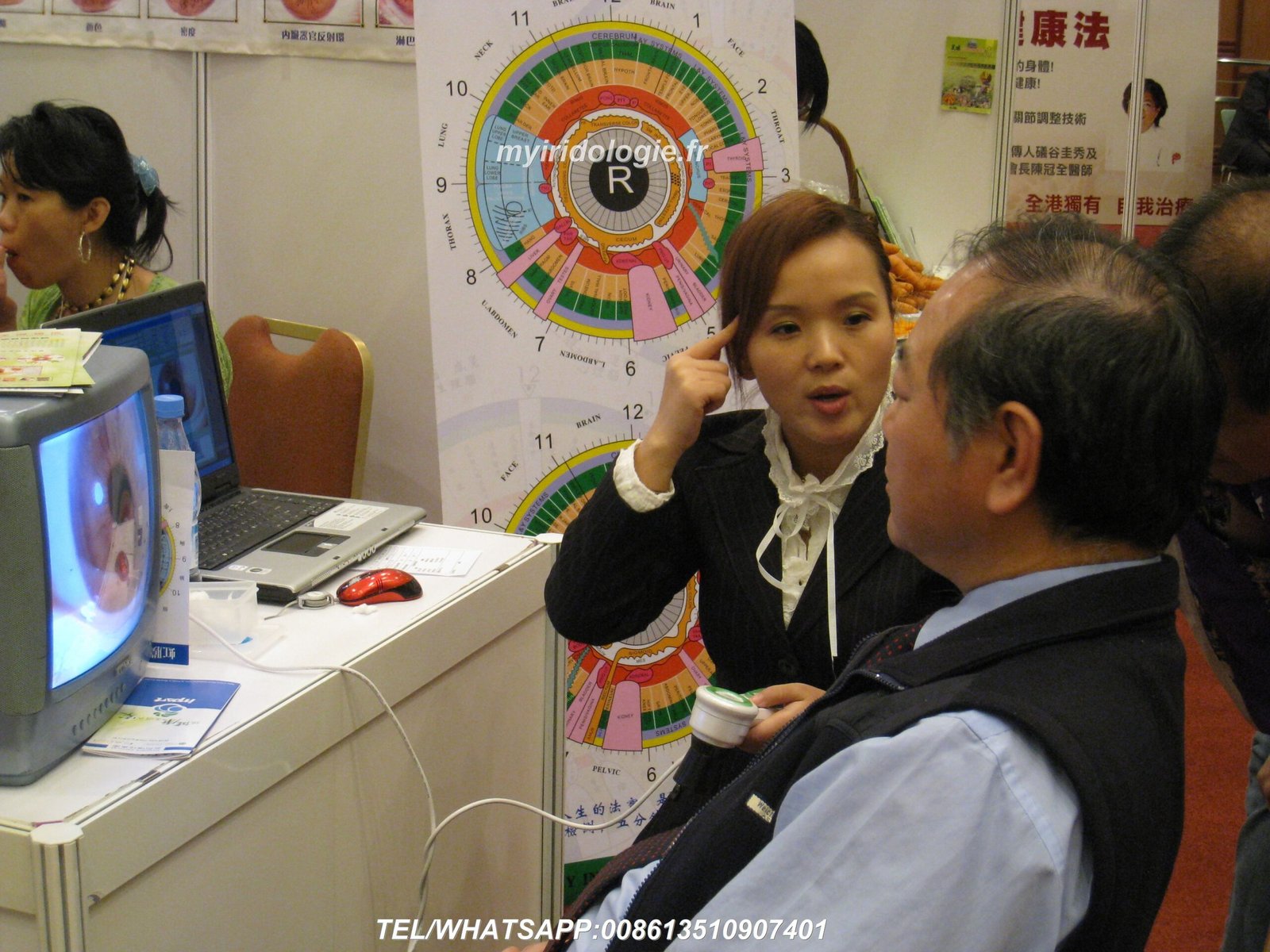
Multi-Language Practice Support
MAIKONG’s 17-language software capabilities support diverse client populations. Practitioners in multicultural areas can conduct examinations and generate reports in clients’ preferred languages including English, Spanish, Korean, Persian, and Mandarin Chinese.
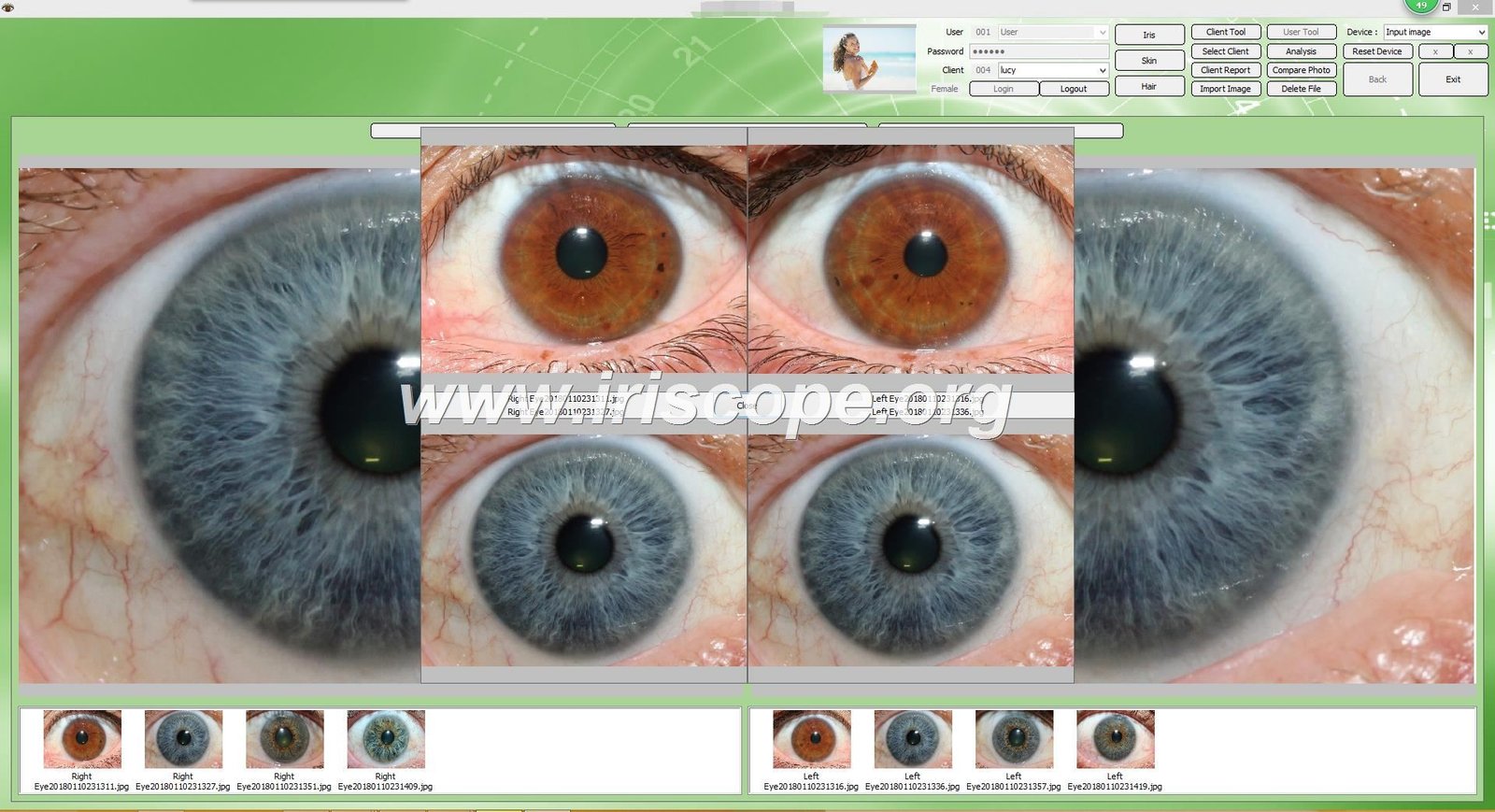
Practice Management Integration
Modern systems integrate with scheduling, billing, and client relationship management tools. Cloud backup ensures client data security while enabling access from multiple devices and locations for mobile practitioners.
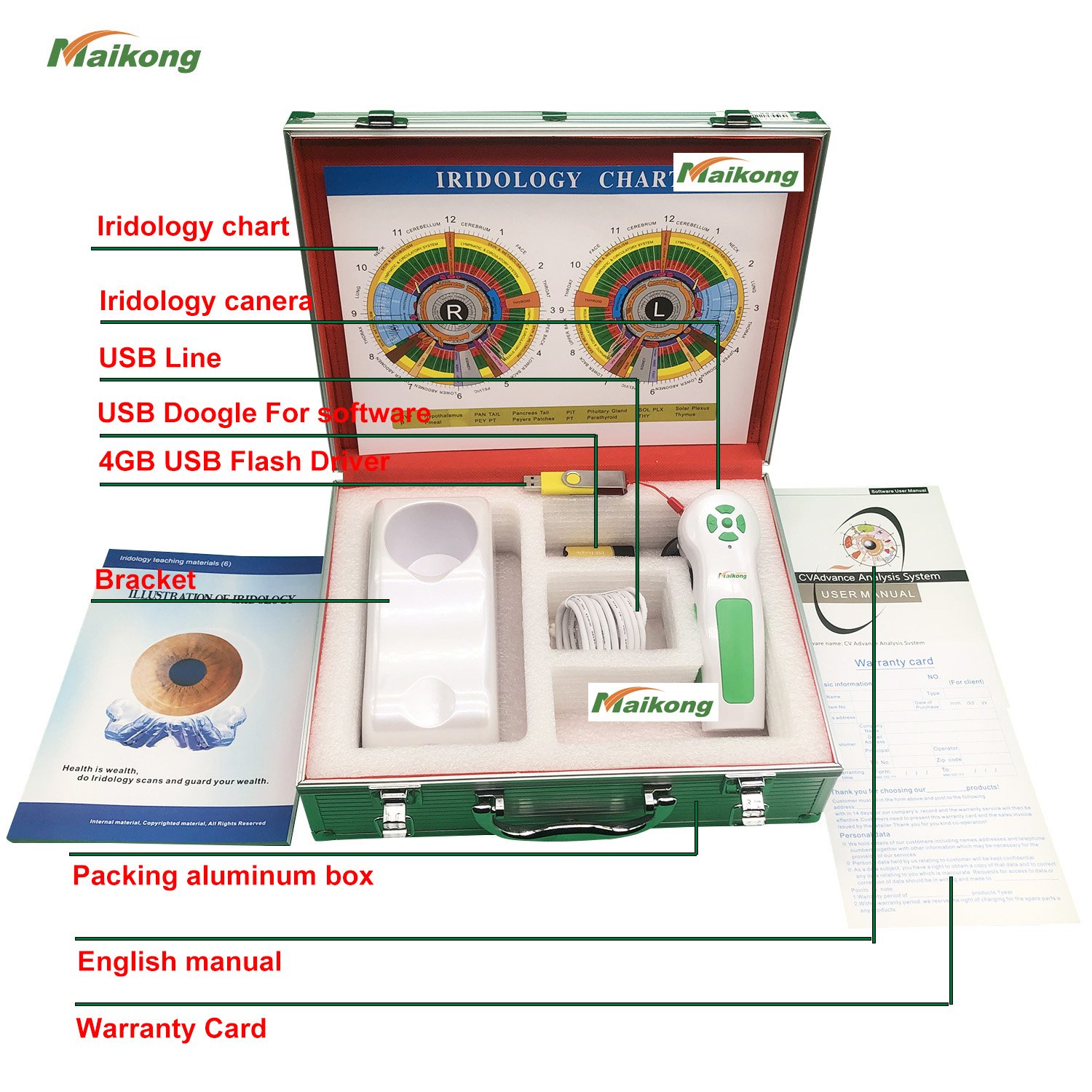
Complete Practice Solutions
Turnkey equipment packages include everything needed for immediate practice launch. Professional iriscope, analysis software, camera stand, iris charts, client intake forms, and practice guides simplify setup for new practitioners.
Marketing Your Holistic Iridology Services
Education-based marketing proves most effective for iridology services. Free community workshops explaining holistic iridology basics attract interested prospects. Demonstrations at health fairs, wellness expos, or farmers markets introduce people to iris observation’s visual appeal.
Digital marketing should emphasize education over selling. Blog posts about iris patterns, social media content showing (with permission) iris variations, and video explanations of the history from Ignaz von Peczely build interest. Always include disclaimers clarifying wellness focus versus medical diagnosis.
Effective Marketing Strategies
- Partner with complementary practitioners for cross-referrals
- Offer introductory iris screenings at reduced rates
- Create educational content demonstrating your expertise
- Collect testimonials from satisfied clients (with compliant language)
- Network within holistic health and natural medicine communities
- Maintain professional online presence with proper credentials displayed
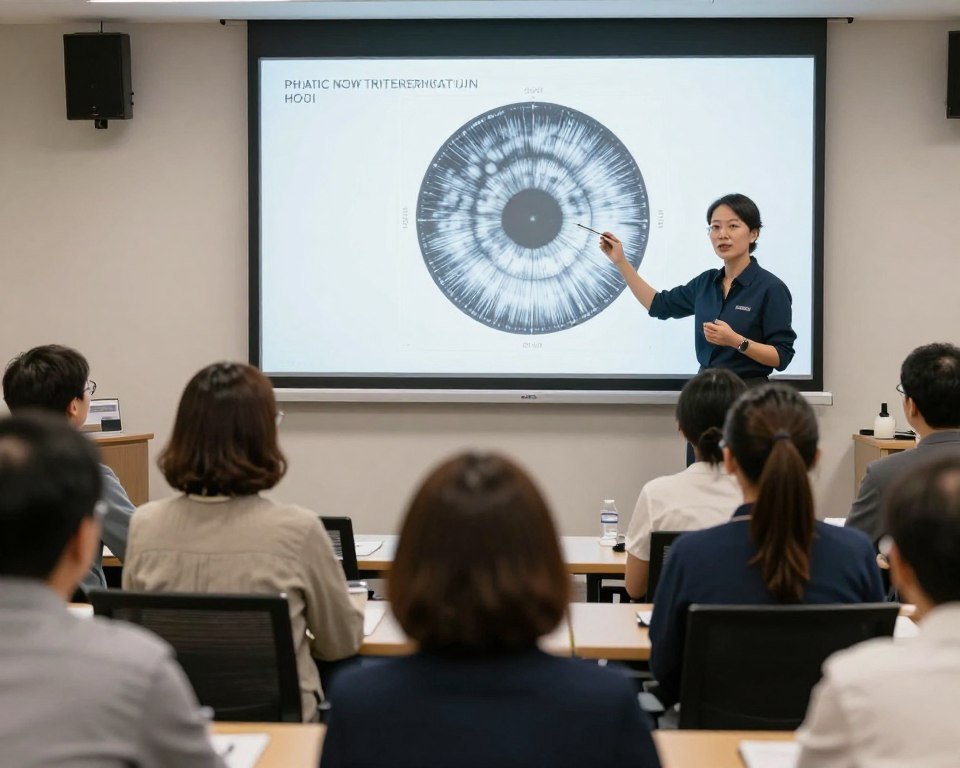
Continuing Education and Skill Development
Maintaining cutting-edge knowledge keeps your practice relevant and effective. Attend annual conferences and workshops. The International Integrative Healthcare and Holistic Iridology Congress brings together leading practitioners worldwide. Regional meetings and online webinars offer convenient learning opportunities.
Advanced certifications demonstrate commitment to excellence. After establishing foundational practice, pursue specialized training in areas like constitutional iridology, pediatric iris analysis, or iridología holistica approaches from different cultural traditions. Each specialty opens new client opportunities.
Stay current with research developments. While iridology remains controversial in mainstream medicine, ongoing studies explore iris-health correlations. Understanding research findings enables intelligent discussion with skeptical colleagues and informed clients seeking evidence-based wellness approaches.
Frequently Asked Questions About Holistic Iridology Training
What is holistic iridology and how does it differ from traditional iridology?
Holistic iridology examines iris patterns to assess overall wellness using a comprehensive approach that integrates multiple health factors. Traditional iridology focuses primarily on iris zone interpretation related to specific organs. Holistic iridology expands this foundation by incorporating constitutional types, lifestyle influences, emotional factors, and integrative wellness principles. Practitioners using holistic approaches consider nutrition, stress, environmental factors, and personal health history alongside iris observations. This creates a more complete picture of client wellness needs compared to purely structural iris analysis. The holistic method aligns with integrated iridology concepts that view health as interconnected body systems rather than isolated organ function.
How long does it take to become certified in holistic iridology?
Certification timelines vary based on program level and your study pace. Basic practitioner certification typically requires 60-100 training hours, completable in 2-4 months full-time or 6-9 months part-time. Comprehensive certified iridologist credentials need 120-180 hours, taking 4-6 months full-time or 10-15 months part-time including required practice examinations. Advanced diplomate holistic iridology certification demands 300+ hours with extensive documented practice, usually requiring 12-24 months. Your background affects speed—healthcare professionals with anatomy knowledge often progress 25-40% faster than complete beginners. Programs requiring supervised practice hours or periodic in-person intensives may extend timelines based on scheduling availability. Most certification bodies also require ongoing continuing education (10-20 hours annually) to maintain active credential status.
Do I need expensive equipment to practice holistic iridology?
Professional practice requires quality equipment but you can start affordably. Entry-level students often begin with basic USB iridology cameras costing $300-$600, sufficient for learning fundamental iridology signs and zone identification. However, serious practitioners should invest in professional-grade equipment like 12-megapixel iriscopes ($800-$1,800) that capture the detail necessary for confident interpretation of subtle iris patterns. Quality matters because unclear images prevent accurate observation of important signs affecting client recommendations. Complete professional setups including camera, analysis software, computer, iris charts, and camera stand typically total $2,000-$4,000. Many training programs offer student equipment discounts or payment plans. Consider equipment an essential business investment—quality tools last 5-10+ years and directly impact service quality and client satisfaction. You cannot develop accurate practical iridology skills without proper equipment enabling clear iris visualization.
Can I offer holistic iridology services without a medical license?
Yes, you can practice holistic iridology without medical licensure in most US jurisdictions, but you must understand scope of practice boundaries carefully. Iridology constitutes wellness assessment and education, not medical diagnosis. You may observe iris patterns, discuss traditional interpretations, provide wellness education, and suggest lifestyle or nutritional changes. You cannot diagnose diseases, prescribe medications, or claim to treat medical conditions—these require medical licensure. State laws vary—some specifically regulate holistic health practices while others have no specific iridology regulations. You’ll need basic business licenses, professional liability insurance, and must provide clear written disclosures that services don’t replace medical care. Always refer clients to licensed healthcare providers for medical concerns. Proper training programs teach legal boundaries and ethical practice standards. Violating scope of practice risks legal consequences and harms professional reputation. Consult a local business attorney familiar with complementary health regulations in your area before launching practice.
What software works best for holistic iridology analysis?
Professional iridology software should offer high-resolution image capture, accurate iris chart overlays, client database management, and professional report generation capabilities. The MAIKONG 2024 system provides comprehensive functionality supporting Windows and macOS platforms with 17-language options including English, Spanish, German, French, Korean, and Chinese variants. Quality software enables iris zone marking, before-and-after comparison tracking, customizable report templates, and cloud backup for data security. Important features include AI-assisted automatic analysis identifying constitutional types and significant signs, integration with practice management systems, and the ability to customize product recommendations within reports. Avoid basic photo editing software lacking iridology-specific tools like proper iris chart overlays calibrated for accurate zone mapping. Some practitioners prefer specialized systems from specific training lineages (like practical iridology Peter Jackson main software approaches) that match their training methodology. Choose software compatible with your camera hardware and offering free technical support for troubleshooting. Many manufacturers bundle software with equipment purchases at reduced cost versus separate purchases.
How much can I earn as a certified holistic iridology practitioner?
Income potential varies significantly based on practice model, location, and business development skills. Part-time practitioners adding iridology to existing wellness services typically earn $600-$1,600 monthly from 10-20 sessions charging $60-$80 per examination. Dedicated part-time practices conducting 20-40 monthly sessions at $75-$100 each generate $1,500-$4,000 monthly. Full-time holistic iridology practitioners performing 60-100 examinations monthly at $100-$150 each earn $6,000-$15,000 monthly, though building to this volume requires 12-24 months of consistent marketing and reputation development. Training centers teaching holistic iridology courses charge $1,500-$3,000 per student with successful programs enrolling 5-15 students monthly, creating $7,500-$45,000 monthly revenue. Geographic location significantly impacts fees—urban markets support higher pricing than rural areas. Practitioners offering comprehensive wellness packages including iridology, nutrition counseling, and supplement recommendations typically earn more than those providing standalone iris examinations. Most new practitioners recover training and equipment investments within 3-12 months depending on existing client base and marketing effectiveness. Sustainable income requires consistent client acquisition, professional service delivery, and ongoing skill development through continuing education.
Where can I find accredited holistic iridology training programs?
Start your search with recognized iridology associations like the International Iridology Practitioners Association, which maintains directories of approved training programs meeting educational standards. Look for programs with accreditation from complementary health education bodies or established reputations spanning 5+ years of operation. Research instructor credentials thoroughly—quality programs employ diplomate-level practitioners with 10-15+ years active practice experience, not just teaching credentials. Check if programs connect to larger holistic health education institutions or have affiliations with established practitioners like those teaching practical iridology or Cambridge holistic iridology methodologies. Request contact information for recent graduates to evaluate program effectiveness directly. Many respected programs now offer hybrid formats combining online theoretical training with periodic in-person practical intensives, providing geographic flexibility without sacrificing hands-on skill development. Verify that programs clearly teach legal practice boundaries and ethical standards alongside technical skills. Avoid programs making unrealistic promises about certification speed (legitimate comprehensive training requires minimum 100-150 hours) or diagnostic capabilities (holistic iridology is for wellness assessment, not medical diagnosis). Regional iridology associations often host conferences where you can meet instructors and evaluate teaching styles before enrollment commitment.
Important Medical Disclaimer
Content Limitation and Educational Purpose: All information provided in this guide about holistic iridology is for traditional iris observation, wellness education, and professional training reference only. Holistic iridology observations and interpretations discussed herein do not constitute medical diagnosis, do not replace professional medical examination or testing, and do not provide treatment for diseases or health conditions.
No Medical Claims: Iris observations cannot diagnose specific diseases, predict future health conditions, or determine the presence or absence of illness. Always consult qualified, licensed healthcare providers for all medical concerns, symptoms, or health conditions. Do not delay seeking professional medical advice, discontinue prescribed treatments, or avoid medical care based on iridology observations or information in this article.
Professional Boundaries: Certified holistic iridology practitioners operate within wellness and educational contexts. They are not licensed medical professionals unless separately credentialed and should not represent themselves as such. Proper practice requires clear client disclosures about service limitations and maintaining appropriate referral relationships with licensed healthcare providers.
Partner with MAIKONG as a US Distributor or Training Center
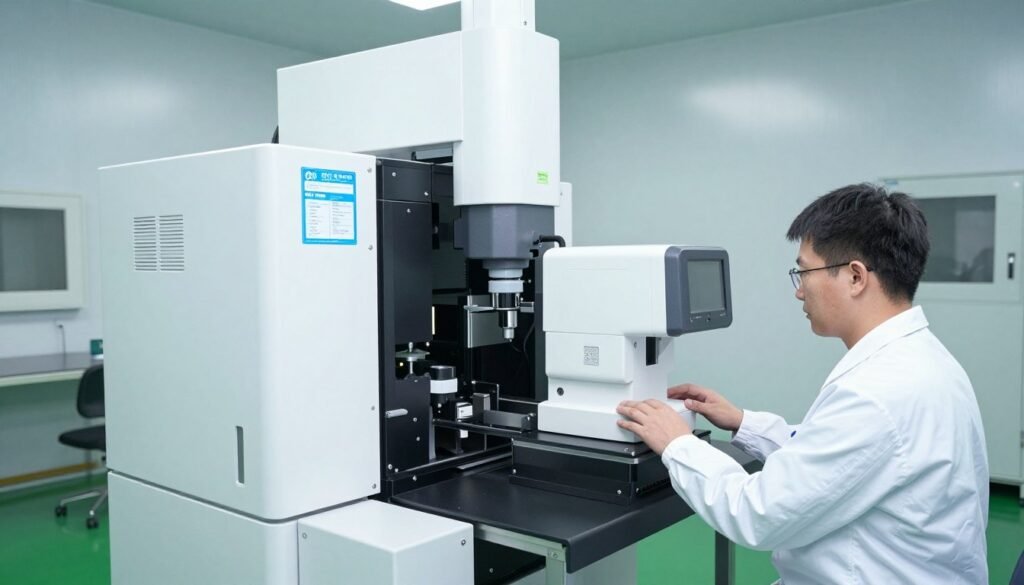
We invite qualified equipment distributors, holistic health training institutions, wellness centers, and medical equipment importers to join our growing US distributor network. MAIKONG provides the competitive advantages your business needs to succeed in the holistic iridology equipment market.
Why Partner with MAIKONG?
- 20+ Years Manufacturing Experience: Established in GD, SZ with proven track record supplying 1,000+ practitioners and training centers globally
- Complete OEM/ODM Capabilities: Hardware customization (model design, appearance, color, functions), software localization (17+ languages, custom features, branded interfaces), and product integration options
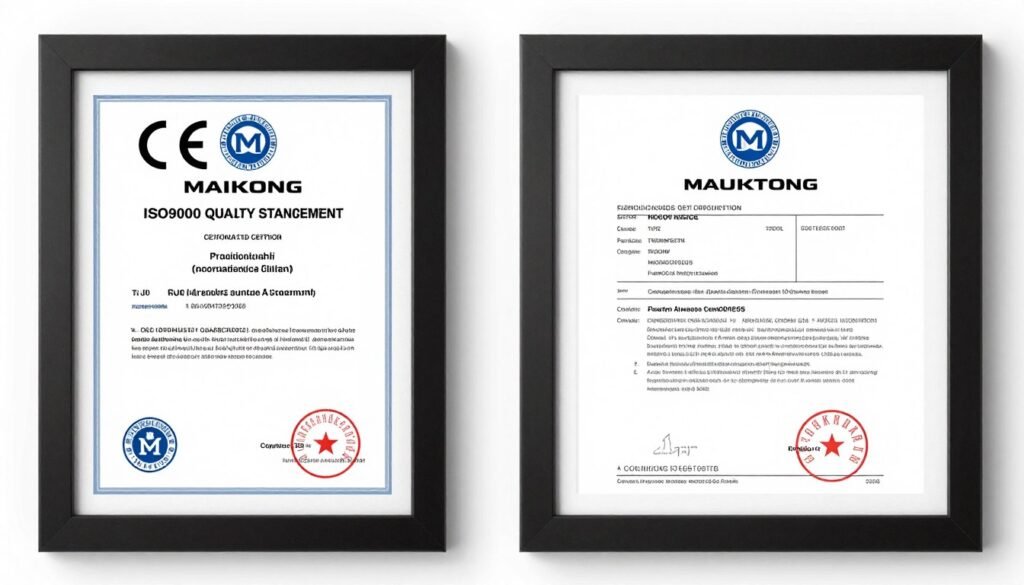
- Certified Quality Standards: CE and ISO9000 certified manufacturing following strict quality control protocols from design through production
- Inventory Availability: Stock warehouses in China and USA enabling fast fulfillment and reduced shipping times for North American customers
- Comprehensive Support: Technical training, marketing materials, customer service assistance, and ongoing product development consultation
- Competitive Wholesale Pricing: Volume discounts and distributor pricing structures providing healthy profit margins for your business growth

Ideal Partnership Candidates
- Medical equipment distributors expanding holistic health product lines
- Holistic health training schools and certification programs
- Natural therapy clinic chains or wellness center franchises
- Health product wholesalers serving practitioners and retailers
- Direct sales companies in health and wellness sectors
- E-commerce businesses targeting holistic health professionals
Our Partnership Advantages
Manufacturing Excellence
Our GD, SZ production facility employs advanced manufacturing equipment following ISO9000 quality management protocols. Every MK-series iriscope undergoes rigorous testing ensuring consistent performance meeting CE certification standards. We control the entire supply chain from component sourcing through final assembly, guaranteeing quality and competitive pricing.
Customization Capabilities
We support complete hardware OEM including model design, external appearance customization, color options, and functional modifications. Software ODM services provide logo customization, multi-language interfaces, feature development, and integration of your proprietary products or protocols into analysis reports. Help your clients differentiate their practices with branded solutions.
Global Experience
Our existing partnerships span direct sales companies (Amway, Natura, Herbalife, Nuskin, USANA), holistic health clinics, medical device retailers, training institutions, and individual practitioners across 50+ countries. This experience helps us understand diverse market needs and provide proven solutions for your specific business model.
MAIKONG 2024 Software Capabilities Supporting Your Business
| Language Support | Operating System Compatibility | Customization Available |
| English, Spanish, French, German, Italian, Portuguese, Russian, Polish, Czech, Bulgarian, Japanese, Korean, Persian, Malaysian, Chinese (Simplified), Chinese (Traditional), and more upon request | Windows: XP, Vista, 7, 8, 10, 11 (32-bit & 64-bit) | macOS: 10.14 Mojave through 15 Sequoia (first iridology software supporting Mac) | Logo customization, language additions, interface modifications, feature development, product recommendation integration, report template design, branded documentation |
Contact Our US Partnership Development Team:
Email: Lucy@myiridology.us
WhatsApp: +86-135-1090-7401
Website: https://myiridology.us/
Company: MAIKONG Technology Co., Ltd | GD, SZ, China
Making Your Holistic Iridology Training Decision
Choosing the right holistic iridology training program shapes your entire professional journey in this fascinating field. The decision involves balancing educational quality, practical training components, certification value, equipment investment, and career goals. Take time evaluating programs thoroughly rather than rushing into the first appealing option.
Remember that quality training pays dividends throughout your career. Comprehensive programs teaching fundamental iridology signs, constitutional interpretation, practical examination skills, and professional ethics prepare you for sustainable practice success. Inadequate training leaves gaps requiring expensive remedial education later or limits your confidence serving clients effectively.

Equipment investment deserves equal consideration. Professional-grade tools like the MAIKONG MK-9822U enable the image quality necessary for confident interpretation. Quality equipment serves you for years, supports practice growth, and demonstrates professionalism to clients. Consider it essential infrastructure, not optional expense.
Your holistic iridology journey combines continuous learning, skill refinement, and community engagement. The practitioners achieving greatest success maintain curiosity, pursue advanced training, stay current with research developments, and actively participate in professional networks. View certification as your beginning, not your destination.
Whether you integrate holistic iridology into existing wellness practice or build dedicated focus in this modality, you join a global community of practitioners helping clients achieve better health through this unique assessment approach. The visual, engaging nature of iris examination resonates with clients seeking tangible wellness insights. Your training and equipment choices directly impact your ability to deliver valuable service.
We encourage you to contact training programs directly, speak with graduated practitioners, and carefully evaluate both educational and equipment options before committing. The right combination of quality training and professional tools positions you for fulfilling, successful practice helping others optimize their wellness through holistic iridology.