Iridology Chart How to Read: Your Complete Professional Guide to Understanding Iris Zone Mapping
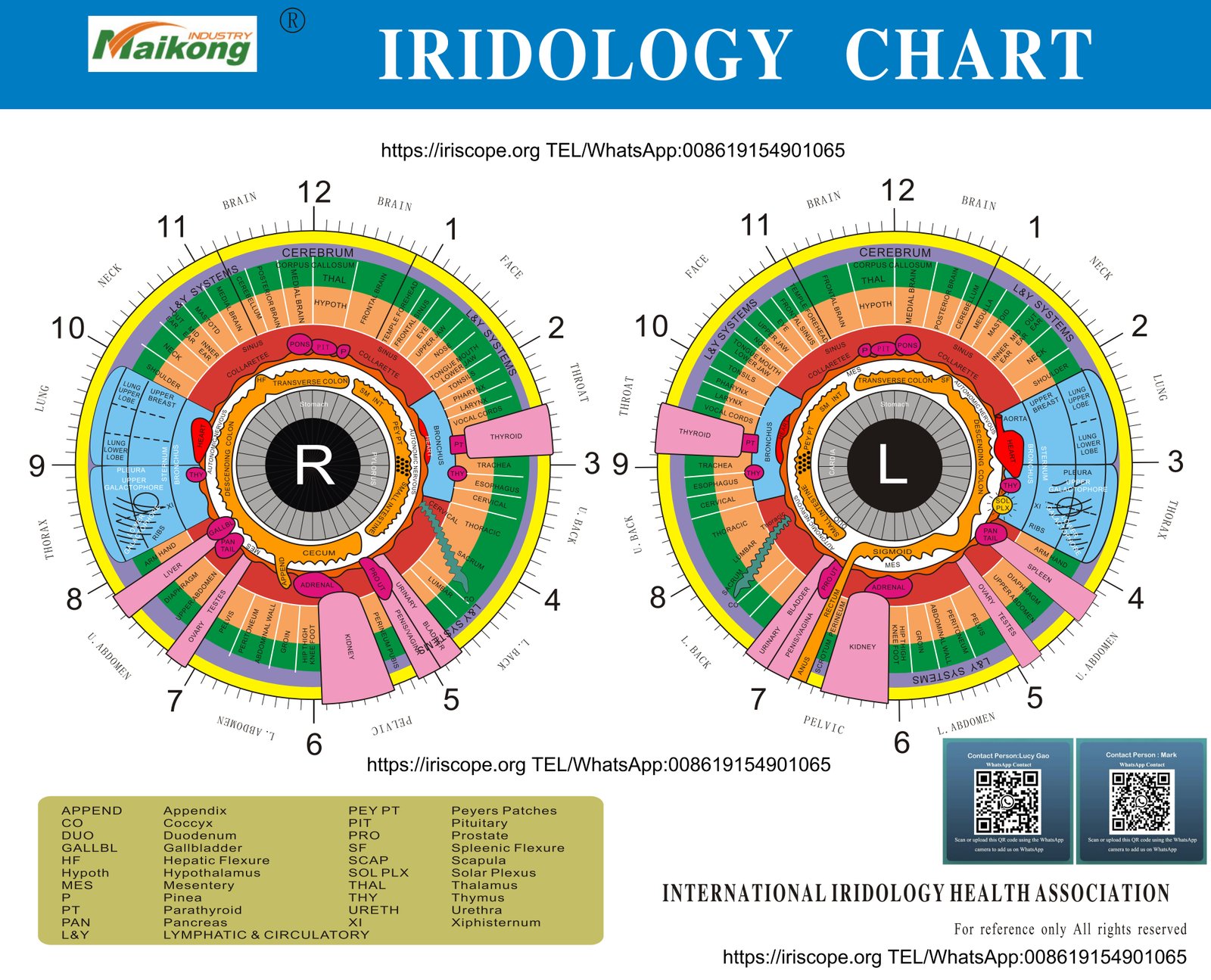
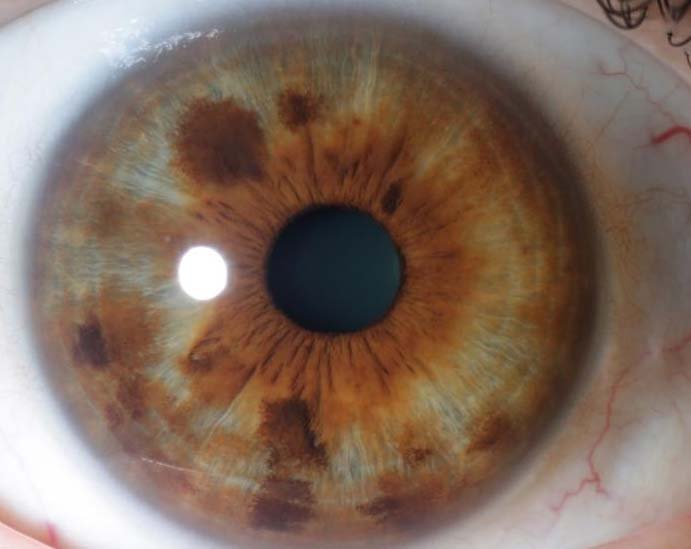
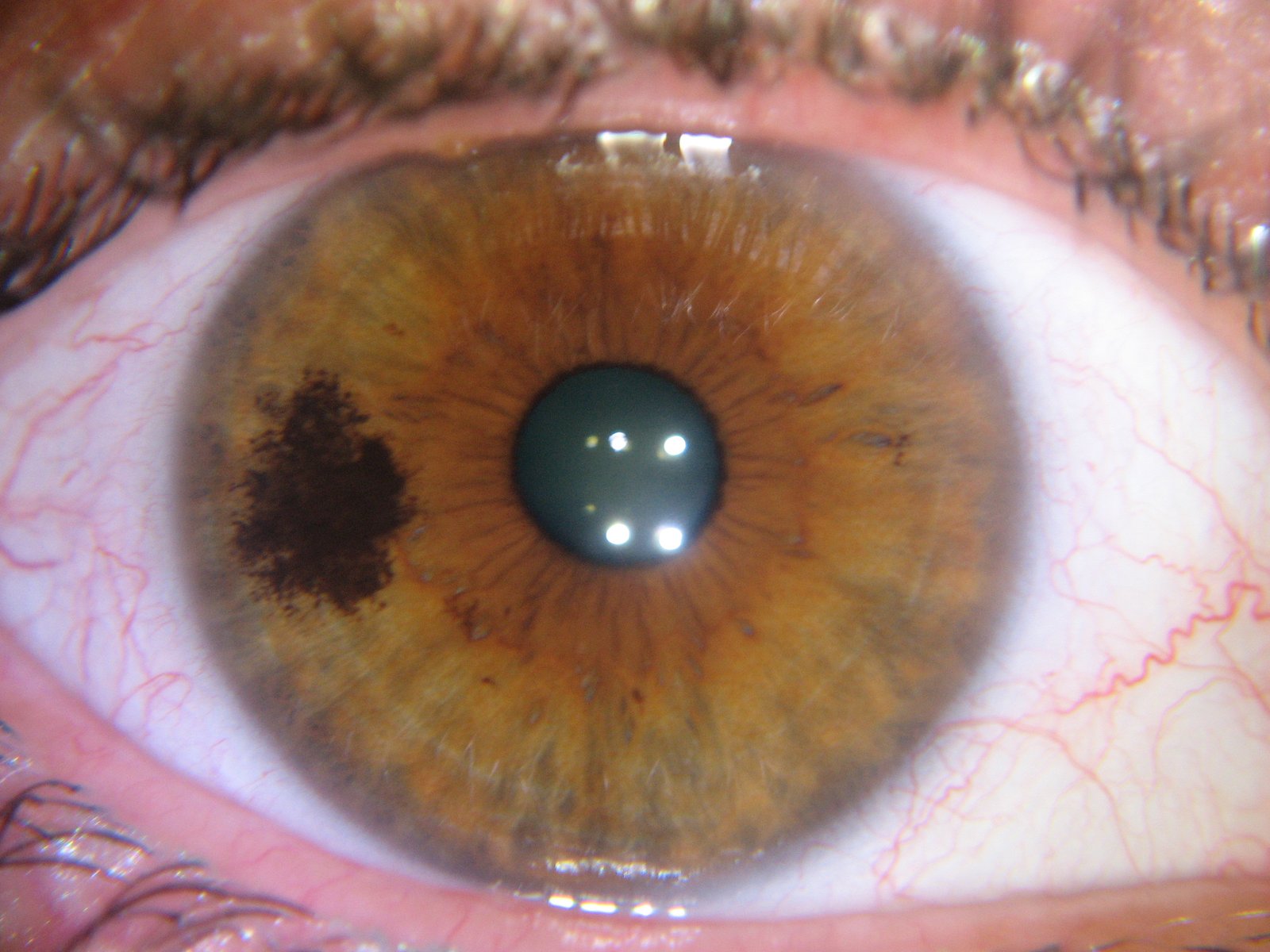
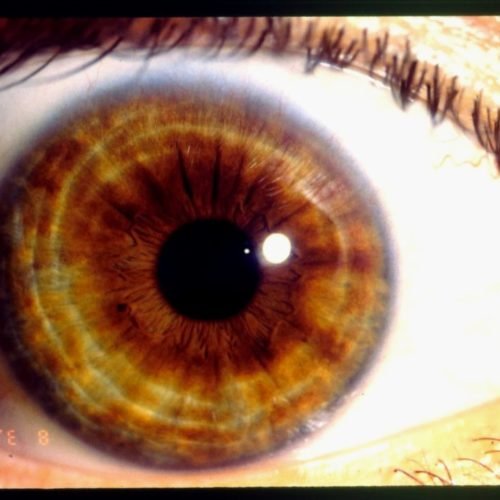
When you first encounter an iridology chart, the circular diagram with its dozens of marked zones can seem overwhelming. I’ve worked with practitioners for over twenty years, and the most common question remains the same: how do you actually read these charts in a practical way? The answer lies in understanding that an iridology chart how to read represents a systematic map that divides the colored part of the eye into specific regions, each traditionally associated with different body parts and systems.
This guide walks you through everything from basic zone identification to advanced reading techniques. Whether you’re a practitioner setting up your first clinic, a training institution developing curriculum, or a wholesaler evaluating equipment for your market, understanding chart fundamentals helps you make informed decisions about tools and resources.
Download Professional Chart Resources
Access our complete professional iridology chart collection including high-resolution Bernard Jensen charts, modern zone maps, and printable reference guides. Used by practitioners and training institutions in over 50 countries.
What Is an Iridology Chart and Why Does It Matter?
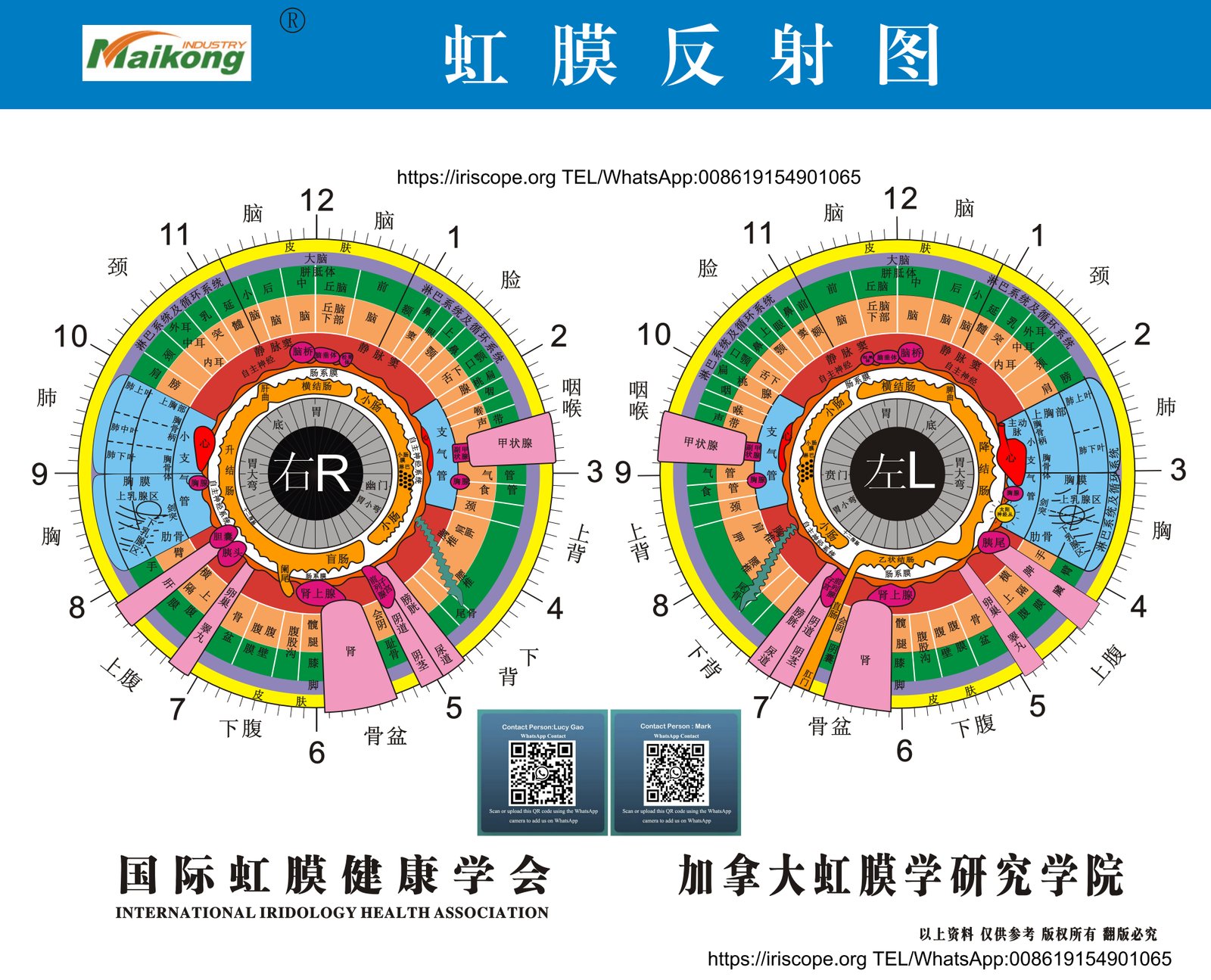
An iridology chart functions as a reference map that practitioners use during iris observations. The chart represents the iris, which is the colored part of the eye surrounding the pupil. Traditional iridology practice divides this circular area into sections, typically ranging from 40 to 90 distinct zones depending on the chart type.
The core principle behind these charts suggests that specific areas of the iris correspond to specific parts of the body. The upper portion of the iris often relates to areas above the diaphragm, while lower sections connect to organs and systems below it. The right iris typically maps the right side of the body, and the left iris corresponds to the left side body parts.
Chart Components You’ll Encounter
- Pupillary zone near the center opening
- Collarette boundary marking inner and outer zones
- Ciliary zone extending to iris edge
- Radial divisions creating sector segments
- Concentric rings showing tissue layers
- Organ labels identifying body correspondences
Why Professionals Need Quality Charts
- Client education and visual communication
- Training and teaching reference materials
- Consistent documentation standards
- Integration with digital imaging systems
- Professional presentation in consultations
- Standardized zone identification protocols
Different schools of iridology have developed various chart versions over decades. Some emphasize emotional and constitutional patterns, while others focus primarily on physical organ systems. Understanding these differences helps practitioners choose appropriate reference materials for their practice approach.
Understanding Left Eye Versus Right Eye Chart Differences
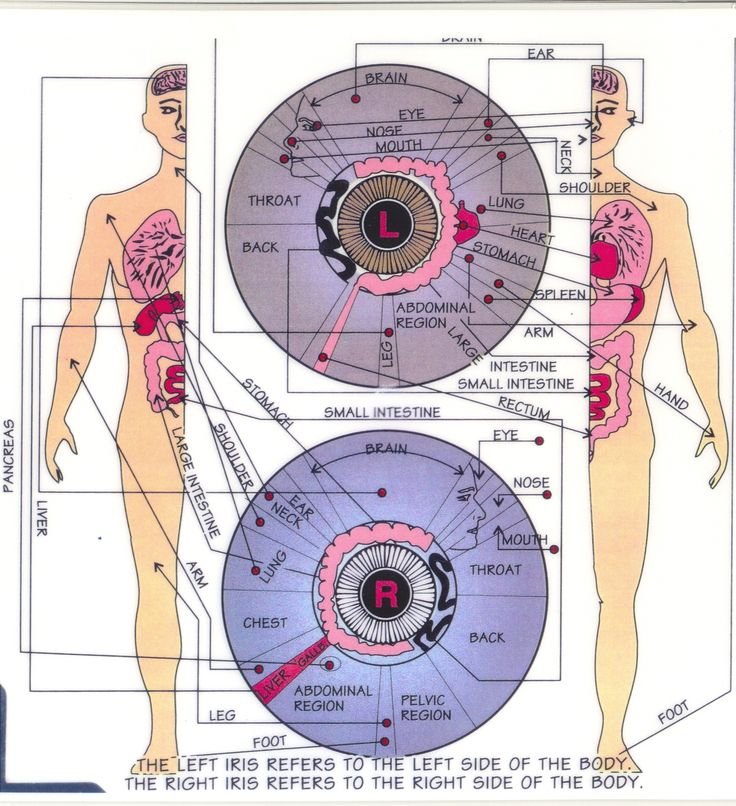
One of the first concepts practitioners must grasp when learning how to read iridology chart materials involves the fundamental left-right body correspondence. This isn’t arbitrary – the mapping follows a logical pattern based on body laterality.
The left eye iridology chart displays zones corresponding to organs and structures on the left side of the body. For example, the heart appears prominently in the left iris chart, typically in the upper left quadrant. The left kidney, spleen, and left lung also map to specific sectors of the left iris.
Conversely, the iridology chart right eye version shows right-sided body structures. The liver, a predominantly right-sided organ, appears in the right iris mapping. The gallbladder, right kidney, and right lung similarly occupy designated zones in the right iris chart.
Key Laterality Patterns in Chart Reading
Bilateral Organs (Appear in Both Charts)
- Lungs show in both irises with side-specific zones
- Kidneys appear in both, each in its corresponding iris
- Adrenal glands map bilaterally
- Bronchi and sinuses reflect in both eyes
- Shoulders and limbs show corresponding sides
Single-Sided Organs (Appear in One Chart)
- Heart appears primarily in left iris only
- Liver shows predominantly in right iris
- Spleen maps to left iris exclusively
- Gallbladder appears in right iris chart
- Appendix traditionally shows in right iris
This laterality principle extends beyond major organs. Even the digestive system shows side-specific mapping. The ascending colon appears in the right iris chart since it sits on the right side of the body. The descending colon maps to the left iris chart for the same reason. The transverse colon, running across the body, appears in both charts.
When working with clients during consultations, practitioners often examine both eyes systematically. Changes or patterns in one iris may indicate issues on that corresponding body side. This side-specific approach forms a foundational concept in traditional iridology practice.
Common Iridology Chart Types and Their Applications
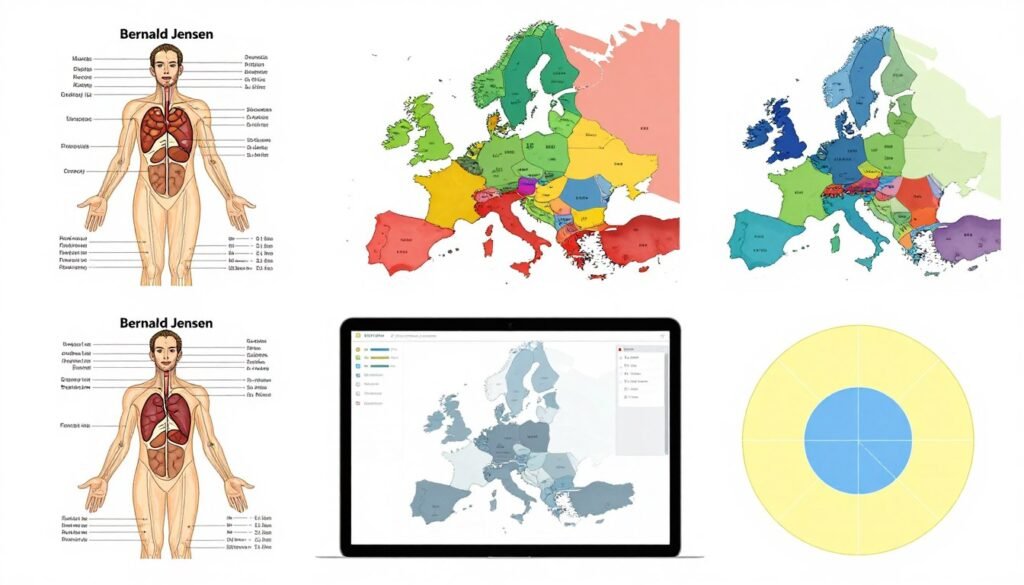
Over the past century, multiple iridology traditions have produced distinct chart versions. Understanding these variations helps practitioners select appropriate references for their specific practice needs and client communication styles.
Bernard Jensen Chart System
The Bernard Jensen iridology chart remains one of the most widely recognized formats in North American practice. Dr. Bernard Jensen developed his systematic approach through decades of clinical observation, creating detailed zone maps that many practitioners still reference today.
Jensen’s charts feature approximately 90 distinct zones arranged in pie-shaped sectors radiating from the pupil. His system emphasizes the connection between tissue integrity visible in iris patterns and overall wellness. The charts use specific numbering systems to identify zones, making documentation and teaching more standardized.
| Chart Type | Primary Origin | Zone Count | Best Application | Key Features |
| Bernard Jensen | United States | 80-90 zones | Clinical practice, teaching | Detailed organ mapping, numbered zones, emphasis on constitutional patterns |
| European/German | Germany, Central Europe | 60-70 zones | Holistic wellness, natural medicine integration | System-based organization, emphasis on tissue conditions, less organ-specific |
| Australian | Australia | 50-60 zones | Behavioral and emotional patterns | Psychological correlations, constitutional iris types, personality indicators |
| Modern Digital | Contemporary international | 40-80 zones (variable) | Software integration, printable resources | Clean vector graphics, customizable zones, multi-language labels |
European School Charts
European traditions, particularly those developed in Germany, often present charts with different organizational principles. These versions tend to group zones by body systems rather than individual organs, creating a more integrated view of physiology.
European-style charts frequently emphasize tissue constitution and inherent patterns. They may include zones for lymphatic systems, endocrine function, and nervous system patterns that appear less prominently in other chart types.
Modern Digital Chart Formats
Contemporary practice increasingly relies on digital chart versions that integrate with iridology camera systems and analysis software. These modern charts offer several practical advantages for busy practitioners.
Digital formats allow real-time overlay on iris photographs captured during consultations. Software can highlight specific zones as practitioners discuss observations with clients. This interactive approach enhances client understanding and engagement during sessions.
Many professional iridology software packages include multiple chart types, allowing practitioners to switch between formats based on their training background or client needs. This flexibility proves particularly valuable in training environments where students learn multiple approaches.
Breaking Down Chart Zone Structure and Organization
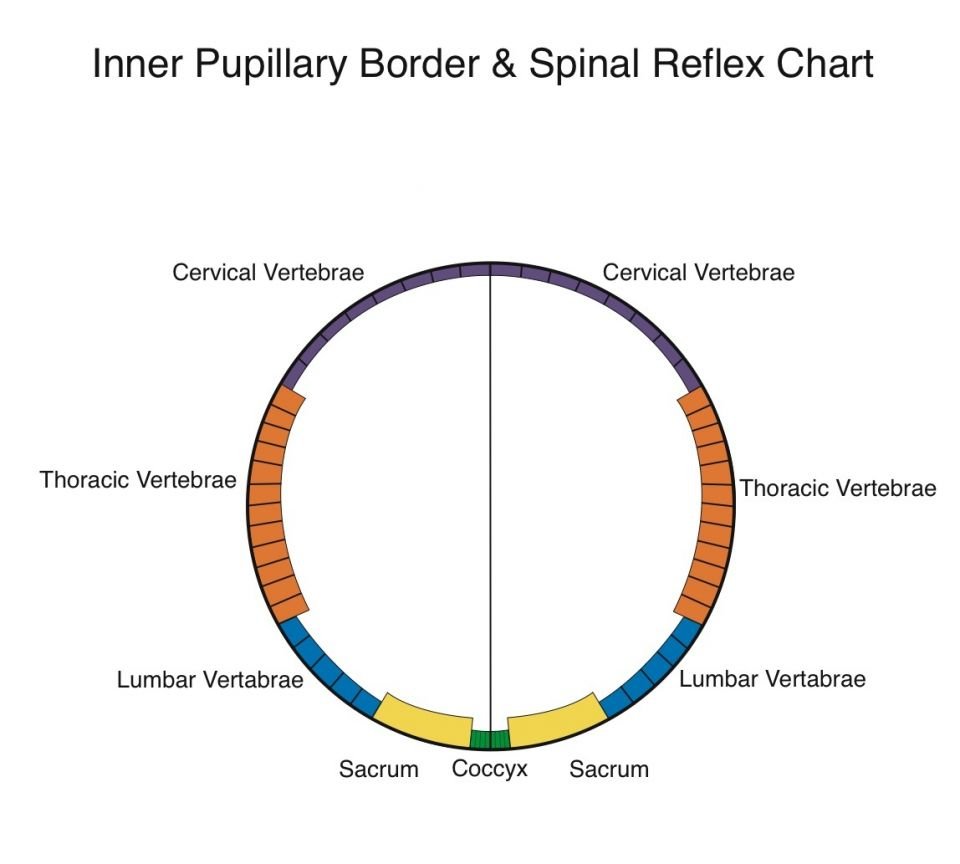
Understanding iridology chart how to read zones requires familiarity with the basic structural organization that most charts share, regardless of their specific tradition or style.
Concentric Ring Organization
Most iridology charts organize zones in concentric rings moving outward from the pupil. This radial organization reflects traditional views about body system relationships and provides a systematic way to navigate the chart.
Inner Zone (Pupillary Area)
The innermost ring immediately surrounding the pupil traditionally corresponds to digestive system organs. This zone often receives particular attention in practice since digestive health connects to many other body systems. The stomach area typically appears prominently in this inner ring.
Practitioners observe the pupillary border itself for symmetry and regularity. The autonomic nerve wreath, a structural feature visible in many irises, appears in this region and provides constitutional information.
Middle Zone (Organ Systems)
Moving outward, the middle sections contain most major organ mappings. The heart, lungs, liver, kidneys, and other vital organs occupy specific sectors in this mid-iris region. This area receives the most detailed subdivision in most chart systems.
The collarette, a ridge-like structure visible in the iris, typically marks the boundary between inner and middle zones. This anatomical landmark provides a consistent reference point across different iris types.
Radial Sector Divisions
Charts divide the iris into pie-shaped sectors, similar to clock positions. This radial organization allows precise zone identification. Some charts use hour positions (12 o’clock, 3 o’clock, etc.), while others use degree measurements (0-360 degrees) or numbered sectors.
The number of radial divisions varies by chart type. Simpler teaching charts might show 12 basic sectors, while detailed clinical charts may display 60 or more refined zones. This variability allows practitioners to choose complexity levels appropriate for their experience and practice needs.
Anatomical Landmarks as Reference Points
Experienced practitioners use visible iris structures as navigation aids when reading charts:
- The collarette ridge provides a clear boundary between zones
- Crypts (small openings in iris tissue) appear in predictable locations
- Furrows (grooves in iris tissue) often align with zone boundaries
- Pigmentation spots may correspond to specific chart areas
- Radii solaris (spoke-like lines) extend outward in characteristic patterns
These structural features help practitioners orient themselves when comparing an actual iris to chart references. The anatomical consistency across human irises makes systematic chart reading possible.
Step-by-Step Process for Reading Iridology Charts
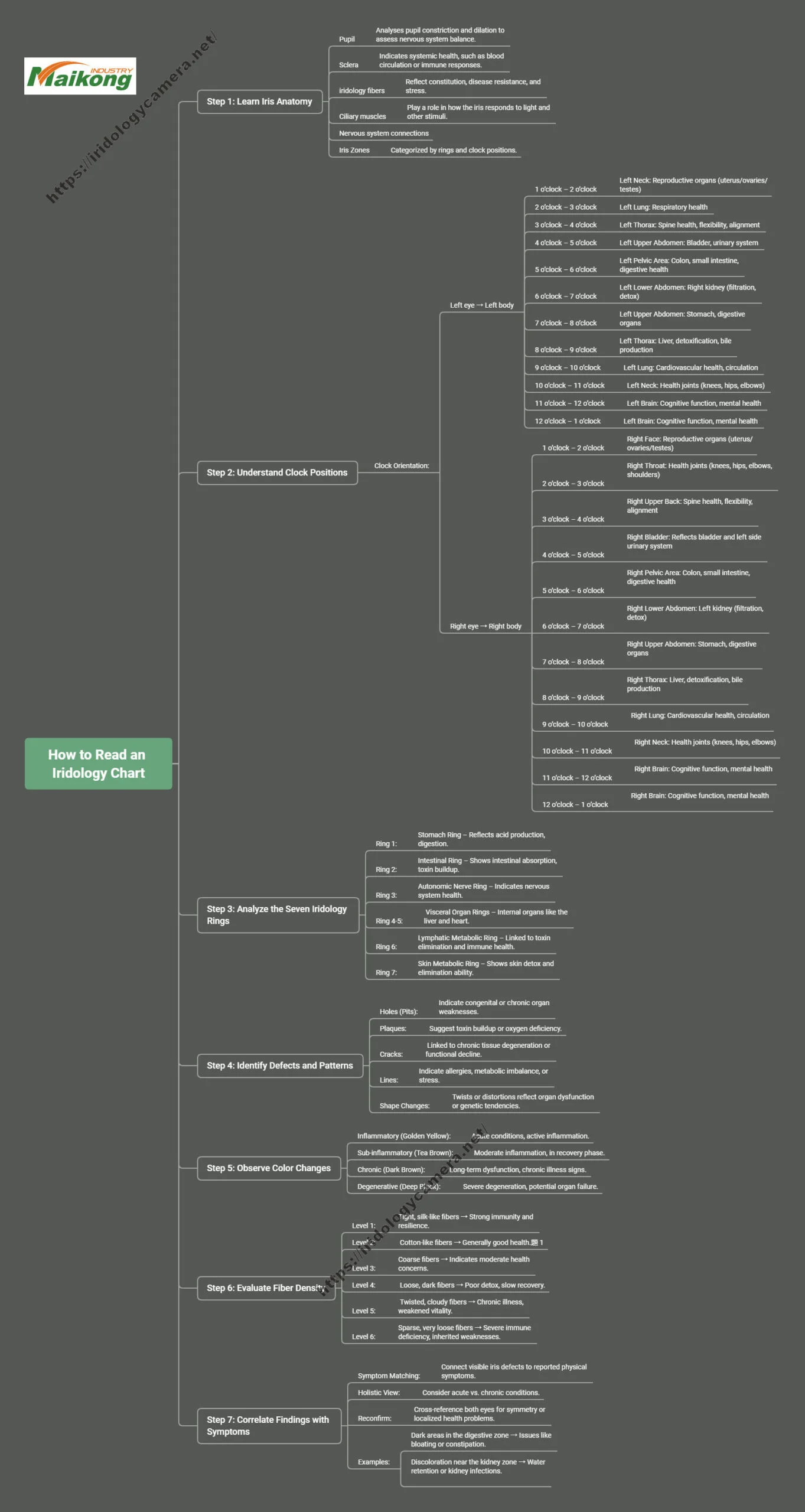
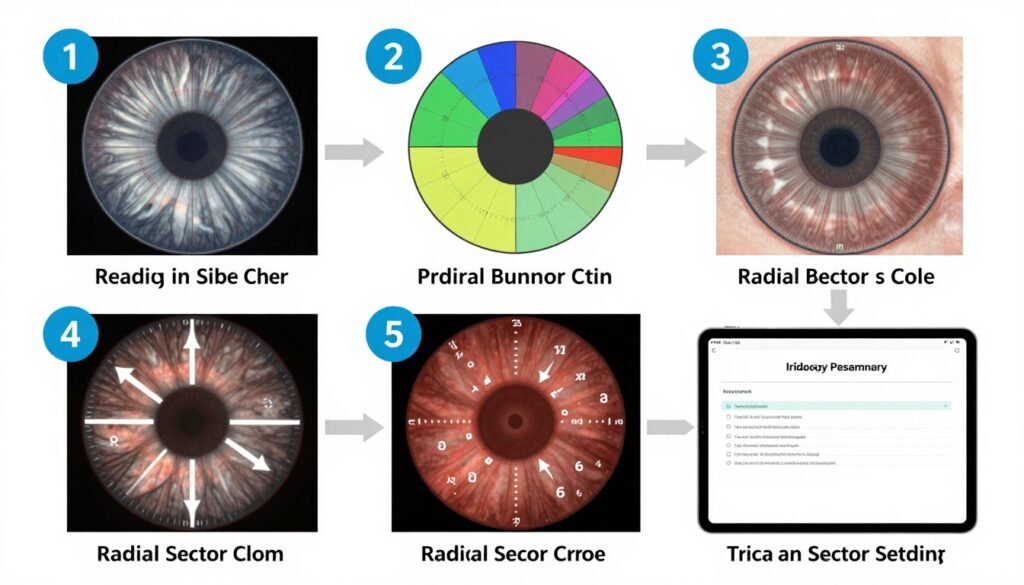
Learning how to read an iridology chart effectively requires a systematic approach. Following consistent steps helps practitioners develop accuracy and confidence in their observations.
Step 1: Orient the Chart to Match Eye Position
Begin by ensuring your chart orientation matches the eye you’re examining. Remember that charts typically show the iris as if you’re facing the person – their right eye appears on your left when you look at them directly.
When working with photographs or digital images, verify the image hasn’t been flipped or mirrored during capture or processing. Many iriscope systems automatically label left and right eyes to prevent confusion.
Step 2: Identify the Pupillary Border
Start your reading by locating the pupillary border – the circular edge where the pupil meets the iris tissue. This inner boundary forms your central reference point. Note whether this border appears regular and circular, or if it shows irregularities.
The autonomic nerve wreath often appears as a slightly raised ring near the pupillary zone. This structure provides constitutional information and marks the traditional boundary between central digestive zones and the broader organ regions.
Step 3: Locate the Collarette
Find the collarette, the ridge-like structure that circles the iris at roughly one-third the distance from pupil to outer edge. This landmark divides the iris into distinct inner and outer zones on your chart.
In some irises, the collarette appears very prominent and easy to spot. In others, it may be subtle. The collarette position varies slightly between individuals but remains consistent within each person’s iris.
Step 4: Use Clock Positions for Navigation
Apply clock-position references to locate specific zones. For example, in the right iris, the liver area typically appears between approximately 7 and 8 o’clock. In the left iris, the heart region maps around 2 to 3 o’clock.
This clock-face approach provides a universal navigation system that works across different chart types. Many practitioners develop the habit of mentally dividing the iris into 12 main sectors corresponding to clock hours.
- Scan Systematically: Move your observation clockwise or counterclockwise around the iris, examining each sector methodically rather than jumping randomly between areas.
- Compare to Chart Zones: As you observe each iris section, reference your chart to identify which body regions correspond to that area.
- Note Patterns and Variations: Document colors, patterns, and structural variations in specific zones for later analysis and client discussion.
- Cross-Reference Both Eyes: Compare corresponding zones between left and right irises to identify bilateral patterns or side-specific variations.
Step 5: Document Your Observations
Professional practice requires consistent documentation. Many practitioners use standardized forms that mirror chart layouts, making it easy to record observations zone by zone.
Digital systems often include annotation tools that allow direct marking on iris photographs. These documented images, when saved with client records, provide valuable reference points for tracking changes over time during follow-up sessions.
Professional Tip: Integration with Digital Tools
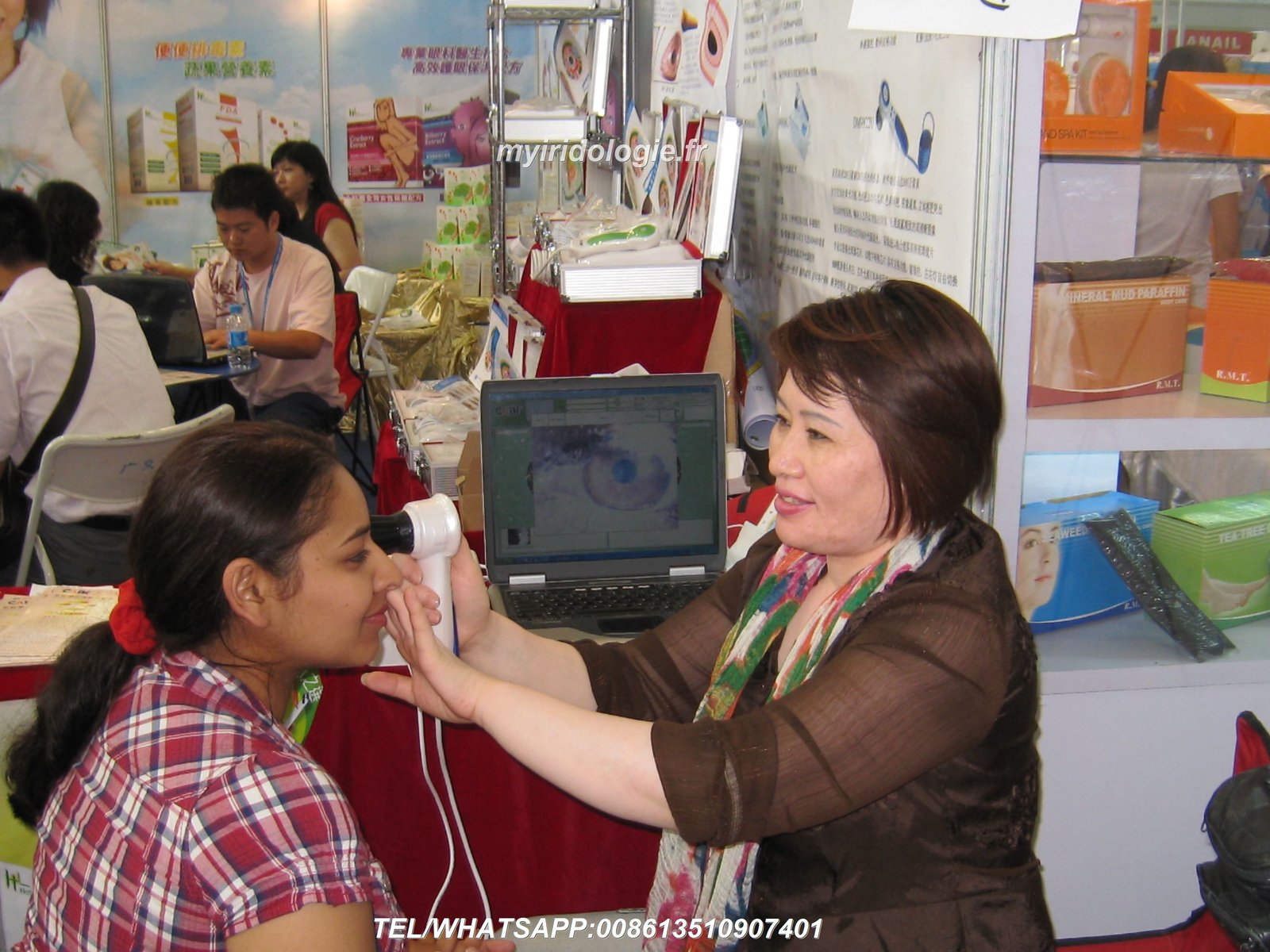
Modern iridology practice increasingly combines traditional charts with digital capture and analysis systems. When you use an iridology camera to photograph the iris, software can overlay chart zones directly on the captured image. This integration streamlines the reading process and enhances client education by allowing you to point out specific zones in real-time on screen.
Common Mistakes to Avoid When Reading Iridology Charts
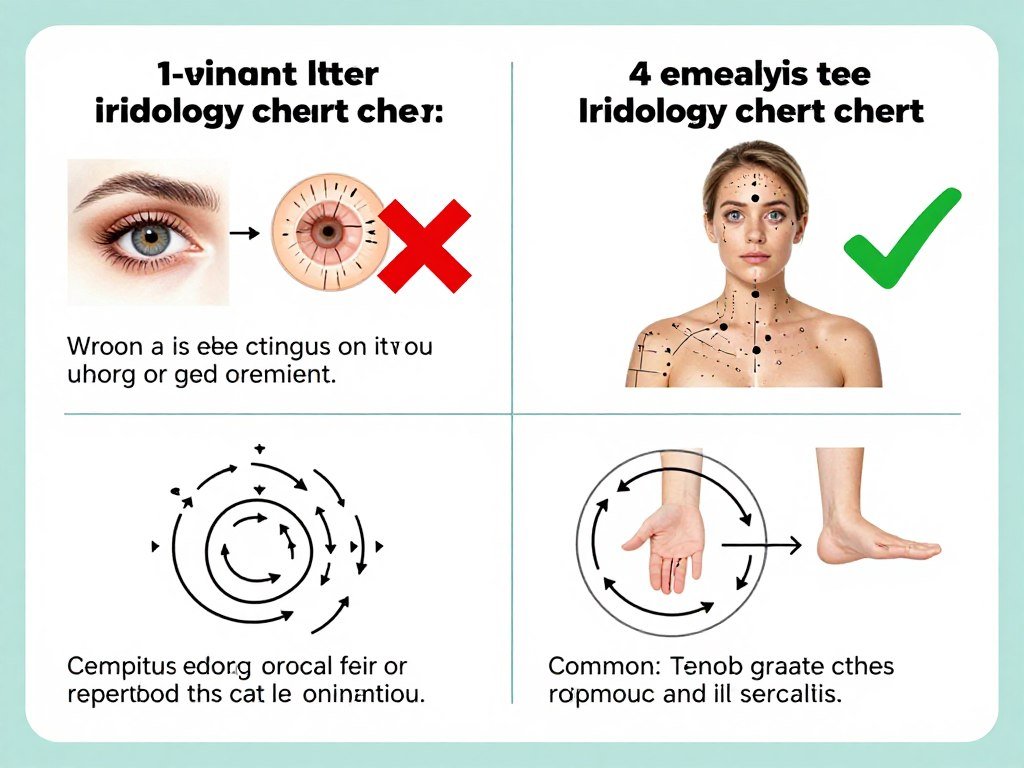
Even experienced practitioners can fall into certain habits that reduce reading accuracy. Being aware of these common pitfalls helps maintain consistent, reliable chart interpretation.
Mistake 1: Confusing Left and Right Eye Charts
The most frequent error involves mixing up reading iridology chart orientations for left versus right eyes. This happens especially when practitioners work from photographs where image orientation isn’t immediately obvious.
Always verify which eye you’re examining before beginning your analysis. Digital systems should clearly label each image. When printing charts for reference, maintain separate clearly marked versions for each eye rather than trying to mentally flip a single chart.
Mistake 2: Ignoring Anatomical Landmarks
Some practitioners focus so intently on finding specific chart zones that they overlook the actual anatomical structures that should guide their navigation. The collarette, pupillary border, and other visible features provide your orientation reference points.
Your chart reading should align with these physical landmarks. If your chart zone identification doesn’t correspond with visible iris structures, reassess your positioning and orientation.
Mistake 3: Over-Interpretation of Minor Variations
Natural variation exists in every iris. Not every color shift, small marking, or subtle texture change carries significance. Early practitioners sometimes over-interpret normal iris variation, leading to unnecessarily concerning client discussions.
Experience helps develop judgment about which observations merit attention and documentation. Training with experienced mentors provides crucial calibration for this aspect of practice.
Critical Reminder: Educational Purpose Only
Iridology chart readings serve traditional observation and educational purposes. Chart-based observations do not constitute medical diagnosis and cannot replace professional healthcare evaluation. Always advise clients to consult qualified healthcare providers for health concerns. This practice remains complementary to, not a substitute for, conventional medical care.
Mistake 4: Inconsistent Systematic Approach
Jumping randomly from zone to zone creates opportunities to miss important observations. Developing a consistent, methodical scanning pattern ensures complete coverage and reduces the chance of overlooking significant areas.
Most experienced practitioners develop a habitual scanning sequence – for example, always starting at 12 o’clock and moving clockwise through each sector, then spiraling outward through the concentric rings. This systematic approach becomes automatic with practice.
Mistake 5: Neglecting Proper Lighting and Image Quality
Chart reading accuracy depends entirely on seeing iris details clearly. Poor lighting, low-resolution images, or inadequate magnification compromise your ability to make accurate observations.
Professional-grade USB iridology camera equipment ensures consistent, high-quality image capture. Proper lighting reveals subtle color variations and structural details that might otherwise go unnoticed.
Physical Charts, Digital Formats, and Printable Resources
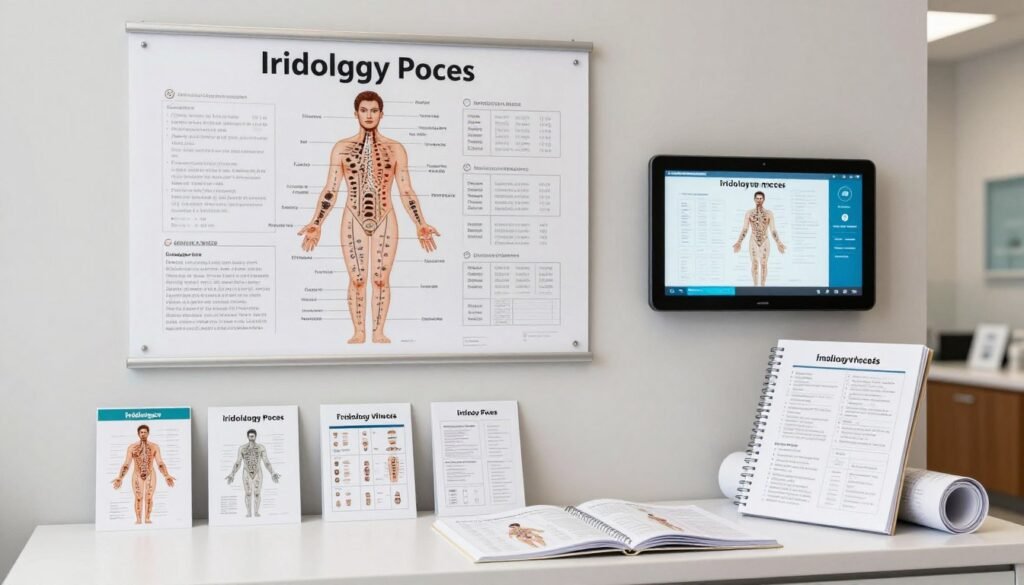
Practitioners and training institutions need charts in various formats depending on their specific use cases. Understanding available options helps make appropriate selections for different scenarios.
Wall Charts and Physical References
Large laminated wall charts remain popular in consultation rooms and teaching environments. These physical references allow practitioners to gesture and point during client education sessions. Clients find it easier to understand explanations when they can see a full-size chart display.
Wall charts typically measure 24×36 inches or larger, providing clear visibility from across a room. Laminated versions withstand frequent handling and cleaning, important considerations in clinical settings. Some practitioners display multiple chart types side by side for comparison and client education.
Printable Chart Resources
Downloadable iridology chart printable files offer flexibility for various applications. Practitioners can print personal reference copies, create client handouts, or incorporate charts into educational materials and presentations.
High-resolution PDF formats maintain clarity when printed at different sizes. Some practitioners print pocket-sized reference cards for quick consultation during sessions. Others create full-size prints for use in multiple office locations without purchasing duplicate wall charts.
Digital Chart Integration with Software
Modern practice increasingly relies on digital chart formats that integrate seamlessly with iris imaging systems. Professional software displays charts alongside captured iris photographs, enabling direct comparison and annotation.
Software Features for Chart Integration
- Real-time chart overlay on iris images
- Multiple chart format options in one system
- Customizable zone labels and colors
- Side-by-side comparison viewing
- Annotation tools for marking observations
- Report generation with integrated charts
- Multi-language chart label support
Equipment Compatibility Considerations
- Camera resolution affects chart overlay precision
- Software must support your chart format preferences
- Multi-language needs require flexible systems
- Customization options for practice branding
- Compatibility with Windows and Mac systems
- Cloud backup for chart templates and settings
- Updates to include new chart versions
Training Institution Requirements
- Multiple chart format access for teaching
- Projection capabilities for classroom use
- Student access to reference materials
- Printable resources for student workbooks
- Interactive digital versions for practice
- Standardized charts across curriculum
- Multi-language support for diverse students
Mobile and Tablet Resources
Some practitioners use tablet devices during consultations, displaying digital charts on portable screens. This approach combines the benefits of physical reference materials with the flexibility of digital resources.
Tablet-based charts allow practitioners to zoom into specific zones for detailed client explanations. The portability supports practice in multiple locations without carrying bulky physical materials.
Using Charts in Educational and Client Consultation Settings
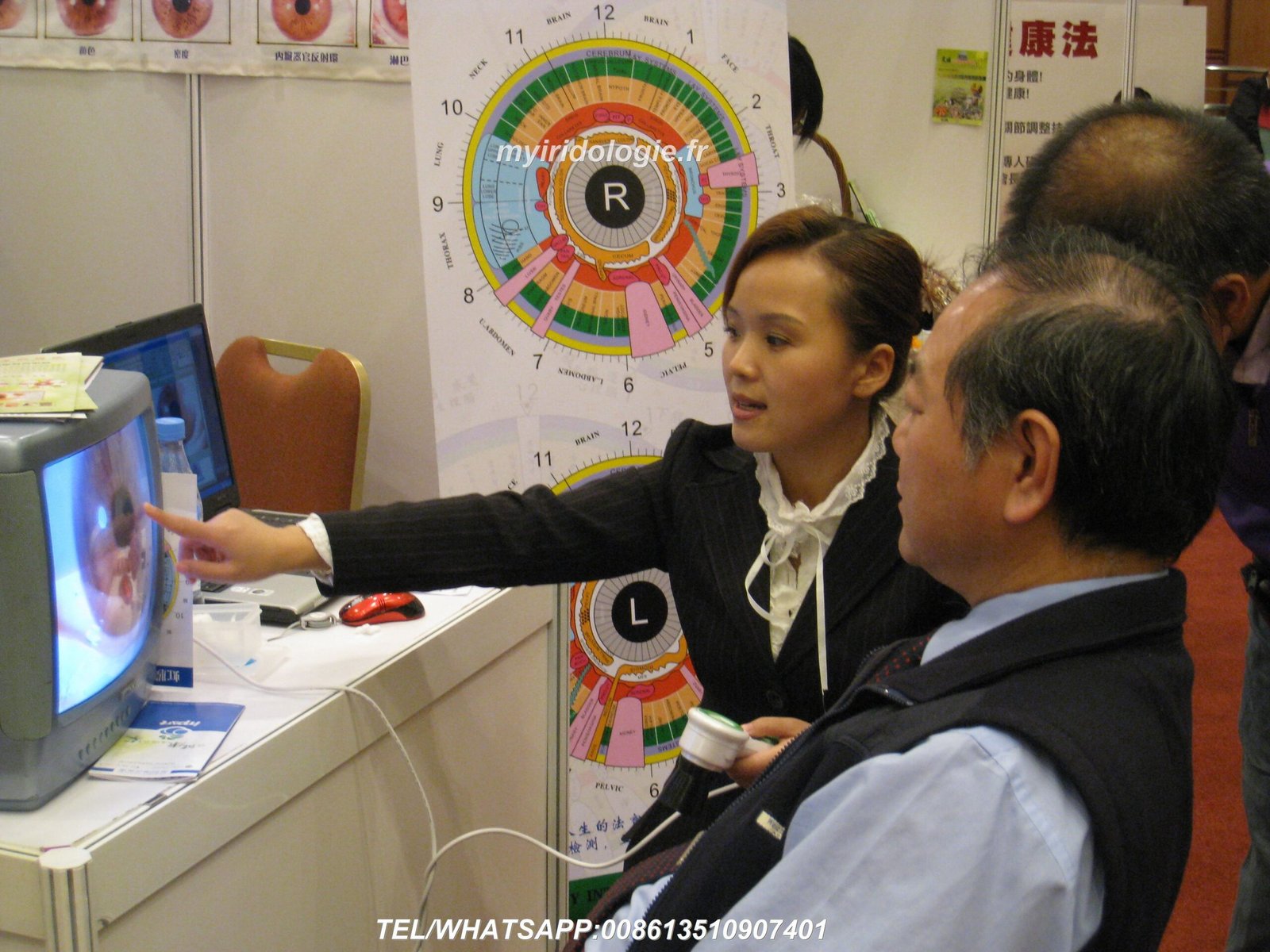
Charts serve multiple functions beyond personal practitioner reference. Understanding how to effectively deploy charts in different settings enhances their practical value.
Client Education and Communication
Visual learning dominates for most people. When practitioners explain observations using charts, clients grasp concepts more quickly than through verbal description alone. The chart provides a shared reference point during discussions.
Effective client communication involves pointing out specific chart zones while explaining what you’re observing in the actual iris. This parallel reference helps clients understand the relationship between what they see in the chart and what exists in their own iris.
Many practitioners create simplified chart handouts for clients to take home. These reference materials help clients remember session discussions and understand recommendations. Simplified versions with fewer zones often work better for client education than complex professional charts.
Training and Teaching Applications
Training institutions require comprehensive chart resources that support progressive learning. Beginning students need simplified charts with major zones clearly marked. Advanced students benefit from detailed charts showing refined zone subdivisions.
Effective iridology training programs typically provide students with:
- Laminated reference charts for hands-on practice sessions
- Digital chart files for personal study and review
- Projected charts for classroom instruction
- Printable practice worksheets with blank chart templates
- Chart comparison materials showing different traditions
- Annotated example charts demonstrating common patterns
Integration with Case Documentation
Professional practice standards require thorough documentation. Charts facilitate this process by providing standardized templates for recording observations. Many practitioners use chart-based forms where they can mark observations in specific zones.
Digital documentation systems that incorporate charts allow practitioners to annotate iris photographs directly. These annotated images become part of the client record, providing visual documentation that supports written notes.
When clients return for follow-up sessions months or years later, practitioners can quickly review previous observations by referencing these documented chart-marked images. This continuity supports more informed ongoing consultation.
Understanding Chart Limitations and Interpretation Boundaries
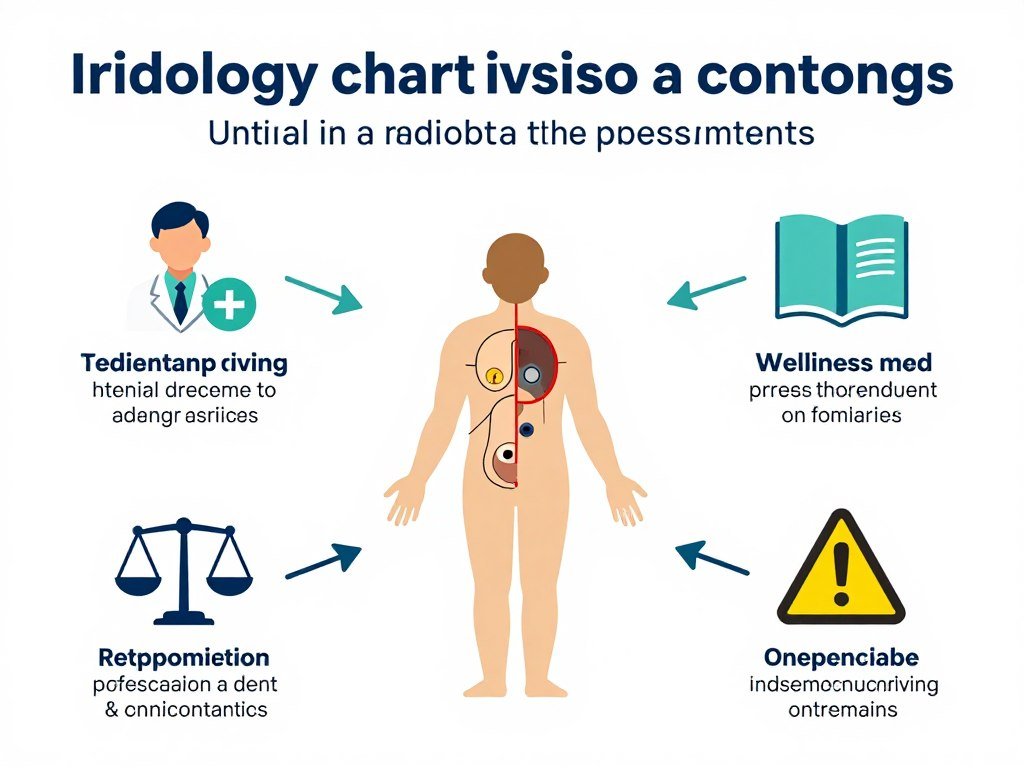
Responsible practice requires understanding what charts represent and what they cannot provide. Clear boundaries prevent misunderstandings and inappropriate applications.
Charts Represent Traditional Observational Systems
Iridology charts reflect observational traditions developed over time by various practitioners and schools. These systems represent interpretive frameworks rather than standardized medical diagnostic tools. The zone mappings vary between different chart traditions, reflecting different theoretical perspectives.
No major medical organizations recognize iridology as a diagnostic methodology. Charts should be positioned as educational references for traditional iris observation practice, not as medical diagnostic instruments. This distinction matters both for ethical practice and legal compliance.
Individual Variation and Constitutional Differences
Every iris displays unique characteristics. Constitutional differences, genetic factors, and normal anatomical variation mean that no two irises look identical. Charts provide general mapping frameworks, but practitioners must account for individual variation in their observations.
Eye color significantly affects what practitioners can observe. Brown irises have heavy pigmentation that obscures some structural details easily visible in blue or green eyes. Chart reading approaches must adjust based on base iris coloration.
Appropriate Practice Scope
Practitioners must maintain clear boundaries about what their chart-based observations represent. Appropriate communication involves:
Appropriate Language and Positioning
- “Based on traditional iris observation…”
- “In this zone, we sometimes see patterns that…”
- “This area corresponds to… in iridology mapping”
- “Some practitioners note…”
- “Traditional iridology associates…”
Inappropriate Claims to Avoid
- “This chart shows you have…”
- “Your iris proves that…”
- “Chart reading diagnosis indicates…”
- “This definitely means…”
- “Medical tests aren’t necessary because…”
Complementary Rather Than Alternative
Chart-based iris observation functions best as a complementary practice that supports wellness goals rather than replacing conventional healthcare. Practitioners should position their work accordingly, encouraging clients to maintain relationships with qualified healthcare providers.
When clients report health concerns during consultations, appropriate responses include referral to medical professionals for proper evaluation and diagnosis. Chart observations never substitute for medical examination, laboratory testing, or imaging studies.
Integrating Charts with Professional Iridology Equipment
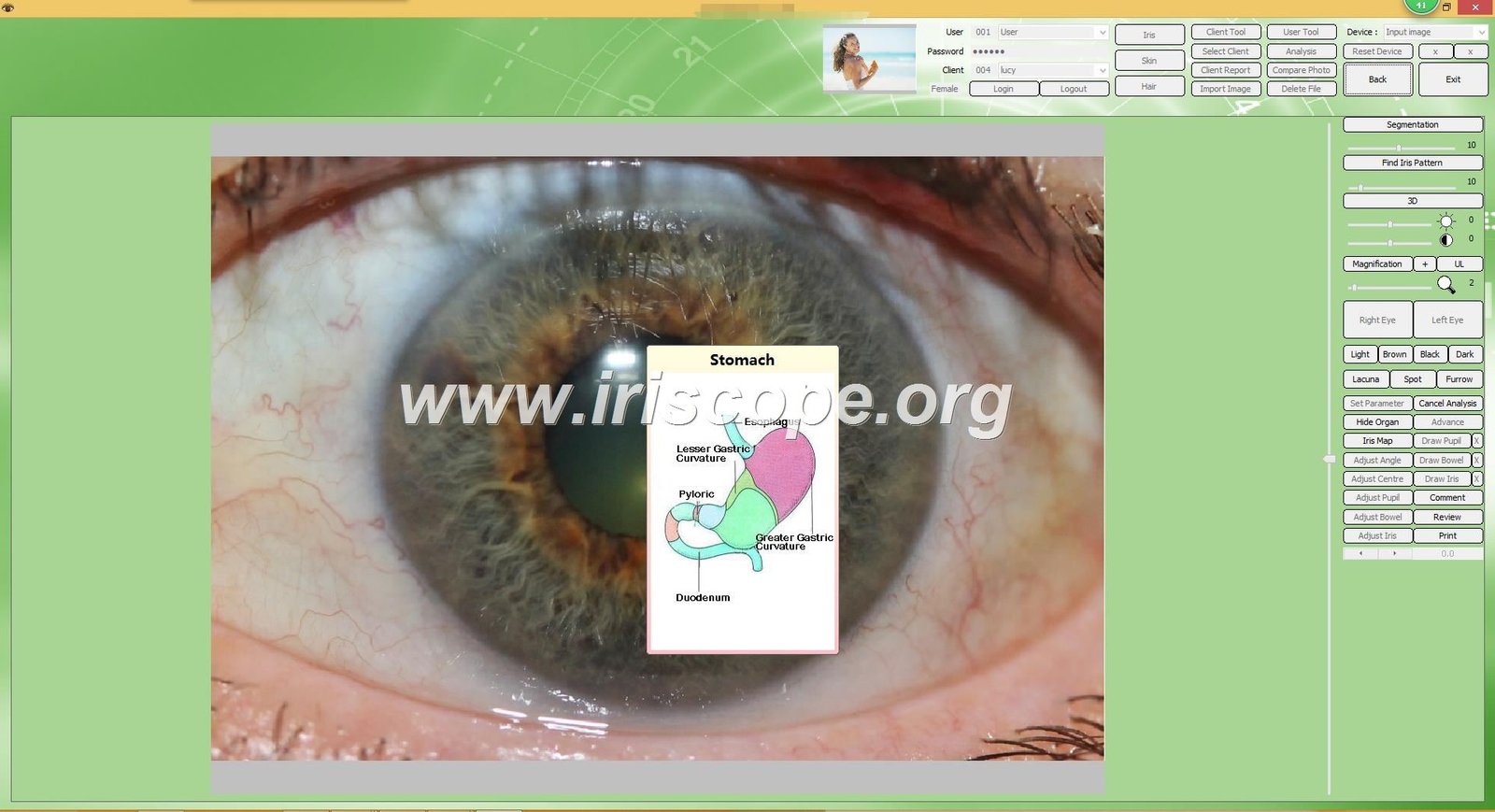
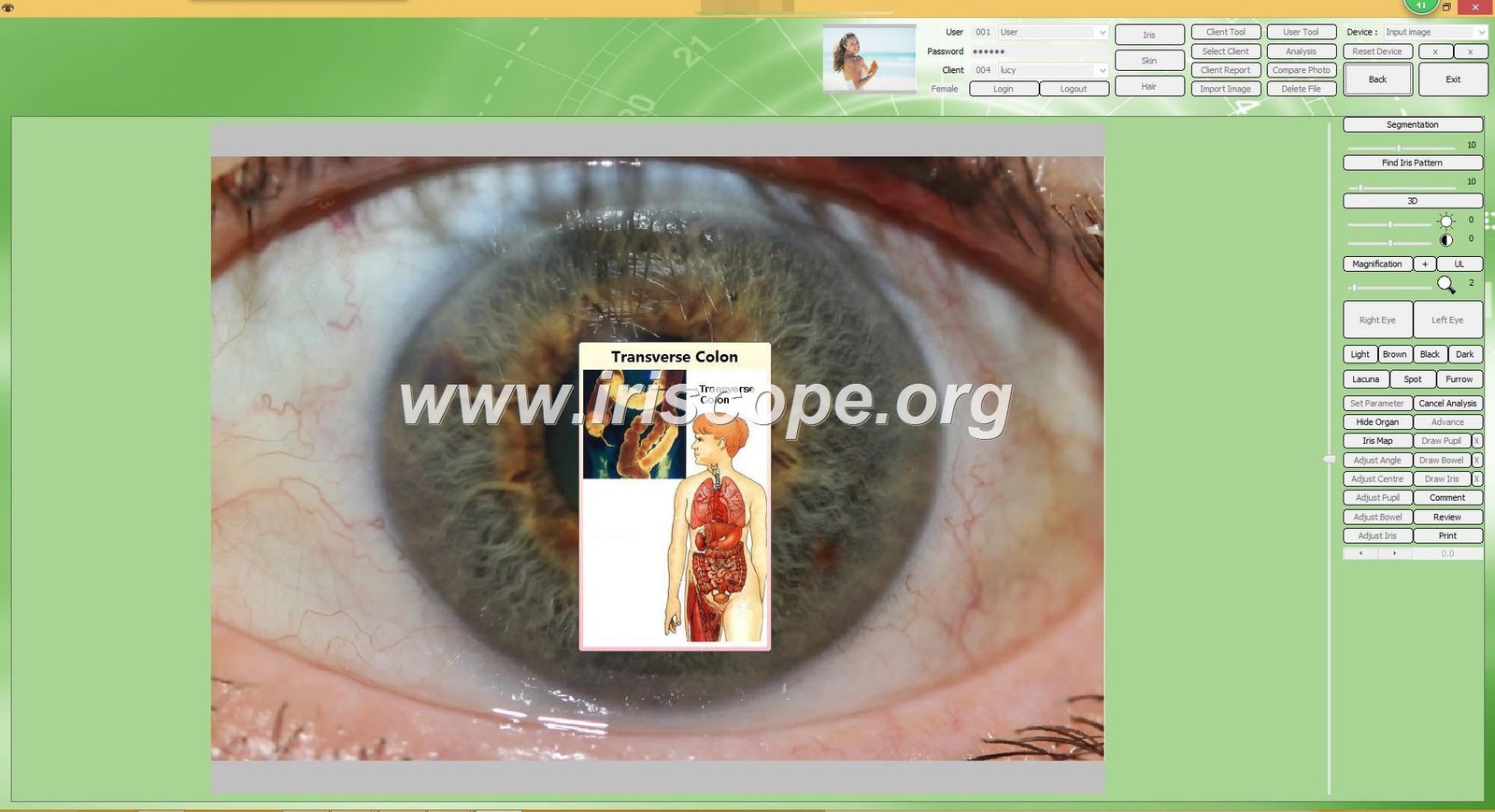
Modern practice combines traditional chart knowledge with contemporary imaging technology. Understanding how charts integrate with equipment helps practitioners make informed purchasing decisions.
Camera and Chart Compatibility
Quality iris photography forms the foundation for effective chart-based analysis. Professional iridology camera systems capture high-resolution images that reveal details necessary for accurate zone identification and observation.
When evaluating camera equipment for practice use, consider these chart-related factors:
| Equipment Feature | Chart Integration Benefit | Professional Standard |
| Resolution (Megapixels) | Higher resolution allows precise zone overlay and detail observation | Minimum 12MP for professional practice |
| LED Illumination | Consistent lighting reveals true colors and patterns in chart zones | Adjustable LED ring light around lens |
| Adjustable Focus | Sharp focus enables accurate alignment with chart boundaries | Manual or auto-focus with fine adjustment |
| Software Compatibility | Seamless chart overlay and annotation capabilities | Works with Windows and Mac systems |
| Image Capture Quality | Clear images support accurate chart zone identification | True color reproduction, minimal distortion |
Software Chart Features
Professional iridology software systems offer various chart-related capabilities that enhance practice efficiency and client communication. When evaluating software options, look for these chart-specific features.
Chart Overlay and Display Options
Quality software allows real-time chart overlay on captured iris images. Practitioners can toggle the chart display on and off, adjust transparency levels, and switch between different chart types during the same session. This flexibility supports various teaching and consultation approaches.
The best systems let you display the iris image and chart side by side or overlaid. Side-by-side viewing helps during initial analysis, while overlay mode supports precise zone identification and client education.
Multi-Language Chart Support
International practice and diverse client populations require chart labels in multiple languages. Professional software packages include chart versions in various languages, allowing practitioners to select appropriate options based on client needs.
Some systems support chart customization where practitioners can edit zone labels, add personal notes to specific areas, or create simplified versions for client education. This customization capability proves valuable for practitioners who blend different iridology traditions or develop their own teaching materials.
Complete System Specifications
Professional practice requires integrated systems where camera, software, and charts work together seamlessly. The following specifications represent equipment suitable for serious practice and training applications.
| Component | Specification | Professional Standard |
| Camera Model | MK-9822U Professional Iriscope | 12.0 Megapixel high-resolution CCD sensor |
| Lens System | 30X magnification iris lens with protective cover | Imported lens with multi-layer coating |
| Illumination | LED ring illuminator with adjustable brightness | Color temperature balanced for accurate iris color capture |
| Image Stabilization | Optical Image Stabilizer | Reduces motion blur for sharp zone detail |
| Software Version | MAIKONG 2024 Professional Edition | Multi-language support, multiple chart formats included |
| Operating System | Windows XP/7/8/10/11 (32-bit & 64-bit), macOS 10.14+ | Cross-platform compatibility |
| Chart Formats | Bernard Jensen, European, Modern Digital | Multiple tradition support with customization |
| Language Options | 17 languages including English, Spanish, German, French, Chinese | Multi-market capability |
| Warranty & Support | 1-year warranty with technical support | Manufacturer direct support |
Package Components for Professional Practice
Complete professional systems include all components necessary to begin chart-based practice immediately. Standard packages typically contain:
- High-resolution USB iriscope camera with LED illumination
- Professional-grade 30X iris lens with protective cover
- 1.5-meter USB connection cable
- Adjustable camera stand or handset (model dependent)
- Protective carrying case for equipment
- Software installation CD with drivers
- USB security key for software activation
- Digital chart collection in multiple formats
- Printed reference charts (select packages)
- User manual and warranty documentation
- Quick start guide and training resources
This comprehensive approach ensures practitioners have everything needed to begin effective chart-based iris observation immediately upon receiving equipment.
Explore Professional Equipment Integration
See how MAIKONG professional iriscope systems integrate multiple chart formats with high-resolution imaging and advanced software. Our equipment supports practitioners, clinics, and training institutions with customizable solutions including OEM/ODM options for private labeling.
Chart Customization and Practice Branding Options
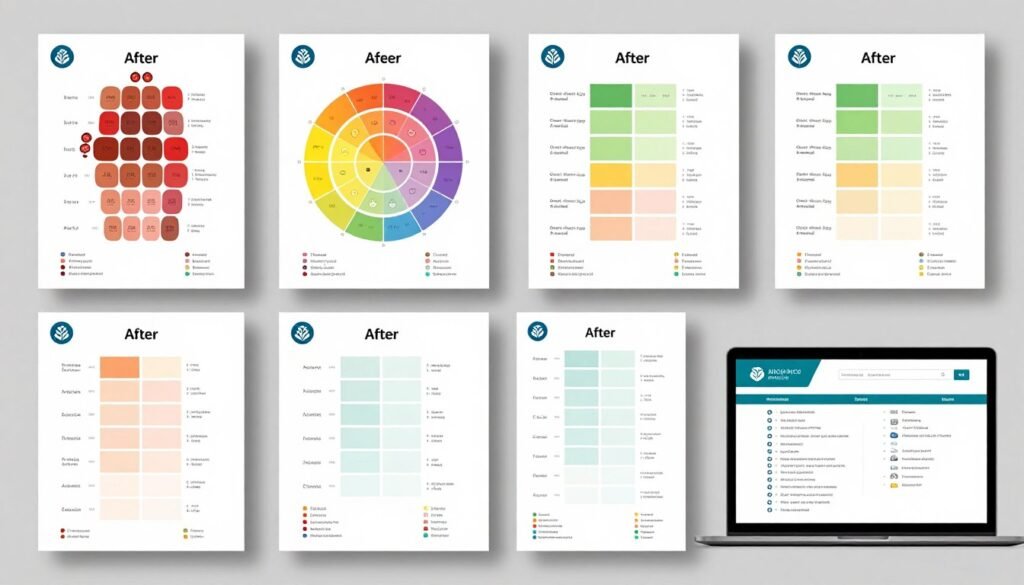
Established practices and growing training institutions often benefit from customized chart materials that reflect their unique approach and brand identity. Understanding customization options helps organizations make strategic decisions about their educational and client resources.
Private Label Chart Development
Manufacturers offering OEM (Original Equipment Manufacturer) and ODM (Original Design Manufacturer) services can develop custom chart versions that carry your practice or institution branding. These personalized materials enhance professional image and create cohesive branded experiences.
Custom chart development typically includes:
Visual Branding Elements
- Practice or institution logo placement
- Custom color schemes matching brand identity
- Personalized layout and design aesthetics
- Branded borders and decorative elements
- Custom fonts and typography choices
Content Customization Options
- Modified zone labels using preferred terminology
- Simplified or expanded zone divisions
- Multi-language versions for your market
- Integration of your teaching methodology
- Addition of proprietary observation categories
Software Chart Customization
Professional software packages often include customization tools that allow practitioners to modify standard charts for their specific needs. These modifications might range from simple label changes to complete zone reorganization.
Software-based customization offers flexibility advantages over fixed physical charts. You can maintain multiple custom versions for different purposes – detailed charts for personal analysis, simplified versions for client education, and specialized formats for specific teaching modules.
Training Institution Requirements
Educational organizations have unique needs that extend beyond individual practice requirements. Training programs benefit from comprehensive chart resources that support progressive curriculum development.
Institutional chart packages might include:
- Progressive series from beginner to advanced complexity
- Instructor versions with teaching notes and annotations
- Student workbook versions with practice exercises
- Examination and assessment templates
- Digital versions for distance learning platforms
- Bulk licensing for software installation across facilities
- Branded materials reinforcing institutional identity
OEM/ODM Manufacturer Capabilities
Working directly with manufacturers who offer comprehensive customization services provides advantages for organizations establishing or expanding their iridology programs. Full-service manufacturers can coordinate hardware, software, and chart materials into cohesive branded solutions.
Manufacturer capabilities typically encompass:
| Customization Area | Available Options | Typical Applications |
| Hardware Branding | Custom device colors, logo engraving, branded carrying cases | Practice kits, training institution equipment, retail products |
| Software Interface | Custom splash screens, branded UI elements, personalized color schemes | Private label software, institutional versions, branded practitioner tools |
| Chart Content | Custom zone layouts, terminology modifications, proprietary systems | Unique teaching methodologies, specialized practice approaches |
| Language Localization | Translation to specific languages, regional terminology adaptation | International markets, multilingual practices, diverse student populations |
| Packaging Materials | Custom boxes, branded documentation, personalized user guides | Retail distribution, professional presentation, gift packaging |
Organizations planning significant customization projects benefit from working with manufacturers who have established OEM/ODM programs and track records in the iridology field. Experience with healthcare and wellness product customization ensures appropriate handling of professional requirements and quality standards.
Wholesale Distribution and Partnership Opportunities

The growing wellness industry and expanding interest in complementary health practices create opportunities for wholesale distributors and regional partners. Understanding the market landscape and partnership structures helps potential distributors evaluate opportunities effectively.
Market Segments for Iridology Equipment and Charts
Multiple customer segments drive demand for professional iridology equipment and chart resources. Successful distributors typically serve several of these markets simultaneously.
Clinical Practitioners
Individual practitioners establishing new practices or upgrading existing equipment represent steady demand. This segment values equipment reliability, comprehensive support, and competitive pricing on complete systems.
Training Institutions
Schools and training programs require bulk equipment purchases for student use, plus comprehensive teaching materials including various chart formats. This segment prioritizes institutional discounts and customization options.
Wellness Centers
Multi-practitioner wellness facilities, spas, and holistic health centers integrate iridology into broader service offerings. This segment needs turnkey solutions and staff training support.
Healthcare Equipment Dealers
Established medical and wellness equipment distributors expand their product lines to include complementary health tools. This segment brings existing sales infrastructure and customer relationships.
E-commerce Sellers
Online retailers and cross-border e-commerce businesses distribute professional health equipment through various platforms. This segment requires competitive wholesale pricing and dropship capabilities.
International Markets
Distributors serving specific countries or regions need multi-language software, localized charts, and regional support capabilities. This segment values manufacturer experience with international business.
Distributor and Agent Partnership Models
Manufacturers typically offer several partnership structures depending on distributor capabilities, market position, and volume commitments. Understanding these models helps potential partners select appropriate arrangements.
Authorized Distributor Agreements
Standard distribution agreements provide wholesale pricing tiers based on order volume. Distributors purchase inventory, manage local marketing, and provide customer support within their territory. This model suits established businesses with existing sales infrastructure.
Benefits typically include:
- Volume-based pricing discounts (typically 30-50% off retail)
- Marketing materials and product photography
- Technical support and training resources
- Product updates and software upgrades
- Territory protection in some cases
Sales Agent Representation
Agent agreements allow representatives to sell on commission without carrying inventory. The manufacturer fulfills orders directly while agents handle customer relationships and sales processes. This model suits individuals or small organizations without warehouse capabilities.
Agent arrangements typically feature:
- Commission-based compensation (typically 15-25%)
- No inventory investment required
- Direct manufacturer fulfillment
- Sales support and technical backup
- Lead generation assistance
Exclusive Territory Partners
Established distributors with strong market position may negotiate exclusive territory rights. These agreements typically require minimum purchase commitments but provide market protection and enhanced support.
Evaluating Manufacturer Partners
Distributors considering partnerships should evaluate potential manufacturer partners based on several critical factors that affect long-term success.
Manufacturing and Supply Capabilities
- Production capacity and inventory availability
- Quality control systems and certifications
- Fulfillment speed and reliability
- Warehouse locations (domestic and international)
- Product development and update frequency
Support and Service Infrastructure
- Technical support availability and quality
- Warranty policies and fulfillment
- Training and educational resources
- Marketing material support
- Communication responsiveness
MAIKONG Manufacturing Advantages for Distribution Partners
Distribution success depends significantly on manufacturer capabilities and reliability. Our twenty-plus years in professional iridology equipment manufacturing provides partners with proven advantages.
Direct Manufacturing Benefits
As direct manufacturers rather than resellers, we control product quality, pricing, and availability. Our facilities in Guangdong, China operate under ISO 9000 quality management systems with comprehensive production oversight from design through final inspection.
| Capability Area | MAIKONG Advantage | Partner Benefit |
| Production Capacity | Dedicated iridology equipment manufacturing lines with 20+ years experience | Reliable supply for growing market demand |
| Inventory Management | China factory inventory plus US warehouse stock | Fast fulfillment without long shipping delays |
| Customization Services | Full OEM/ODM capabilities for hardware, software, and charts | Private label opportunities and market differentiation |
| Quality Assurance | CE certification, ISO 9000 compliance, comprehensive QC process | Professional-grade products for demanding markets |
| Software Development | In-house development team, 17-language support, Windows and Mac compatibility | Complete solutions serving diverse customer needs |
| Market Experience | 1000+ successful OEM/ODM partnerships globally | Proven systems and processes that support success |
Partnership Support Infrastructure
Successful distribution requires more than quality products. Our partner support infrastructure includes comprehensive resources that help distributors succeed in their markets.
We provide partners with:
- High-resolution product photography for marketing materials
- Technical specifications and detailed product documentation
- Software demonstration videos and training materials
- Customizable marketing templates and presentation materials
- Technical support in English and multiple other languages
- Regular product updates and software improvements
- Responsive communication via email, WhatsApp, and phone
Getting Started as a Distribution Partner
Organizations interested in exploring distribution partnership opportunities can begin with an initial consultation to discuss market potential, volume projections, and partnership structure options.
The process typically involves:
- Initial Contact and Discussion: Share information about your market position, customer base, and distribution capabilities
- Market Analysis: Evaluate opportunity size and competitive landscape in your territory
- Sample Product Evaluation: Test equipment quality and assess software capabilities firsthand
- Agreement Negotiation: Establish pricing, terms, territory, and support arrangements
- Training and Onboarding: Receive product training and access to partner resources
- Launch and Ongoing Support: Begin sales with manufacturer backup and regular communication
Frequently Asked Questions About Reading Iridology Charts

How long does it take to learn how to read an iridology chart proficiently?
Most practitioners develop basic competency in iridology chart how to read skills within 3-6 months of focused study and practice. This timeline includes learning zone locations, understanding major organ correspondences, and practicing with numerous iris photographs. However, developing refined observation skills and interpretation confidence typically requires 1-2 years of regular practice.
Training programs vary in intensity. Intensive courses might provide foundational knowledge in weeks, but practical application experience remains essential. Many practitioners continue learning throughout their careers as they encounter diverse iris presentations and refine their observation techniques. Regular practice with high-quality iridology camera equipment accelerates skill development by providing clear, consistent images for study.
Are there different iridology chart types, and which should I use?
Yes, several distinct chart traditions exist, each with different zone divisions and emphases. The Bernard Jensen iridology chart remains popular in North American practice, featuring detailed organ-specific zones. European charts often organize zones by body systems rather than individual organs. Australian charts may emphasize constitutional and behavioral patterns.
The “best” chart depends on your training background, practice philosophy, and client communication needs. Many experienced practitioners become familiar with multiple chart types, selecting the most appropriate version for specific situations. Digital iridology software often includes multiple chart formats, allowing flexibility to switch between approaches. Starting practitioners benefit from choosing one primary chart type for initial learning, then gradually exploring alternatives as skills develop.
Can I use iridology charts for self diagnosis at home?
While you can certainly study self diagnosis iridology chart how to read resources and observe your own irises, this practice should never replace professional healthcare. Self-observation using charts can promote general wellness awareness and understanding of traditional iridology concepts, but interpreting what you see requires training and experience.
Several important limitations affect self-observation: you lack objective perspective on your own irises, many significant patterns require experienced eyes to recognize, and you cannot properly photograph your own irises without specialized equipment. Additionally, making health decisions based on untrained self-interpretation could lead to missed medical conditions or inappropriate actions. If you notice concerning changes in your irises or have health symptoms, consult qualified healthcare providers for proper evaluation and diagnosis.
Where can I get high-quality printable iridology charts for my practice?
Professional iridology chart printable resources are available from equipment manufacturers, professional iridology organizations, and educational institutions. High-resolution PDF files work best for printing, maintaining clarity at various sizes from pocket reference cards to large wall charts.
When selecting printable charts, verify the resolution meets your needs (minimum 300 DPI for quality printing), check that labels are clearly readable at your intended print size, and ensure the chart tradition matches your training and practice approach. Many professional iridology software packages include printable chart files as part of their resources. For practices requiring branded materials, OEM manufacturers can create custom chart versions with your logo and specific formatting preferences.
How do left eye and right eye iridology charts differ?
The fundamental principle behind separate left eye iridology chart and iridology chart right eye versions involves body laterality. Traditional iridology associates each iris with its corresponding body side – the left iris maps left-sided organs and structures, while the right iris corresponds to right-sided body parts.
This means organs like the heart (predominantly left-sided) appear in left iris charts, while the liver (predominantly right-sided) shows in right iris charts. Bilateral organs like lungs and kidneys appear in both charts but in their respective side-specific locations. When reading charts, always verify you’re using the correct version for the eye you’re examining. Digital systems typically display both charts simultaneously or switch automatically based on which eye image you’re viewing. This laterality principle forms a core concept in understanding how to read iridology eye chart materials correctly.
What equipment do I need to effectively use iridology charts in practice?
Effective chart-based practice requires quality iris imaging equipment that captures clear, detailed photographs. A professional iriscope with minimum 12-megapixel resolution provides the image quality necessary for accurate observation. The camera should include LED illumination for consistent lighting and adjustable focus for sharp detail.
Beyond the camera, you’ll need professional software that displays charts alongside captured images, allowing overlay and side-by-side comparison. Complete systems include the camera, analysis software with multiple chart formats, connection cables, and often printed reference materials. For clinical use, consider a camera stand for consistent positioning, though handheld iriscope models work well for mobile practice. Training institutions may require multiple camera units and software licenses for student use. Many practitioners also maintain wall charts for client education and printed reference materials for quick consultation during sessions.
Can iridology charts diagnose specific diseases or medical conditions?
No, iridology charts and the observations made using them do not diagnose diseases or medical conditions. This distinction is critical for ethical practice and legal compliance. Iridology represents a traditional observation practice used for wellness education and general health awareness, not medical diagnosis.
When using charts in practice, appropriate positioning emphasizes that observations reflect traditional iridology perspectives and serve educational purposes. Charts show zone correspondences based on iridology traditions, but these mappings don’t constitute medical diagnostic tools. No major medical organizations recognize iridology as a diagnostic methodology. Practitioners should clearly communicate that chart-based observations complement but never replace medical examination, laboratory testing, or professional healthcare evaluation. Anyone with health concerns requires proper medical assessment from qualified healthcare providers. Responsible practice maintains these boundaries clearly in all client communications and documentation.
How often do iridology chart standards or zone mappings change?
Established iridology chart traditions like the Bernard Jensen system remain relatively stable, as they represent well-documented historical approaches developed over decades. However, individual practitioners and schools may develop variations or refinements based on their experience and observations. Modern digital chart versions sometimes incorporate updated anatomical understanding or reorganize zones for improved clarity.
Unlike medical diagnostic standards that undergo regular evidence-based updates, iridology chart mappings reflect observational traditions rather than scientific consensus. This means charts from different schools or time periods may show variations in zone boundaries, organ placements, or interpretive frameworks. When selecting charts for your practice, consider the tradition you trained in and what your clients or students expect. Professional software often includes multiple chart versions, allowing you to work with various approaches. The most important factor is consistency within your own practice – using the same chart references over time supports accurate comparison and documentation.
Moving Forward with Professional Iridology Chart Practice

Understanding iridology chart how to read principles forms the foundation for professional practice, whether you’re establishing your first clinic, expanding an existing wellness center, or developing training curriculum. Charts serve as essential reference tools that bridge traditional observation wisdom with modern professional practice.
Successful implementation requires more than chart knowledge alone. Quality equipment that captures clear iris images, professional software that integrates charts seamlessly, and comprehensive understanding of appropriate practice boundaries all contribute to effective chart-based work.
For practitioners beginning their journey, focus on mastering one primary chart system thoroughly before exploring alternatives. Invest in quality imaging equipment that provides the resolution and clarity necessary for accurate observation. Build systematic reading habits that ensure comprehensive coverage of all zones. Most importantly, maintain clear ethical boundaries about what chart observations represent and what they cannot provide.
Training institutions developing iridology programs benefit from comprehensive chart resources that support progressive learning from basic zone identification through advanced pattern recognition. Customizable materials that reflect your institution’s specific teaching approach enhance student learning and program cohesion.
Wholesale distributors and equipment dealers evaluating this market should understand that professional practitioners demand reliable equipment, responsive support, and comprehensive solutions. The growing wellness industry creates ongoing opportunity for distributors who partner with established manufacturers offering quality products and proven support infrastructure.
The Role of Quality Equipment in Chart-Based Practice
Chart knowledge provides the interpretive framework, but quality equipment makes accurate observation possible. Professional-grade iridology camera systems capture the detail and color accuracy that chart-based analysis requires. Software that integrates multiple chart formats with captured images streamlines workflow and enhances client communication.
When evaluating equipment for purchase or distribution, consider not just initial cost but total value: image quality, software capabilities, manufacturer support, warranty terms, and upgrade paths all affect long-term satisfaction and practice success.
Partner with MAIKONG – Become Our US Distributor or Agent
We’re seeking qualified partners to distribute professional iridology equipment in the US market. As a MAIKONG partner, you’ll receive:
- Exclusive territory options for established distributors
- Full OEM/ODM customization capabilities (hardware, software, packaging, charts)
- Competitive wholesale pricing with volume-based discounts
- US warehouse inventory for fast customer fulfillment
- Multi-language technical support for your customers
- 20+ years manufacturing expertise and proven quality
- CE & ISO 9000 certified professional-grade equipment
- Comprehensive partner support and marketing materials
Join successful partnerships with wellness clinics, training schools, equipment wholesalers, and health product distributors across North America. Our experienced team provides the manufacturing capability, technical support, and partnership infrastructure that helps distributors succeed in growing markets.
Whether you’re an established medical equipment distributor expanding into complementary health tools, a wellness industry entrepreneur, or an e-commerce business seeking quality products, we offer partnership models suited to various business structures and market positions.
Visit our website for complete product information: https://myiridology.us
Important Medical Disclaimer
This content is for traditional iridology observation and educational reference only. Iridology chart reading and iris observation do not constitute medical diagnosis or treatment. The information provided cannot and should not replace professional medical examination, laboratory testing, or healthcare evaluation by qualified medical practitioners.
Iridology is not intended to diagnose, treat, cure, or prevent any disease or medical condition. Anyone experiencing health concerns or symptoms should consult appropriate licensed healthcare providers for proper medical assessment and care. Chart observations and traditional iridology practice serve complementary educational purposes and wellness awareness only.