
Iridology Eye Color Chart: Complete Guide to Understanding Iris Mapping and Regional Analysis
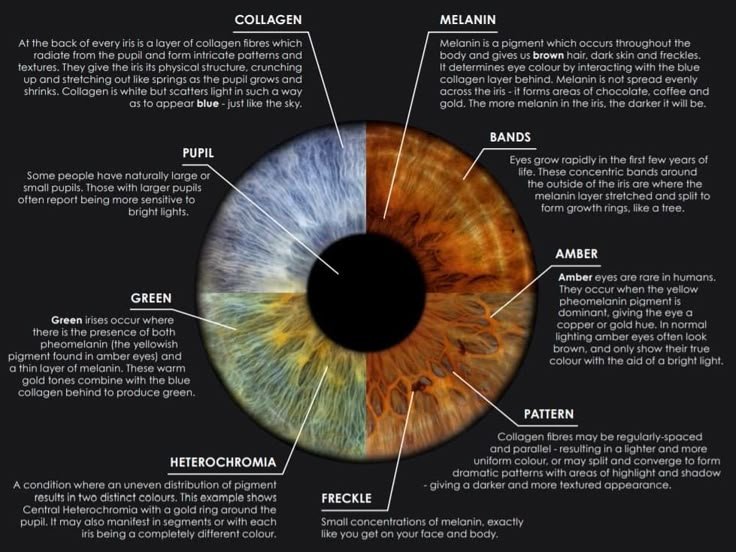
When practitioners search for an iridology eye color chart, they need accurate visual references showing how iris patterns correspond to traditional health observation zones. I’ve worked with these charts for years, and the most common question remains: how do chart interpretations differ across brown, blue, and green eye colors?
This guide answers that exact question. You’ll find detailed explanations of chart structure, regional divisions, practical reading methods, and how different eye colors affect zone visibility. Whether you’re teaching iridology, consulting with clients, or selecting equipment for your practice, this resource provides the framework you need.
Traditional iridology charts map the iris into specific zones. Each section corresponds to different body areas in classical iris observation theory. Understanding these regional divisions helps practitioners use charts effectively during consultations and educational sessions.
Important Educational Note: All information in this guide relates to traditional iridology observation and education. Iridology charts serve as reference tools for practitioners trained in classical iris observation methods. This content does not provide medical diagnosis or replace professional healthcare evaluation.
What Is an Iridology Eye Color Chart and Why Eye Color Matters

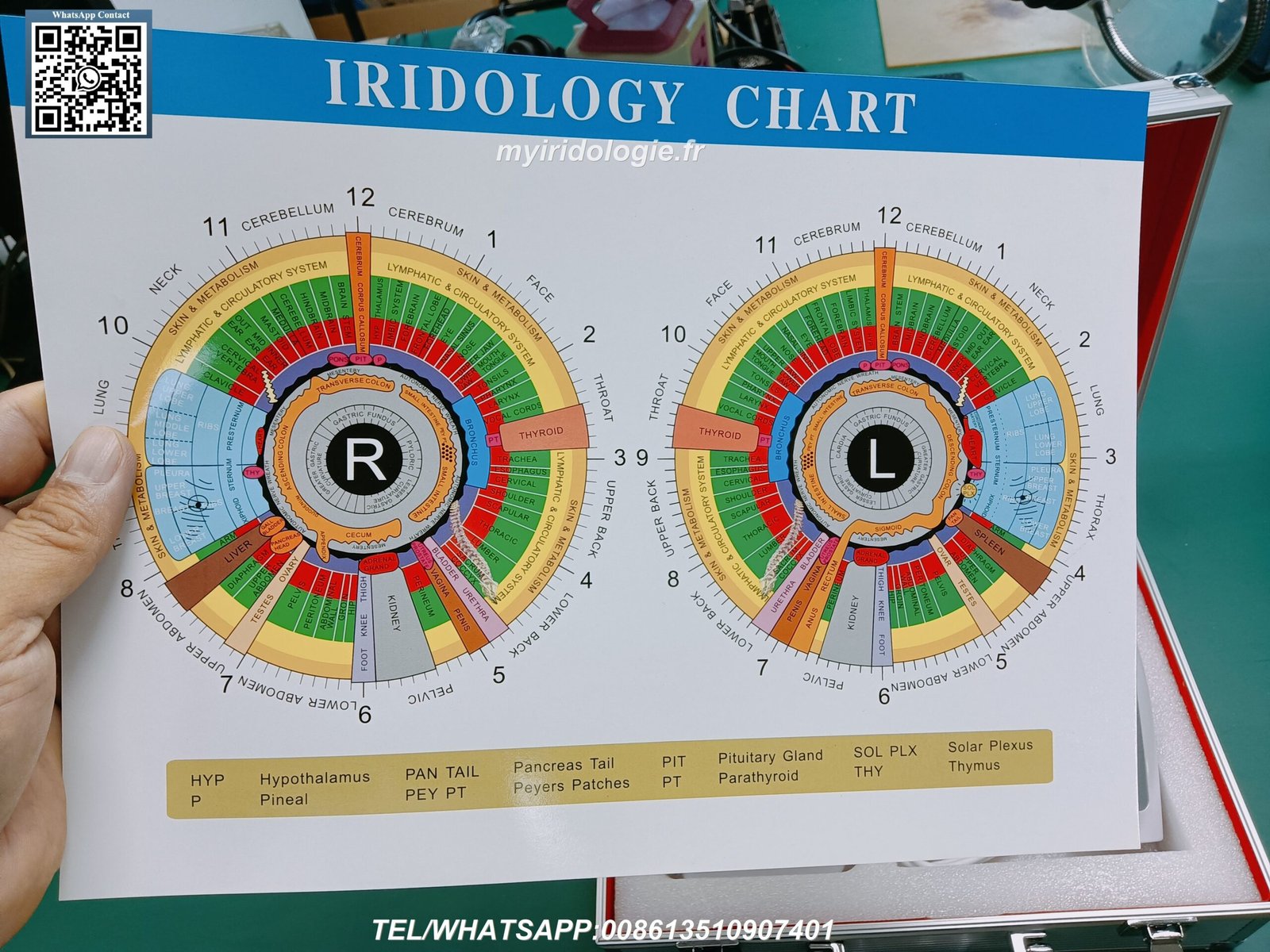
An iridology eye color chart is a circular diagram dividing the iris into zones. Each zone represents a specific body area in traditional iridology practice. These charts serve as reference guides during iris observation sessions.
Eye color significantly impacts how practitioners read these charts. The iris structure differs between brown, blue, and green eyes. Pigmentation levels affect zone visibility and marking clarity.
Why Different Charts Exist for Different Eye Colors
The iridology chart brown eyes version accounts for heavier pigmentation. Dark irises show different fiber patterns compared to lighter colors. Practitioners need charts that help identify subtle variations in deeply pigmented tissue.
Conversely, iridology chart blue eyes references work with minimal pigmentation. Light irises display fiber structures more clearly. These charts focus on different markers visible in less pigmented tissue.
The iridology chart green eyes falls between these two extremes. Green irises contain moderate pigmentation levels. Charts for green eyes blend observation techniques from both brown and blue eye references.
Brown Eye Chart Features
- Emphasis on pigment spot identification
- Focus on structural fiber patterns beneath pigmentation
- Specialized lighting considerations for zone visibility
- Reference points for lacunae detection in darker tissue
Blue Eye Chart Features
- Clear fiber structure documentation
- Detailed radial furrow mapping
- Color variation zone identification
- Nerve ring prominence indicators
Professional practitioners often maintain all three chart types in their reference library. Each color variation provides specific advantages when working with different client iris types.
Understanding Regional Divisions in Iridology Eye Color Charts
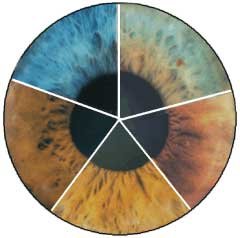
Traditional iridology charts divide the iris into specific regional zones. The most common mapping system uses a radial and concentric approach. Understanding this structure helps practitioners navigate any chart variation effectively.
The Clock-Face Radial Division System
Most charts use a twelve-section radial division similar to clock positions. Starting at twelve o’clock and moving clockwise, each section corresponds to different anatomical areas. This standardized approach allows consistent communication between practitioners worldwide.
The brain and head areas typically map to the upper portions around twelve o’clock. Moving downward, digestive and elimination zones occupy the lower sections. Lateral positions often correspond to extremities and limb areas.
Concentric Ring Zones: Inner to Outer Iris
Pupillary Zone
The innermost ring immediately surrounding the pupil. In traditional observation, this area relates to digestive function and intestinal health markers.
Ciliary Zone
The middle region extending from the collarette outward. This broader area encompasses most organ and system correspondence points on traditional charts.
Peripheral Zone
The outermost ring near the sclera boundary. Classical iris observation associates this zone with circulatory and lymphatic system markers.
When examining an iridology eye colour chart, you’ll notice these concentric divisions remain consistent across all color variations. The regional mapping system stays standard whether viewing brown, blue, or green eye references.
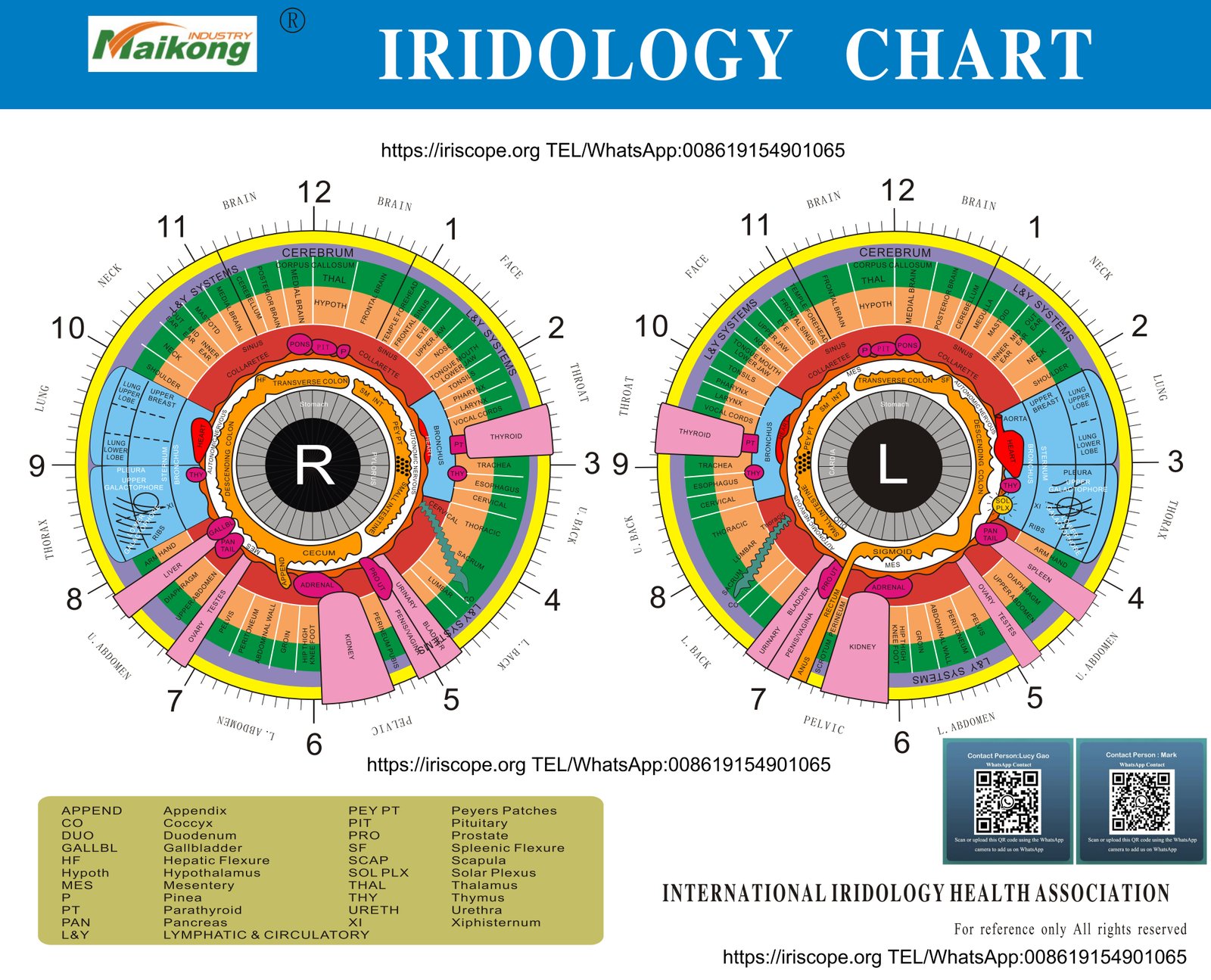
Left Eye vs Right Eye Correspondence
Traditional iridology mapping assigns body sides to specific eyes. The left eye iridology chart corresponds to the left side of the body. Conversely, the iridology chart right eye maps to right-side body areas.
This bilateral correspondence affects chart interpretation significantly. Practitioners examine both eyes during consultations to create complete observations. A marking appearing only in one eye might indicate a unilateral focus in traditional iris analysis.
Some organs appear on both charts due to bilateral presence in the body. Kidneys, lungs, and limbs show representation in both iris maps. Single organs like the heart or liver appear predominantly on one chart based on their anatomical position.
Common Iridology Eye Color Chart Types and Classification Systems
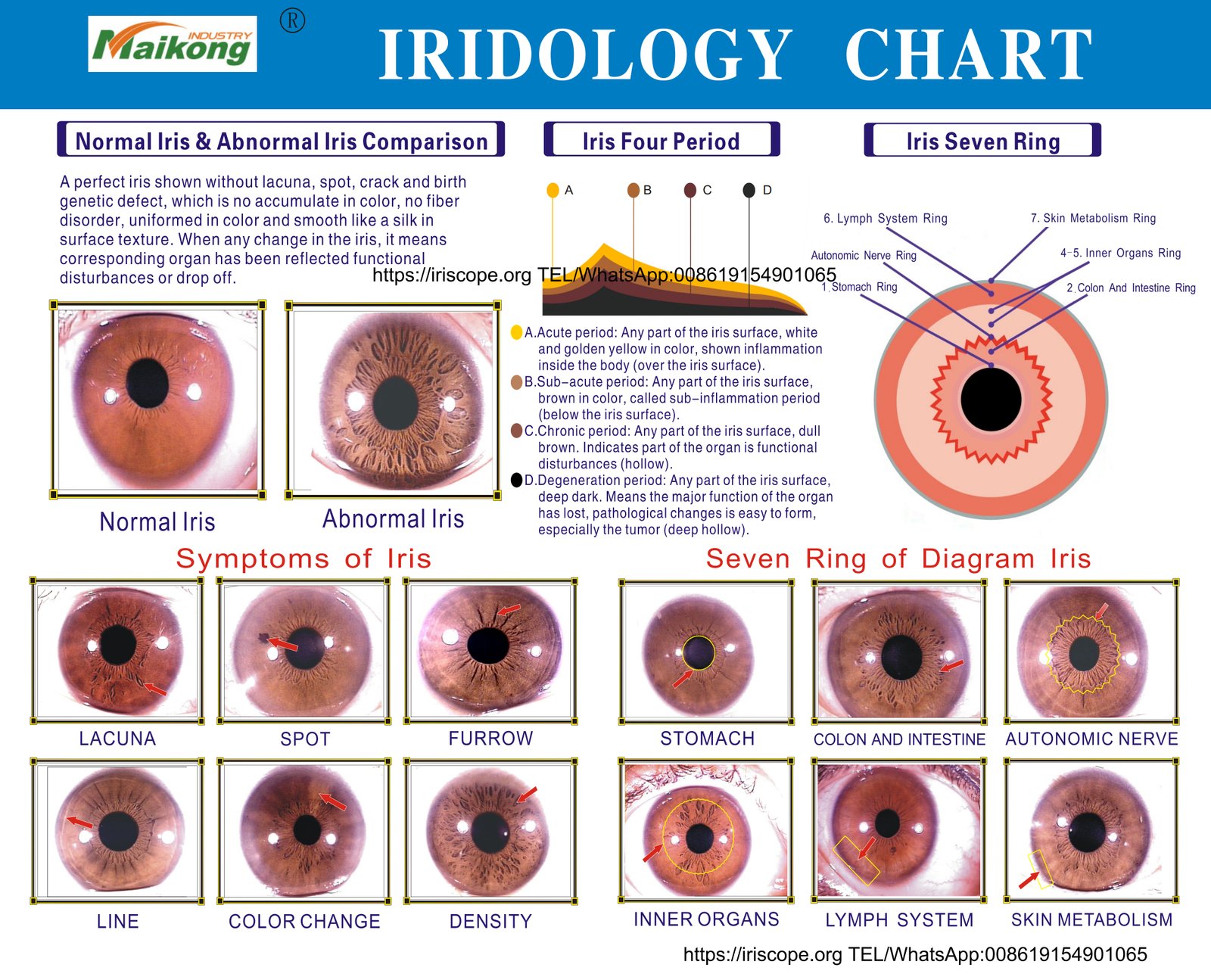
Several classification systems exist within iridology practice. The Bernard Jensen iridology chart remains one of the most widely recognized references. Dr. Jensen’s mapping system established foundational zone divisions still used today.
Major Chart Classification Approaches
- Anatomical mapping charts – Focus strictly on organ and body system correspondence zones
- Constitutional charts – Emphasize iris structure types and inherited tissue patterns
- Combination charts – Integrate both anatomical zones and constitutional fiber pattern references
- Specialized charts – Target specific systems like digestive, nervous, or lymphatic focus areas
Different practitioners prefer different chart styles based on their training background. European schools often use charts with slightly different zone divisions compared to American traditions. Both approaches maintain the core principle of regional iris mapping.
Digital vs Printed Chart Resources
Modern practice includes both traditional printed references and digital chart resources. Many iridology camera systems now include built-in chart overlays. These digital tools allow real-time comparison between captured iris images and reference zones.
Chart Resource Tip: Professional iridology software often includes multiple chart variations within one platform. The MAIKONG iridology software, for example, provides Bernard Jensen charts, European mapping systems, and constitutional references across 17 language versions. This multi-chart approach serves diverse training backgrounds and client populations.
Printed charts remain valuable for teaching environments and client education. A printable iridology chart allows practitioners to mark observations directly on paper during consultations. Many professionals use both digital and printed formats depending on the consultation context.
How to Read an Iridology Eye Color Chart: Step-by-Step Methodology
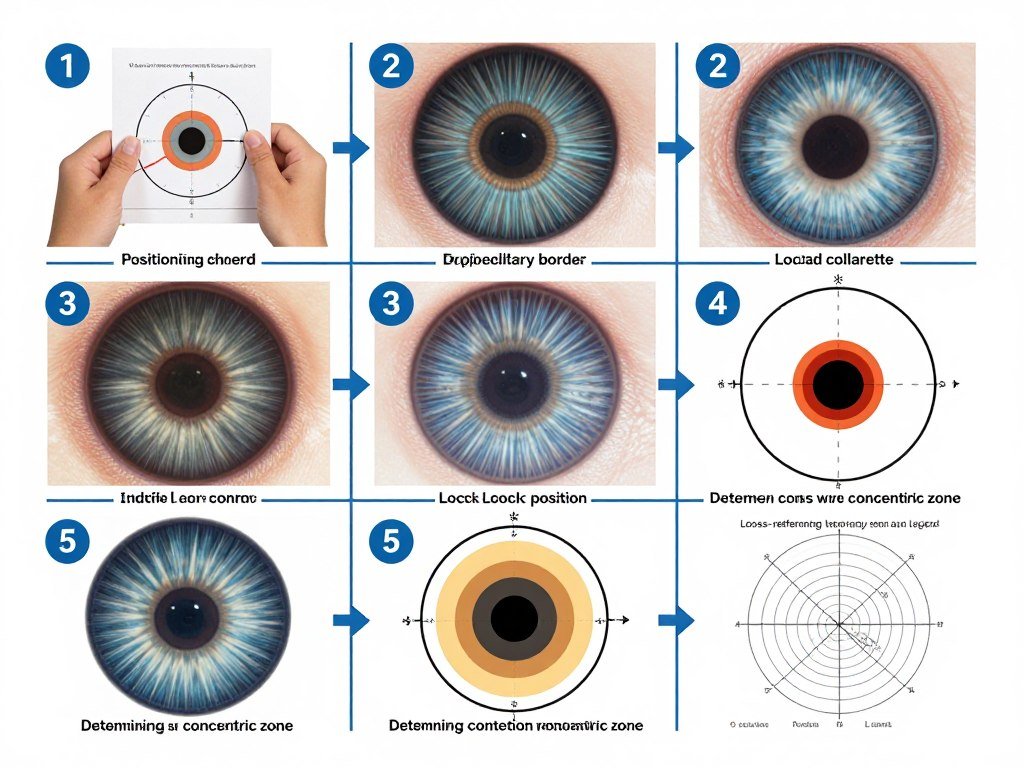

Learning how to read iridology charts requires systematic methodology. The process involves matching observed iris features to chart reference zones. Here’s the practical approach professionals use.
Five-Step Chart Reading Process
- Capture or observe the iris clearly – Use proper lighting and magnification. Quality iriscope equipment ensures accurate zone identification.
- Identify the pupillary border and collarette – These landmarks serve as reference points for concentric zone determination.
- Determine clock position – Establish which radial section contains the area of interest using the twelve-hour reference system.
- Locate concentric depth – Determine whether the observation sits in the pupillary, ciliary, or peripheral zone.
- Cross-reference with chart legend – Match the identified position to the corresponding body area on your reference chart.
This methodology works consistently across all eye colors. However, the iridology eye color chart brown requires additional attention to lighting conditions. Darker pigmentation makes some structural markers less visible without proper illumination.
Working with Different Eye Color Charts
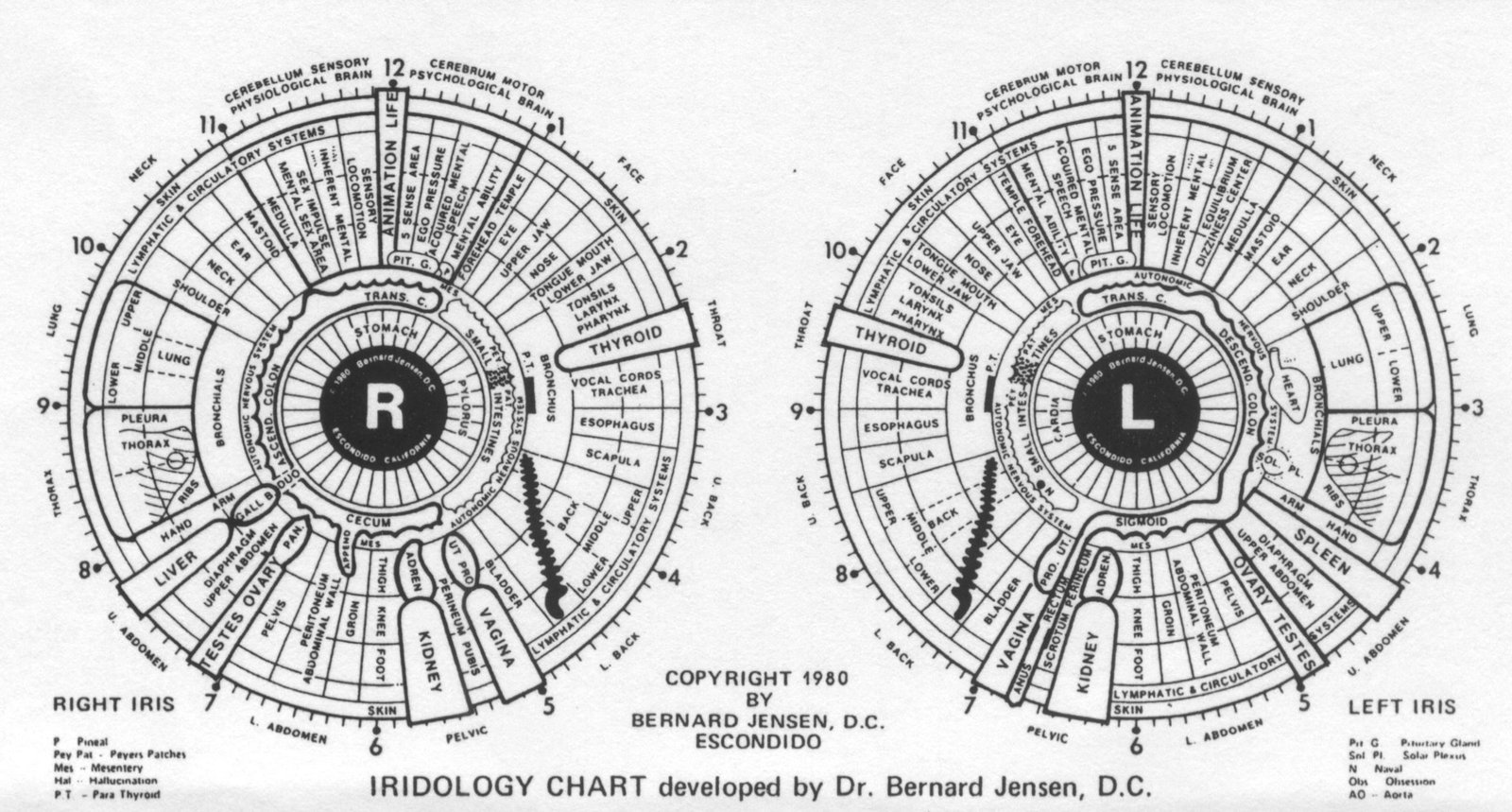
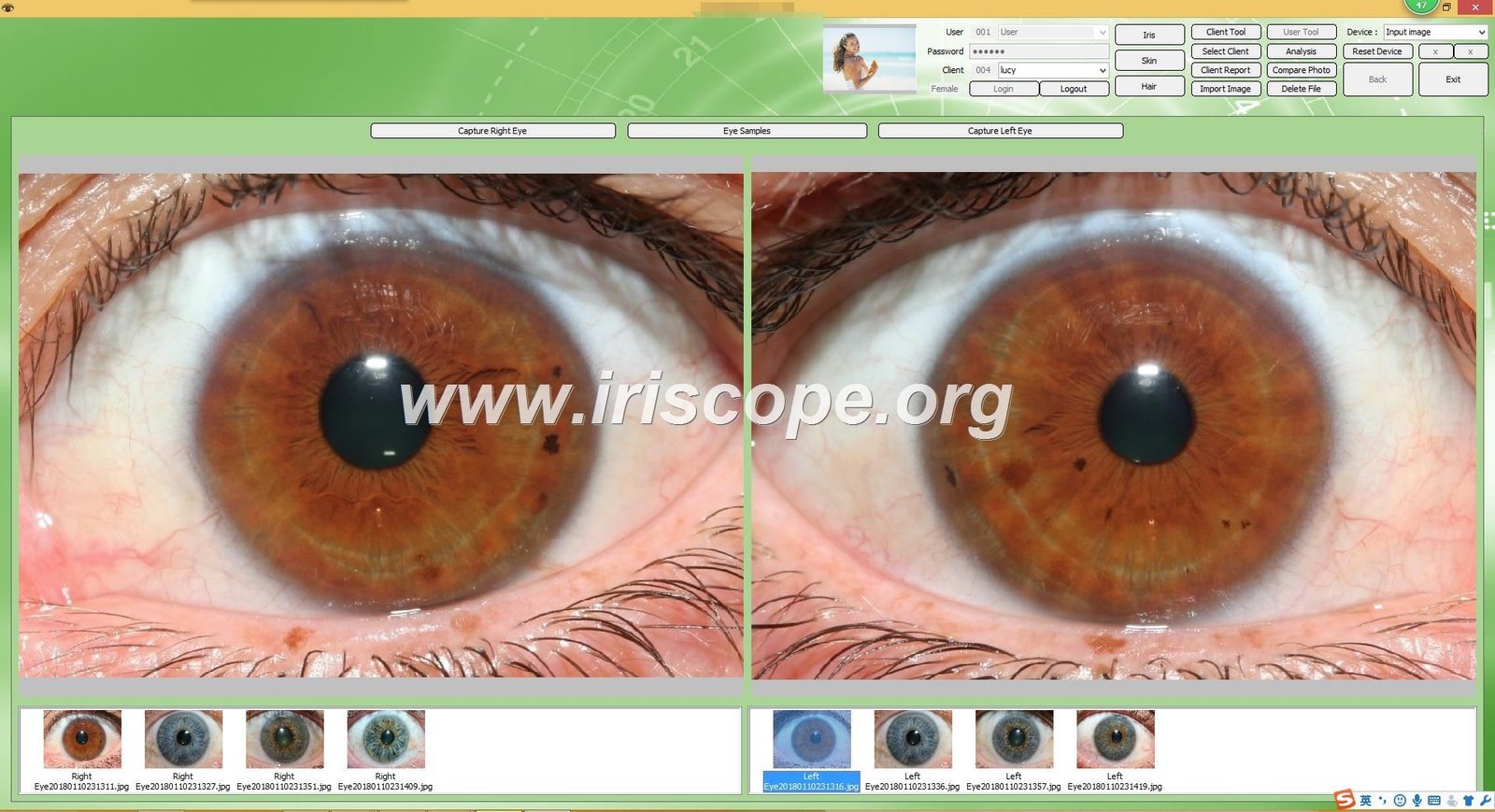
When working with clients who have brown eyes, practitioners reference the iridology chart brown eyes version specifically. This chart emphasizes pigment variations rather than fiber structure alone. Areas where pigmentation clusters or thins can indicate zones of traditional observation interest.
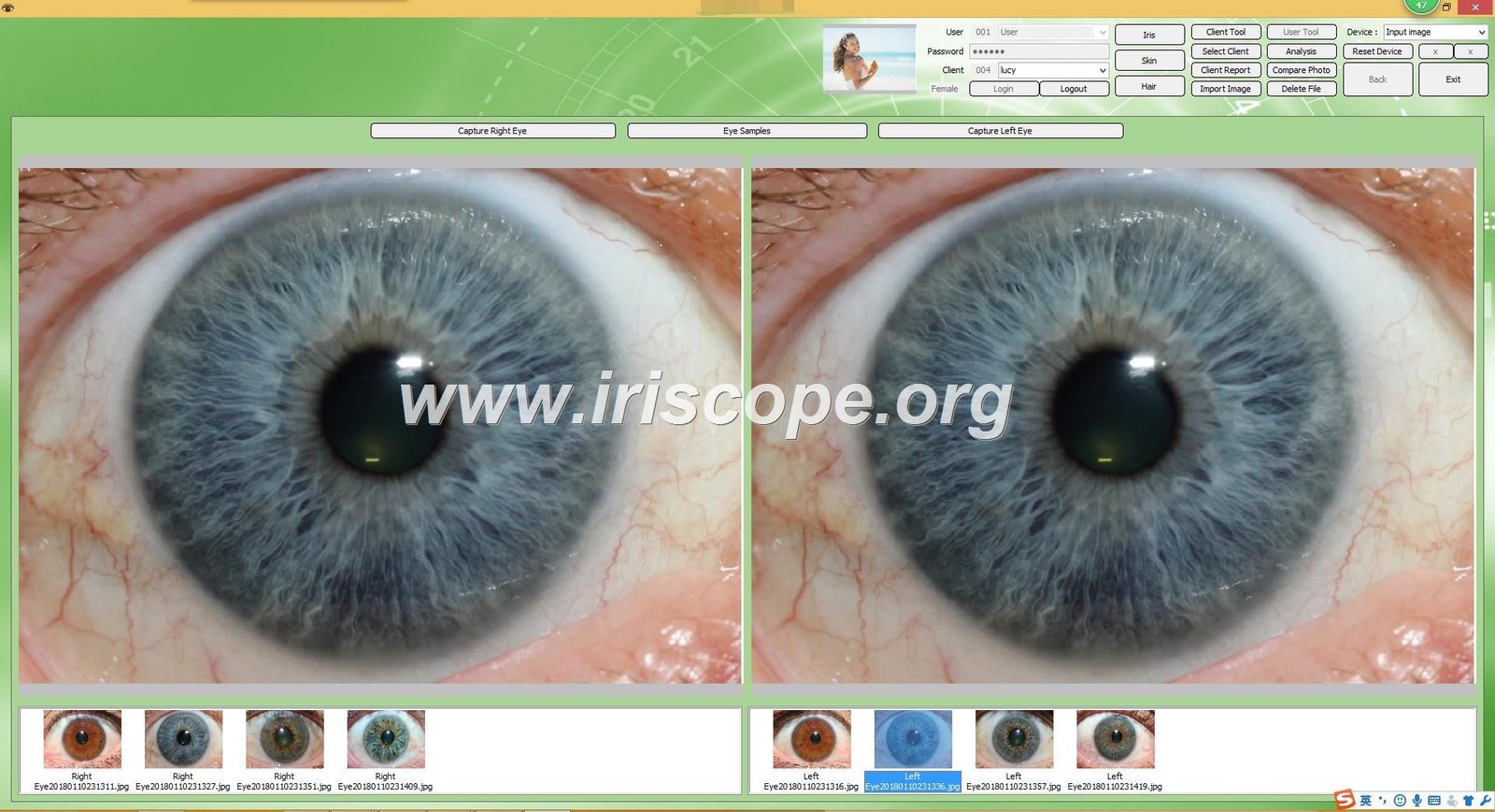
Blue eye observations use the iridology chart blue eyes reference. These charts highlight fiber structures, radial furrows, and collarette variations more prominently. The reduced pigmentation in blue irises makes structural features the primary observation focus.
For clients with green eyes, practitioners often use a hybrid reading approach. The iridology chart green eyes variation acknowledges moderate pigmentation while still tracking structural patterns. Green irises combine characteristics of both brown and blue tissue types.
Essential Chart Reading Tools
- High-resolution iris imaging camera
- Multiple chart reference types (printed and digital)
- Proper magnification equipment
- Color-balanced lighting system
- Documentation software for comparison tracking
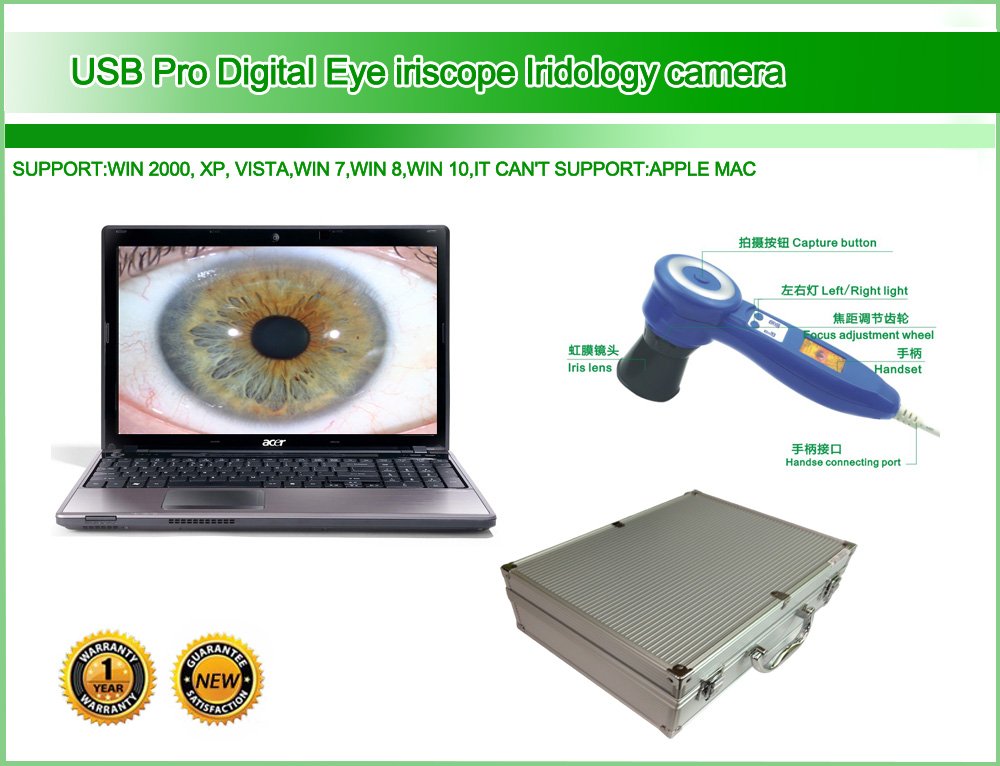
Quality equipment makes chart reading more accurate and efficient. Modern USB iridology cameras connect directly to computers running analysis software. This integration allows instant chart overlay comparisons during live consultations.
Integrating Iridology Eye Color Charts with Cameras and Software

Modern iridology practice increasingly relies on integrated digital systems. Chart references that once existed only in printed form now appear as software overlays. This integration streamlines the observation and documentation process significantly.
How Digital Chart Overlays Work with Iris Cameras
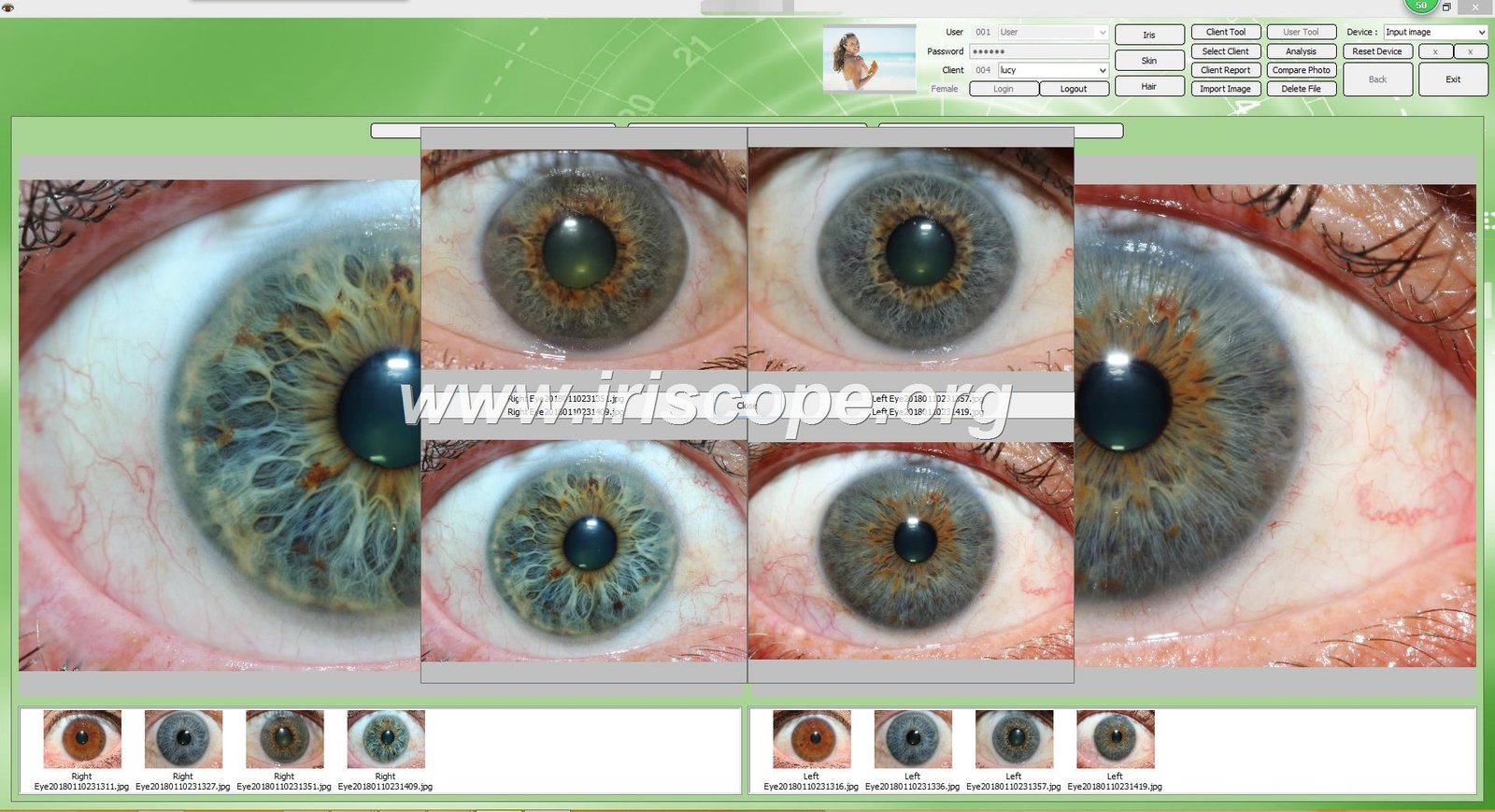
Contemporary iridology software systems provide real-time chart overlay features. When you capture an iris image using a compatible camera, the software can superimpose a reference chart directly onto the photograph.
This overlay function allows precise zone identification. Practitioners can adjust the chart alignment to match individual iris size variations. The digital approach eliminates the guesswork involved in comparing separate printed charts to iris photographs.
Software Integration Example: Professional iridology platforms include chart libraries with multiple mapping systems. Practitioners select their preferred chart style – Bernard Jensen, European constitutional, or specialized system variants. The software then overlays the chosen chart onto captured iris images, maintaining proportional accuracy across different iris sizes.
Camera-to-Chart Workflow in Professional Practice
- Image capture – Use a high-quality iridology camera to photograph the iris with proper focus and lighting
- Software import – Transfer the image to analysis software with built-in chart references
- Chart selection – Choose the appropriate color-specific chart (brown, blue, or green eye version)
- Overlay alignment – Position the chart overlay to match the captured iris dimensions
- Zone analysis – Examine specific areas using the chart reference as a guide
- Documentation – Save marked images with chart overlays for client records
This workflow creates consistent documentation standards. When practitioners review client progress over time, previous images with chart overlays provide clear comparison references.
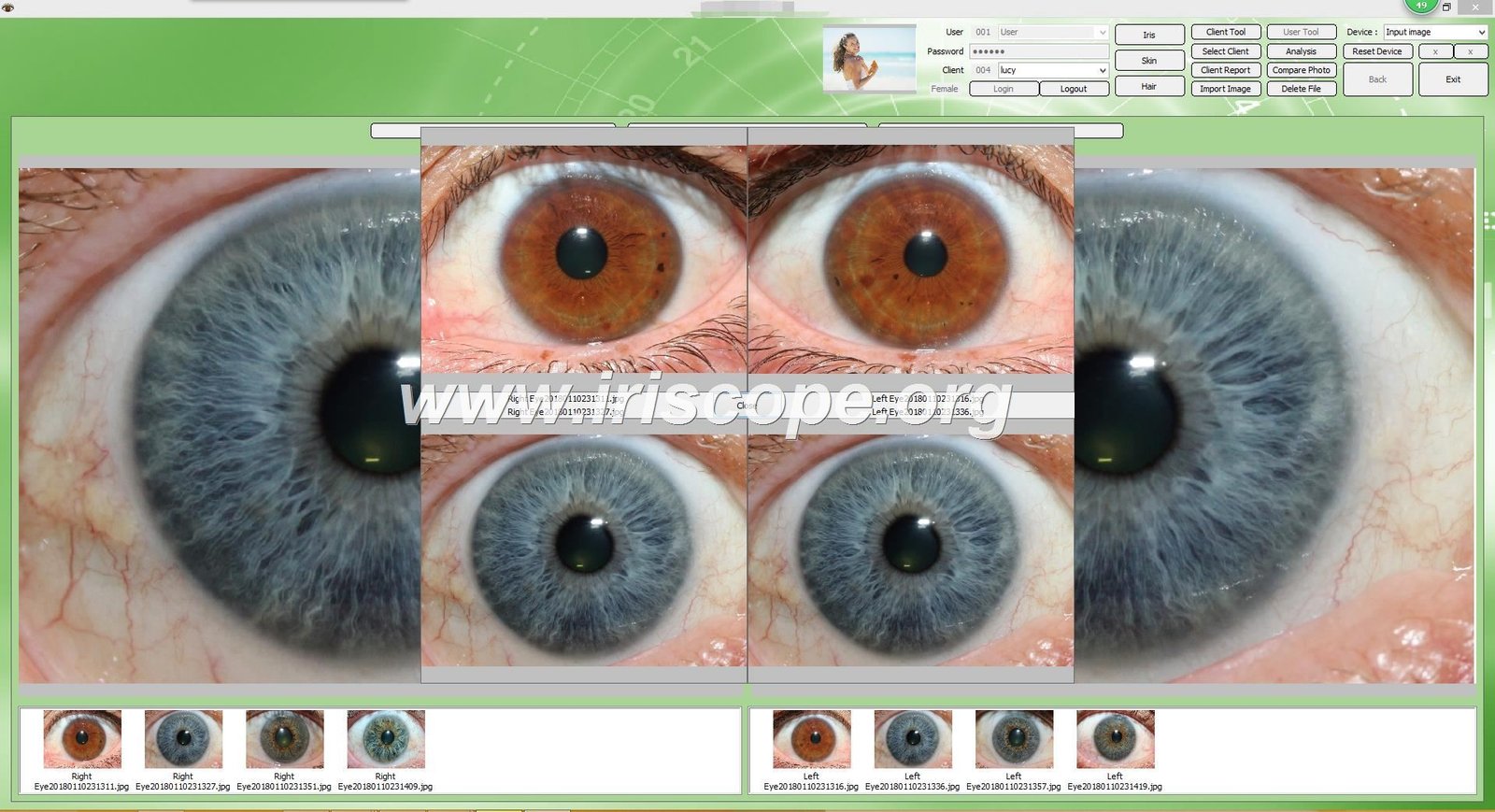
Essential Software Features for Chart Integration
Professional iridology software should include these chart-related capabilities:
- Multiple chart library access – Various mapping systems and eye color variations available
- Adjustable overlay transparency – Ability to see both iris image and chart simultaneously
- Proportional scaling – Charts resize accurately to match different iris dimensions
- Zone highlighting tools – Mark specific areas of interest with annotations
- Multi-language chart options – Essential for international practice or diverse client bases
- Comparison view modes – Side-by-side chart and image display for detailed analysis
When evaluating equipment options, practitioners should verify chart integration capabilities. Not all camera-software combinations offer comprehensive overlay features. Systems designed specifically for iridology practice typically provide better chart integration than general medical imaging software adapted for iris observation.
Using Iridology Eye Color Charts in Teaching and Client Consultations

Iridology eye color charts serve dual purposes in professional practice. They function as analytical tools during observations and as educational resources during client communication. Understanding both applications maximizes chart utility.
Educational Applications in Training Environments
Training institutions rely heavily on comprehensive chart resources. Students learn regional mapping by studying detailed reference charts before examining actual irises. This foundational education establishes the knowledge base for practical observation skills.
Effective teaching programs use multiple chart formats simultaneously. Instructors display large wall-mounted charts during classroom presentations. Students receive individual printed references for workbook exercises. Digital chart software allows practice with virtual overlay techniques.
Classroom Chart Applications
- Large format wall charts for group instruction
- Laminated desk references for individual study
- Digital projection for software demonstration
- Color-specific chart comparisons for pigmentation education
- Blank practice charts for student zone identification exercises
Client Education Chart Uses
- Explaining regional correspondence concepts
- Showing where specific observations appear
- Demonstrating bilateral body mapping
- Providing takeaway reference materials
- Clarifying traditional observation theory
Client Consultation Chart Strategies
During consultations, charts help bridge the communication gap between technical observation and client understanding. Most people lack familiarity with iris anatomy and regional mapping concepts. Visual chart references make abstract correspondence ideas more concrete.
Practitioners often keep simplified charts specifically for client education. These versions emphasize major body systems rather than detailed sub-zones. The simplified approach prevents overwhelming clients with excessive technical information while still conveying the mapping concept.
Documentation and Record-Keeping with Charts
Professional practice standards require thorough documentation. Chart-based records provide consistent tracking methods across multiple sessions. When clients return for follow-up consultations, previous chart-marked images show observation location consistency.
Digital systems excel at long-term documentation. Software platforms store unlimited chart-overlaid images with date stamps and session notes. This digital archive allows practitioners to review years of client history efficiently.
Some jurisdictions require specific record-keeping formats for complementary health practices. Check local regulations regarding documentation standards. Maintaining detailed chart-referenced records demonstrates professional practice standards and supports continuing education documentation requirements.
Common Misconceptions and Important Limitations of Iridology Charts

Clarity about chart applications and limitations maintains professional credibility. Several common misconceptions about iridology charts persist in both public understanding and among some beginning practitioners. Addressing these directly supports ethical practice standards.
What Iridology Charts Are NOT
Critical Distinction: Iridology eye color charts are educational reference tools for traditional iris observation practice. They do NOT provide medical diagnosis capabilities, replace professional healthcare evaluation, or detect specific diseases. Charts represent theoretical correspondence systems used in classical iridology education, not validated medical diagnostic frameworks.
- Charts are not diagnostic instruments – They cannot identify specific medical conditions or diseases
- Charts are not universally validated – Regional mapping represents traditional theory, not scientifically proven anatomical connections
- Charts are not self-explanatory – Proper interpretation requires comprehensive training in iris observation methodology
- Charts are not prescriptive – They don’t recommend treatments, therapies, or medical interventions
- Charts are not standardized globally – Different schools use varying zone divisions and correspondence systems
Appropriate Chart Applications in Professional Context
Understanding proper chart use maintains ethical practice boundaries. Professional practitioners use charts as reference frameworks during traditional iris observations. Charts help organize observations and communicate findings within the iridology theoretical model.
Charts support educational conversations with clients interested in traditional iris observation approaches. When clients ask questions about specific iris markings, charts provide visual context for explaining classical iridology interpretations. This educational use differs fundamentally from medical diagnostic applications.
Professional Practice Standard: Always clarify that chart-based observations represent traditional iridology theory perspectives, not medical diagnoses. Clients should continue all medical care with licensed healthcare providers. Iridology observations complement but never replace conventional medical evaluation.
Training Requirements for Chart Interpretation
Competent chart use requires comprehensive training. Purchasing a chart and camera system doesn’t automatically qualify someone for professional iris observation practice. Reputable training programs teach:
- Iris anatomy and physiology fundamentals
- Historical development of iridology mapping systems
- Multiple chart classification approaches and their differences
- Proper observation methodology and documentation standards
- Scope of practice limitations and ethical boundaries
- Client communication skills for traditional observation contexts
Professional organizations offer certification programs establishing minimum competency standards. These programs typically require supervised practice hours beyond classroom education. Certification demonstrates commitment to professional practice standards and continuing education.
Selecting the Right Iridology Eye Color Chart for Your Practice
Practitioners face numerous chart format and style choices. Selecting appropriate references depends on practice type, client population, and preferred observation methodology. Consider these factors when building your chart resource library.
Practice Type Considerations
Clinical Practice Priorities
- Durable laminated charts for daily consultation use
- Digital software with client documentation features
- Multiple eye color chart variations
- Simplified client education versions
- Detailed technical references for complex observations
Teaching Environment Priorities
- Large format wall charts for classroom visibility
- Individual student reference copies
- Blank practice charts for learning exercises
- Comparative chart sets showing different systems
- Digital projection-compatible formats
Client Population Factors
Your typical client demographics influence chart selection. Practices serving predominantly brown-eyed populations benefit from specialized iridology eye color chart brown references. These charts emphasize pigmentation patterns relevant to darker iris observations.
Clinics in regions with mixed eye color populations need comprehensive chart sets. Maintaining separate optimized references for brown, blue, and green eyes ensures appropriate guidance regardless of client iris type.
Format and Accessibility Options

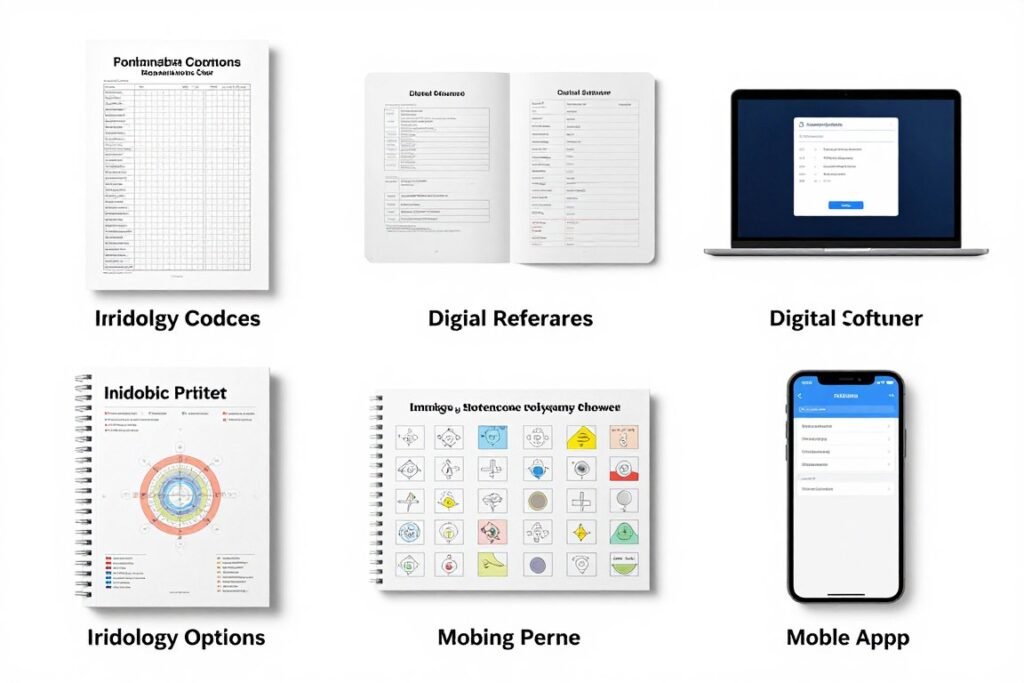
- Printed poster charts – Traditional wall-mounted references, sizes typically 18×24 inches to 24×36 inches
- Laminated desk references – Durable 8.5×11 or 11×17 inch formats for consultation table use
- Spiral-bound chart books – Multiple chart variations in portable reference format
- Digital software libraries – Integrated chart collections within analysis platforms
- Mobile app references – Portable chart access on tablets and smartphones
- Downloadable PDF charts – Customizable printable versions for varied size needs
Many practitioners maintain both printed and digital chart resources. Printed versions serve client education and quick reference purposes. Digital charts integrate with camera systems for analysis workflows.
Language and Cultural Considerations
International practices or clinics serving diverse populations require multi-language chart options. Professional software platforms increasingly offer chart references in multiple languages. This capability supports practitioners working with non-English-speaking clients or international student populations.
Cultural factors sometimes influence chart style preferences. European-trained practitioners often prefer charts following European iridology school conventions. American-trained observers typically use Bernard Jensen-based mapping systems. Understanding these preference differences helps when collaborating with practitioners from different training backgrounds.
Frequently Asked Questions About Iridology Eye Color Charts
What is the difference between an iridology chart for brown eyes versus blue eyes?
The fundamental regional mapping remains the same across all eye colors, but observation emphasis differs. Brown eye charts focus on pigmentation pattern variations, spot locations, and structural features visible beneath heavier pigmentation. Blue eye charts emphasize fiber structures, radial furrows, and collarette details more prominently since minimal pigmentation makes these features clearer. Green eye charts typically blend both approaches, acknowledging moderate pigmentation while tracking structural patterns. The zone divisions stay consistent, but the observation markers practitioners look for within those zones vary based on iris pigmentation levels.
Can I use one universal iridology eye color chart for all clients regardless of their eye color?
While the basic regional mapping system remains consistent, using color-specific charts improves observation accuracy. A universal chart provides general zone locations, but color-specific versions guide you toward the most visible markers in each pigmentation type. Professional practice benefits from maintaining all three primary variations. If equipment or budget limits you to one chart initially, choose the version matching your most common client iris color. As your practice develops, expand your chart library to include specialized references for all eye color types you encounter.
Where can I find printable iridology eye color charts for my practice?
Several sources provide printable chart resources. Professional iridology software platforms often include downloadable PDF chart files as part of their package. Educational organizations and training schools typically offer charts to their students and graduates. Some equipment manufacturers provide complementary chart resources when you purchase iridology cameras or complete analysis systems. When selecting printable charts, verify they come from reputable iridology education sources. Chart quality and accuracy vary significantly between sources. Professional-grade printable charts should include clear zone labels, proper proportions, and attribution to recognized iridology mapping systems.
How do I integrate iridology eye color charts with my iris camera system?
Integration methods depend on your equipment type. Modern dedicated iridology software includes built-in chart overlay features. After capturing an iris image, you select your preferred chart style from the software library, and the program superimposes it onto the photograph with adjustable alignment. If your camera system doesn’t include integrated software, you can use separate screen display methods – showing the captured iris image on one monitor or window while displaying a digital chart reference on another. Some practitioners print charts and physically place them beside displayed iris images during analysis. The most efficient workflow uses purpose-built iridology software with native chart overlay capabilities designed specifically for iris observation work.
Do different iridology schools use different eye color chart systems?
Yes, chart variations exist between different training traditions. American iridology largely follows Bernard Jensen’s mapping system or variations derived from his work. European schools often use charts based on Josef Deck or other European iridology pioneers, which may show slightly different zone divisions or emphasis areas. Some specialized schools focus on constitutional iridology, using charts that emphasize iris structure types rather than purely anatomical correspondence. Despite these variations, the fundamental concept remains consistent – the iris is divided into zones corresponding to body areas in traditional observation theory. When learning chart interpretation, identify which school tradition your primary training follows, then expand familiarity with alternative systems as your expertise develops.
What chart features should I look for when purchasing iridology reference materials?
Quality iridology charts should include clear zone delineation with readable labels, accurate proportional scaling of concentric rings, proper radial division markings, and attribution to recognized mapping systems. Color-specific versions should address unique observation markers for brown, blue, and green eyes respectively. Professional charts indicate which eye (left or right) the map represents, show the collarette position clearly, and use consistent anatomical terminology. Digital chart versions should offer adjustable overlay transparency, multiple chart style options, and compatibility with standard iris image formats. Educational charts benefit from simplified zone groupings for client communication, while technical reference charts need detailed sub-zone divisions for comprehensive observation work.
Are iridology eye color charts scientifically validated for health assessment?
Iridology charts represent traditional observation theory rather than scientifically validated diagnostic tools. The zone correspondence systems shown on charts derive from classical iridology philosophy and empirical observation traditions, not controlled medical research. Current scientific evidence does not support using iris markings for disease diagnosis or health condition identification. Professional practitioners use charts as frameworks for traditional iris observation practice and client education within complementary health contexts. Charts serve educational and organizational purposes in iridology training and practice, but do not constitute medical diagnostic instruments. Anyone using iridology charts professionally should clearly communicate this distinction to clients and maintain appropriate scope of practice boundaries.
How often should I update my iridology chart references?
Basic anatomical chart mapping remains relatively stable over time, but updated versions occasionally incorporate refined zone divisions or improved labeling clarity. Review your chart resources every few years to ensure you’re using current versions from your training school or professional organization. Digital chart libraries within software platforms receive updates more frequently – typically with software version upgrades. These updates might add new chart variations, improve overlay accuracy, or include translations in additional languages. If you maintain printed charts in your consultation space, inspect them annually for physical wear and replace damaged or faded versions to maintain professional appearance. When new training or continuing education introduces you to alternative mapping systems, consider adding those chart variations to your reference library for comparison purposes.
Professional Equipment for Iridology Chart Applications
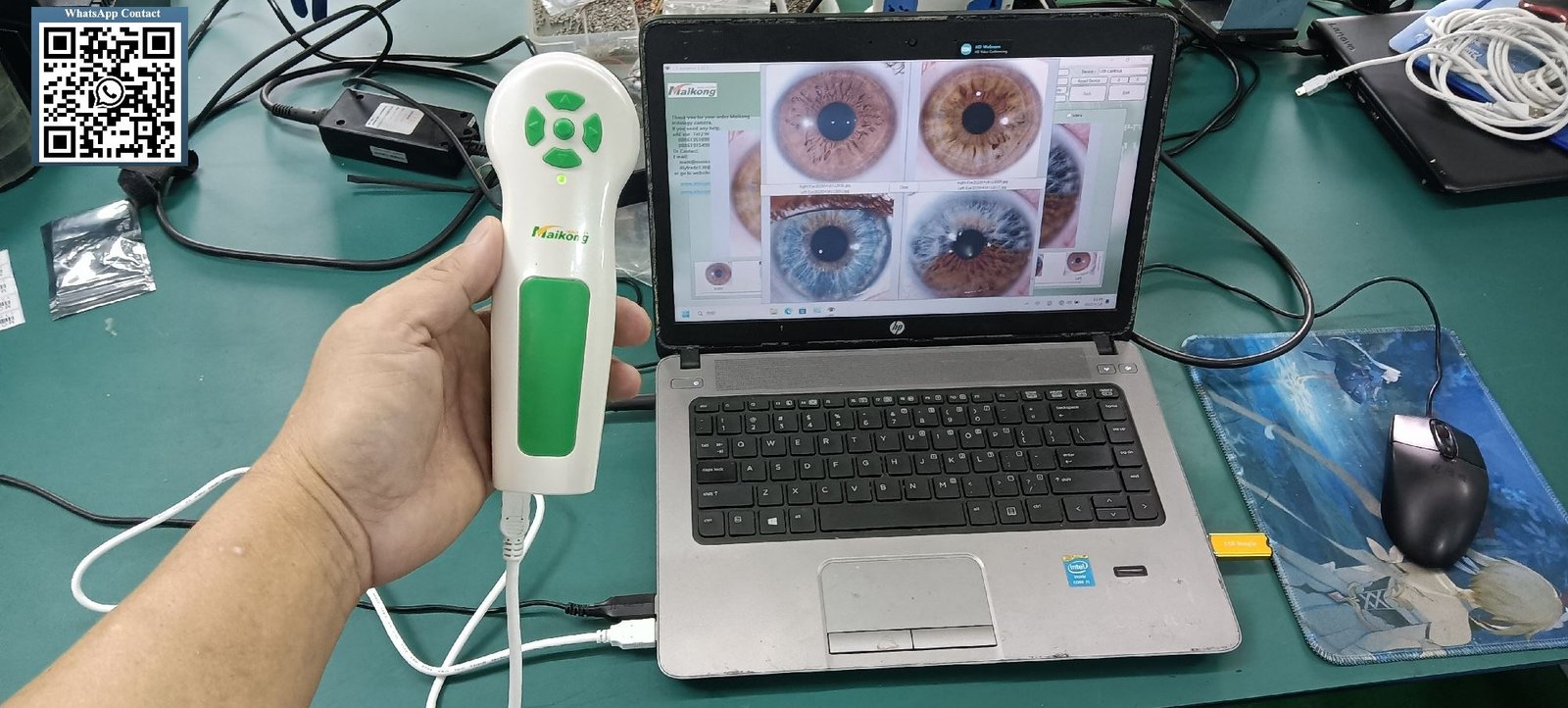
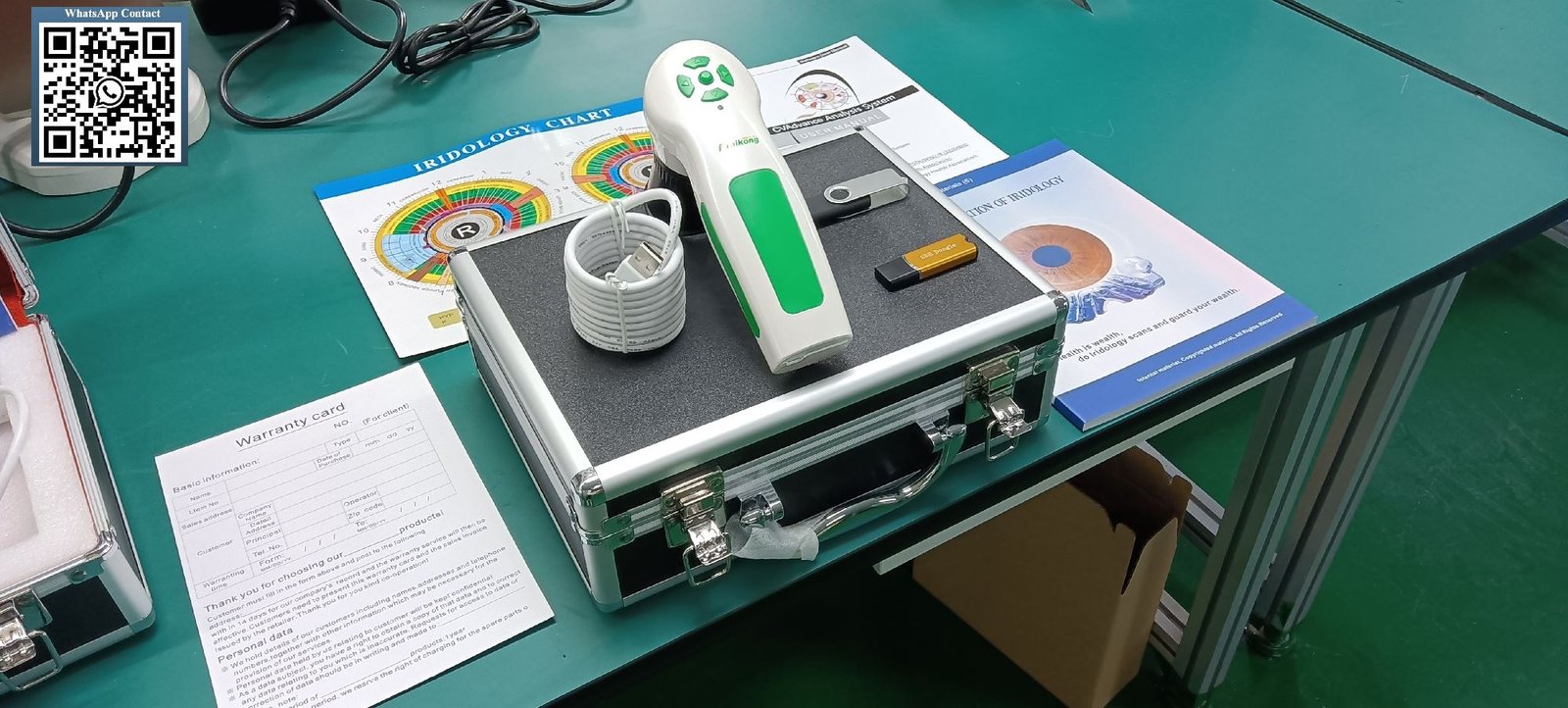
Effective chart utilization requires quality imaging equipment and compatible software. While charts themselves provide reference frameworks, capturing clear iris images and accurately overlaying chart references depends on professional-grade tools.
MAIKONG Professional Iriscope Camera Specifications
The MAIKONG MK-9822U represents current professional iridology camera standards. This system integrates seamlessly with chart-based analysis workflows.
| Specification | Details |
| Model Number | MK-9822U Professional Iriscope |
| Image Sensor | 12.0 Megapixel High Resolution CCD |
| Illumination | LED ring light around lens (adjustable brightness) |
| Lens Type | Imported multi-layer coated optics with 30X iris magnification |
| Focus System | Adjustable manual focus with optical image stabilization |
| Connection | USB 2.0 interface (plug-and-play, no external power required) |
| Compatibility | Windows 2000/XP/Vista/7/8/10/11 (32-bit & 64-bit), macOS |
| Controls | Single capture button, brightness adjustment dial, focus ring |
| Image Processing | Digital signal processor with auto white balance and contrast adjustment |
| Included Accessories | 30X iris lens, protective lens cover, 1.5m USB cable, carrying case |
MAIKONG Iridology Software Chart Features
Professional analysis requires software that integrates chart references seamlessly with captured iris images. The MAIKONG iridology software platform provides comprehensive chart library access.
| Feature Category | Capabilities |
| Chart Library | Multiple mapping systems including Bernard Jensen, European constitutional, and specialized organ-focused charts |
| Eye Color Variations | Dedicated chart versions for brown eyes, blue eyes, and green eyes with color-specific observation markers |
| Overlay Functionality | Real-time chart overlay on captured iris images with adjustable transparency and alignment controls |
| Language Support | Chart labels available in 17 languages including English, Spanish, French, German, Chinese, Japanese, Russian, and others |
| Analysis Tools | Zone highlighting, annotation markers, measurement tools, and comparison view modes |
| Client Management | Integrated database for storing chart-overlaid images with session notes and progress tracking |
| Report Generation | Automated report creation including chart-marked images and customizable observation summaries |
| Operating Systems | Windows XP/Vista/7/8/10/11 (32-bit & 64-bit) and macOS 10.14 through 15.x |
| Updates | Free software updates including new chart additions and feature enhancements |
| Customization | OEM branding options, custom chart integration, and personalized product recommendations |
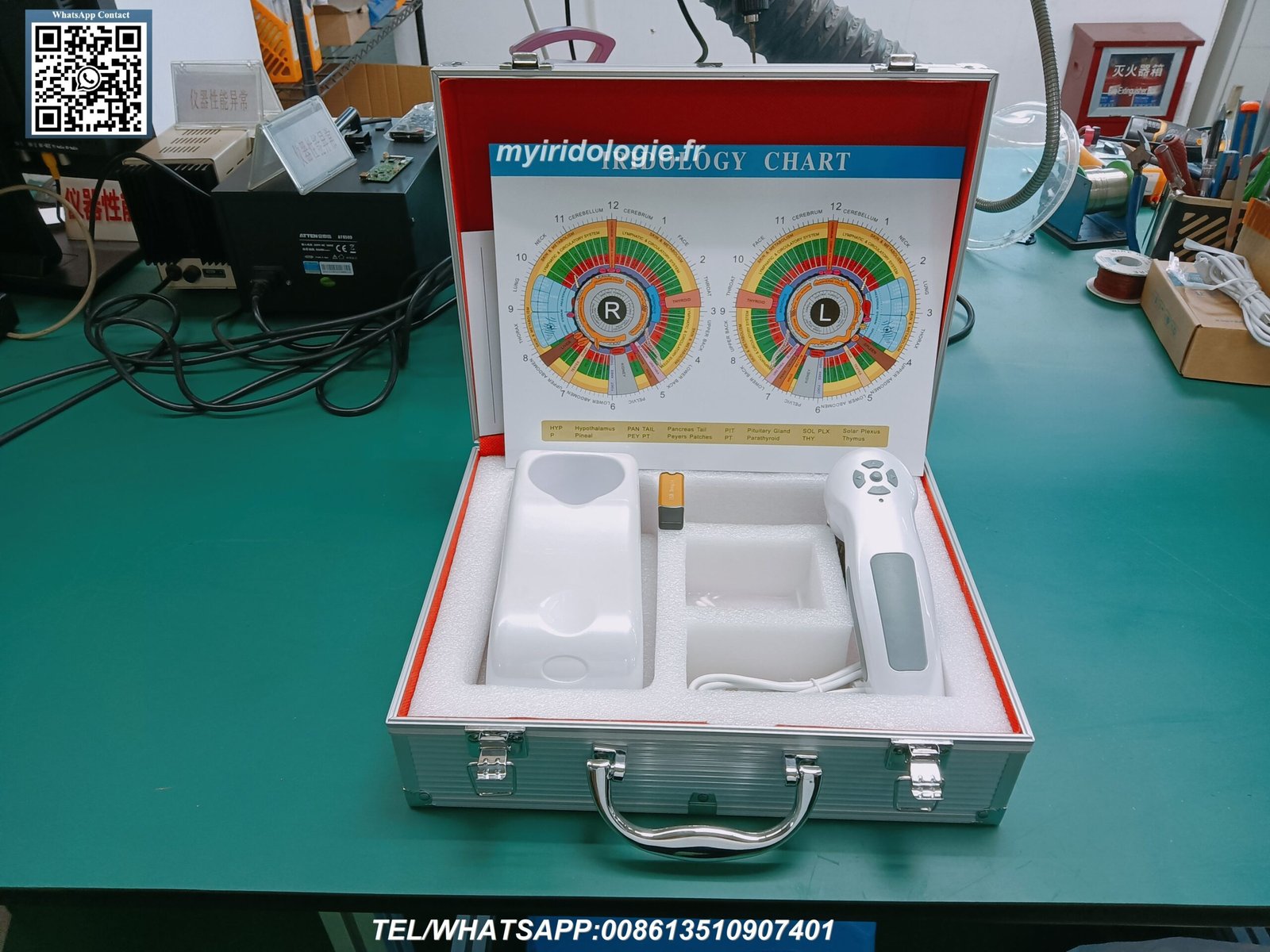
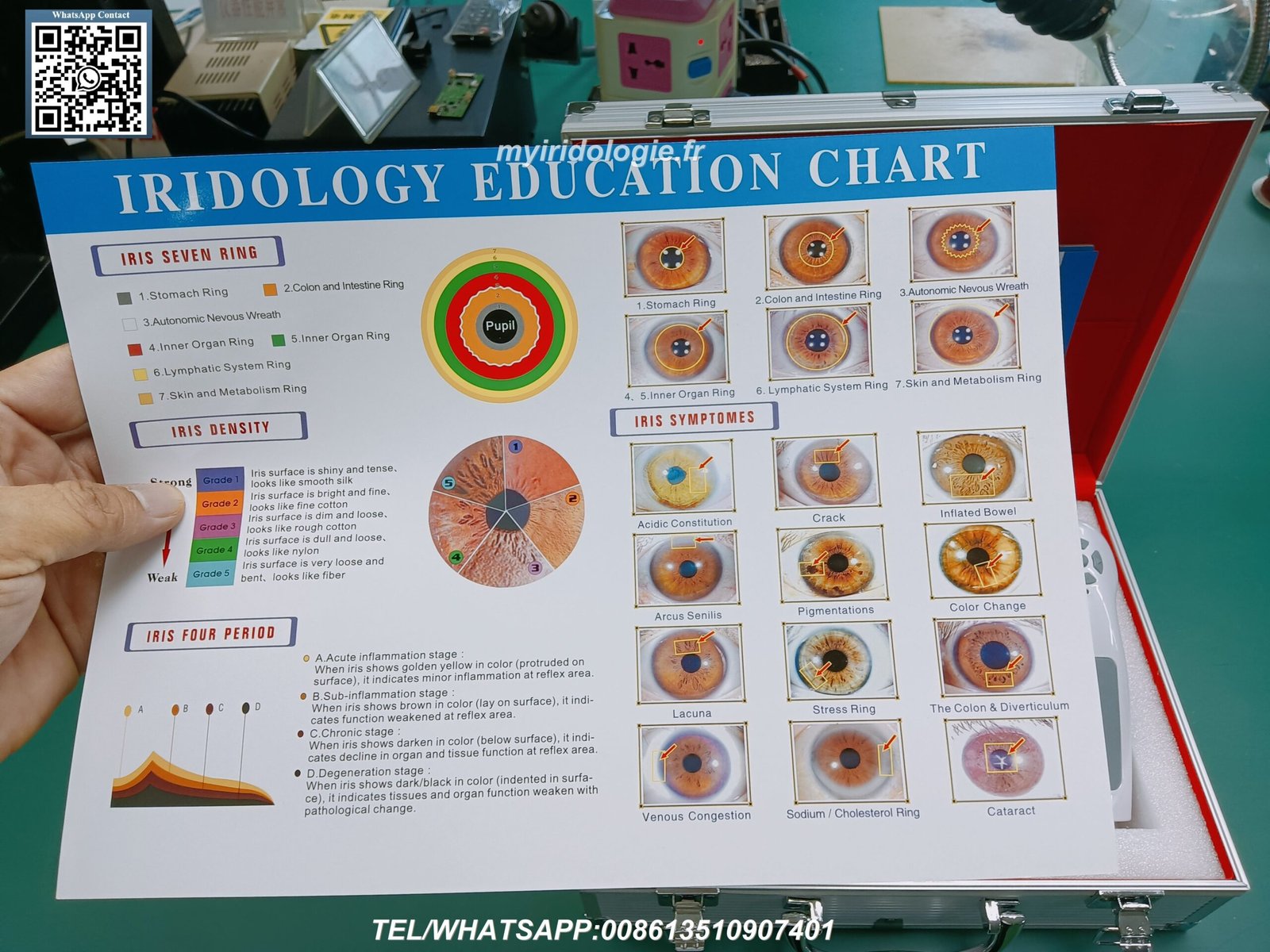
Complete Professional Package Contents
Professional iridology chart practice requires integrated equipment systems rather than standalone components. Complete packages ensure compatibility and workflow efficiency.
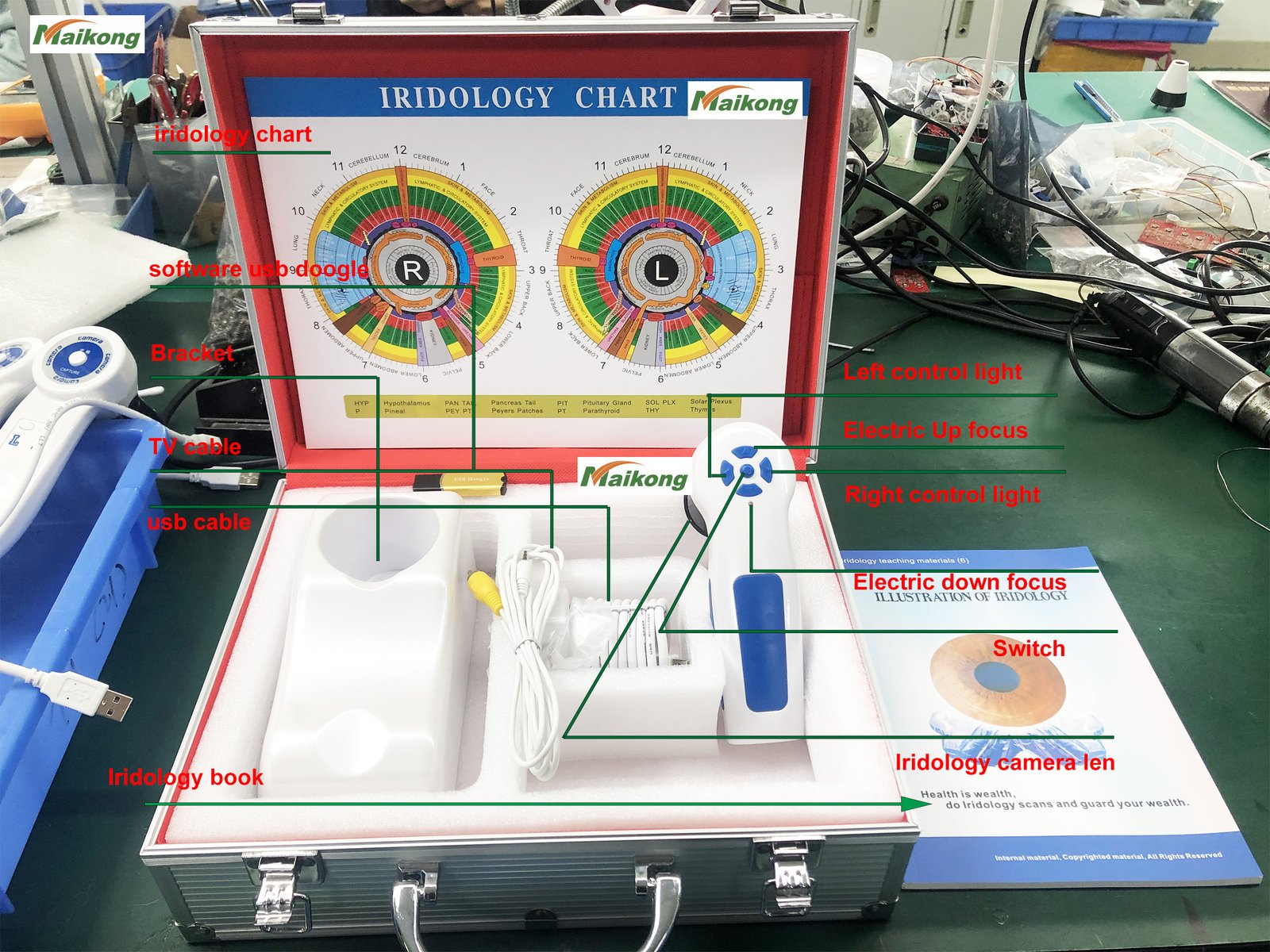
- MK-9822U Iriscope Camera – High-resolution imaging with professional optics
- MAIKONG Software License – Comprehensive chart library and analysis platform
- USB Encryption Dongle – Software security and activation key
- Printed Chart Set – Laminated reference charts for brown, blue, and green eyes
- Installation Media – Software CD with drivers and multi-language versions
- User Documentation – Instruction manual, chart reading guide, and warranty information
- Training Resources – Video tutorials and case study materials
- Protective Carrying Case – Professional storage for portable practice use
This integrated approach ensures all components work together seamlessly. Chart overlay accuracy depends on proper camera-to-software calibration, which manufacturer-provided packages optimize automatically.
Professional Partnership Opportunities with MAIKONG
For practitioners, clinics, and distributors seeking reliable iridology equipment and chart resources, MAIKONG offers comprehensive partnership opportunities. Our manufacturing expertise and customization capabilities support businesses throughout the global health and wellness equipment sector.
Why Professional Distributors Choose MAIKONG
Manufacturing Excellence
Twenty years of specialized iridology equipment production experience. ISO9000-certified manufacturing processes ensure consistent quality from design through final inspection. CE certification for international market compliance.
Customization Capabilities
Complete OEM/ODM services including hardware customization, software branding, multi-language chart integration, and custom packaging. We adapt products to your market requirements and brand specifications.
Global Support Infrastructure
Inventory warehouses in China and the United States enable fast order fulfillment. Technical support available in multiple languages. Software updates and chart library expansions provided to all partnership clients.
Partnership Benefits for Distributors and Resellers
- Competitive wholesale pricing – Volume-based pricing structures supporting healthy profit margins for distributors
- Private labeling options – Software and hardware branding with your company identity
- Technical training resources – Comprehensive product training materials for your sales teams
- Marketing support materials – Professional product images, specifications, and sales literature
- Flexible order quantities – Inventory available for both large-scale distributors and emerging market entrants
- Multi-language documentation – Product manuals and charts available in your target market languages
- Ongoing product development – Regular software updates and hardware improvements keep your product line current
Target Markets and Applications
MAIKONG equipment and chart resources serve diverse professional sectors globally. Current partnership clients include:
Healthcare and Wellness Sector
- Naturopathic medical clinics
- Integrative health centers
- Chiropractic offices
- Functional medicine practices
- Wellness spas and retreat centers
Education and Distribution Sector
- Iridology training institutions
- Natural health education programs
- Medical equipment importers
- Health product distributors
- E-commerce wellness retailers
Our Manufacturing Advantage
MAIKONG operates from GD, SZ (Guangdong, Shenzhen), China – a global hub for precision optical and electronic manufacturing. This location provides access to advanced production equipment and specialized component suppliers serving the medical device industry.
Our quality assurance process follows strict protocols:
- Design verification – Optical and electronic specifications validated before production
- Component inspection – All incoming materials tested against quality standards
- Assembly quality control – Multiple checkpoints during camera and accessory assembly
- Software testing – Chart overlay accuracy and system compatibility verified across operating systems
- Final inspection – Complete system testing before packaging
- Documentation review – Instruction manuals and charts verified for accuracy and completeness
This systematic approach maintains the consistency that professional distributors require when representing our products in their markets.
Become a MAIKONG Distribution Partner
Join our network of successful distributors bringing professional iridology equipment and comprehensive chart resources to practitioners worldwide. We provide the manufacturing expertise, product quality, and customization capabilities you need to build your market presence in the growing wellness equipment sector.
Contact our partnership team to discuss distribution opportunities in your region. We’ll provide detailed product specifications, pricing structures, customization options, and market support resources tailored to your business requirements.
Moving Forward with Professional Iridology Chart Resources

Understanding iridology eye color charts transforms them from simple reference tools into valuable practice assets. Whether you’re establishing a new wellness clinic, expanding an existing practice, or developing a distribution business in the health equipment sector, chart knowledge forms a crucial foundation.
Professional chart resources combined with quality imaging equipment create comprehensive observation systems. The integration between printed references, digital chart libraries, and compatible camera systems streamlines both client consultations and educational applications.
Remember that charts serve educational and organizational purposes within traditional iridology practice contexts. They provide frameworks for iris observation and client communication but do not constitute medical diagnostic instruments. Maintaining this clear distinction supports ethical practice standards and professional credibility.
Essential Takeaways for Practitioners
- Eye color-specific charts improve observation accuracy by emphasizing relevant markers for each pigmentation type
- Regional mapping remains consistent across chart variations, but observation emphasis differs between brown, blue, and green eye versions
- Quality equipment integration enhances chart utility through real-time overlay capabilities and documentation features
- Comprehensive training in chart interpretation is essential for professional practice standards
- Multiple chart formats serve different purposes – teaching, consultation, and client education each benefit from specific chart styles
- Clear communication about chart limitations maintains ethical boundaries and professional integrity
As iridology practice continues evolving globally, chart resources adapt to serve diverse training traditions, language requirements, and professional applications. Digital platforms expand chart accessibility while maintaining the foundational mapping principles established by classical iridology pioneers.
For those building professional practices or distribution businesses in this sector, selecting reliable equipment partners and comprehensive chart resources positions you for sustainable success. Quality tools support quality practice, and professional-grade chart integration capabilities distinguish serious practitioners from casual hobbyists.
Professional Development Resource: Stay current with iridology chart developments through continuing education programs, professional organization memberships, and regular equipment updates. The field continues evolving with improved imaging technology and refined observation methodologies. Investing in ongoing learning ensures your chart interpretation skills and equipment capabilities remain at professional standards.
Whether you’re interpreting an iridology chart brown eyes reference for a client with dark pigmentation, using an iridology chart blue eyes version for light-colored irises, or working with the iridology chart green eyes variation for moderate pigmentation cases, the core principle remains constant: charts provide organizational frameworks for traditional iris observation within appropriate professional contexts.
Your journey with iridology eye color charts continues beyond this guide. Each client consultation, each teaching session, and each equipment upgrade builds your expertise. Approach chart interpretation with respect for both the classical traditions that established these mapping systems and the modern tools that make professional observation more accessible and documentable than ever before.