
Iridology Kidney Chart: Complete Professional Guide to Kidney Zone Mapping and Interpretation
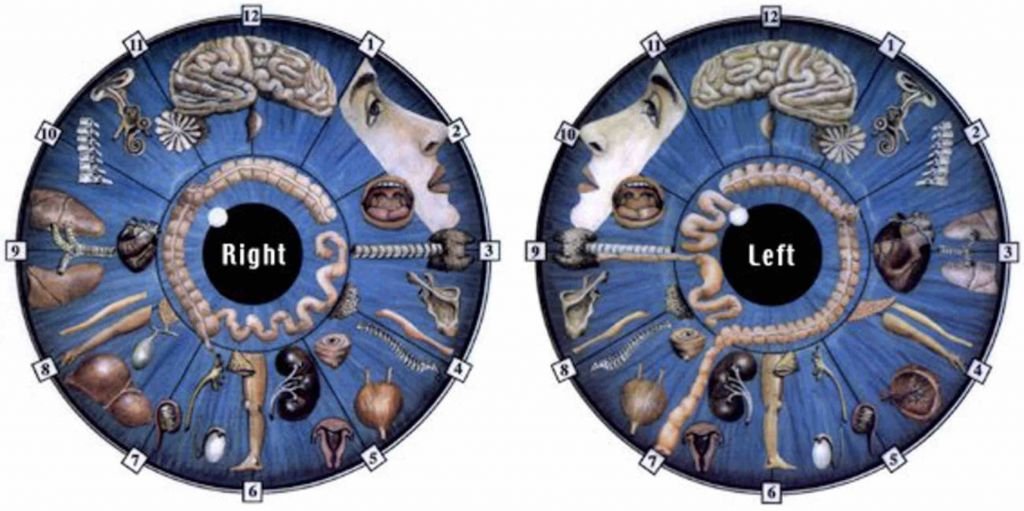
For over two decades working with iridology practitioners across North America, I have watched countless health professionals struggle with a single fundamental question: where exactly are the kidney zones located in the iris, and how do I read them accurately? The iridology kidney chart represents one of the most frequently consulted reference tools in any natural health practice, yet many practitioners tell me they feel uncertain about kidney zone interpretation.
Every week, practitioners contact our team asking about kidney zone positioning, wondering why different charts show slight variations, or seeking clarity on how to explain kidney markings to their clients. This uncertainty is not surprising. The kidney zones occupy specific segments of the iris that require precise identification, and the differences between left and right eye interpretations add another layer of complexity.
This comprehensive guide addresses every practical question about iridology kidney charts that I have encountered in my years supporting natural health professionals. Whether you are setting up your first practice or you are an experienced practitioner seeking to refine your chart reading skills, you will find the answers you need here.
What Is an Iridology Kidney Chart and Why Practitioners Need It
An iridology kidney chart is a specialized reference diagram that maps the specific iris zones corresponding to kidney and renal system function according to traditional iridology theory. Unlike general iridology charts that show all body systems, a kidney-focused chart provides detailed zone divisions for the renal areas, adrenal glands, and associated structures.
In my practice, I use the iridology chart kidney reference constantly during client sessions. The kidney zones are located in the lower portions of each iris, typically between the 5 o’clock and 7 o’clock positions depending on which eye you examine. This positioning is not arbitrary. Traditional iridology maps, developed over more than a century of observation, consistently place kidney representations in these specific iris segments.
The chart serves three critical functions for practitioners. First, it provides a visual reference for locating kidney zones quickly during consultations. Second, it helps explain iris observations to clients by showing them exactly where kidney areas appear on the chart. Third, it serves as a teaching tool for practitioners learning to identify subtle patterns in these zones.
Primary Uses in Practice
- Quick zone identification during client iris analysis sessions
- Client education about iris zone locations and observations
- Training new staff members in kidney zone recognition
- Documentation reference when recording observations in client files
- Comparison tool when evaluating changes over time in follow-up sessions
Chart Information Components
- Precise angular positions for kidney zones in both eyes
- Differentiation between right kidney and left kidney locations
- Adrenal gland zone markings adjacent to kidney areas
- Related structures like ureters and bladder zones
- Color indicators for different chart reading systems
One detail that surprises many new practitioners is that kidney zones do not occupy the same position in both eyes. The right eye iridology chart shows the right kidney in a different position than the left eye chart displays the left kidney. This bilateral mapping follows the principle that each iris primarily represents the same side of the body, though some overlap exists.

Understanding Kidney Zone Anatomy and Precise Location on the Iris
The kidney zones in iridology occupy specific angular positions that have remained remarkably consistent across different chart systems. In my experience working with various chart versions, including the widely-used Bernard Jensen iridology chart, the kidney areas consistently appear in the lower outer quadrants of each iris.
For the right eye, the right kidney zone typically appears between approximately 5:00 and 6:00 on the iris clock. The left eye shows the left kidney zone in a similar lower position, between roughly 6:00 and 7:00. These positions place the kidney zones in what practitioners call the “lower lateral” sections of the iris.
Kidney Zone Positioning Reference
Right Eye (Right Kidney): Lower outer quadrant, approximately 5:00-6:00 clock position, extending from zone 6 to zone 7 on most radial division systems
Left Eye (Left Kidney): Lower outer quadrant, approximately 6:00-7:00 clock position, mirroring the right eye position
Adjacent Zones: Adrenal glands appear just above kidney zones; bladder zones appear more centrally in the lower iris portions
Understanding these precise locations matters because kidney zones are relatively small compared to some other organ representations in the iris. During consultations, I often observe practitioners examining the wrong area simply because they have not precisely located the kidney zone boundaries. A few millimeters of difference can mean you are actually looking at a neighboring zone entirely.
The Lower Part Iris and Kidney Representation
The lower part iris contains multiple structures according to traditional iridology mapping. The kidney zones occupy only a portion of this lower area. Other structures represented in the lower iris include parts of the leg, lower back, and pelvic organs. This concentration of structures in the lower iris means practitioners must be especially precise when identifying which features correspond to kidneys specifically.
I have noticed that patterns in the kidney zones often extend slightly beyond the strict zone boundaries. The body does not organize itself in perfect geometric divisions, and iris features rarely respect exact boundary lines. When examining kidney areas, I always check the immediately adjacent zones as well, particularly the adrenal zone above and the areas immediately medial and lateral to the primary kidney zone.
Left Side and Right Side Body Correlations
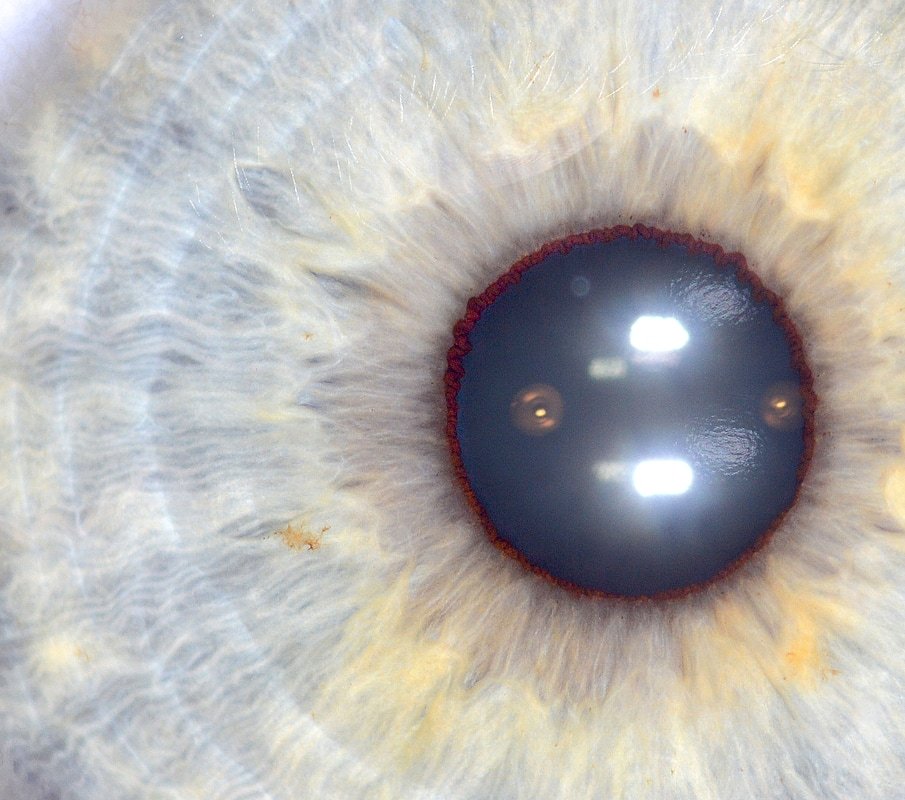
The bilateral nature of kidney representation follows the broader principle in iridology that each iris primarily represents the same side body structures. The right iris shows predominantly right side body organs and systems, while the left iris displays left side body features. This lateralization applies strongly to paired organs like kidneys.
However, practitioners should understand that some degree of crossover exists. Systemic health conditions affecting kidney function may show features in both eyes simultaneously, even if the primary problem involves only one kidney. I have observed this pattern frequently with clients who have systemic issues impacting overall kidney function rather than a localized problem in one kidney only.
Different Types of Iridology Kidney Charts and Their Applications
Over my years in this field, I have worked with dozens of different chart versions. While the kidney zone locations remain relatively consistent, different chart systems emphasize various aspects of kidney area interpretation. Understanding these variations helps practitioners choose the most appropriate chart for their specific practice needs.
Traditional Printed Chart Formats
Standard printed charts remain the most common format in practices today. These laminated reference sheets typically show both eyes with color-coded zones. For kidney-specific work, some practitioners prefer printable chart versions that allow them to make notes directly on the chart or create customized versions highlighting kidney zones.
The advantage of printed charts is their constant availability without requiring technology. During consultations, I can point to the printed chart to show clients exactly where their kidney zones appear. This tangible reference helps clients understand the observations I share with them about their iris features.
Basic Zone Charts
Simple diagrams showing primary organ zones with clear kidney area demarcation. Best for beginners learning zone locations and general practitioners who need quick reference guides.
- Clear zone boundaries
- Minimal detail complexity
- Easy client communication
- Suitable for wall display
Detailed Anatomical Charts
Comprehensive charts showing sub-zones within kidney areas, including separate adrenal zones, renal pelvis regions, and ureter connections. Preferred by advanced practitioners.
- Precise anatomical divisions
- Multiple interpretive layers
- Advanced feature identification
- Suitable for detailed analysis
Color-Coded System Charts
Charts emphasizing color interpretations in kidney zones, showing expected color ranges and highlighting areas where color changes might appear. Valuable for constitutional analysis approaches.
- Color reference standards
- Constitutional indicators
- Comparative analysis support
- Pattern recognition training
Digital and Software-Based Charts
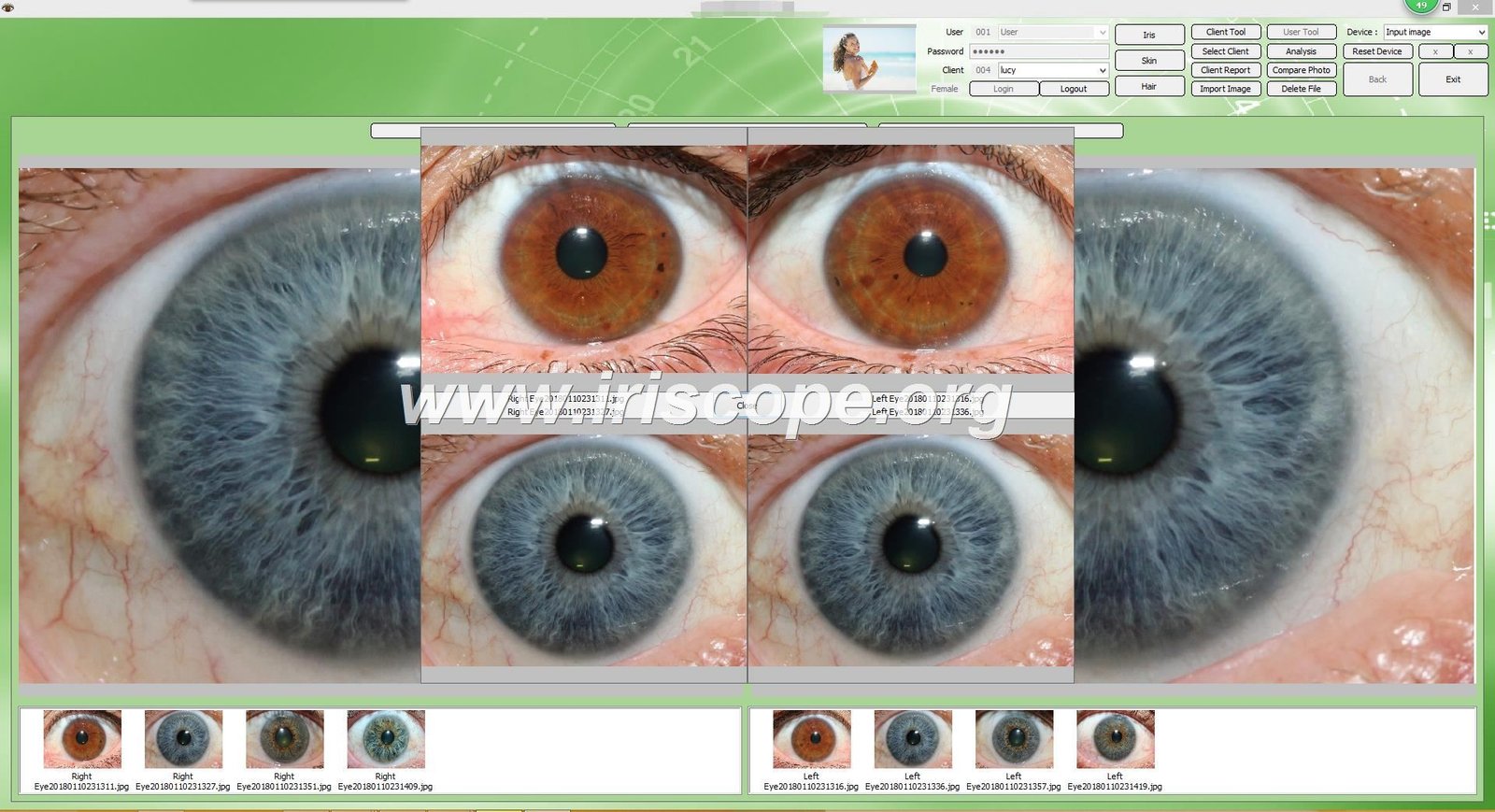
Modern iridology software incorporates interactive charts that practitioners can overlay directly onto iris images. This technology transformation has significantly improved accuracy in my practice. Instead of visually estimating where a feature falls on a printed chart, I can overlay the digital chart directly onto the captured iris image.
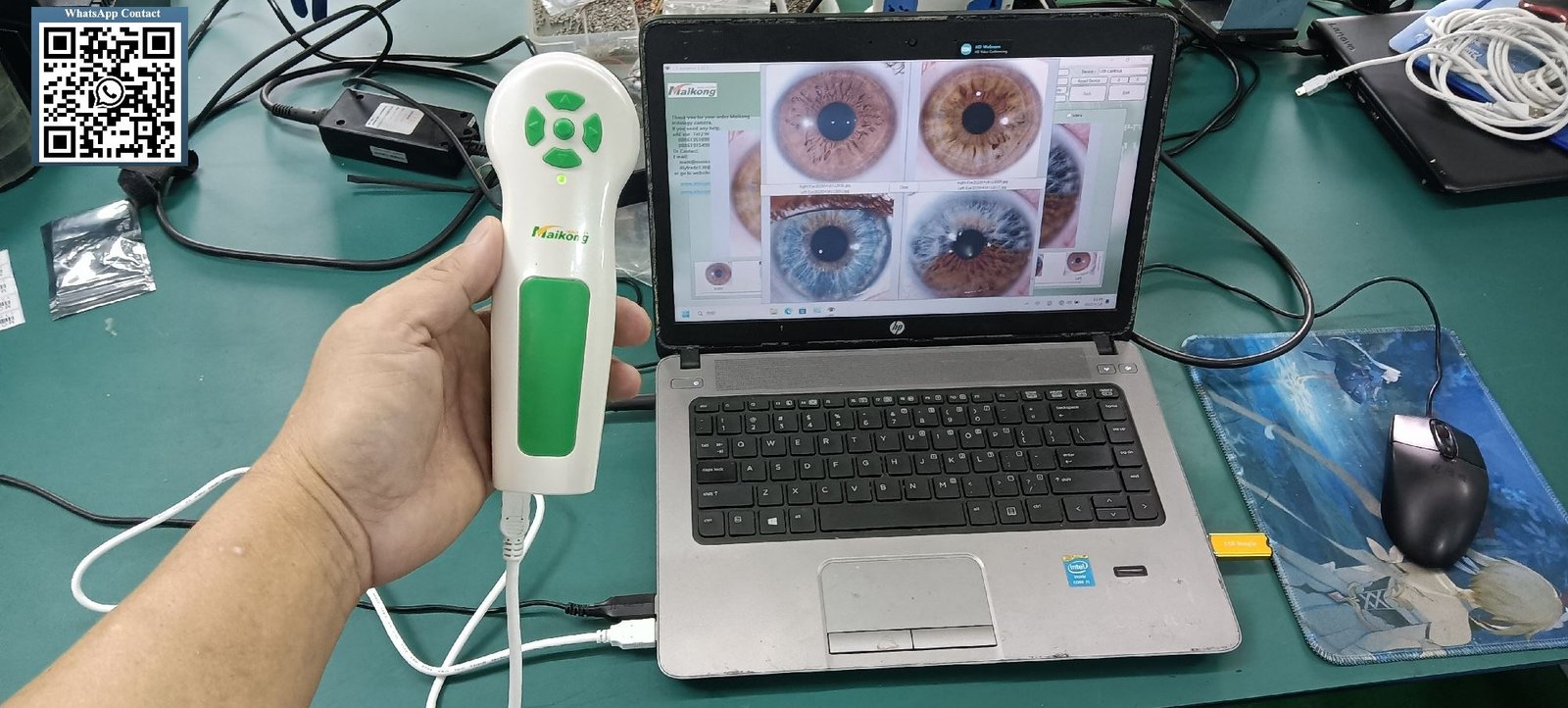
Our MAIKONG iridology software includes multiple chart versions, all compatible with images captured using any quality iridology camera. The software allows practitioners to toggle between different chart systems, zoom into specific zones like the kidney areas, and even adjust zone boundaries slightly to account for individual iris size variations.
Professional Iridology Software with Integrated Kidney Charts
Our MAIKONG 2024 iridology software includes comprehensive chart libraries with detailed kidney zone mapping, supporting 17 languages and compatible with Windows and macOS systems. The software integrates seamlessly with our iriscope cameras for precise kidney zone analysis.
Specialized Kidney-Focused Charts
Some chart systems provide expanded views specifically of the kidney zones. These specialized charts show the kidney area at a much larger scale, with subdivisions that indicate specific kidney structures according to traditional iridology theory. I find these detailed kidney charts particularly useful when conducting focused kidney analysis sessions or when explaining complex observations to clients.
These specialized charts often include additional information such as common pattern types observed in kidney zones, color variations associated with different traditional interpretations, and anatomical correlations showing which kidney structures supposedly correspond to specific iris features within the kidney zone.
How to Read an Iridology Kidney Chart: Step-by-Step Method
Learning to read kidney zones effectively requires understanding both the chart itself and the method for applying that chart to actual iris observations. After training hundreds of practitioners in chart reading techniques, I have developed a systematic approach that works consistently well for both beginners and experienced professionals refining their skills.
The process begins before you ever look at the chart. First, you need a quality iris image. Without a clear, well-lit iris photograph captured with proper equipment, even the best chart reading skills cannot produce reliable observations. I always emphasize to practitioners that chart reading accuracy depends entirely on image quality as the foundation.
Essential Chart Reading Steps
- Image Capture and Preparation – Obtain a high-resolution iris image using a proper USB iridology camera. Ensure the entire iris is visible, properly focused, and evenly lit without hot spots or shadows obscuring the lower iris areas where kidney zones appear.
- Pupil and Iris Boundary Identification – Before consulting the chart, identify the pupil edge (inner iris boundary) and the limbus (outer iris boundary). These boundaries serve as reference points for all zone measurements. Kidney zones extend from approximately the mid-iris radius to the outer third of the iris.
- Clock Position Orientation – Establish your clock position reference. With the iris oriented as if viewing a clock face, identify the 12:00 position (top of iris). Count clockwise to locate the approximate kidney zone positions: 5:00-6:00 for right kidney in right eye, 6:00-7:00 for left kidney in left eye.
- Chart Overlay or Comparison – Place your reference chart next to the iris image, or if using software, overlay the digital chart directly onto the image. Align the chart’s radial divisions with the actual iris structure, making small rotational adjustments as needed for proper alignment.
- Zone Boundary Verification – Verify that the kidney zone boundaries on your chart correspond correctly to the iris features you observe. Check both the radial boundaries (clock positions) and the concentric boundaries (distance from pupil). Make mental or digital notes about the precise boundaries.
- Systematic Feature Observation – Within the identified kidney zones, systematically observe the iris features present. Look at color, texture, fiber patterns, any unusual markings, density variations, and structural features. Refer to your chart reading guide for interpretation frameworks.
- Adjacent Zone Comparison – Compare the kidney zone features with immediately adjacent zones. Note whether observed features are isolated to the kidney zone or extend into neighboring areas. This context helps determine whether observations are zone-specific or part of broader patterns.
- Documentation and Chart Reference – Document your observations with specific reference to chart positions. Record not just what you observe, but exactly where on the chart those features appear. This documentation enables accurate tracking of changes over time during follow-up sessions.
Common Chart Reading Mistakes to Avoid
Through years of observing practitioners learning chart reading, I have identified several recurring mistakes that compromise accuracy. The most frequent error is improper chart alignment. Even a few degrees of rotational misalignment can place your observations in the wrong zone entirely, leading to incorrect interpretations.
Another common mistake involves ignoring individual iris size variations. Charts are standardized diagrams, but actual irises vary significantly in diameter. A small iris may compress all zones closer together, while a large iris spreads zones apart. Practitioners must mentally adjust for these size differences rather than applying chart measurements rigidly.
Critical Chart Reading Precautions
Remember: Iridology charts, including kidney zone charts, represent traditional observational frameworks developed for educational and reference purposes. Chart reading does not constitute medical diagnosis. Never use chart observations to diagnose kidney disease, assess kidney function clinically, or recommend medical treatment. Always advise clients to consult qualified healthcare providers for any health problems or concerns about kidney function. Chart observations serve only as part of traditional iridology practice for educational and wellness consultation purposes.
Integration with Modern Camera Systems
Today’s digital iridology camera systems have made chart reading significantly more accurate than traditional methods using handheld magnifiers and printed photographs. Modern cameras capture iris images at resolutions that reveal details invisible to older methods, allowing practitioners to observe subtle features within kidney zones that previous generations of practitioners could not see clearly.
When I demonstrate chart reading to practitioners visiting our facility, I emphasize the importance of camera quality. The best iridology cameras provide not just high resolution, but also proper iris-specific lighting that illuminates kidney zones clearly without creating glare. Poor lighting in the lower iris can hide important features in kidney zones, where shadows naturally tend to form due to eyelid position.
Left Eye vs Right Eye: Understanding Kidney Zone Differences
The bilateral arrangement of kidney zones represents one of the most important concepts in iridology chart interpretation. Many practitioners struggle initially with this concept because the arrangement seems counterintuitive until you understand the underlying mapping principle that each iris represents primarily the same side body structures.
In the right iris, you observe features associated with right side body organs and systems. The kidney zone in the right eye therefore represents the right kidney specifically. The left iris shows left side body features, with its kidney zone representing the left kidney. This organization means you must examine both eyes to obtain information about both kidneys.
Practical Implications for Practitioners
During consultations, I always capture images of both eyes, even when a client’s concerns do not specifically involve kidneys. You never know when observations in one kidney zone might provide important context for understanding features elsewhere in the iris. The bilateral comparison often reveals asymmetries that prove valuable for understanding overall patterns.
For example, if I observe certain features in the right eye kidney zone but not in the left eye kidney zone, this asymmetry suggests the observation may be specific to the right kidney rather than indicating a systemic condition affecting both kidneys. Conversely, similar features in both kidney zones simultaneously often indicate systemic factors impacting overall kidney-related patterns rather than a problem isolated to one kidney.
Right Eye Kidney Zone
Location: Lower outer quadrant, approximately 5:00-6:00 position
Represents: Right kidney according to traditional iridology mapping
Clinical Note: Observations here are traditionally associated with right kidney patterns in iridology practice
Common Patterns: Practitioners often observe that features in this zone may show subtle differences from the corresponding left eye zone, reflecting the natural asymmetry between paired organs
Left Eye Kidney Zone
Location: Lower outer quadrant, approximately 6:00-7:00 position (mirror position)
Represents: Left kidney according to traditional iridology mapping
Clinical Note: This zone traditionally represents left kidney patterns in iridology consultation
Common Patterns: The left kidney zone position appears as a mirror image of the right eye position, maintaining consistency with the bilateral iris mapping principle used throughout iridology
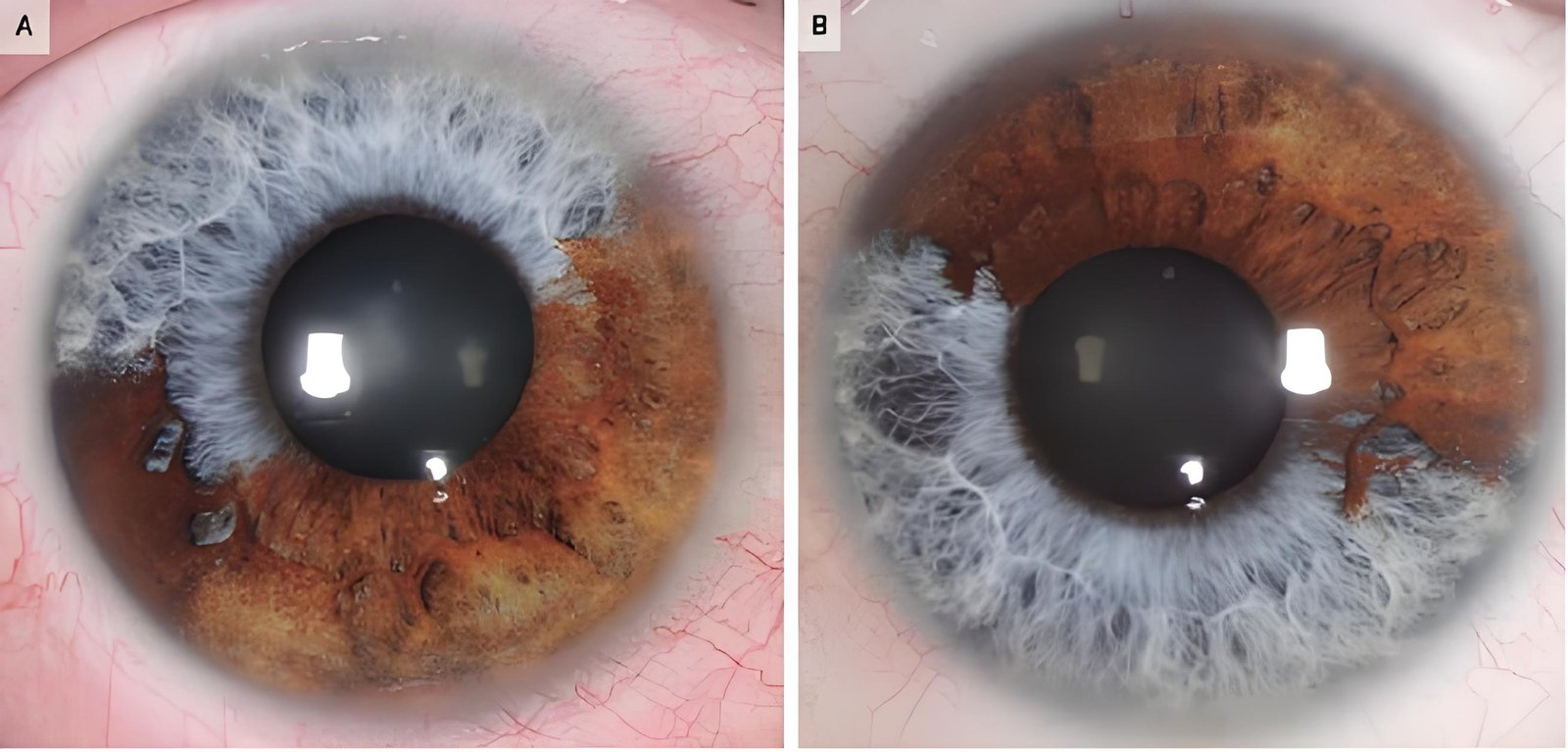
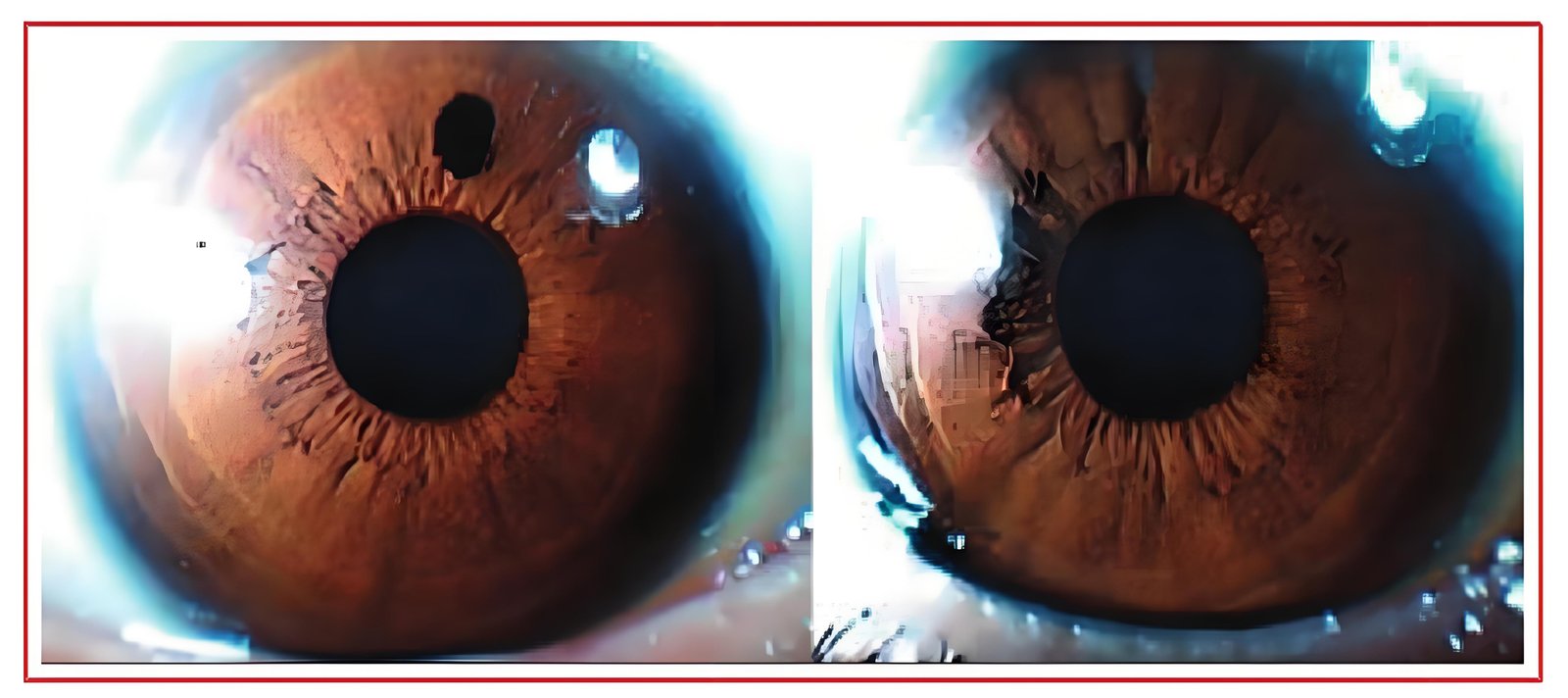
The Side Body Correlation Principle
The broader principle that each iris shows primarily same-side body structures applies throughout the entire iris, not just to kidney zones. Right side body organs appear in the right iris, left side organs in the left iris. This organization extends to unpaired organs as well, which typically show features in both eyes but often with subtle differences in how those features present.
Understanding this side body correlation helps practitioners make sense of asymmetric observations. When features appear in only one eye, we can often correlate this with the corresponding body side. When features appear bilaterally but with different characteristics, we look for explanations related to functional differences between the two sides of the body or variations in how systemic conditions manifest in paired structures.
Capturing Both Eyes Efficiently
Efficient bilateral imaging requires proper equipment setup. A quality iridology camera stand helps maintain consistent camera position and distance when switching between eyes, ensuring that both iris images are captured at the same scale. Scale consistency matters significantly when comparing kidney zone features between eyes.
I recommend capturing the right eye first, then immediately capturing the left eye before moving the camera setup. This sequence keeps both images under similar lighting conditions, which helps when comparing features between the two kidney zones. Variable lighting between captures can create apparent differences that reflect photography conditions rather than actual iris variations.
Using Kidney Charts with Iridology Cameras and Software
The integration of kidney charts with modern camera equipment and analysis software has transformed how practitioners conduct kidney zone observations. When I first started in this field, chart reading involved printing iris photographs, then manually comparing them to printed charts using rulers and protractors to estimate zone positions. Today’s technology eliminates these cumbersome steps and dramatically improves accuracy.
Camera Selection for Kidney Zone Imaging
Not all cameras capture kidney zones equally well. The lower iris position where kidney zones appear presents specific imaging challenges. The upper eyelid naturally creates shadows in this area, and the lower eyelid rim can partially obscure the lowermost kidney zone edges. Cameras designed specifically for iridology address these challenges with appropriate lighting configurations.
When evaluating iridology cameras for sale, I specifically test how well they illuminate lower iris zones. Cameras with ring lights or adjustable directional lighting perform significantly better for kidney zone imaging than cameras with single-point light sources. The even, shadow-free illumination makes kidney zone features clearly visible.
| Camera Feature | Importance for Kidney Zones | MAIKONG MK-GY-9822U Specification |
| Resolution | Critical for seeing fine details in small kidney zone areas | 12.0 Megapixels high-resolution CCD sensor |
| Lighting Type | Even illumination prevents shadows in lower iris | LED illuminator ring around lens |
| Focus Control | Precise focus needed for detailed zone observation | Adjustable focus with optical image stabilizer |
| Lens Quality | Clear, distortion-free zone imaging | Imported lens with plated layer, 30X iris lens included |
| Color Accuracy | True color representation for accurate observations | Auto white balance, contrast adjustment, color temperature filter |
| Ease of Use | Quick captures allow bilateral comparison imaging | Single capture button, digital pause capture, USB direct connection |
Software Chart Overlay Functions
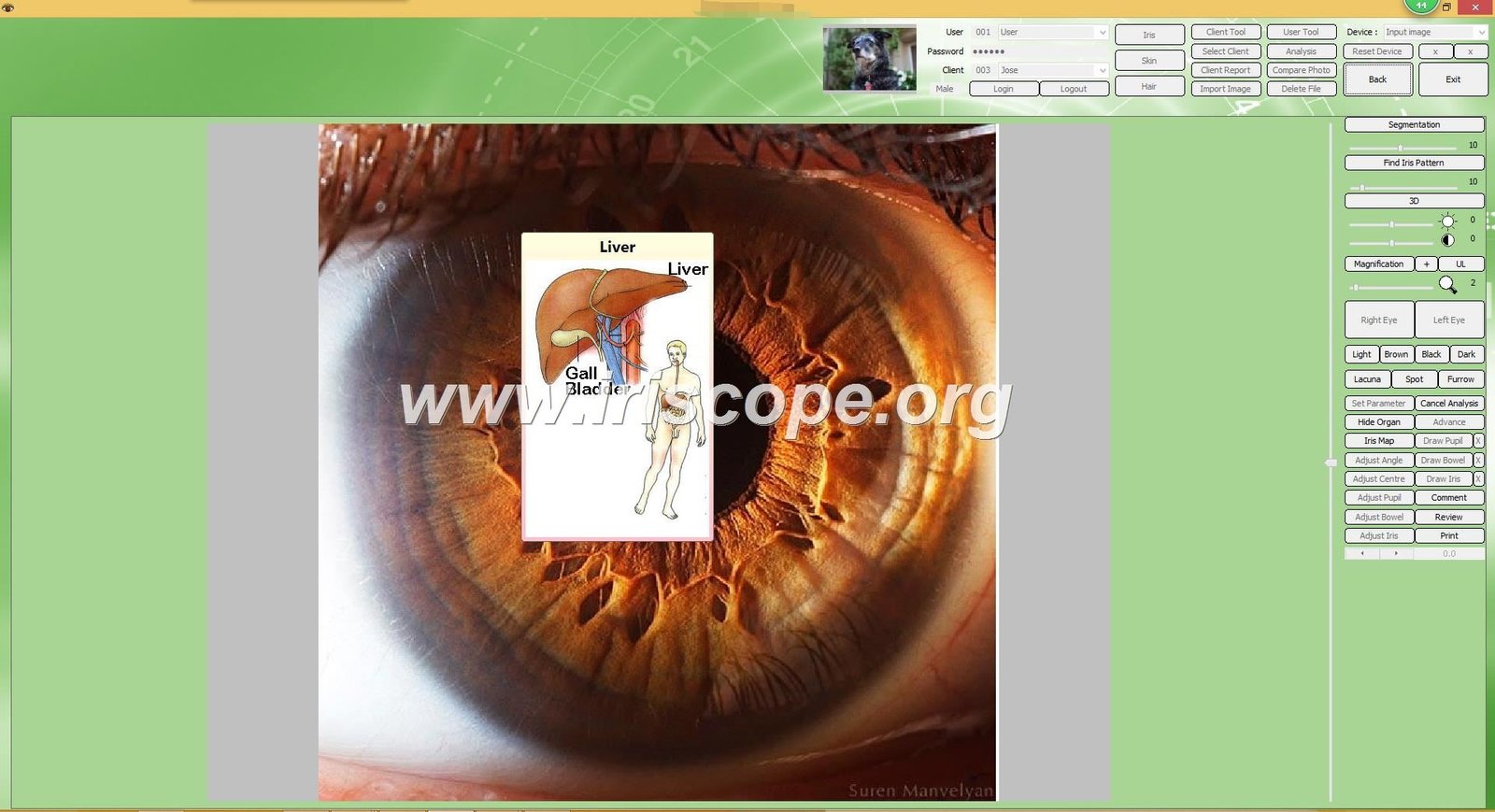
Once you have captured quality iris images with appropriate camera equipment, software chart overlay functions enable precise kidney zone identification. Our MAIKONG iridology software, like most professional systems, allows practitioners to overlay various chart types directly onto captured iris images. This overlay function transforms chart reading from an estimation process into a precise measurement technique.
The overlay function works by aligning the chart’s center point with the pupil center, then scaling the chart to match the iris diameter. Once properly aligned, the chart’s kidney zone boundaries show exactly where those zones appear in the actual iris image. Practitioners can then examine the iris features present within those precise boundaries.
Software Features Specifically Beneficial for Kidney Zone Analysis
Beyond basic chart overlay, advanced software includes features that significantly enhance kidney zone evaluation. Zoom functions allow practitioners to magnify kidney zones for detailed examination of subtle features. Contrast adjustment tools can enhance visibility of features that appear faint in the original image. Comparison functions enable side-by-side viewing of right and left eye kidney zones.
Our software also includes measurement tools that let practitioners quantify certain observations. For example, if you observe a feature in the kidney zone, you can measure its exact size and position relative to zone boundaries. This quantification enables more precise documentation and more objective tracking of changes during follow-up sessions.
Complete Iridology System with Kidney Chart Integration
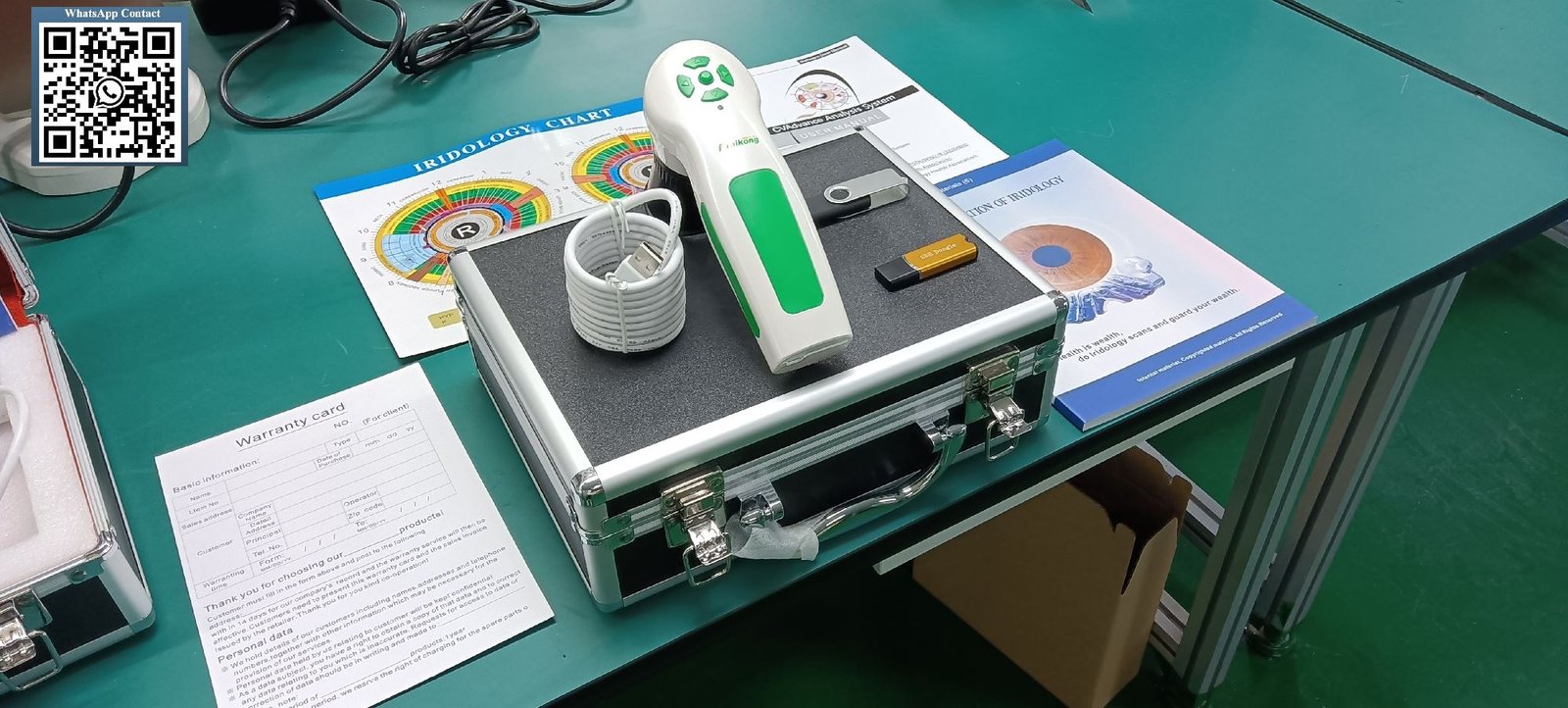
MAIKONG offers integrated systems combining high-resolution cameras with professional analysis software featuring comprehensive kidney chart libraries. Our systems support practitioners in over 50 countries with equipment designed specifically for accurate zone analysis. All systems include kidney-focused chart options and support bilateral comparison functions.
Chart Libraries and Customization Options
Professional iridology software includes libraries of multiple chart systems, allowing practitioners to switch between different mapping approaches depending on their training and preferences. This flexibility proves particularly valuable for kidney zone analysis because different chart systems sometimes show slight variations in how they subdivide kidney zones or correlate specific kidney structures to iris features.
For practitioners who develop their own interpretive approaches over time, many software systems allow chart customization. Practitioners can modify zone boundaries, add notation layers, or create entirely custom charts reflecting their personal observation frameworks. This customization capability allows experienced practitioners to refine their kidney zone mapping based on their own clinical experience.
Using Kidney Charts for Teaching and Client Communication
Beyond their analytical function, kidney charts serve critical roles in both practitioner training and client education. In my experience training new practitioners and conducting thousands of client consultations, the chart’s communication value often equals or exceeds its analytical value. A clear chart transforms abstract concepts into concrete visual information that people can understand immediately.
Educational Applications in Practitioner Training
When teaching iridology to new practitioners, I always begin with chart orientation. Students need to understand not just where kidney zones are located, but why they appear in those positions, how the zones relate to adjacent structures, and what the boundaries represent. A quality kidney chart serves as the foundation for all subsequent learning about kidney zone interpretation.
I have found that students learn kidney zone locations most effectively through a three-step process. First, they study the chart abstractly, memorizing zone positions. Second, they practice locating kidney zones on multiple iris photographs of varying quality and with different iris colors and structures. Third, they attempt to locate kidney zones on live subjects without referring to the chart, then verify their accuracy by checking the chart afterward.
Progressive Training Approach
Stage 1: Chart Familiarization (Week 1-2)
Students study kidney charts extensively, learning clock positions, radial boundaries, and concentric zone divisions. They memorize the locations without yet examining actual irises. This foundation prevents the overwhelming experience of trying to find zones while simultaneously learning chart reading techniques.
Stage 2: Photographic Practice (Week 3-4)
Students practice locating kidney zones on diverse iris photographs. They work with different eye colors, various iris structures, and images of different quality levels. This stage develops the visual pattern recognition skills needed to find zones consistently despite iris variations.
Stage 3: Live Subject Practice (Week 5-6)
Students locate kidney zones on live subjects using camera equipment, capture images, then verify their accuracy using chart overlays. This stage integrates equipment operation skills with zone location skills and builds confidence in real consultation scenarios.
Stage 4: Interpretation Development (Week 7-8)
Once students can reliably locate kidney zones, training shifts to observing and interpreting features within those zones. Students learn to recognize common patterns, understand what various features traditionally represent, and develop systematic observation habits.

Client Education and Consultation Communication
During client consultations, kidney charts transform complex iris observations into understandable information. Clients rarely understand what you mean when you say “I observe certain features in your kidney zones.” However, when you show them a chart, point to the kidney zone location, then show them their iris image with that zone highlighted, understanding becomes immediate.
I keep both printed charts and digital charts available during consultations. Printed charts work well for initial explanations, giving clients something tangible to look at while you explain basic concepts. Digital charts displayed on a monitor alongside their iris images work better for detailed observations, allowing you to point to specific features and show exactly where those features appear on the chart.
Effective Client Communication Techniques
Technique 1: Show the chart first before examining the iris, explaining that the chart is a reference map developed by traditional iridology practitioners over many years of observation.
Technique 2: Point to the kidney zone on the chart, explaining its location using the clock position method that clients can easily understand (“approximately 5 o’clock position in the right eye”).
Technique 3: Display the client’s iris image next to the chart, using chart overlay if software is available, so they can see their actual iris alongside the reference map.
Technique 4: Describe observations in plain language, avoiding technical terminology that might confuse clients or create unnecessary concern about health problems.
Technique 5: Always emphasize that chart reading represents traditional iridology observation practice for educational purposes, not medical diagnosis of kidney disease or kidney function assessment.
Charts for Different Practice Settings
Different practice environments benefit from different chart presentation formats. In private consultation rooms, large wall-mounted charts create an educational atmosphere and give clients something to look at while you prepare equipment. In mobile or home-visit practices, laminated pocket charts or tablet-based digital charts provide convenient portable references.
For group educational sessions or workshops, I prefer large-format charts visible to entire groups, supplemented with projected digital charts showing actual case examples. This combination allows you to teach general principles with the large chart while demonstrating specific applications with projected images.

Understanding Chart Accuracy, Variations, and Limitations
After two decades working with iridology charts, I can confirm that practitioners often have inflated expectations about chart precision. Charts represent generalized mapping systems developed through observation and tradition. They provide useful reference frameworks, but they are not precise anatomical diagrams with exact correlations proven by scientific research.
Why Different Charts Show Slight Variations
Practitioners examining multiple chart sources often notice that kidney zone positions vary slightly between different chart systems. These variations reflect different interpretive traditions within iridology, slight differences in how various practitioners define zone boundaries, and the inherent challenge of creating standardized maps for structures that vary individually.
Most variations are minor, typically involving only small differences in exact zone boundaries or the subdivision of kidney zones into smaller sub-zones. The general location remains consistent across reputable chart systems. Kidney zones always appear in the lower outer quadrants of each iris, even if the precise angular measurements differ slightly between chart versions.
Chart Strengths and Benefits
- Provide consistent reference framework for zone location
- Enable standardized documentation across practitioners
- Facilitate teaching and practitioner training efficiently
- Help clients understand iris structure and zone concepts
- Allow comparison of observations across multiple sessions
- Support systematic, organized approach to iris examination
- Integrate well with modern camera and software technology
Chart Limitations and Constraints
- Represent generalized mapping not individualized to each person
- Show slight variations between different chart system versions
- Cannot account for individual iris size and structure variations
- Reflect traditional observation frameworks not verified by controlled research
- May oversimplify complex relationships between iris features and body systems
- Require significant training and experience for accurate application
- Should never be used as sole basis for health assessments or conclusions
Individual Variations and Chart Adjustments
One limitation rarely discussed in basic training is that standardized charts cannot perfectly account for individual iris variations. People with very small irises have all zones compressed into a smaller total area, while people with very large irises have zones spread across a larger area. The proportional relationships between zones also vary somewhat individually.
Experienced practitioners learn to make mental adjustments for these individual variations. When examining an unusually small or large iris, I do not apply chart boundaries rigidly. Instead, I use the chart as a general guide while making proportional adjustments based on the specific iris I am examining. This flexibility comes with experience and explains why novice practitioners sometimes struggle with zone location on irises that differ significantly from chart standards.
The Medical Disclaimer Requirement
Perhaps the most critical limitation to understand is that kidney charts, like all iridology charts, represent traditional observation frameworks developed for educational and wellness consultation purposes. They are not medical diagnostic tools. No practitioner should use kidney chart observations to diagnose kidney disease, assess clinical kidney function, or recommend medical treatment for kidney problems.
I always explain to clients that observations in kidney zones represent traditional iridology interpretive frameworks. These observations may prompt clients to discuss kidney health with their qualified healthcare providers, but observations never constitute medical diagnosis. Clients with concerns about kidney function should always consult appropriate medical professionals for clinical evaluation.
Critical Practice Boundaries
Important Legal and Ethical Guidelines: Iridology kidney charts serve educational and traditional wellness consultation purposes only. Practitioners must never:
- Diagnose kidney disease, kidney stones, kidney infection, or any medical condition based on chart observations
- Claim chart observations indicate kidney function levels, creatinine measurements, or other clinical parameters
- Recommend stopping or altering medications prescribed for kidney conditions
- Delay or discourage clients from seeking medical evaluation for kidney-related symptoms
- Present chart-based observations as scientifically validated diagnostic information
- Practice outside your scope of training, certification, and legal authority in your jurisdiction
Always encourage clients to work with qualified healthcare providers for any health concerns, including all kidney-related problems.
Common Patterns Observed in Kidney Zones and Their Traditional Interpretations
Over years of examining kidney zones in thousands of irises, certain patterns appear repeatedly. While I cannot make medical diagnostic claims about what these patterns mean, I can describe what traditional iridology frameworks have suggested about commonly observed features in kidney zones. Understanding these common patterns helps practitioners recognize what they are observing and communicate using consistent terminology.
Color Variations in Kidney Zones
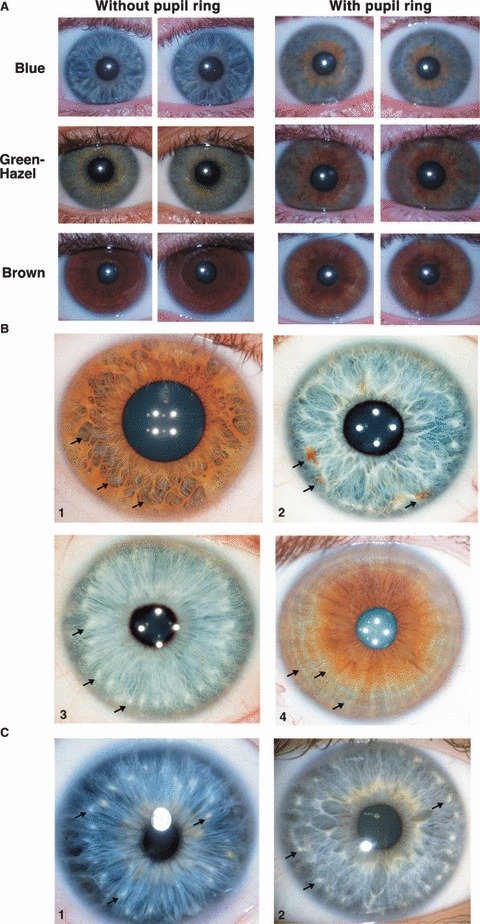
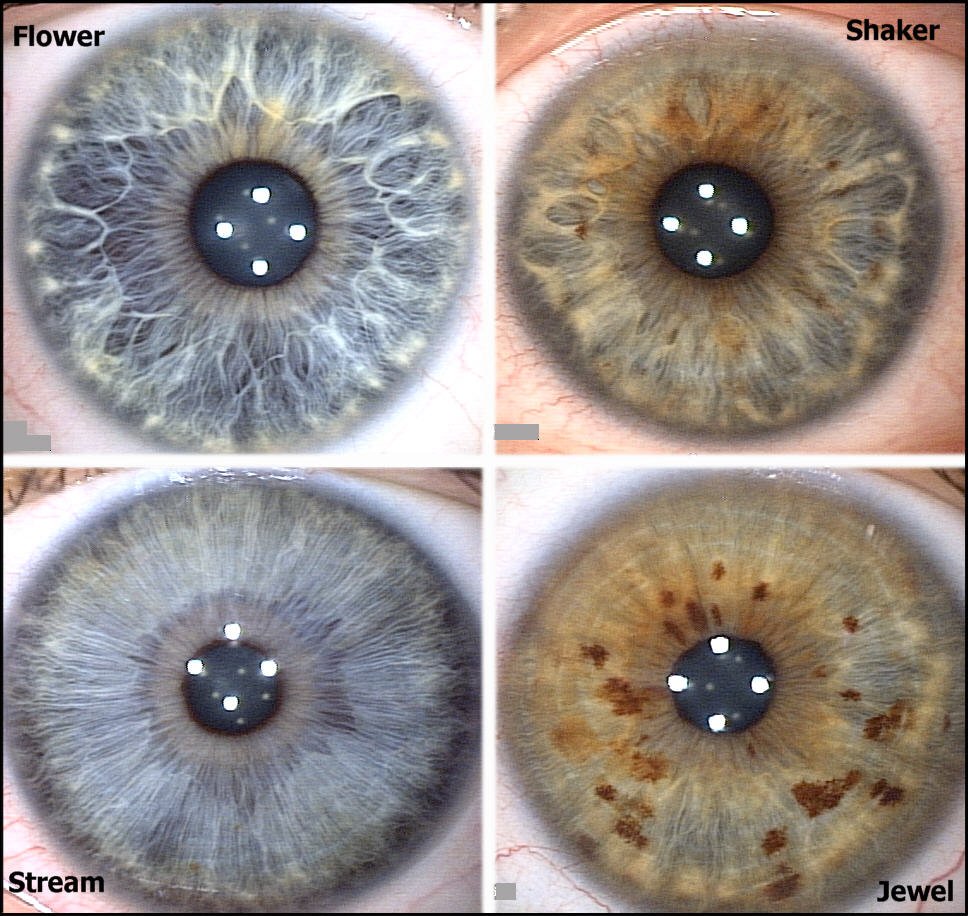
The iris naturally displays various colors and shades, and kidney zones are no exception. Traditional iridology associates different color presentations in specific zones with various interpretive frameworks. In kidney zones, practitioners commonly observe variations in the local color compared to surrounding iris tissue.
Some irises show kidney zones with similar color to the general iris color, while others display kidney zones with slightly different hues. Dark patches, light spots, or color variations within kidney zones represent some of the most commonly discussed observations in traditional iridology practice. Different interpretive systems associate these color variations with different traditional meanings.

Structural Features and Texture Variations
Beyond color, iris structure and texture provide rich observational information. Kidney zones may show structural features such as changes in fiber density, gaps or openings in the iris tissue structure, areas of seemingly compressed fibers, or regions where the normal radial fiber pattern appears disrupted.
These structural variations represent normal human iris diversity. Irises are not uniform, smooth structures. They contain complex three-dimensional architecture with significant natural variation from person to person and even between different zones within a single iris. Features observed in kidney zones exist within this broader context of normal iris structural variation.
Markings and Spots in Kidney Areas
Many irises contain small spots, dots, or markings in various locations including kidney zones. Traditional iridology literature discusses numerous types of markings, each with its own terminology and interpretive framework. Common marking types include small pigment spots, areas of apparently thickened tissue, and regions where the iris surface texture differs from surrounding areas.
Practitioners learning to identify kidney zone features should remember that many observed markings are normal iris features present from birth or appearing naturally during life. The presence of markings in kidney zones does not automatically indicate health problems. Careful, conservative interpretation remains essential when observing any iris features.
Bilateral Pattern Comparison
Comparing kidney zone observations between right and left eyes often provides valuable context. Some patterns appear bilaterally with similar characteristics in both kidney zones, while other observations are distinctly asymmetric, appearing in only one kidney zone or showing different characteristics between the two eyes.
Bilateral patterns that appear similar in both kidney zones might suggest systemic factors in traditional iridology frameworks, while asymmetric patterns isolated to one kidney zone might be interpreted within frameworks considering lateralized or organ-specific factors. However, these represent interpretive frameworks only, not diagnostic conclusions about disease or kidney function.
Pattern Documentation Best Practices
When documenting observations in kidney zones, I recommend systematic approaches that create reliable records:
- Use standardized terminology consistently across all client records
- Document both what you observe and where precisely you observe it using chart position references
- Note whether patterns appear unilaterally or bilaterally
- Record objective descriptive observations rather than interpretive conclusions
- Capture high-quality images that preserve the observations for future reference and comparison
- Track changes over time by comparing current observations with previous session documentation
Implementing Kidney Charts in Different Practice Settings
The practical application of kidney charts varies significantly depending on practice type, client population, and consultation format. Through consulting with hundreds of practitioners establishing or refining their practices, I have observed which chart implementation approaches work best in different professional settings.
Natural Health and Wellness Practices
In natural health practices where iridology represents one component of comprehensive wellness consultations, kidney charts typically serve as supporting reference tools rather than primary focus points. Practitioners in these settings often examine multiple body systems during consultations, using various chart types including kidney-specific charts when observations in kidney zones warrant detailed attention.
These practices benefit from having both wall-mounted general iridology charts showing all body systems and specialized kidney charts available when needed for detailed kidney zone examination. The general chart provides context showing where kidney zones fit within the overall iris map, while the specialized kidney chart offers the detail needed for focused kidney zone work.
Specialized Iridology Consultation Practices
Practices focused specifically on iridology consultations typically maintain more extensive chart libraries including multiple kidney chart versions. These specialized practices might work with different interpretive systems, requiring charts from various traditional frameworks. Practitioners in these settings often become highly skilled at kidney zone interpretation because they examine kidney zones in nearly every consultation.
Specialized practices frequently invest in advanced equipment and software systems that integrate chart functions seamlessly. The ability to quickly overlay different chart types, zoom into kidney zones, and compare bilateral kidney zone observations becomes essential when iridology represents the entire consultation focus rather than one component among several modalities.
Naturopathic Clinics
Iridology often integrates with comprehensive naturopathic evaluation. Kidney charts support overall assessment within broader natural health frameworks.
- Charts used alongside other diagnostic approaches
- Kidney zone observations inform holistic treatment planning
- Integration with nutritional and herbal protocols
- Client education emphasis using visual chart tools
Chiropractic Offices
Some chiropractors incorporate iridology as complementary assessment. Kidney charts help identify potential wellness areas beyond musculoskeletal focus.
- Quick screening tool during wellness evaluations
- Charts support whole-body wellness perspective
- Referral decisions for kidney-related concerns
- Patient education about body systems interconnection
Training Institutions
Educational settings require extensive chart libraries including detailed kidney chart versions for teaching zone location and pattern recognition.
- Multiple chart system versions for comparative teaching
- Large-format charts for classroom visibility
- Digital charts for projection and interactive learning
- Practice sets with varied kidney zone examples

Mobile and Home-Visit Practices
Practitioners who conduct consultations at clients’ locations face unique challenges implementing kidney charts effectively. Portable equipment setups must include chart access without the convenience of permanently displayed wall charts or large computer monitors. Tablet-based software with integrated charts provides the most practical solution for mobile practices.
I have worked with numerous mobile practitioners to optimize their portable setups. The most successful configurations include a quality laptop or large tablet running iridology software with comprehensive chart libraries, a portable USB iridology camera that connects quickly without complicated setup, and laminated pocket charts as backup references that do not require technology.
Integrating Charts into Consultation Workflow
Regardless of practice setting, efficient chart integration into consultation workflow makes the difference between smooth, professional consultations and awkward sessions where technology or chart references interrupt the natural consultation flow. I recommend practitioners develop standardized workflows that incorporate chart references at consistent consultation points.
My personal workflow begins with initial iris image capture of both eyes, followed by general observation without charts to get an overall impression. Then I systematically examine specific zones, including kidney zones, using chart overlays to precisely identify and document observations. This sequence allows me to notice prominent features first before detailed zone-by-zone examination that might cause me to miss obvious overall patterns.
Kidney Charts in Professional Development and Advanced Training
Mastering kidney chart usage requires ongoing learning that extends far beyond initial training. In my experience mentoring practitioners at various skill levels, I have observed that chart reading skill develops progressively over years of regular practice. Beginning practitioners often feel overwhelmed by the detail and precision required, while experienced practitioners develop intuitive zone location abilities that make chart reading appear effortless.
Progressive Skill Development Stages
Practitioners typically progress through predictable skill development stages. The initial stage involves conscious, deliberate chart reference for every observation, carefully measuring zone positions and constantly verifying accuracy. This stage feels slow and sometimes frustrating, but it builds the foundational skills essential for later advancement.
The intermediate stage sees practitioners requiring less frequent chart reference, having internalized common zone locations through repeated practice. Kidney zones become recognizable through visual pattern recognition without measuring each time. However, practitioners at this stage still regularly verify observations with charts to maintain accuracy.
Advanced practitioners develop what appears to be intuitive kidney zone location ability. They can identify kidney zones in unfamiliar irises quickly and accurately without deliberate measurement. However, even advanced practitioners regularly use charts for precise documentation, client education, and verification of observations in challenging cases where iris features make zone identification more difficult.
Continuing Education in Chart Interpretation
Professional development should include regular education about kidney chart interpretation systems. Multiple interpretive frameworks exist within iridology, and different practitioners follow different traditional systems. Understanding various interpretive approaches, even if you personally practice within one primary system, enriches your overall comprehension of kidney zone observations.
I encourage practitioners to attend workshops and training sessions that explore kidney zone interpretation specifically. General iridology education covers all body systems, often giving only limited time to kidney-specific work. Specialized training focused on kidney zones, renal system representation in iridology, and detailed kidney chart variations provides depth that general training cannot offer.
Beginner Focus Areas
New practitioners should concentrate on fundamental chart reading skills that create strong foundations for all future learning and development.
- Accurate kidney zone location in various iris types
- Understanding clock position and radial division systems
- Proper equipment use for kidney zone imaging
- Basic pattern recognition in kidney areas
- Ethical boundaries and medical disclaimer requirements
- Documentation standards and systematic observation methods
Intermediate Development
Practitioners with basic competency should expand their skills with more sophisticated chart applications and interpretation frameworks.
- Bilateral comparison techniques for kidney zones
- Integration of kidney observations with other iris features
- Understanding multiple chart system variations
- Advanced pattern recognition and classification
- Software proficiency for detailed kidney zone analysis
- Client communication refinement for complex observations
Advanced Specialization
Experienced practitioners can develop specialized expertise in kidney zone interpretation that distinguishes their practice and serves clients better.
- Subtle pattern recognition requiring extensive experience
- Integration with other assessment modalities
- Teaching and mentoring other practitioners
- Chart system comparison and critical evaluation
- Research participation and case study documentation
- Custom chart development for specific practice needs
Expert-Level Contributions
Master practitioners often contribute to the field’s advancement through teaching, research, and systematic case documentation that expands collective knowledge.
- Developing training materials and educational resources
- Publishing case studies and systematic observations
- Contributing to chart system refinement and evolution
- Mentoring advanced practitioners in specialized techniques
- Conducting systematic research on pattern correlations
- International teaching and cross-cultural practice comparison
Building a Reference Library
Serious practitioners benefit from maintaining personal reference libraries that include multiple kidney chart versions from various sources. This library serves both as a learning resource for understanding different interpretive traditions and as a practical reference when encountering observations that seem ambiguous or difficult to classify within your primary chart system.
My personal reference library includes classic charts from pioneers like Bernard Jensen, contemporary charts from current educators, specialized kidney-focused charts from various traditions, and historical charts showing how kidney zone mapping has evolved over time. This collection provides perspective on the field’s development and helps me understand why different practitioners sometimes interpret kidney zone observations differently.

Equipment Considerations for Kidney Chart-Based Practice
Building an effective iridology practice that incorporates kidney chart analysis requires thoughtful equipment selection. Over two decades of manufacturing and supporting iridology equipment, I have learned which equipment characteristics matter most for practitioners focusing on kidney zone work and which features represent unnecessary complexity or expense.
Essential Equipment Components
A functional kidney chart-based practice requires three essential equipment categories: image capture equipment (camera), image display and analysis equipment (computer with software), and chart reference materials (printed or digital charts). The quality and integration of these three components determines how effectively you can perform kidney zone analysis.
The camera represents the foundation of everything that follows. Without quality iris images that clearly show kidney zone details, even the best charts and software cannot produce reliable observations. This reality explains why practitioners should prioritize camera quality when allocating equipment budgets. A camera that inadequately illuminates lower iris areas or lacks sufficient resolution for detailed kidney zone examination undermines all subsequent analysis work.
Camera Specifications for Kidney Zone Work
When evaluating iridology cameras specifically for kidney zone analysis, several specifications matter more than general marketing specifications might suggest. Resolution gets significant attention in camera marketing, but lighting quality and lens clarity often prove more critical for kidney zone work where shadows and lower eyelid obstruction create challenges.
| Specification | Minimum Requirement | Recommended Level | Impact on Kidney Zone Imaging |
| Sensor Resolution | 5 Megapixels | 12+ Megapixels | Higher resolution reveals fine details in small kidney zones essential for accurate pattern identification |
| Lighting Type | Adjustable LED | Ring LED around lens | Even circumferential lighting prevents shadows in lower iris where kidney zones appear |
| Lens Magnification | 20X optical | 30X optical | Adequate magnification enables visualization of subtle structural features within kidney zones |
| Focus System | Manual adjustable | Adjustable with stabilizer | Precise focus critical for kidney zones that occupy relatively small iris areas requiring detail clarity |
| Connection Type | USB direct | USB plug-and-play | Simple connection enables quick bilateral imaging for kidney zone comparison between eyes |
| Color Accuracy | Basic white balance | Auto white balance with filters | True color representation essential for accurate observation of color variations in kidney zones |
Software Requirements for Chart Integration
Software selection matters as much as camera selection for kidney chart-based practice. The software must support chart overlay functions, provide measurement and documentation tools, and integrate seamlessly with your camera equipment. Software that works well with one camera brand may not support another, making integrated system selection important.
Our MAIKONG software developed specifically to address practitioner needs I observed during years of working with iridology professionals. The software includes comprehensive chart libraries with multiple kidney chart options, supports all standard chart overlay and measurement functions, and integrates smoothly with our camera equipment. We designed the interface based on actual consultation workflow requirements rather than theoretical feature lists.
Integrated Camera and Software Systems for Kidney Zone Analysis
MAIKONG manufactures complete iridology systems designed specifically for professional kidney zone analysis. Our MK-GY-9822U camera with integrated MAIKONG 2024 software provides the imaging quality, chart integration, and workflow efficiency practitioners need for accurate kidney chart-based consultations. Systems include comprehensive training materials and ongoing technical support.
Physical Chart Materials
Despite excellent digital chart options, printed physical charts remain valuable in practice. Wall-mounted charts create professional atmosphere, provide reference that does not require powering up equipment, and give clients something to examine while you capture iris images or prepare software. High-quality laminated charts withstand the humidity and handling that occurs in active practices.
For practitioners who want printable charts for customization or replacement, we provide high-resolution chart files suitable for professional printing. Practitioners can print these on large-format printers, send files to professional printing services for lamination, or print multiple copies for training materials and client handouts.
Common Questions and Misconceptions About Kidney Charts
Throughout my career supporting practitioners and educating clients about iridology, I have encountered recurring questions and misconceptions about kidney charts specifically. Addressing these common points helps practitioners communicate more effectively and helps clients understand what kidney chart observations do and do not mean.
Frequently Asked Misconceptions
Misconception: Different kidney chart versions mean iridology is unreliable
Reality: Slight variations between kidney chart versions reflect different interpretive traditions within iridology, similar to how different medical specialties sometimes approach the same clinical situation from different perspectives. Core kidney zone locations remain remarkably consistent across reputable chart systems. Variations typically involve minor boundary differences or sub-zone divisions rather than fundamentally different kidney zone locations.
These variations do not invalidate iridology any more than different acupuncture traditions invalidate acupuncture. Practitioners should select a primary chart system, learn it thoroughly, and apply it consistently while understanding that other valid approaches exist.
Misconception: Kidney chart observations diagnose kidney disease
Reality: Kidney charts provide reference frameworks for traditional iridology observation practice used for educational and wellness consultation purposes. Chart-based observations do not diagnose kidney disease, kidney stones, infections, or any medical conditions. They do not measure kidney function, creatinine levels, GFR, or other clinical parameters.
Practitioners must never present chart observations as medical diagnostic information. Clients with kidney-related symptoms or concerns require evaluation by qualified healthcare providers including nephrologists, urologists, or primary care physicians who can perform appropriate clinical testing and medical diagnosis.
Misconception: Kidney zones show real-time kidney function
Reality: Even within traditional iridology frameworks, iris features do not change rapidly in response to momentary physiological changes. The iris is a structural organ that develops over time and changes slowly if at all during adult life. Features observed in kidney zones represent structural characteristics and patterns, not dynamic readings of current kidney activity.
This principle means kidney chart observations cannot monitor acute kidney problems, track kidney function during illness, or provide information about moment-to-moment kidney performance. Traditional iridology frameworks suggest iris features might reflect constitutional tendencies or long-term patterns, not acute functional status.
Misconception: Everyone’s kidney zones look identical in healthy people
Reality: Substantial natural variation exists in iris structure, color, and features across the healthy population. Kidney zones, like all iris zones, show significant normal variation from person to person. Some of this variation reflects different iris colors (blue, green, brown eyes have inherently different structural appearances), while additional variation reflects normal human genetic diversity.
The presence of features or patterns in kidney zones does not automatically indicate problems. Many observed features represent normal variation. Conservative, careful interpretation that accounts for normal variation is essential to avoid creating unnecessary client concern about observations that fall within normal ranges.
Misconception: More expensive equipment produces more accurate kidney chart readings
Reality: Equipment quality matters, but beyond a reasonable quality threshold, operator skill and systematic method matter more than equipment cost. A skilled practitioner with moderate-quality equipment typically produces more reliable observations than an inexperienced practitioner with top-tier equipment.
Essential equipment characteristics include adequate resolution to see kidney zone details clearly, proper lighting that illuminates lower iris areas without shadows, and reliable chart overlay software. These capabilities exist at various price points. Practitioners should prioritize training and skill development alongside equipment investment rather than assuming expensive equipment compensates for limited experience.

Future Developments in Kidney Chart Technology and Applications
The field of iridology continues evolving as technology advances and practitioners develop new applications for traditional observational frameworks. Looking ahead based on current development trends I observe in our manufacturing and research work, several innovations will likely impact how practitioners use kidney charts in coming years.
Artificial Intelligence and Pattern Recognition
Machine learning and artificial intelligence technologies are beginning to support iridology practitioners in pattern recognition. Early AI systems can identify kidney zones automatically in iris images, potentially helping practitioners ensure they examine the correct areas consistently. More advanced systems under development may assist practitioners in identifying subtle patterns within kidney zones that might be easy to overlook.
These AI tools should function as practitioner assistants, not replacements. The technology can help ensure systematic examination and may call attention to features practitioners might miss during manual examination. However, interpretation requires human judgment that accounts for individual context, the limitations of observational methods, and appropriate ethical boundaries. AI cannot replace practitioner expertise and professional responsibility.
Enhanced Imaging Technologies
Camera technology continues improving with higher resolutions, better sensors, and more sophisticated lighting systems. Future iridology cameras will likely capture kidney zone details with clarity that exceeds current capabilities. Advanced imaging might include depth mapping that reveals three-dimensional structural features in kidney zones or spectral analysis that captures information beyond the visible light spectrum.
These enhanced imaging capabilities will require updated chart systems that incorporate the additional information layers. Traditional flat charts show only two-dimensional zone locations, but future charts might include depth dimensions or spectral characteristics alongside conventional zone boundaries. Practitioners will need additional training to interpret these expanded information sets effectively.
Standardization and Research Developments
Ongoing efforts toward greater standardization in iridology may impact kidney chart design and application. If the field develops more standardized terminology, measurement systems, and interpretive frameworks, kidney charts may become more consistent across different schools and traditions. This standardization could facilitate communication between practitioners and potentially support research investigating correlations between kidney zone observations and health patterns.
Research specifically examining kidney zones remains limited compared to research on other diagnostic methods. Future research, if conducted with appropriate methodology and careful interpretation, might provide insight into how kidney zone features correlate with various factors. Any such research must be designed and interpreted carefully, with appropriate consideration for the observational nature of iridology and clear boundaries about what can and cannot be concluded from iris observations.
Integration with Other Modalities
Many practitioners already integrate iridology with other assessment approaches such as nutritional evaluation, lifestyle counseling, or other traditional wellness modalities. Future developments may see more sophisticated integration where kidney chart observations inform and integrate with information from other assessment methods, creating more comprehensive wellness consultation frameworks.
This integration requires practitioners trained in multiple modalities who can synthesize information from different sources appropriately. Kidney chart observations provide one information stream among several, and practitioners must weigh various information sources appropriately rather than overemphasizing any single assessment method.
Professional Resources for Kidney Chart Practitioners
Practitioners seeking to develop or refine their kidney chart expertise need access to quality resources including training materials, professional associations, continuing education opportunities, and reliable equipment suppliers. The quality and accessibility of these resources significantly impacts practitioner development and the services practitioners can provide to their clients.
Training and Certification Programs
Multiple organizations worldwide provide iridology training that includes kidney chart education. These programs range from introductory courses covering basic zone location to advanced certification programs addressing detailed interpretation frameworks. Practitioners should seek training that balances theoretical knowledge with practical hands-on experience examining actual irises and using professional equipment.
Quality training programs emphasize ethical boundaries, medical disclaimer requirements, and scope of practice limitations alongside technical skill development. Practitioners must understand not just what to observe in kidney zones, but also how to communicate observations appropriately, when to refer clients to medical professionals, and how to practice within legal and ethical boundaries in their jurisdictions.
Equipment and Supply Resources
Reliable equipment suppliers provide essential support for practitioners throughout their careers. Beyond initial equipment purchase, practitioners need ongoing access to technical support, software updates, replacement parts, and consultation about equipment upgrades as practice needs evolve. Supplier reliability and support quality matter as much as initial equipment specifications.
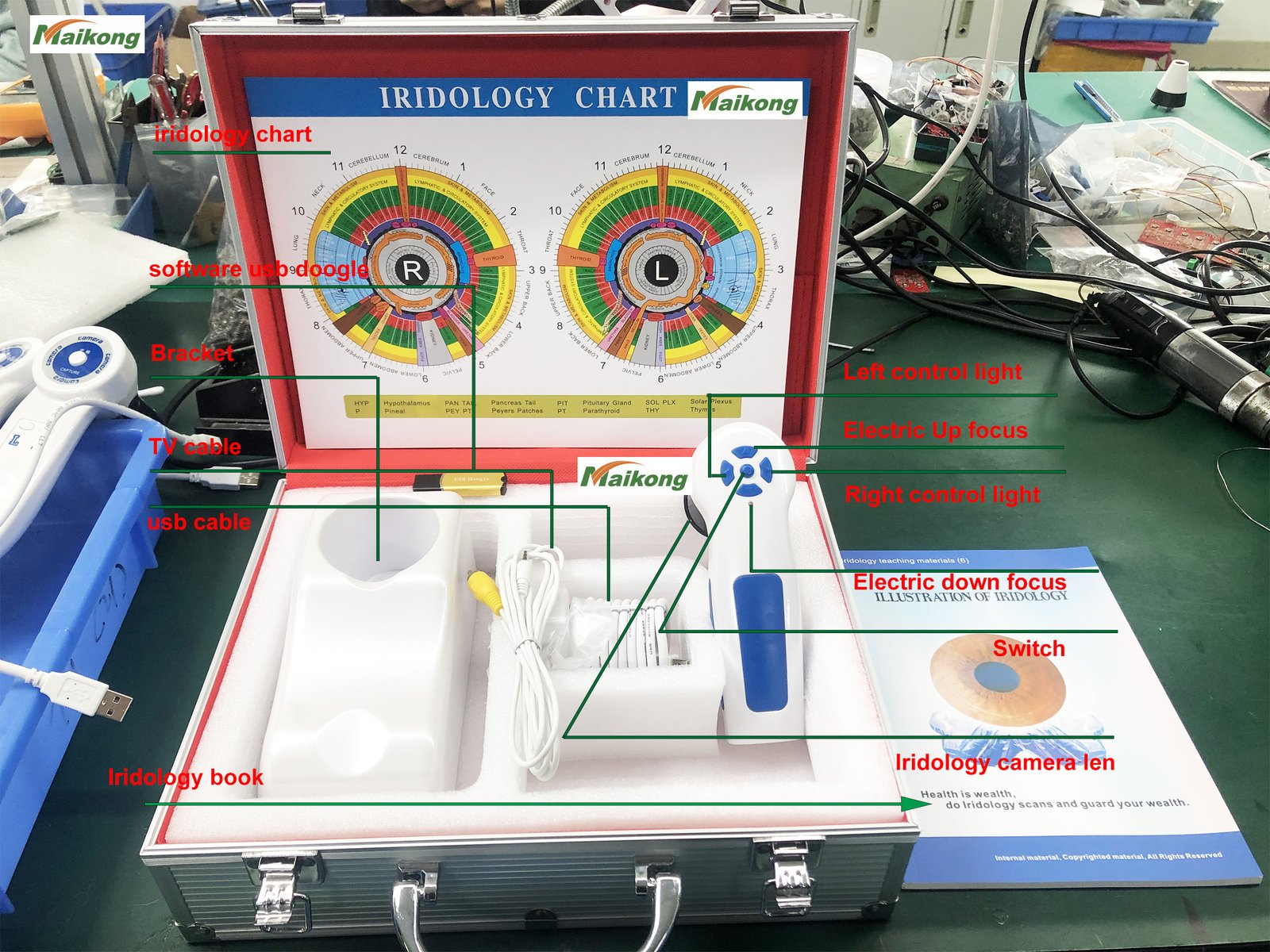
As a manufacturer, MAIKONG has supported iridology practitioners globally for over 20 years. We provide not just equipment but also comprehensive technical support, training resources, software updates, and consultation services. Our experience working with diverse practice types helps us understand practitioner needs and develop solutions that address real-world challenges practitioners face in their daily work.
What to Look for in Equipment Suppliers
- Manufacturing experience and industry reputation spanning multiple years
- Comprehensive technical support including phone, email, and remote assistance
- Regular software updates that add features and improve functionality
- Training resources including manuals, videos, and consultation availability
- Warranty coverage and reliable repair or replacement services
- OEM/ODM capabilities for practitioners needing customized solutions
- International shipping and support for practitioners outside manufacturer locations
- Multi-language support in both software and customer service
Professional Community and Networking
Connecting with other practitioners provides valuable learning opportunities, case discussion possibilities, and professional support. Professional associations, online forums, and local study groups create spaces where practitioners can share experiences, discuss challenging cases (while maintaining client confidentiality), and learn from colleagues with different backgrounds and approaches.
These communities help practitioners stay current with field developments, learn about new research or techniques, and access the collective wisdom of experienced colleagues. For practitioners who sometimes feel isolated in their practices, especially those in areas with few other iridology practitioners, these professional connections provide essential support and ongoing learning opportunities.
Reference Materials and Continuing Education
Building a personal reference library supports ongoing learning throughout a practitioner’s career. Core references should include comprehensive iridology textbooks covering kidney zones in detail, specialized monographs focused on renal system representation in iridology, historical works showing traditional approaches, and contemporary publications addressing current practice methods and research developments.
Continuing education extends beyond reading to include workshops, conferences, webinars, and advanced training sessions. Practitioners should regularly engage with continuing education that challenges their current understanding, introduces new perspectives, and keeps their knowledge current with field developments. Education focused specifically on kidney zones, even for experienced practitioners, often reveals new insights or refines existing understanding.
Business Opportunities: Becoming an Iridology Equipment Distributor
For professionals considering business opportunities in the natural health equipment industry, iridology equipment distribution represents a growing market segment. The increasing interest in natural health approaches, the global expansion of complementary medicine practices, and advancing technology creating more sophisticated equipment all contribute to expanding demand for quality iridology systems including cameras, software, and educational materials like kidney charts.
The Iridology Equipment Market
The market for iridology equipment serves diverse customer segments including individual practitioners establishing or upgrading practices, natural health clinics outfitting multiple practitioners, training institutions equipping classrooms, and wellness centers adding iridology services to existing offerings. Each segment has distinct needs regarding equipment specifications, price points, training support, and technical assistance.
Distributors who understand these diverse customer segments and can provide appropriate guidance serve an essential market function. Many practitioners lack technical expertise to evaluate equipment specifications or compare different system options. Knowledgeable distributors who can match equipment to specific practice needs, provide realistic capability expectations, and offer ongoing support create significant value for customers.
Why Partner with MAIKONG
MAIKONG has supported distributors and dealers worldwide for over two decades. Our distributor partnerships succeed because we provide comprehensive support that helps distributors serve their customers effectively. We understand that distributor success depends on having reliable products, comprehensive training and support resources, competitive pricing that allows reasonable margins, and manufacturer backing for technical issues and warranty concerns.
Become a MAIKONG Distributor in Your Region
We invite qualified distributors and dealers to join our global network. As a MAIKONG distributor, you gain access to our complete product line including cameras, software, charts, and accessories, plus comprehensive training materials, technical support, marketing resources, and competitive wholesale pricing. We support distributors in over 50 countries and welcome inquiries from professionals interested in the North American market.
Distributor Benefits
- Comprehensive Product Line: Complete iridology systems from cameras to software to charts, all designed to work together seamlessly
- OEM/ODM Customization: Hardware and software customization including logo, language, appearance, and functionality modifications
- Technical Support: Dedicated technical support team providing assistance in multiple languages via phone, email, and remote connection
- Training Resources: Complete training materials including product manuals, video tutorials, and practitioner training content
- Marketing Support: Professional product photography, specification sheets, comparison guides, and marketing content
- Competitive Pricing: Wholesale pricing structures that enable healthy margins while remaining competitive in your market
- Quality Assurance: ISO9000 certified manufacturing, CE certification, comprehensive quality control, and 1-year warranty coverage
- Inventory Support: Warehouses in China and United States enabling faster delivery and reduced international shipping delays
Ideal Distributor Profile
- Established business serving natural health, wellness, or medical equipment markets
- Existing customer relationships with practitioners who might use iridology equipment
- Technical capability to provide basic customer support and equipment troubleshooting
- Sales team able to understand and communicate equipment capabilities and applications
- Financial capability to maintain reasonable inventory levels for customer service
- Interest in long-term partnership rather than one-time transactions
- Commitment to representing products professionally and ethically
- Understanding of or willingness to learn about iridology practice and applications
Supporting Your Distributor Success
Our distributor support goes beyond providing products. We help distributors understand the iridology market, identify potential customers, approach different market segments effectively, and position products appropriately for various customer types. We provide training not just on equipment operation but on market applications, common customer questions, competitive positioning, and effective sales approaches.
Distributors gain access to our 20+ years of market experience. We have worked with natural health clinics, training institutions, individual practitioners, wellness spas, chiropractic offices, nutritionist practices, and numerous other customer types. This experience helps us guide distributors toward successful strategies specific to their market regions and customer bases.

Growing Market Opportunities
Several trends suggest expanding opportunities for iridology equipment distributors in coming years. Increasing consumer interest in natural health approaches drives more practitioners entering the field. Technology improvements make equipment more capable and affordable, expanding the potential customer base. Growing acceptance of complementary approaches by mainstream healthcare creates new market segments including integrative clinics and hospital-based wellness centers.
The COVID-19 pandemic also influenced market dynamics by accelerating adoption of telehealth and remote consultation models. Iridology equipment that enables practitioners to capture images, analyze them using software, and conduct remote consultations serves this evolving market. Distributors who understand these application possibilities and can communicate them to potential customers position themselves for success in changing market conditions.
Conclusion: Kidney Charts as Essential Professional Tools
After two decades working with iridology practitioners and manufacturing equipment worldwide, I can confirm that kidney charts remain essential tools for any serious iridology practice. These specialized reference diagrams, when properly understood and appropriately applied, provide practitioners with consistent frameworks for locating, examining, and documenting observations in kidney zones.
The kidney zones occupy relatively small iris areas positioned in the lower outer quadrants of each eye. Their small size and specific location make accurate zone identification essential. Quality kidney charts provide the reference points practitioners need to ensure they examine the correct areas consistently across different clients and multiple sessions with the same client over time.
Effective kidney chart usage requires integration with appropriate equipment including quality cameras that illuminate lower iris areas clearly and professional software that enables chart overlay and precise measurements. The combination of quality charts, proper equipment, systematic method, and appropriate training creates the foundation for reliable kidney zone observations within traditional iridology practice frameworks.
Practitioners must always remember that kidney charts serve educational and wellness consultation purposes within traditional iridology frameworks. Chart-based observations do not diagnose kidney disease, assess kidney function clinically, or provide medical information. All kidney chart work must occur within appropriate ethical and legal boundaries with clear understanding that observations represent traditional interpretive frameworks rather than medical diagnostic information.
For practitioners committed to developing their kidney chart expertise, the pathway includes ongoing education, regular practice with quality equipment, engagement with professional communities, and consistent attention to systematic observation methods. The skills develop progressively over years of regular application, rewarding practitioners who commit to continuous learning and refinement of their observational abilities.
The field continues evolving with advancing technology, ongoing research, and developing applications. Practitioners who stay current with these developments while maintaining grounding in traditional foundational principles position themselves to provide the highest quality services to their clients and contribute meaningfully to the field’s continued advancement.
Key Takeaways for Kidney Chart Practice
- Kidney zones occupy specific lower outer iris quadrants requiring precise identification for accurate observation
- Quality equipment including proper cameras and software significantly impacts kidney zone analysis effectiveness
- Multiple chart systems exist with slight variations; practitioners should master one primary system thoroughly
- Bilateral comparison between right and left kidney zones provides valuable observational context
- Charts serve educational and reference purposes within traditional iridology frameworks, not medical diagnosis
- Systematic methods and ongoing training development are essential for reliable kidney zone observations
- Professional resources including quality suppliers, training programs, and practitioner communities support ongoing development
- Ethical boundaries and appropriate communication are essential aspects of responsible kidney chart practice
Whether you are establishing your first practice, upgrading existing equipment, or seeking to refine your kidney zone interpretation skills, remember that chart mastery develops through consistent application combined with quality tools and ongoing learning. The investment you make in developing these skills serves your clients by enabling you to provide thorough, systematic observations within appropriate professional frameworks.
For practitioners seeking equipment, training resources, or professional consultation about building or refining their kidney chart-based practice, we welcome your inquiries. Our team draws on decades of experience supporting practitioners worldwide, and we are committed to helping you succeed in providing quality iridology services to your community.