
Iridology Skin Chart: Your Complete Resource for Understanding Iris Analysis Mapping
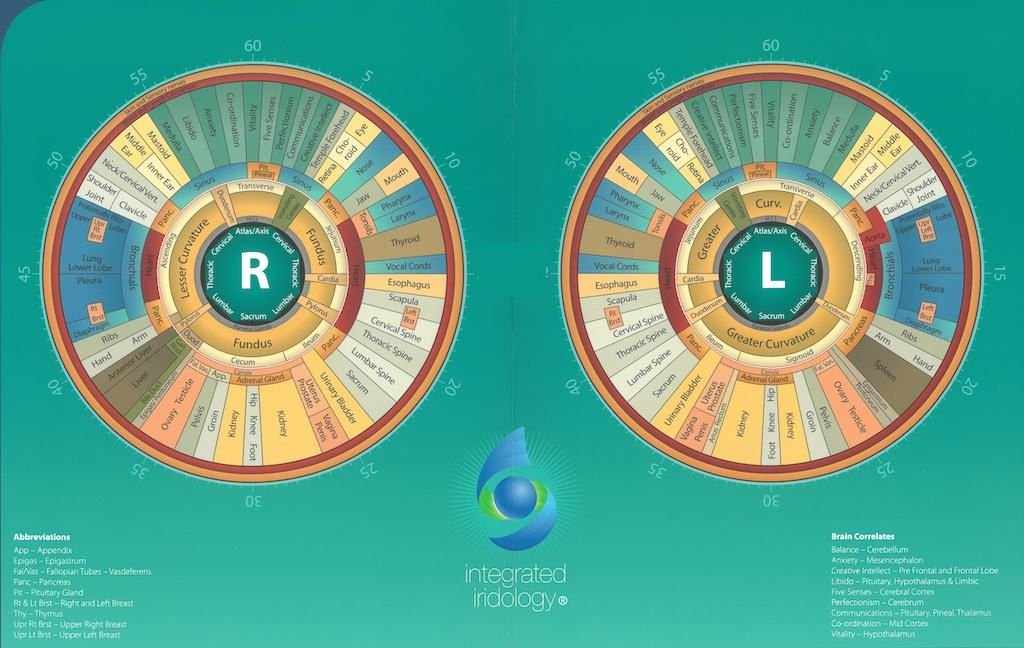
When you search for an iridology skin chart, you need accurate visual references that show how different zones in the iris connect to body systems in traditional observation practices. I’ve worked with iris analysis tools for two decades, and I understand the challenge practitioners face when looking for clear, reliable chart resources.
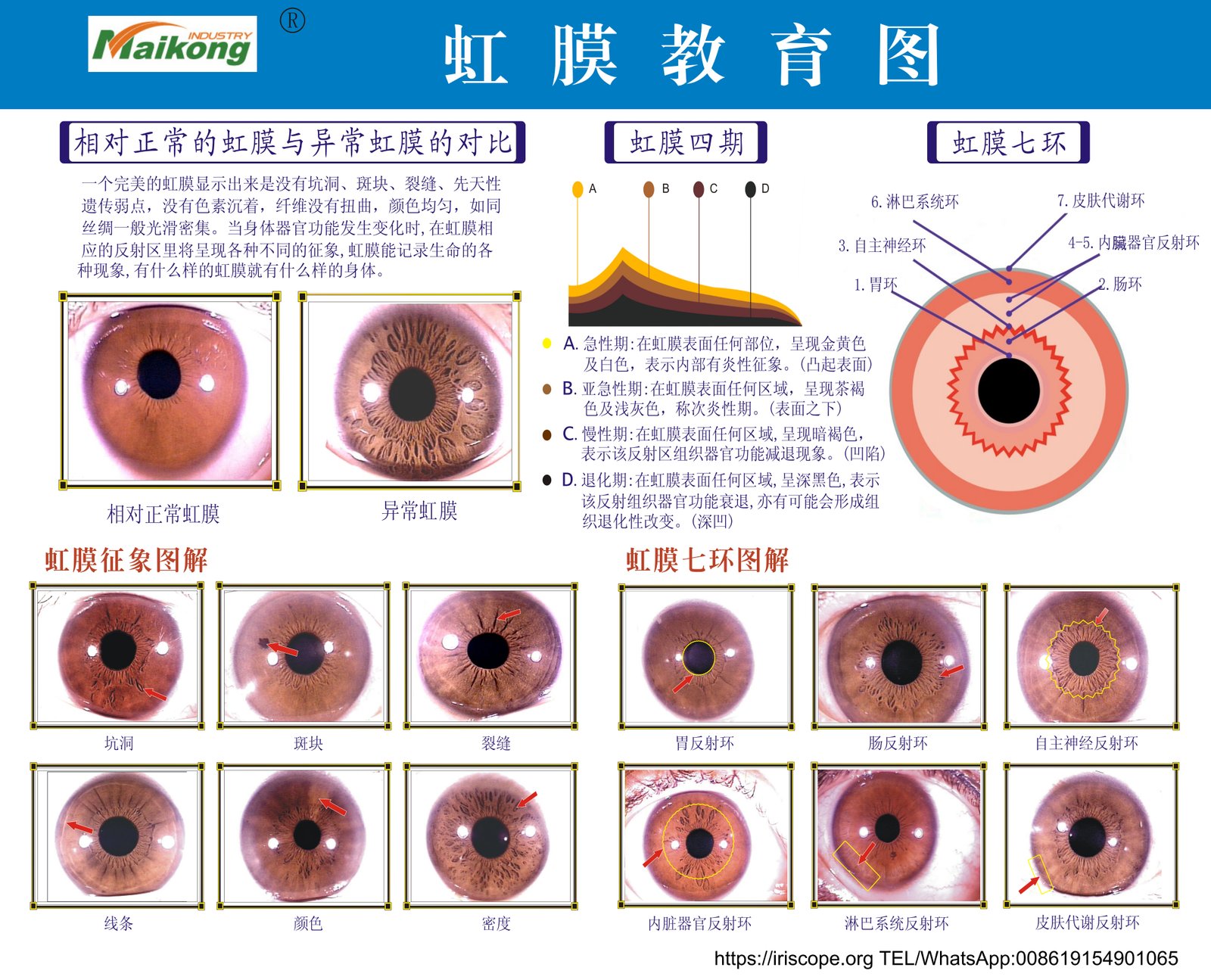
The iridology skin chart represents a specialized mapping system. It shows specific iris regions that correspond to skin-related observations in traditional iridology practice. This chart helps practitioners identify iris markings, rings, and zones during client consultations.
This guide provides everything you need about iridology skin charts. You’ll learn chart types, reading methods, practical applications, and how modern equipment supports chart-based analysis. All information serves educational purposes for traditional iridology study and professional tool selection.
Medical Disclaimer: Content in this article is for traditional iridology observation, education, and equipment reference only. Iridology charts do not diagnose disease, replace medical examinations, or substitute for professional healthcare advice. Always consult qualified healthcare providers for medical concerns.
What Is an Iridology Skin Chart and Why It Matters
An iridology skin chart is a visual reference tool used in traditional iris analysis. It maps the iris into specific zones that practitioners observe during consultations. The chart shows which iris areas connect to different body parts according to iridology theory.
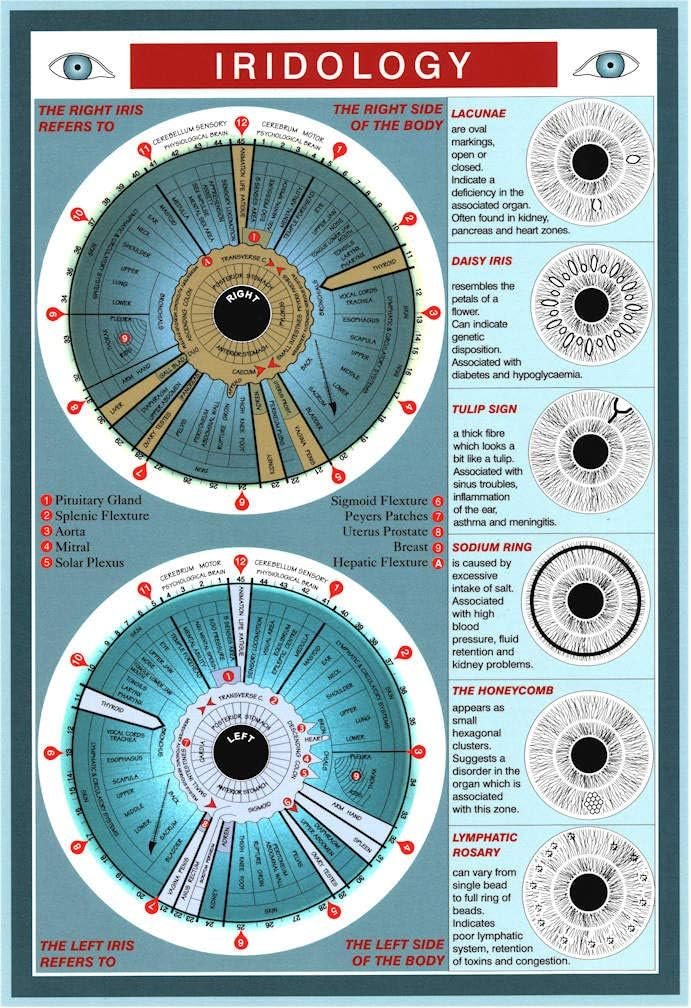
The skin-specific chart focuses on iris zones believed to relate to skin tissue, lymphatic system, and elimination pathways. These charts typically show rings around the iris periphery where skin-related observations occur in traditional practice.
Key Chart Components
Every iridology skin chart includes several essential elements. The chart divides the iris into segments radiating from the pupil outward. Each segment represents different body systems or organs according to traditional iridology mapping.
- Numbered or labeled iris zones
- Color-coded regions for different body systems
- Left eye and right eye separate diagrams
- Ring designations from pupil to sclera
- Organ and system location markers
The Skin Ring in Iridology Charts
The iridology skin ring chart specifically highlights the outer zones of the iris. Traditional practitioners observe this area for signs they associate with skin health, lymphatic function, and elimination processes. The skin zone typically appears in the iris periphery, near the outer edge.
This ring area may show various markings, color variations, or structural patterns. Iridologists use these observations as part of their traditional assessment practice, combined with other health information.
Different Types of Iridology Charts for Skin Analysis
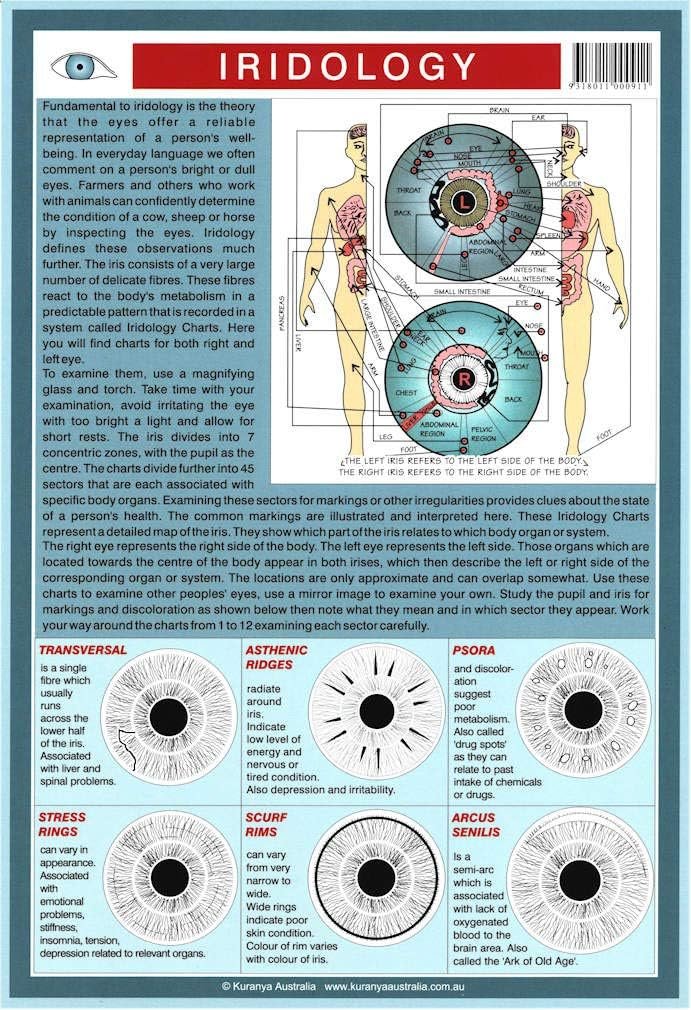
Several chart variations exist in traditional iridology practice. Each type serves different purposes and follows different mapping systems. Understanding these differences helps you select appropriate references for your study or practice needs.
Bernard Jensen Iridology Chart
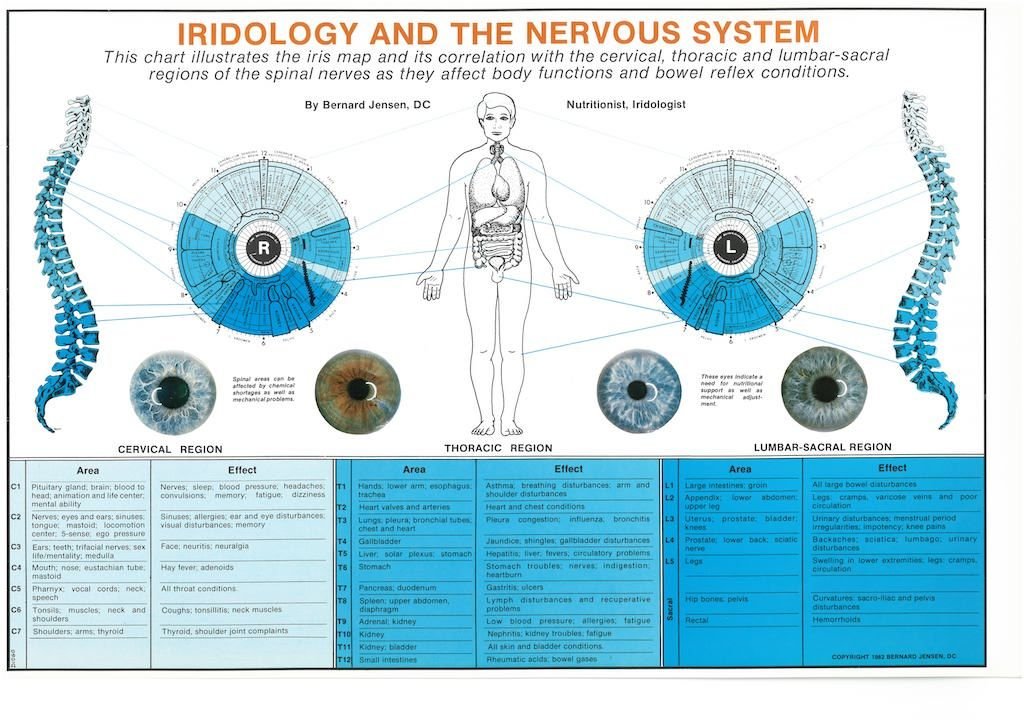
The Bernard Jensen chart is one of the most recognized systems in Western iridology. Dr. Jensen developed this mapping approach over decades of practice. His chart divides each iris into approximately 90 zones, with specific attention to organ systems.
Jensen’s chart includes detailed skin and lymphatic zone markings. The outer iris rings receive particular focus in his system. Many practitioners consider this chart a foundational reference for traditional iris observation.
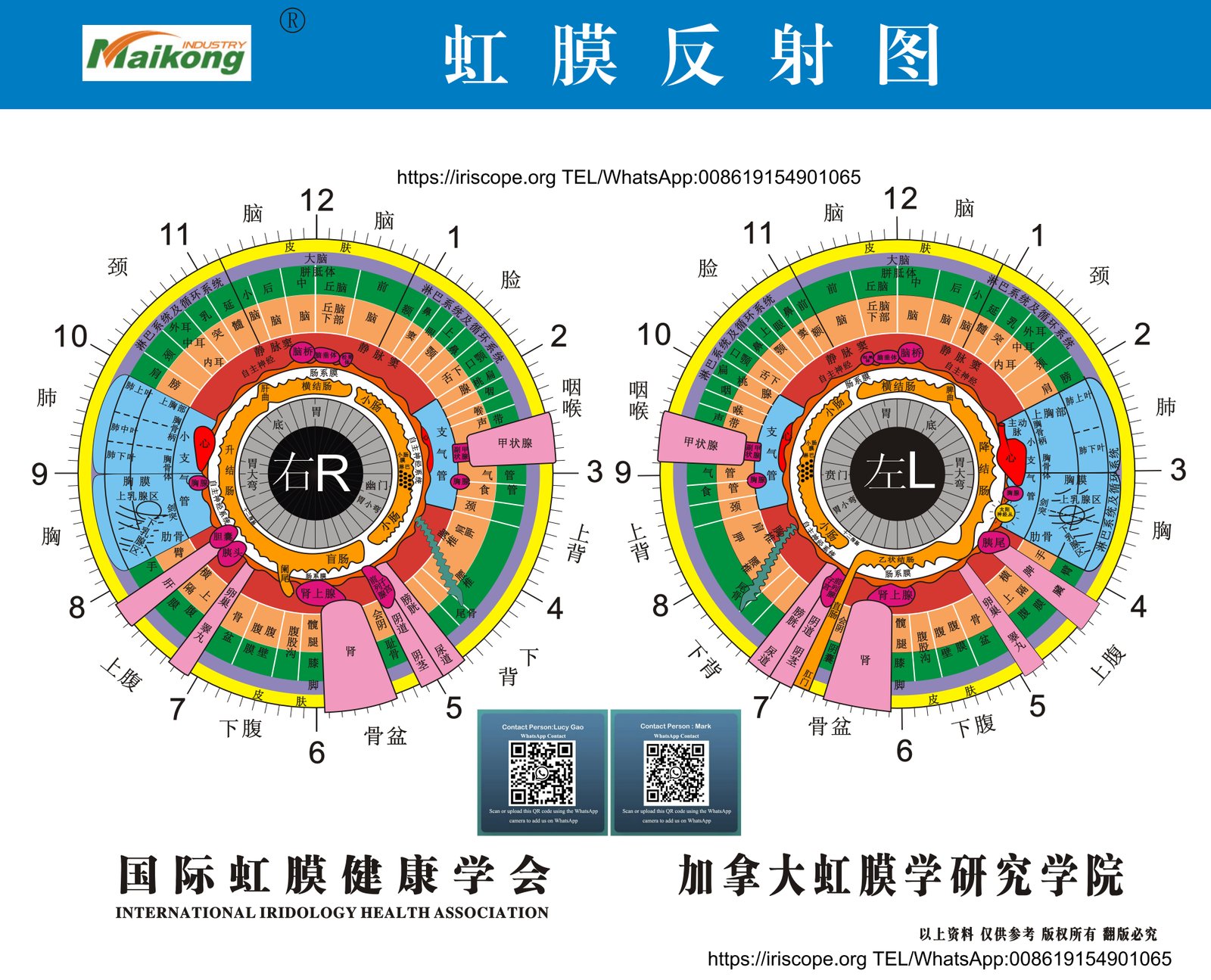
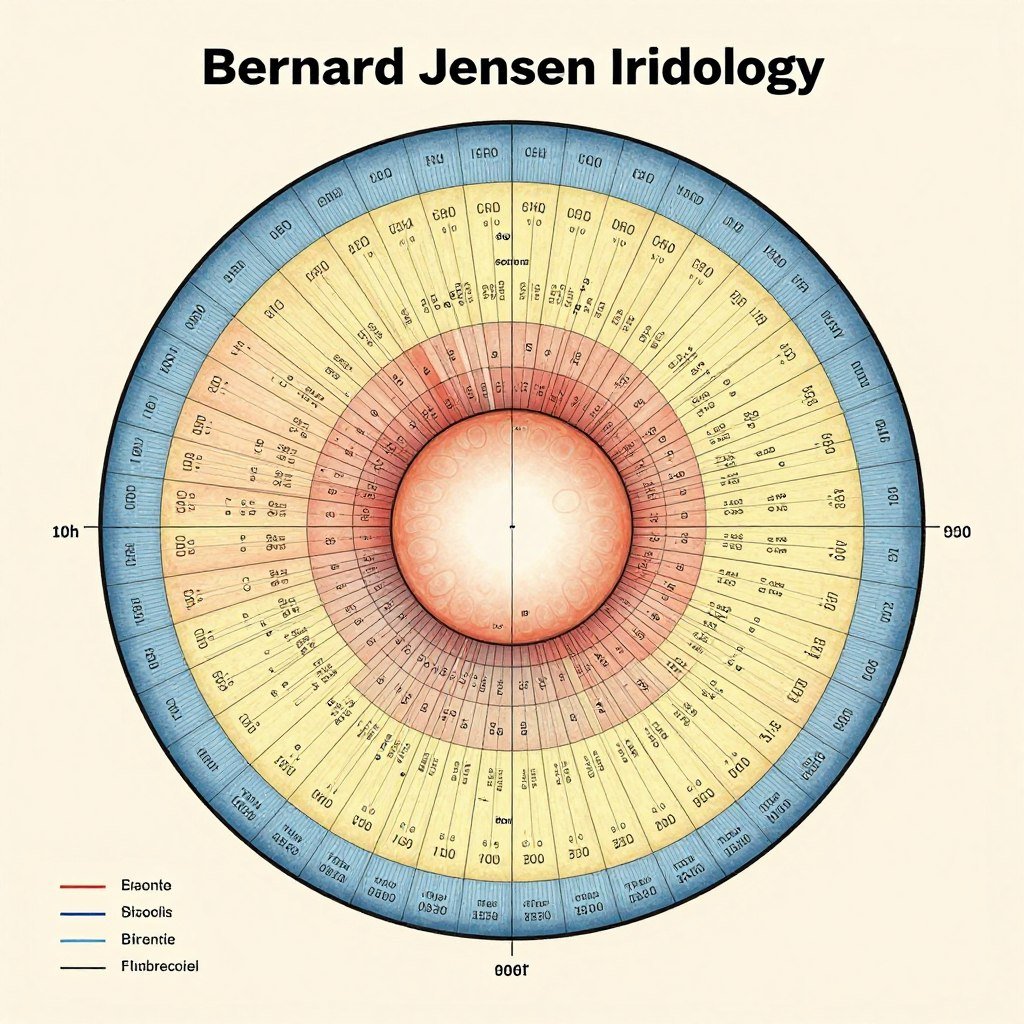
You can learn more about this specific system through our detailed guide on the Bernard Jensen iridology chart.
Modern Digital Chart Systems
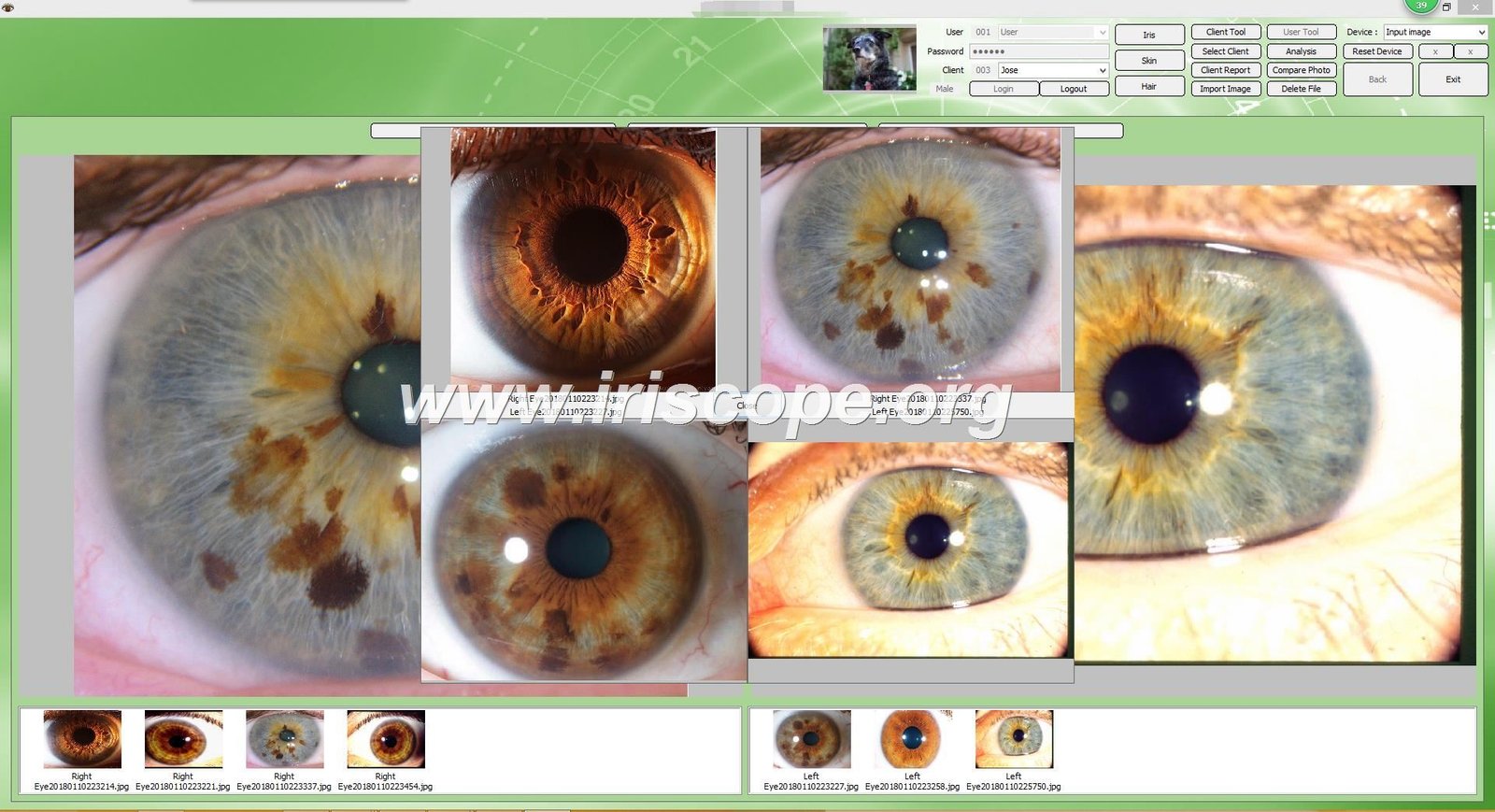
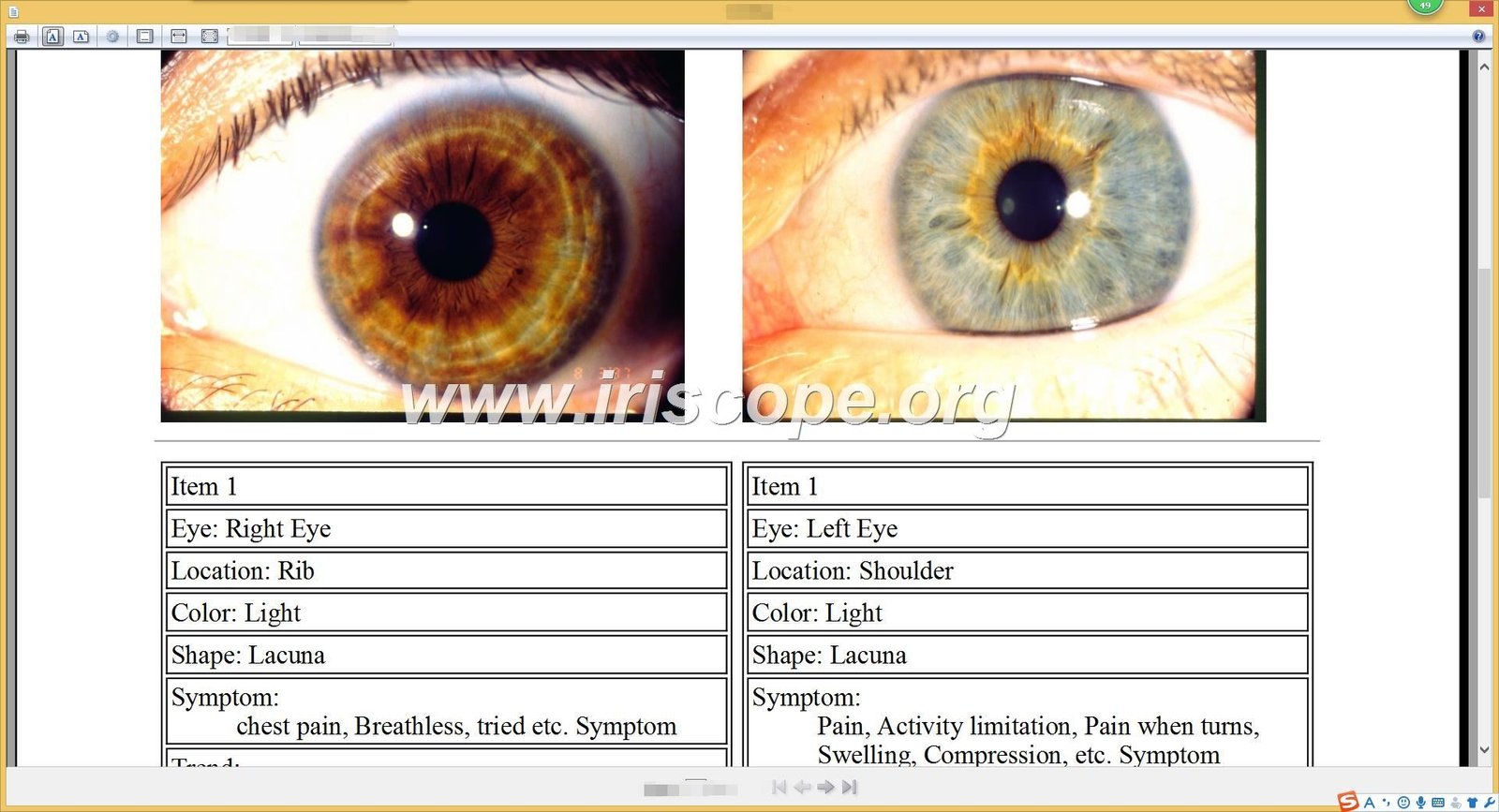
Contemporary iridology practice often uses digital charts integrated into analysis software. These electronic versions offer several advantages over printed charts. They provide zoom capabilities, overlay functions, and instant reference during live iris photography sessions.
At MAIKONG, we’ve developed comprehensive digital chart libraries within our iridology software. Our system includes multiple chart types – Jensen, European, Chinese, and hybrid models. This gives practitioners flexibility to work with their preferred mapping approach.
Digital Chart Benefits
- Instant chart switching between systems
- Overlay charts directly on iris photos
- Zoom into specific iris zones
- Multi-language chart labels (17 languages in MAIKONG software)
- Print customized chart combinations
- Update charts with new research findings
Our iridology software includes all major chart systems used worldwide. This supports practitioners working with diverse client populations or studying multiple iridology approaches.
Printable Chart Resources
Physical printed charts remain valuable teaching tools and wall references in clinical settings. High-quality printable versions allow practitioners to mark observations, annotate findings, or use charts in client education.
When selecting printable charts, resolution quality matters significantly. Charts need clear zone boundaries, readable text labels, and accurate color representation. Lower quality prints create confusion during iris zone identification.
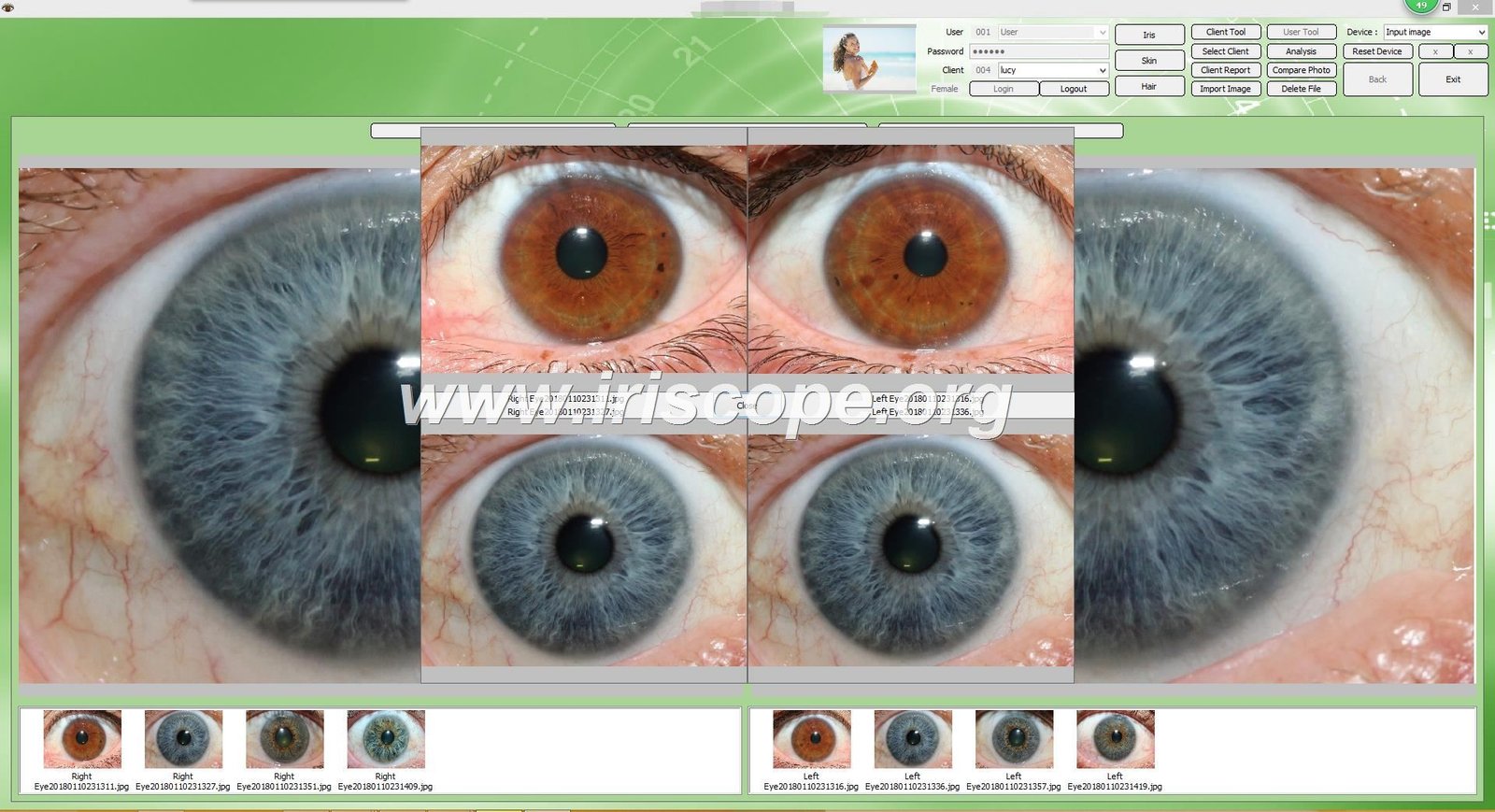
We provide detailed information about obtaining quality printed resources in our guide on printable iridology charts.
How to Read an Iridology Skin Chart: Step-by-Step Guide
Reading an iridology chart requires systematic observation and chart reference skills. The process involves comparing actual iris features with chart zone locations. This section outlines the basic reading approach used in traditional practice.
Understanding Left Eye vs Right Eye Charts
Iridology uses separate charts for left and right eyes. Traditional theory suggests each eye reflects different body sides or systems. The right eye typically corresponds to right-side body organs, while the left eye corresponds to left-side organs.
Some organs appear in both eye charts. The heart, for example, shows primarily in the left eye chart around the 2-3 o’clock position (when viewing the iris directly, not mirror-image). The liver appears predominantly in the right eye chart around the 7-8 o’clock position.
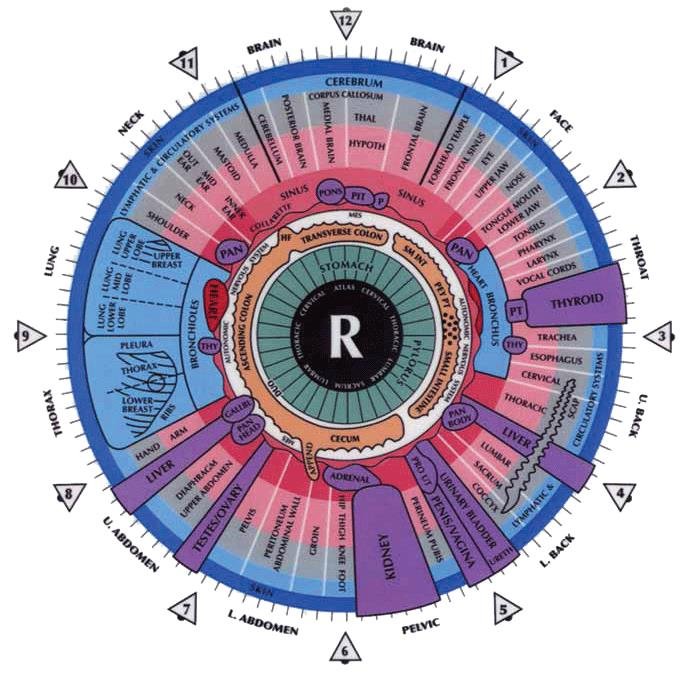
Right eye chart showing organ positions
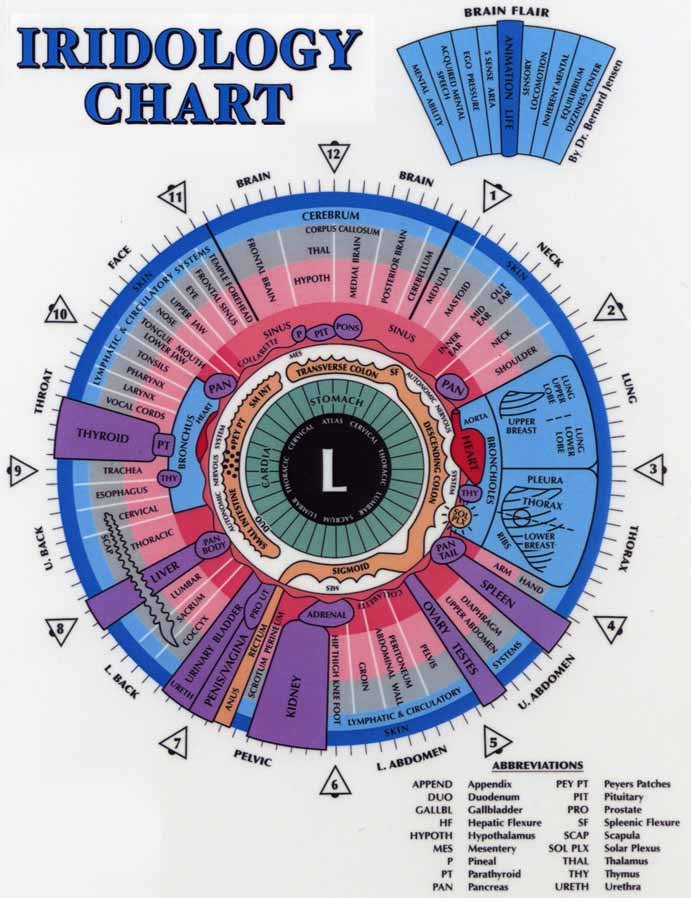
Left eye chart showing organ positions
Our detailed guides explore these differences further: right eye chart and left eye chart references.
The Clock-Face Orientation System
Most iridology charts use clock-face numbering for zone identification. The iris divides into 12 primary segments, like hours on a clock. This creates a universal reference system practitioners use worldwide.
When reading charts, practitioners note positions using clock references. “A marking at 3 o’clock in the right eye” provides precise location information. This system works regardless of language or regional chart variations.
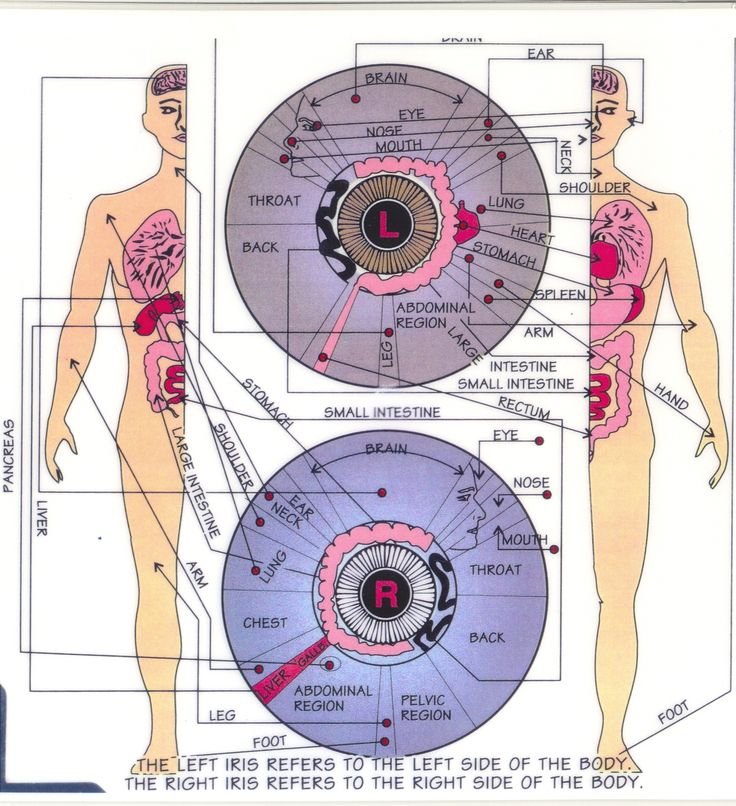
Ring System: Pupil to Periphery
Beyond circular segments, charts organize iris zones in concentric rings. These rings move outward from the pupil edge to the iris periphery. Different ring systems exist, but most include three to seven main rings.
The skin zone typically occupies the outermost rings. In many chart systems, this appears in rings 6-7 (in a 7-ring system). Practitioners observe this peripheral area for the markings they associate with lymphatic and skin function in traditional theory.
| Ring Number | Ring Name | Traditional Association | Location from Pupil |
| 1 | Pupillary Zone | Stomach and digestive tract | Immediately around pupil |
| 2 | Nutritive Zone | Intestinal and nutritional absorption | Inner iris region |
| 3 | Organ Zone | Major body organs | Middle iris region |
| 4 | Circulatory Zone | Blood and circulation | Mid-outer iris region |
| 5 | Lymphatic Zone | Lymph system | Outer iris area |
| 6 | Skin Zone | Skin and elimination | Peripheral iris edge |
| 7 | Scurf Rim | Skin elimination capacity | Extreme outer edge |
Basic Reading Steps
Traditional chart reading follows a systematic process. Practitioners develop these skills through training and practice. Here’s the basic approach used with iridology skin charts:
- Capture clear iris photograph – Use appropriate lighting and magnification to see iris details. Quality equipment matters significantly for accurate observation.
- Orient the image correctly – Identify whether viewing right or left eye. Confirm correct chart orientation (direct view vs mirror image).
- Overlay or reference chart – Place chart overlay on photograph or reference printed chart beside image. Align chart zones with actual iris features.
- Identify the skin zone – Locate the peripheral iris rings associated with skin in your chart system. Note the ring’s appearance, color, and any markings.
- Note observable features – Record any iris markings, color changes, lines, or structural variations in the skin zone areas.
- Reference clock positions – Use clock-face numbering to precisely document locations of any observations.
- Compare with chart indications – Review what traditional iridology theory suggests about observations in specific zones.
- Document findings – Record observations systematically for client files and potential comparison over time.
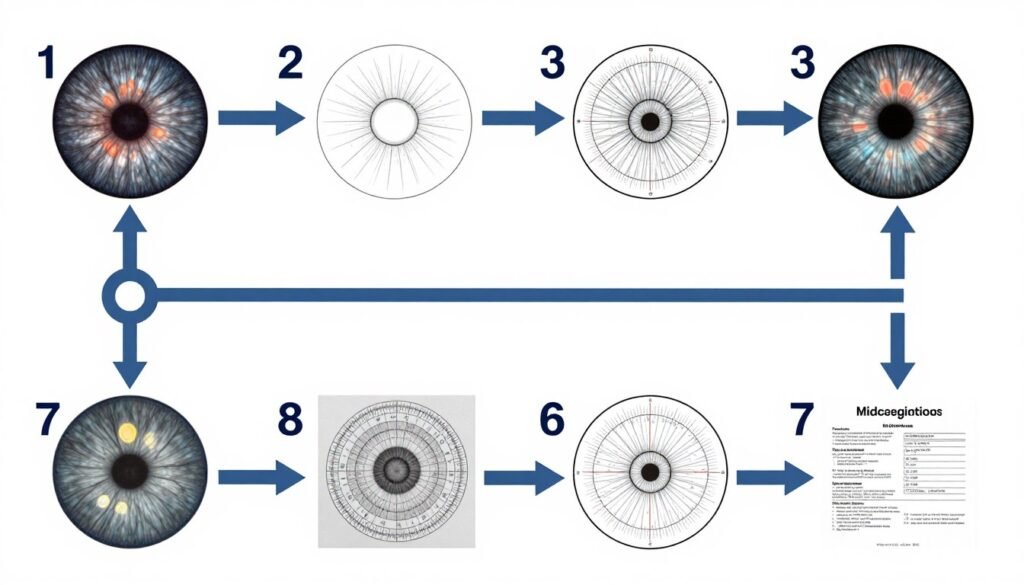
For comprehensive reading techniques, visit our guide on how to read iridology charts.
Using Equipment with Charts
Modern iris observation uses specialized cameras called iriscopes. These devices capture high-resolution iris photographs that practitioners analyze using charts. The combination of quality equipment and accurate charts improves observation precision.
At MAIKONG, we manufacture professional iriscope cameras designed specifically for chart-based analysis. Our MK-GY-9822U model features 12-megapixel resolution, LED illumination, and adjustable focus. This clarity level allows practitioners to observe fine iris details that correlate with chart zone locations.
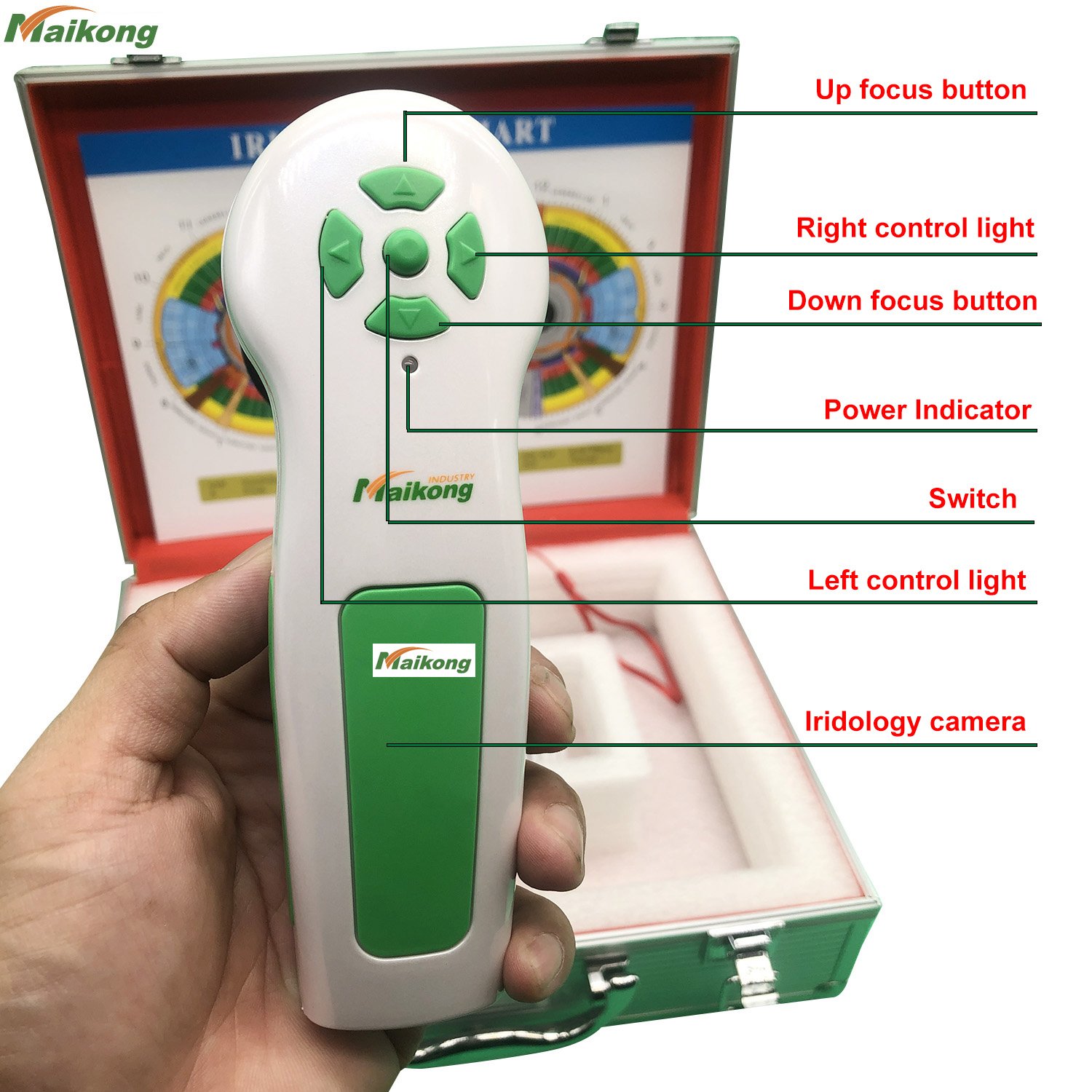
MAIKONG MK-GY-9822U Iriscope
| Resolution | 12.0 Megapixels |
| Sensor | High-resolution CCD |
| Illumination | LED ring light |
| Focus | Adjustable manual |
| Connection | USB plug-and-play |
| Software Compatibility | Windows XP/7/8/10/11, macOS |
Our camera integrates directly with our chart-enabled software, allowing instant overlay and zone reference during live capture sessions.
Practical Applications of Iridology Skin Charts
Iridology skin charts serve multiple purposes in traditional practice settings. Understanding these applications helps practitioners and students use charts effectively for their intended educational and observational purposes.
Client Consultation and Education
Many practitioners use iridology charts as visual communication tools during client consultations. Charts help explain traditional iridology concepts to clients who may be unfamiliar with iris analysis practices.
During a session, the practitioner might display both the client’s iris photograph and a corresponding chart. This side-by-side comparison helps clients understand what the practitioner observes and which chart zones correspond to those observations.
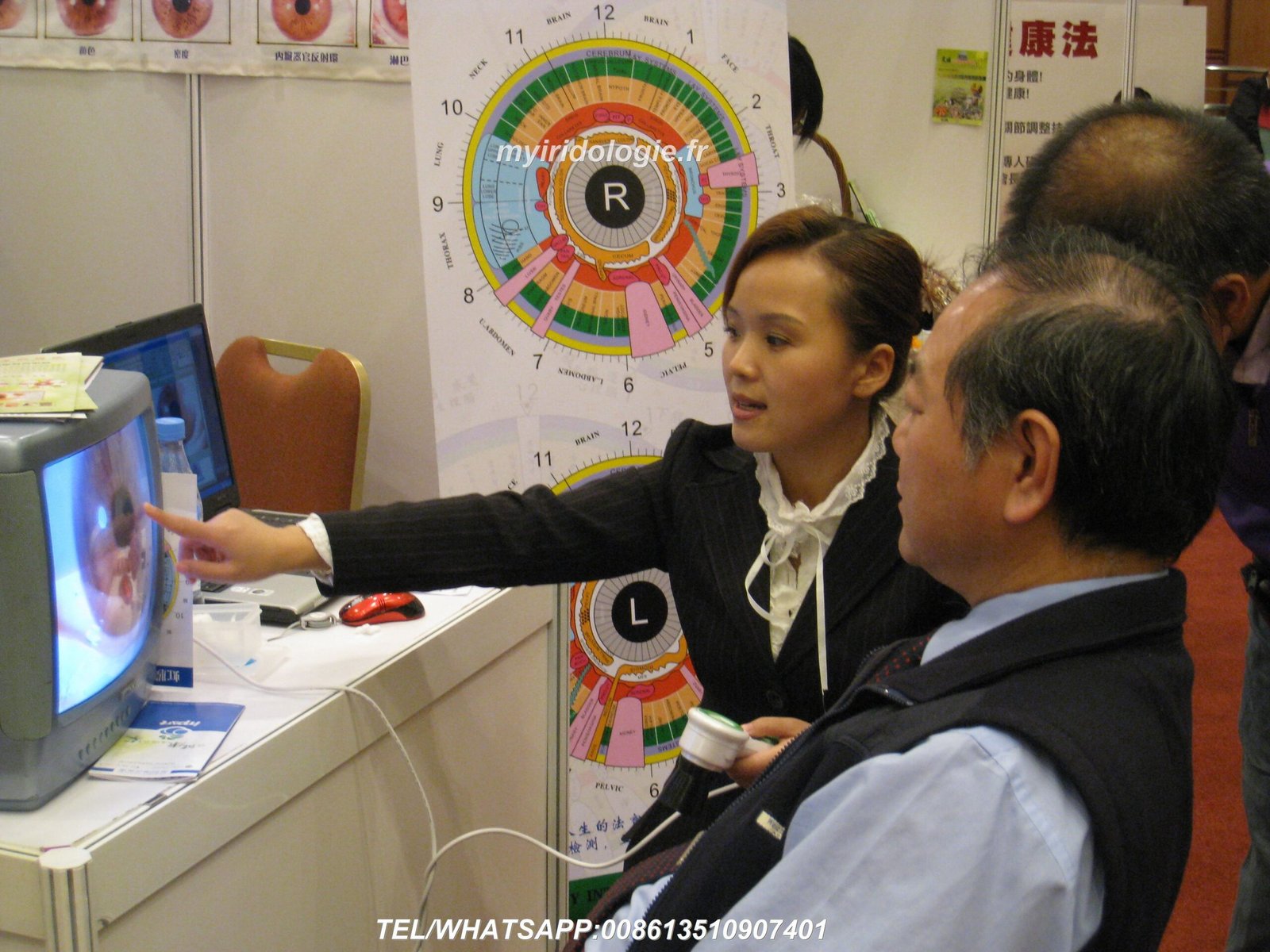
This educational approach serves traditional practice better than making health claims. Clients learn about iridology theory while understanding that observations are part of a complementary practice, not medical diagnosis.
Student Training and Certification Programs
Iridology training institutions rely heavily on accurate charts for teaching purposes. Students learn zone locations, memorize organ positions, and practice iris feature identification using standardized chart references.
Training programs typically provide students with multiple chart types. This exposure helps students understand different iridology mapping systems and choose their preferred approach for future practice.
Common Training Uses
- Zone location memorization exercises
- Practice readings with sample iris photos
- Comparison of different chart systems
- Client case study analysis
- Chart overlay technique practice
- Documentation and note-taking training

We work with numerous training institutions worldwide. Many schools choose MAIKONG equipment because our software includes comprehensive chart libraries and multi-language support. This helps institutions serve international students and teach various chart systems within a single platform.
Personal Health Awareness Practice
Some individuals use iridology charts for personal wellness observation and traditional health awareness practices. This self-study approach attracts people interested in complementary health perspectives and body awareness.
Personal users typically start with basic printed charts and educational resources. Some advance to using USB iridology cameras for self-observation at home. This practice remains educational rather than diagnostic.
Important for Personal Users: Self-observation with iridology charts is for educational interest only. It does not replace professional medical care. Any health concerns require consultation with qualified healthcare providers. Iridology observations do not diagnose disease or medical conditions.
Research and Documentation
Some practitioners and researchers use standardized charts to document iris observations over time. Consistent chart reference systems allow comparison of iris changes in the same person across months or years.
This documentation practice requires high-quality equipment for consistent imaging conditions. Lighting, magnification, and focus must remain constant to ensure comparable photographs for longitudinal observation.
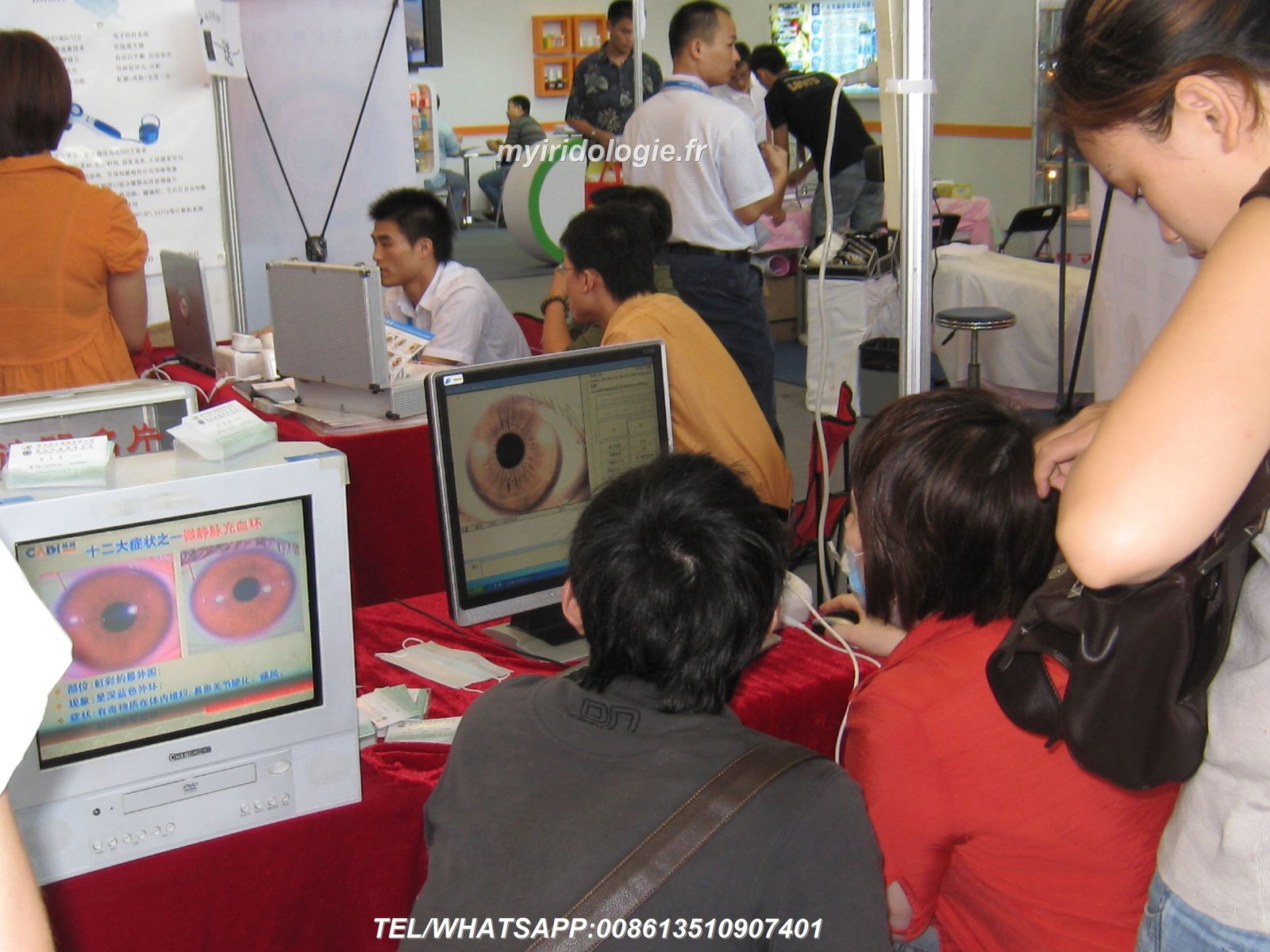
Finding Quality Iridology Skin Chart Resources
Access to accurate, high-quality charts matters significantly for effective practice and study. This section covers where to find reliable chart resources and what quality factors to consider.
Digital Chart Formats and Downloads
Digital chart files offer convenience and versatility. Practitioners can store multiple chart systems on their devices, print copies as needed, or use charts within analysis software.
When selecting digital charts, file resolution determines usefulness. Charts intended for printing require high-resolution files (minimum 300 DPI at final print size). Charts for screen reference can use lower resolutions but should remain clear and readable.
Digital Chart Format Considerations
| Format | Best Use | Quality Level |
| Printing, archiving, universal compatibility | High (vector when available) | |
| PNG | Screen display, software integration | Medium-High (resolution dependent) |
| JPG | General reference, web display | Medium (compression affects quality) |
| SVG | Scalable printing, editing | Highest (vector format) |
MAIKONG software includes built-in chart libraries in multiple formats. Users can export charts as PDF for printing or use them directly within the software interface. Our system maintains high resolution for both screen display and print output.
Printed Chart Quality Factors
Physical printed charts remain popular for wall mounting in clinical spaces and as desk references during consultations. Print quality significantly affects chart usefulness and longevity.
Professional-quality prints use heavy paper stock (minimum 100gsm), archival inks, and precise color matching. Charts printed on standard office printers typically lack the color accuracy and durability needed for long-term professional use.

Software-Integrated Chart Systems
Modern iridology software includes interactive chart systems that offer advantages over static printed charts. These digital tools allow dynamic chart use during live iris imaging sessions.
Software charts typically include features like zoom, rotation, transparency adjustment, and multiple chart system switching. Practitioners can overlay charts directly on iris photographs with adjustable opacity to compare iris features with chart zones.
MAIKONG Iridology Software: Complete Chart Solution
Our professional iridology software includes comprehensive chart libraries with all major mapping systems. The software supports 17 languages, works on both Windows and macOS, and integrates seamlessly with our iriscope cameras.
Chart Features Include:
- Bernard Jensen chart system
- European iridology charts
- Chinese medicine iris maps
- Customizable hybrid charts
- Overlay and transparency controls
- Multi-language zone labels
- Print and export capabilities
Software Advantages:
- Instant chart switching during sessions
- Real-time overlay on live camera feed
- Client database with chart annotations
- Automatic report generation with charts
- Regular updates with new chart versions
- Cloud backup of custom chart notes
Chart Accuracy and Source Reliability
Not all iridology charts maintain the same accuracy or follow established mapping systems correctly. Charts from unreliable sources may contain zone placement errors, mislabeled organs, or inconsistent mapping that creates confusion.
Reliable chart sources include established iridology organizations, certified training institutions, and manufacturers who work directly with iridology educators. These sources maintain standards for chart accuracy and update charts based on established practice methods.
Chart Quality Warning: Free charts found through general internet searches may contain errors or follow non-standard mapping systems. For professional practice or serious study, obtain charts from verified iridology education sources or established equipment manufacturers who work with certified practitioners.
Common Misconceptions About Iridology Skin Charts
Several misunderstandings exist about iridology charts and their application. Clarifying these misconceptions helps practitioners use charts appropriately and communicate accurately with clients about iridology’s role in traditional wellness practices.
Charts Do Not Provide Medical Diagnosis
The most critical misconception is that iridology charts enable disease diagnosis. This is incorrect and potentially dangerous if it delays proper medical care.
Iridology charts represent traditional observation systems, not diagnostic tools recognized by conventional medicine. Practitioners use charts as references for iris zone identification during traditional wellness consultations. Charts do not diagnose disease, identify specific medical conditions, or replace medical testing.
“Iridology charts serve as educational maps for traditional iris observation practice. They are not medical diagnostic instruments and do not identify diseases or medical conditions. Anyone with health concerns requires evaluation by qualified healthcare providers using appropriate medical diagnostic methods.”
Chart Variations Don’t Indicate Error
Different iridology chart systems exist, and they don’t always show identical zone placements. Some people interpret these variations as proof that iridology lacks validity. This misunderstands how different traditional systems developed.
Chart variations reflect different schools of thought within iridology practice. European, American, and Asian iridology traditions developed somewhat independently. Each system has internal consistency, though systems may differ from each other.
Practitioners typically choose one primary chart system and become proficient in that approach. Mixing multiple systems without understanding their theoretical foundations creates confusion rather than improved practice.
More Detailed Charts Aren’t Always Better
Some charts show extremely detailed subdivisions with hundreds of tiny zones. Beginners sometimes assume more detailed charts provide superior information. This isn’t necessarily true.
Highly detailed charts require exceptional iris imaging quality to use effectively. They also demand extensive training to apply correctly. Many experienced practitioners prefer simpler charts with major zones clearly marked.
The best chart for any practitioner is one that matches their training, their practice approach, and the image quality their equipment provides. A simple, well-understood chart serves better than a complex chart used incorrectly.
Charts Require Proper Equipment to Apply
Some people believe they can effectively use iridology charts with basic smartphone photos or bathroom mirror observations. While charts themselves are accessible, applying them meaningfully requires quality iris imaging.
Professional iris observation needs appropriate magnification, controlled lighting, and sufficient resolution to see iris details that correlate with chart zones. Standard photography equipment typically doesn’t provide the specific requirements for chart-based iris analysis.
Dedicated iridology cameras provide the necessary image quality, LED illumination, and magnification. Attempting chart application with inadequate equipment leads to misidentification of zones and misinterpretation of iris features.
Integrating Charts with Modern Iridology Equipment
Contemporary iridology practice combines traditional chart knowledge with modern imaging technology. This integration creates more effective and professional consultation experiences compared to using charts and equipment separately.
Camera and Chart Coordination
Quality iriscope cameras capture iris images with sufficient detail to identify the zones marked on iridology charts. The camera’s resolution, lighting, and focus capabilities determine how effectively practitioners can match real iris features to chart locations.
MAIKONG manufactures iriscope systems specifically designed for chart-based analysis. Our cameras provide several features that support accurate chart application:
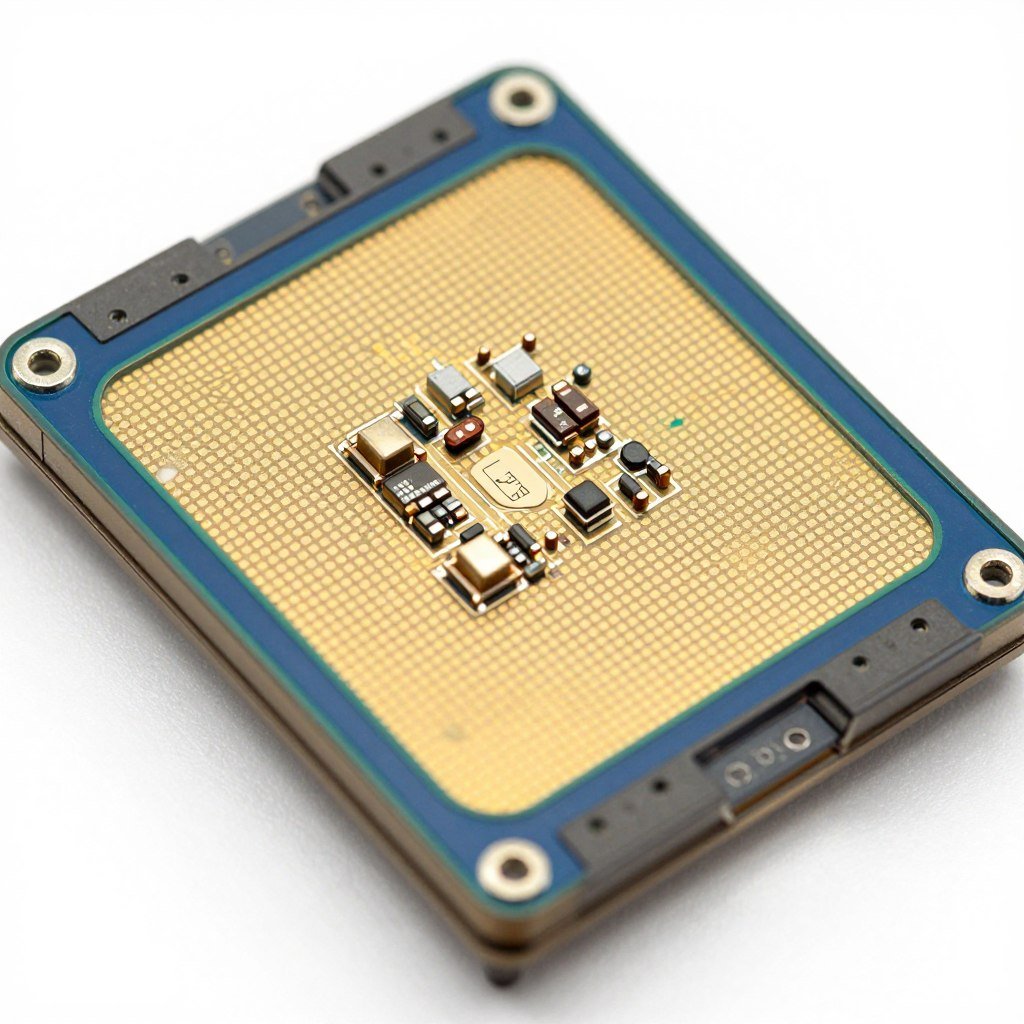
12MP High-Resolution Sensor
Our CCD sensor captures iris details at 12 megapixels, providing clarity sufficient to observe fine iris structures that correspond to small chart zones.
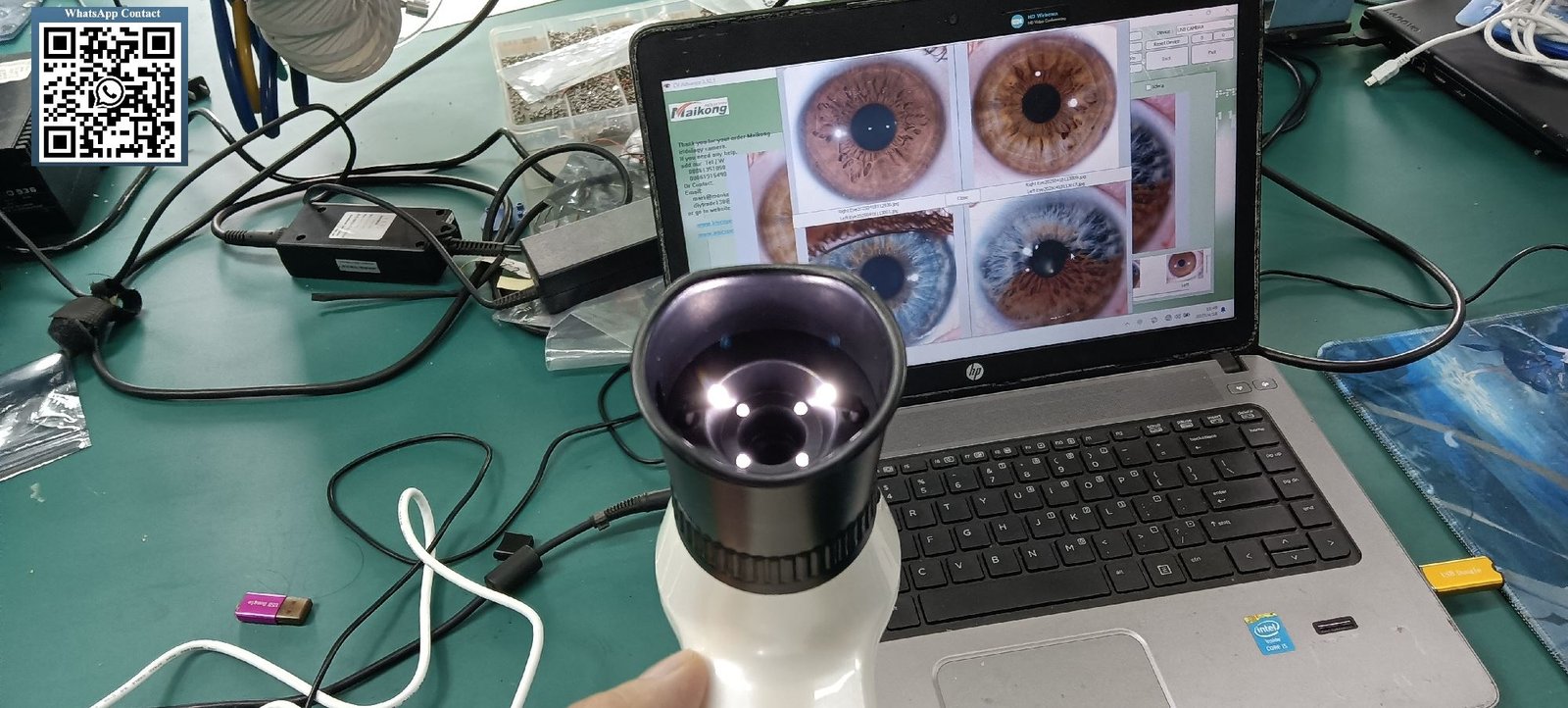
LED Ring Illumination
Even, controlled lighting reveals iris colors and structures accurately. Consistent illumination across sessions allows reliable comparison with chart features.
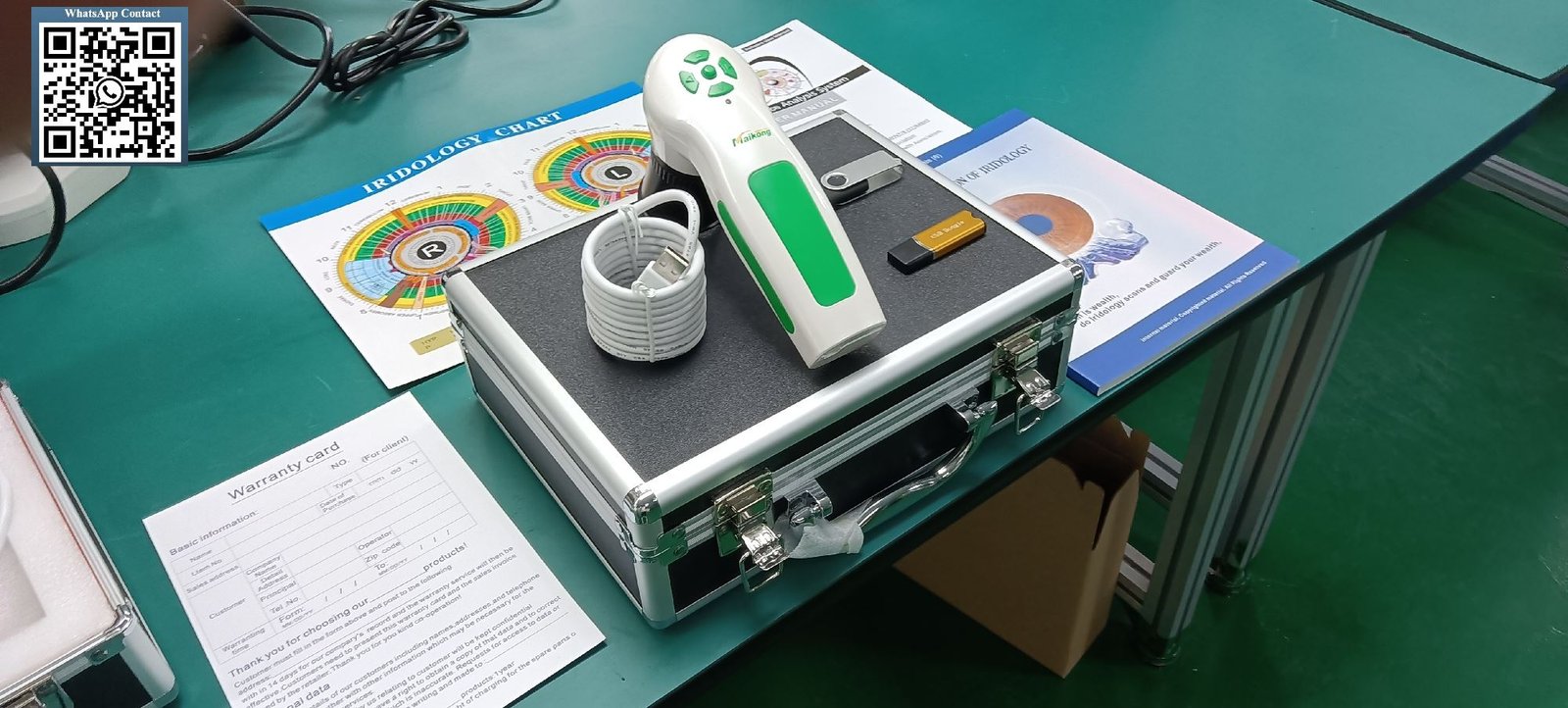
Adjustable Focus System
Precise focus control ensures sharp iris detail across different eye types. Sharp focus is essential for identifying exact chart zone boundaries on actual irises.
Software Chart Overlay Capabilities
Modern iridology software allows practitioners to overlay charts directly on iris photographs. This overlay function significantly improves chart application accuracy compared to referencing separate printed charts.
Our MAIKONG software includes sophisticated overlay controls. Practitioners can adjust chart transparency, rotate charts to match iris orientation, and switch between chart systems instantly during a session.
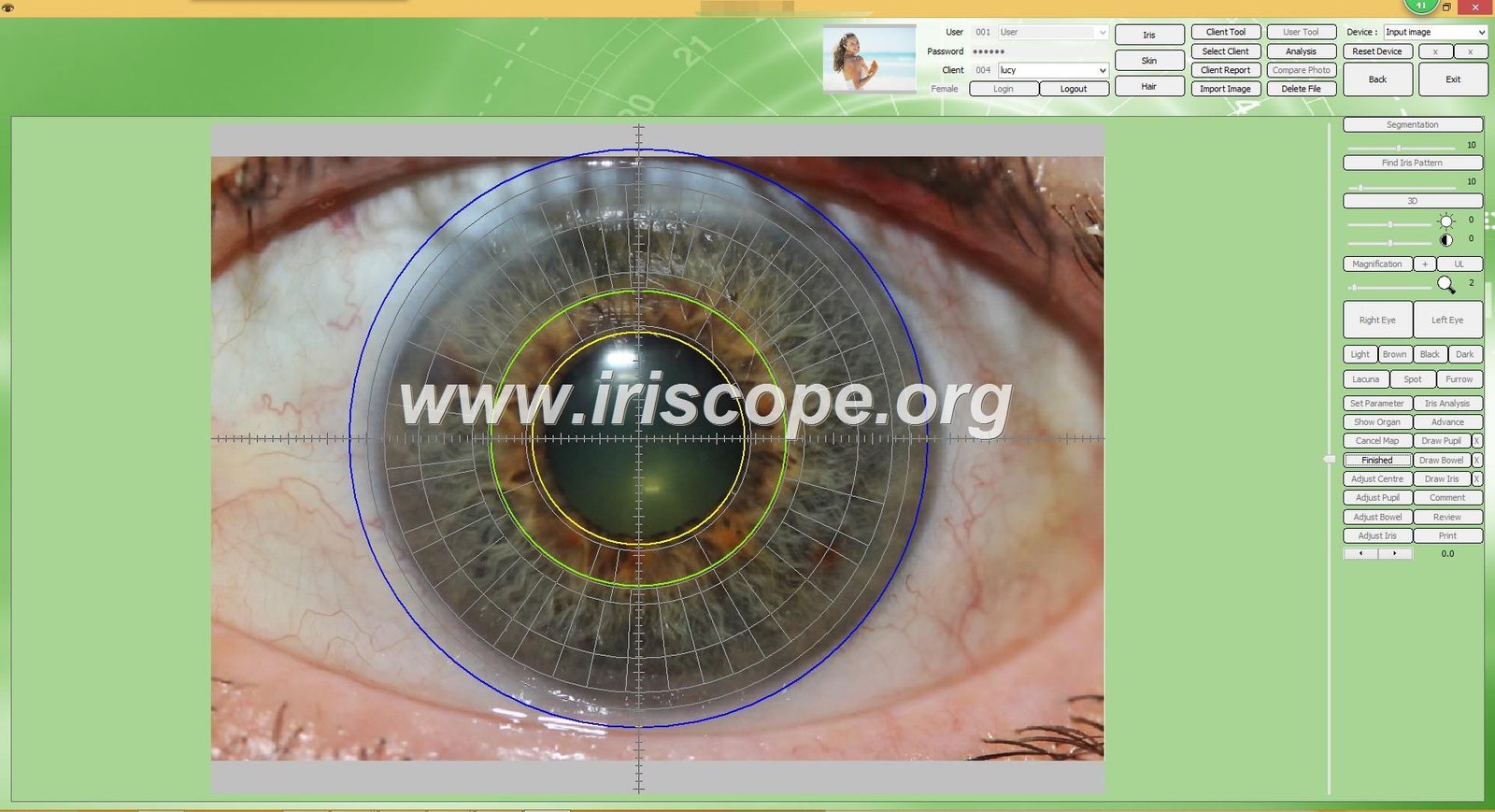
The overlay feature helps practitioners:
- Identify exact iris locations corresponding to chart zones
- Demonstrate observations to clients visually
- Document specific zone observations in client records
- Compare iris features across multiple chart systems
- Save annotated images with chart overlays for future reference
Complete System Integration Example
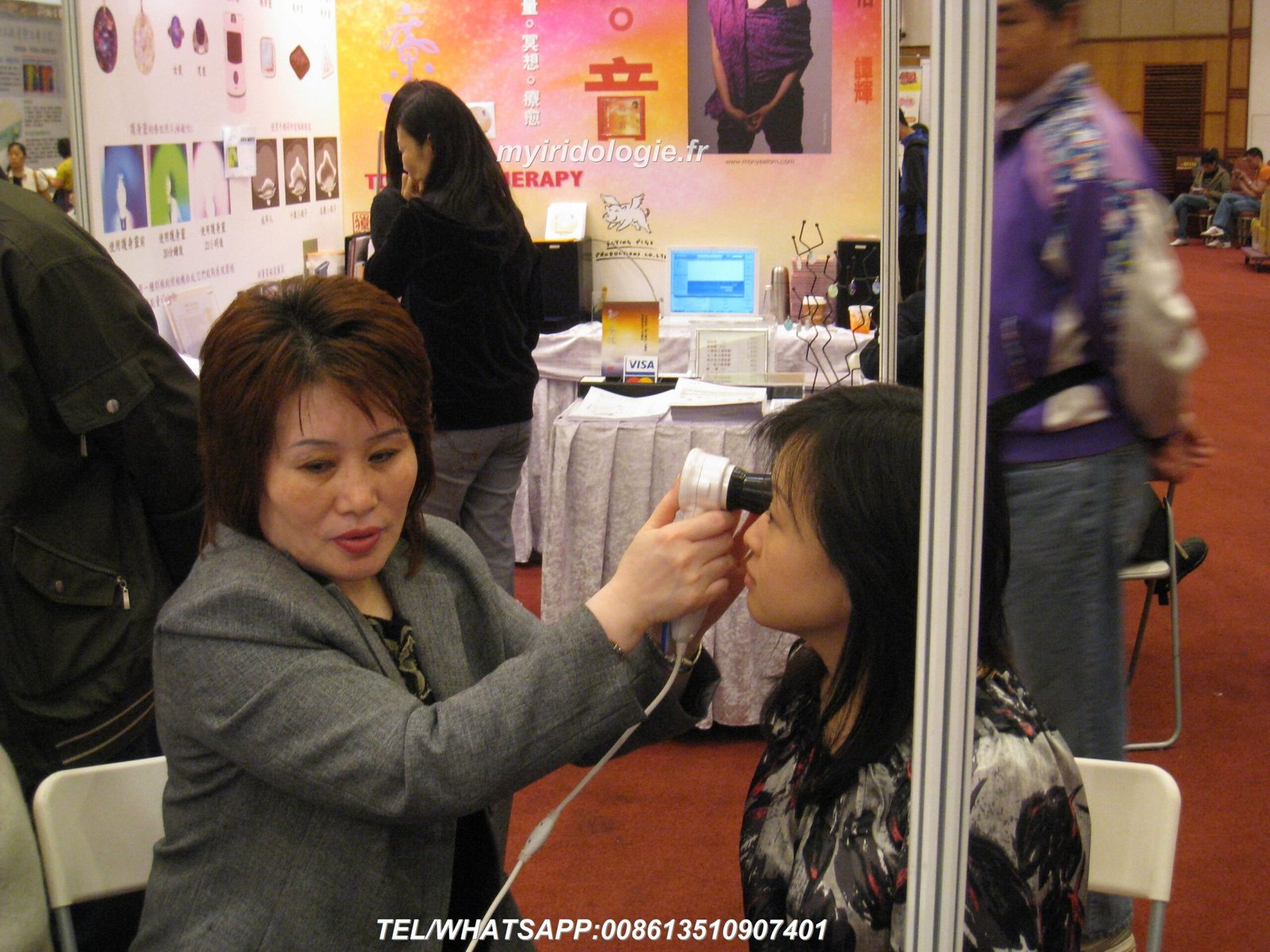
A fully integrated iridology system includes camera, software, and chart resources working together seamlessly. Here’s how this integration functions in a typical consultation:
- Client positioning: Client positions head in front of the iriscope camera. The practitioner adjusts lighting and focus.
- Live capture: The camera sends live iris video to the software. The practitioner can see the iris in real-time on screen.
- Chart overlay selection: Practitioner selects their preferred chart system from the software menu. Chart overlays on the live iris feed.
- Image capture: When iris is properly focused and centered, practitioner captures high-resolution photograph.
- Detailed analysis: Practitioner uses zoom and chart overlay features to examine specific iris zones corresponding to chart locations.
- Client education: Screen display shows both iris and chart simultaneously. Client can see what practitioner observes.
- Documentation: Software saves images with chart annotations to client file. Comparative analysis possible in future sessions.
- Report generation: Software creates professional reports including iris photos, chart references, and observations notes.
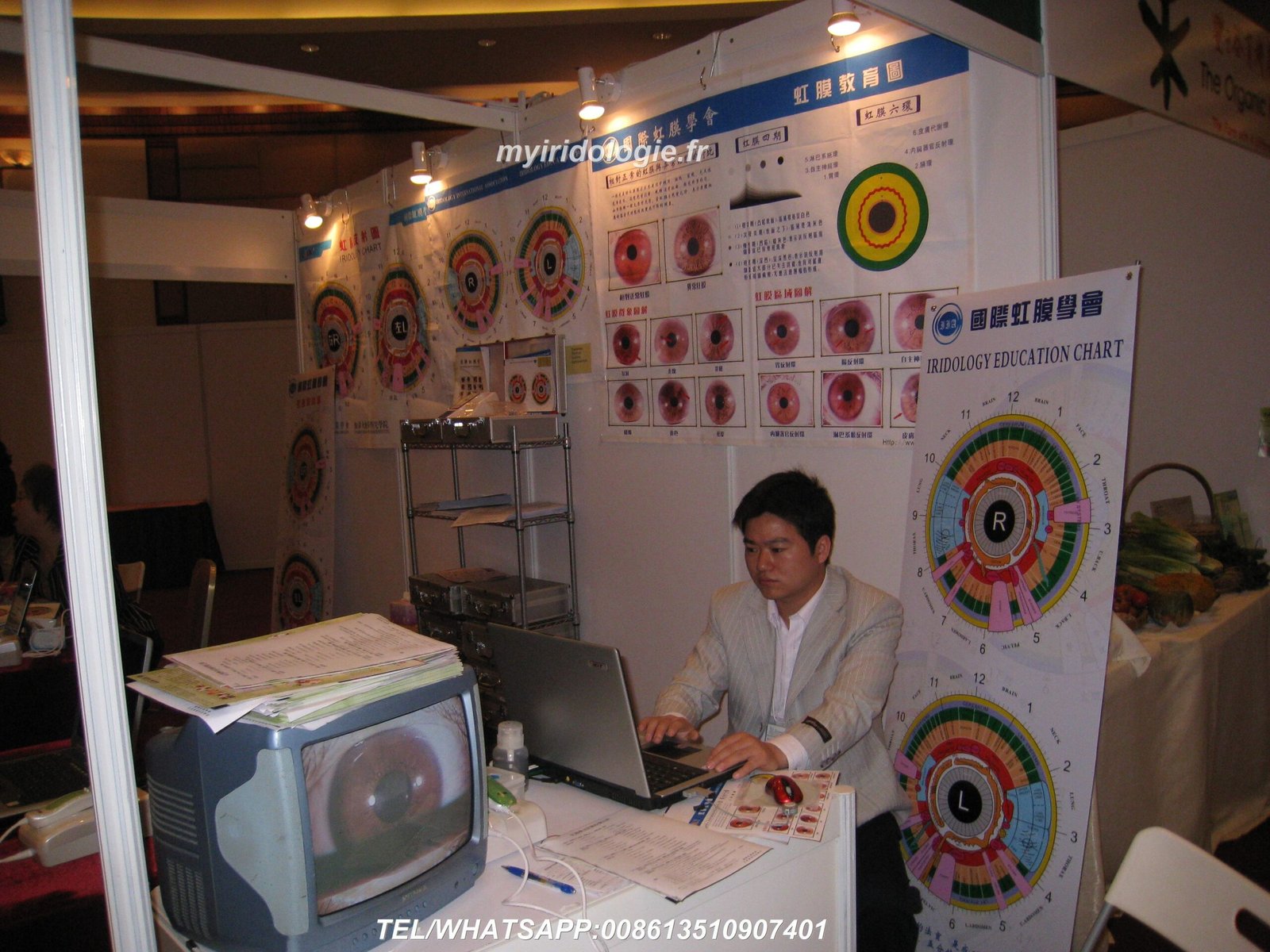
MAIKONG Complete System Specifications
We offer complete iridology systems that integrate camera hardware, analysis software, and comprehensive chart libraries. Our systems serve practitioners, clinics, training institutions, and wellness centers worldwide.
| Component | Specification | Professional Advantage |
| MK-GY-9822U Camera | 12MP CCD sensor, LED illumination, USB connection, adjustable focus | Professional-grade iris imaging suitable for detailed chart zone identification |
| MAIKONG 2024 Software | Windows & macOS compatible, 17 language support, multiple chart systems, cloud backup | Complete practice management with integrated chart libraries and client database |
| Chart Library | Jensen, European, Chinese, and hybrid chart systems included | Flexibility to work with multiple traditional approaches or client preferences |
| Accessories | 30X iris lens, protective cover, USB cable, carrying case, printed chart set | Complete kit ready for immediate professional use |
| Support | Email and WhatsApp technical support, software updates, training resources | Ongoing manufacturer support ensures long-term system effectiveness |
Our systems serve practitioners in over 50 countries. We work with individual practitioners, multi-practitioner clinics, wellness spas, chiropractic offices, and iridology training schools.
Frequently Asked Questions About Iridology Skin Charts
What exactly does an iridology skin chart show?
An iridology skin chart shows the peripheral zones of the iris that traditional iridology associates with skin tissue, lymphatic system, and elimination pathways. The chart divides the outer iris rings into segments corresponding to different body areas.
Charts typically display the “skin ring” or “scurf rim” in the iris periphery. This zone appears in the outermost 1-2mm of the iris, near where iris tissue meets the sclera (white of the eye). Different chart systems may label this zone slightly differently, but most recognize an outer iris area associated with skin function in traditional theory.
The iridology skin ring chart provides detailed mapping of this specific zone for practitioners focusing on skin-related observations.
Can I use iridology skin charts to diagnose skin conditions?
No. Iridology skin charts do not diagnose skin conditions, diseases, or medical problems. Charts are educational references for traditional iris observation practice only.
Using charts to claim disease diagnosis is inappropriate, potentially harmful, and may be illegal depending on jurisdiction. Iridology is not recognized as a diagnostic method by conventional medicine or regulatory health authorities.
Anyone with skin problems, rashes, lesions, or other dermatological concerns requires evaluation by qualified medical professionals (dermatologists or primary care physicians). Medical professionals use appropriate diagnostic methods including visual examination, dermoscopy, biopsy, and laboratory testing.
Iridology observations with charts serve as one element of traditional complementary wellness consultation, not medical diagnosis.
Which iridology chart system is most accurate for skin analysis?
No single chart system is universally “most accurate” because iridology itself is a traditional practice without standardized medical validation. Different chart systems reflect different schools of thought within iridology tradition.
The Bernard Jensen chart system is widely used in Western iridology and includes detailed skin zone mapping. European systems developed by practitioners like Josef Deck or Peter Jentschura also address skin zones with somewhat different approaches. Chinese medical iris diagnosis incorporates skin relationships in different theoretical frameworks.
Practitioners typically select a chart system based on their training, practice philosophy, and the tradition they studied. Consistency with one system generally serves better than mixing multiple systems without thorough understanding of each.
Chart “accuracy” matters less than practitioner skill, quality equipment, and appropriate use of charts as educational references rather than diagnostic tools.
Do I need special equipment to use iridology skin charts effectively?
Yes. Effective chart application requires specialized iris imaging equipment. Standard cameras, smartphones, or mirror observations don’t provide the image quality needed for meaningful chart-based analysis.
Professional iridology practice uses dedicated iriscope cameras. These devices provide high-resolution sensors (10-12 megapixels minimum), controlled LED lighting, magnification (typically 20-30X), and precise focus control. This equipment captures iris details small enough to correlate with specific chart zones.
At MAIKONG, our professional iridology cameras include all necessary features for chart-based work. The MK-GY-9822U model offers 12MP resolution, LED ring illumination, and software integration with chart overlay capabilities.
Attempting to use charts with inadequate equipment leads to zone misidentification and unreliable observations. Professional-quality equipment represents an essential investment for serious practice or study.
Where can I download or get printable iridology skin charts?
Several options exist for obtaining iridology charts:
Digital downloads: Some iridology organizations and training schools offer downloadable chart files. Quality varies significantly. Free internet charts often lack accuracy or resolution needed for professional use.
Software integration: Professional iridology software includes built-in chart libraries. MAIKONG software provides multiple chart systems with print and export capabilities. This is the most reliable source for accurate, high-resolution charts.
Printed chart sets: Educational suppliers and equipment manufacturers sell professionally printed charts. These typically offer better color accuracy and durability than home-printed versions.
Training program materials: Iridology certification courses usually provide chart sets as part of educational materials.
We provide comprehensive chart resources with our equipment systems and software. Our charts include all major mapping systems in digital formats suitable for screen use and high-quality printing.
For specific chart types, visit our resources on general iridology charts and printable chart options.
How do left eye and right eye skin charts differ?
Traditional iridology theory suggests each eye reflects different body sides or systems. Right eye charts typically show right-side organs and systems, while left eye charts show left-side organs and systems.
For skin zones specifically, differences are more subtle. The peripheral skin ring appears in both eyes but may show different patterns according to body laterality. Some practitioners observe one eye’s skin zone more closely based on whether they’re examining right or left-side body concerns.
In practice, most iridologists examine both eyes during consultations. Comparing left and right iris observations provides more complete information than examining only one eye.
Chart orientation also matters. When viewing an iris directly (person facing you), the chart orientation differs from mirror-image or photographic views. Software like our MAIKONG system handles orientation automatically, ensuring chart alignment matches the actual iris view.
Learn more about specific eye chart differences in our guides for right eye charts and left eye charts.
Can iridology skin charts be used for self-examination at home?
While some people attempt self-examination with iridology charts, this approach has significant limitations and risks:
Equipment limitations: Effective self-examination requires quality iriscope equipment, not just charts. Most people don’t have access to appropriate imaging tools at home.
Training requirements: Meaningful chart application requires training in iris observation, zone identification, and traditional iridology theory. Untrained self-examination often leads to misinterpretation.
Objectivity challenges: Self-examination lacks the objectivity that a trained practitioner provides. Personal bias affects observation and interpretation.
Health risk concerns: Most importantly, self-examination might delay proper medical care if someone attempts to self-diagnose health conditions using iridology charts. This represents a serious health risk.
If you’re interested in learning iridology, consider formal training programs rather than untrained self-examination. Use charts as educational tools to understand iridology concepts, not as self-diagnostic instruments.
For health concerns, always consult qualified healthcare providers who use appropriate medical diagnostic methods.
What software works best with iridology skin charts?
Effective iridology software should include several chart-related features:
Multiple chart systems: Software should offer various traditional chart types (Jensen, European, etc.) rather than limiting users to one system.
Chart overlay capabilities: The ability to overlay charts on iris photographs with transparency control greatly improves chart application accuracy.
Multi-language support: For practitioners serving diverse clients or international students, multi-language chart labels are valuable.
Print and export functions: Software should allow printing charts separately or exporting chart-overlaid images for client reports.
Regular updates: Chart libraries should receive updates as traditional systems evolve or new mapping approaches develop.
MAIKONG iridology software includes all these features. Our system supports 17 languages, integrates seamlessly with our iriscope cameras, and includes comprehensive chart libraries covering major traditional systems worldwide.
We’ve developed our software based on 20 years of feedback from practitioners, training institutions, and clinics. The interface prioritizes ease of use while providing professional-level chart functionality.
Our software works on both Windows (XP through 11, 32-bit and 64-bit) and macOS (versions 10.14 through current releases). This cross-platform compatibility ensures accessibility regardless of your computer system preference.
Selecting Quality Equipment for Chart-Based Iridology Practice
Charts alone don’t create effective iridology practice. The combination of accurate charts, quality imaging equipment, and reliable software determines professional practice success.
Why Equipment Quality Matters for Chart Application
Lower-quality cameras produce images lacking the detail needed for precise chart zone identification. When iris details are unclear, practitioners cannot accurately match iris features to chart locations.
Professional-grade equipment provides consistent results across different clients, lighting conditions, and session times. This consistency allows reliable chart application and meaningful comparison of iris observations over time.
Quality Equipment Indicators
- Sensor resolution 10MP or higher
- Dedicated LED iris illumination
- Adjustable precision focus
- USB plug-and-play connectivity
- Software integration capability
- Durable medical-grade construction
- Manufacturer warranty and support
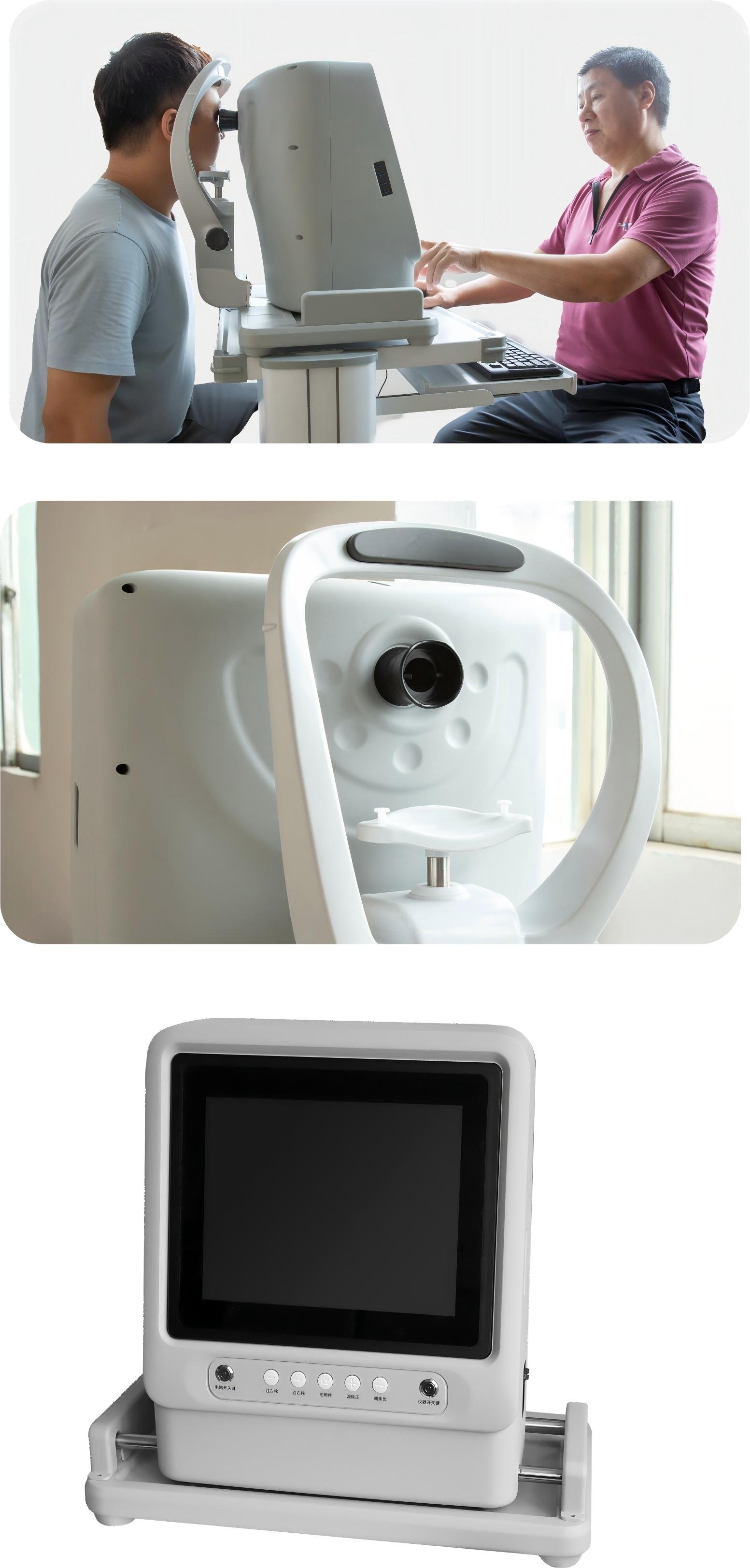
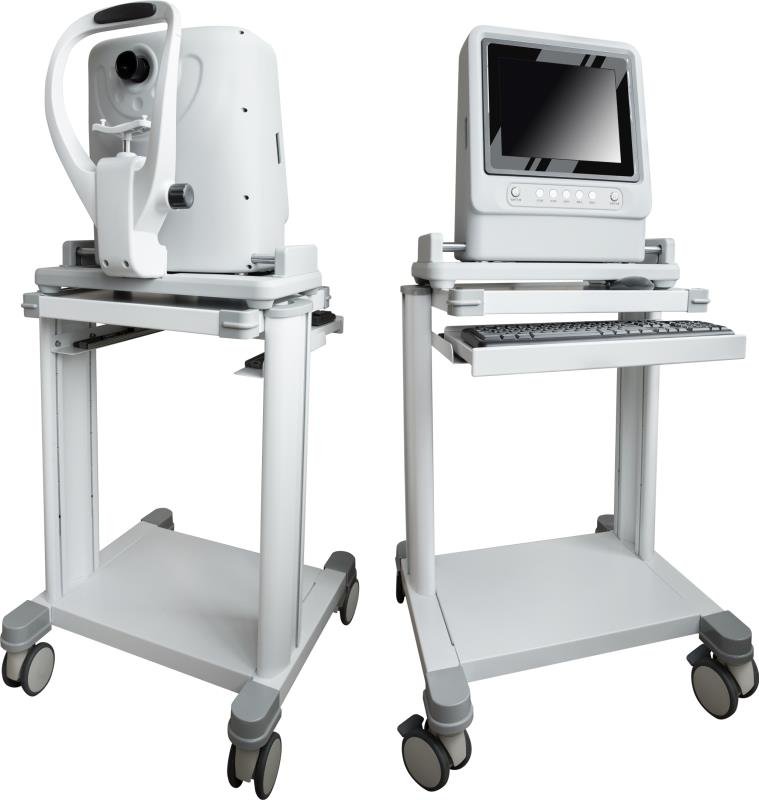
MAIKONG: Twenty Years of Iridology Equipment Manufacturing
Since 2004, we’ve manufactured iridology equipment for practitioners, clinics, and training institutions worldwide. Our experience working directly with iridology professionals informs every aspect of our product development.
We’re not retailers reselling other manufacturers’ products. We design and manufacture our equipment in our GD Province, SZ City facilities. This direct manufacturing approach allows us to:
Customize Equipment
We offer OEM services including custom branding, color schemes, and functionality modifications to meet specific practice or institutional needs.
Develop Custom Software
Our software team customizes logos, languages, features, and integrates client-specific products or educational materials into the system.
Maintain Quality Control
Direct manufacturing allows ISO9000-certified quality processes from design through production to final testing and shipment.
Supporting Global Practice with Local Availability
We maintain inventory in both China and United States warehouses. This dual-location approach provides faster shipping, reduces international shipping costs, and improves availability for our North American customers.
Our US warehouse serves distributors, practitioners, and institutions across North America. We ship complete systems, replacement parts, and accessories with typical delivery times of 3-5 business days within the continental United States.

Complete System Package Contents
Our standard iridology system includes everything practitioners need to begin professional chart-based practice immediately:
| Component | Specification | Quantity |
| MK-GY-9822U Iriscope Camera | 12MP resolution, LED illumination, CCD sensor | 1 unit |
| 30X Iris Lens | Professional magnification optics with plated layer | 1 lens |
| USB Connection Cable | 1.5 meter high-speed USB cable | 1 cable |
| Lens Protective Cover | Dust and scratch protection | 1 cover |
| Professional Carrying Case | Leather PU protective case | 1 case |
| MAIKONG 2024 Software | Complete analysis software with chart libraries | Installation media + USB key |
| Software USB Security Dongle | Hardware encryption key for software activation | 1 dongle |
| Printed Chart Set | Professional quality laminated charts (left/right eye) | 1 set |
| User Manual | Comprehensive equipment and software documentation | 1 manual |
| Video Training Access | Online tutorial videos for equipment and software use | Digital access |
Global Partnership Network
We’ve established partnerships with practitioners, clinics, and wellness organizations worldwide. Our client network includes:
Healthcare Practitioners
- Natural therapy clinics and wellness centers
- Chiropractors integrating iridology
- Nutritionists and functional medicine doctors
- Individual iridology practitioners
Training Institutions
- Iridology certification schools
- Natural health training programs
- Continuing education providers
- University alternative medicine departments
Business Partners
- Medical equipment importers
- Health equipment wholesalers and distributors
- Multi-level marketing health companies
- OEM brand partners
We’ve provided OEM and ODM services to over 1,000 partners globally. Our customization capabilities help partners develop their own branded systems while leveraging our manufacturing expertise and quality control processes.
Partnership Opportunities with MAIKONG
We actively seek partnerships with US-based distributors, agents, and dealers who serve the natural health and wellness equipment market. Our partnership model provides competitive advantages for businesses entering or expanding in the iridology equipment sector.
Why Partner with a Direct Manufacturer
Working directly with MAIKONG eliminates middleman costs and delays. Partners benefit from manufacturer pricing, customization options, and direct technical support that resellers cannot provide.

Partnership Advantages
- Wholesale Pricing: Manufacturer-direct pricing provides significant margin potential for partners
- Customization Services: OEM branding and custom features help partners differentiate in their markets
- Technical Support: Direct manufacturer support for complex technical questions and custom solutions
- Inventory Availability: Large inventory in US warehouse ensures quick fulfillment and customer satisfaction
- Multi-language Resources: Sales and support materials in 17 languages serve diverse markets
- Territory Protection: Exclusive territory options for qualified distributors in specific regions
Partnership Models We Support
We offer flexible partnership arrangements based on your business model and market focus:
Regional Distributor
Serve multiple states or regions with exclusive or preferred distributor status. Receive highest-level pricing, marketing support, and inventory consignment options.
- Multi-state territory protection
- Co-op marketing funds
- Dedicated account manager
Dealer/Agent
Sell MAIKONG equipment alongside other wellness products. Perfect for established health equipment dealers expanding their product lines.
- Competitive dealer pricing
- Drop-ship capabilities
- Sales training resources
OEM Partner
Develop your own branded iridology equipment line using our manufacturing capabilities. We handle production while you focus on your market and brand.
- Custom branding and design
- Software white-labeling
- Minimum order flexibility
Support We Provide Partners
Successful partnerships require ongoing support beyond initial product supply. We provide comprehensive partner support including:
Sales and Marketing Support
- Product specification sheets and technical documentation
- High-resolution product photography and videos
- Demo unit programs for qualified partners
- Co-branded marketing materials
- Trade show support and participation
- Lead sharing in your territory
Technical and After-Sales Support
- Product training for your sales team
- Technical support hotline and email
- Warranty service coordination
- Software updates and upgrades
- Replacement parts availability
- Customer service escalation support
Ready to Discuss Partnership Opportunities?
We welcome inquiries from qualified businesses interested in distributing MAIKONG iridology equipment in the United States. Whether you’re an established medical equipment distributor looking to expand your product line or an entrepreneur entering the wellness equipment market, we offer partnership models that can support your business goals.
Our partnership team responds to inquiries within 24 hours. We’ll discuss your market focus, business model, and how MAIKONG can support your success in the iridology equipment sector.
Conclusion: Iridology Skin Charts as Educational Resources
Iridology skin charts serve as valuable educational references for traditional iris observation practice. These charts map iris zones according to established traditional systems, providing practitioners with standardized references for zone identification during consultations.
Effective chart use requires understanding their proper role and limitations. Charts are educational tools, not diagnostic instruments. They help practitioners explain traditional iridology concepts and identify iris zones systematically. Charts do not diagnose disease, identify medical conditions, or replace appropriate medical care.
Key Takeaways
- Iridology skin charts map outer iris zones associated with skin and lymphatic observations in traditional practice
- Multiple chart systems exist; choose one that matches your training and practice approach
- Quality equipment is essential for meaningful chart application
- Charts serve education and traditional observation, not medical diagnosis
- Modern software integration improves chart application accuracy and efficiency
- Professional practice combines chart knowledge with quality imaging equipment
For practitioners, students, or institutions seeking quality equipment to support chart-based iridology practice, MAIKONG offers comprehensive solutions developed through 20 years of manufacturing experience. Our systems integrate high-resolution cameras, multi-chart software, and professional support to serve the global iridology community.
Final Reminder: All content in this article addresses traditional iridology observation and educational equipment selection. Iridology charts and observations are for educational reference only and do not diagnose disease or substitute for professional medical evaluation and treatment.
Contact MAIKONG for Equipment Information and Partnership Inquiries
Whether you’re a practitioner seeking quality iridology equipment, an institution requiring systems for training programs, or a business exploring partnership opportunities, our team is ready to discuss how MAIKONG can support your needs.
MAIKONG – Professional Iridology Equipment Manufacturer
Manufacturing Facility
MAIKONG Technology Co., Ltd
GD Province, SZ City
China
Established: 2004
Certifications: ISO9000, CE
Experience: 20+ years iridology equipment manufacturing
US Operations
United States Warehouse
Serving North American Market
3-5 Day Shipping
Inventory: Complete systems and parts in stock
Support: English-language sales and technical support
Website: https://myiridology.us/
What We Offer
For Practitioners & Clinics:
- Professional iriscope camera systems
- Comprehensive analysis software with chart libraries
- Complete system packages ready for immediate practice
- Technical support and training resources
- Warranty service and replacement parts
For Business Partners:
- Wholesale and distributor pricing
- OEM and ODM customization services
- Territory protection opportunities
- Marketing and sales support
- US warehouse inventory access
We respond to all inquiries within 24 hours. Contact us to discuss your equipment needs, request product specifications, arrange demonstrations, or explore partnership opportunities.
Note: MAIKONG iridology equipment is designed for traditional iris observation, educational purposes, and complementary wellness consultation. Our products do not diagnose disease, treat medical conditions, or substitute for professional medical care. Always consult qualified healthcare providers for medical concerns.