
Left Eye Iridology Chart: Your Complete Professional Guide to Iris Zone Mapping
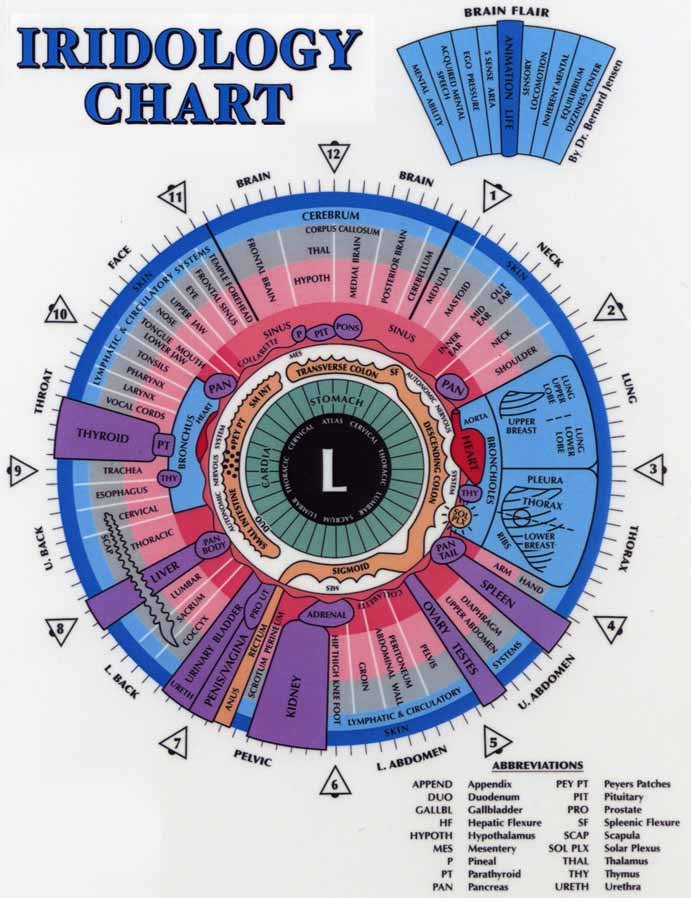
The left eye holds remarkable insights into your body’s left side organs and systems. As an iridology camera manufacturer based in Shenzhen, we’ve worked with thousands of practitioners worldwide who rely on accurate left eye iridology charts every single day. Understanding this specialized mapping system transforms how you assess patterns, zones, and potential wellness indicators visible within the iris structure.
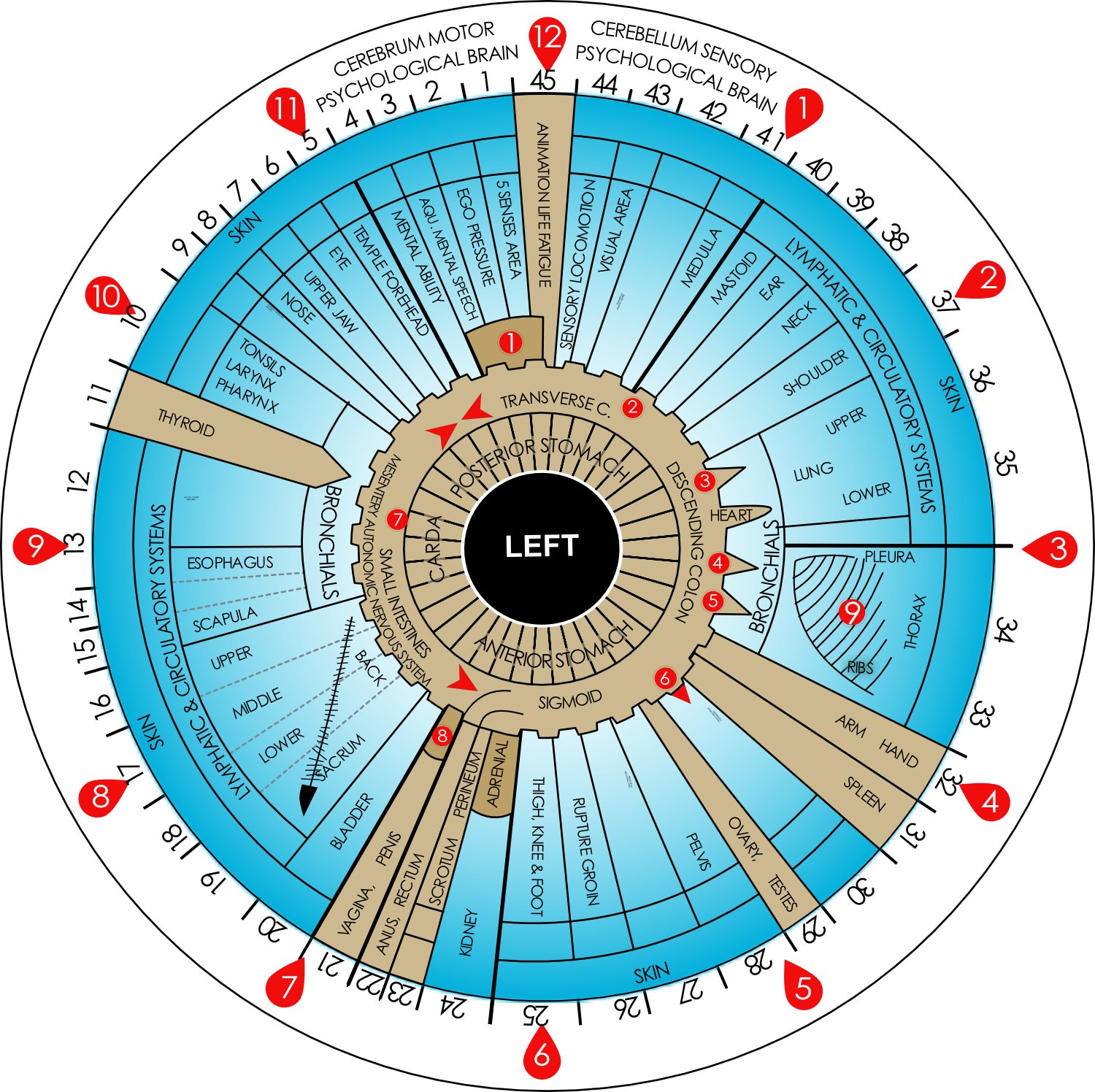
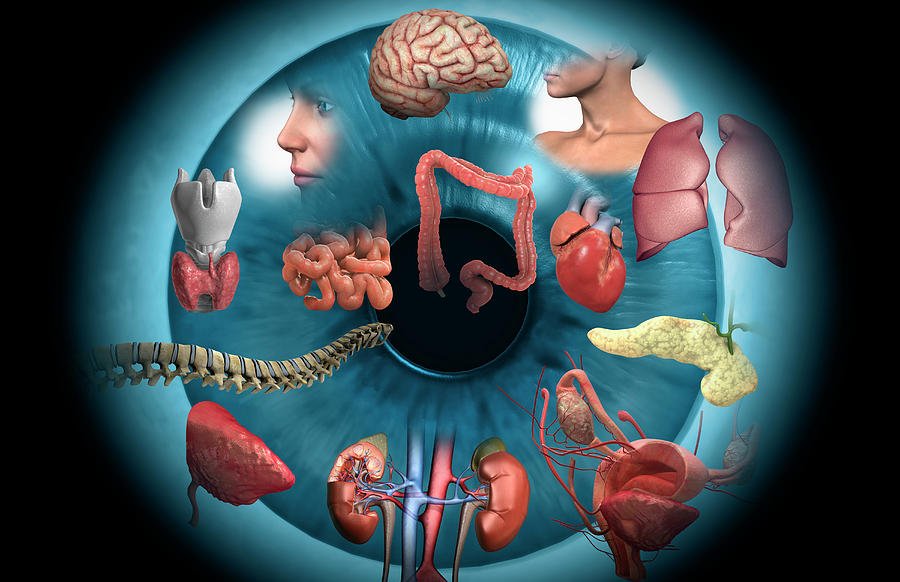
The chart divides iris into distinct sectors. Each region corresponds to specific body areas. The left eye iridology map particularly reveals information about organs predominantly on your body’s left side—including parts of your heart, spleen, left lung, left kidney, and the descending colon. This systematic approach has been refined over decades of practice and observation.
Many practitioners initially struggle with chart interpretation. The iris patterns can seem complex at first glance. However, once you grasp the foundational zone structure and understand how the iridology chart left eye differs from the right, assessment becomes significantly more intuitive. We’ll walk through everything you need to master this essential tool.
What Is the Left Eye Iridology Chart and Why Does It Matter?
An iridology chart functions as a topographical map of your iris. The chart divides iris tissue into zones that practitioners believe reflect corresponding body regions. The left eye iridology chart specifically maps the left side body structures and certain organs that process materials flowing through your system’s left pathways.
The practice originated in the 1800s when physicians noticed iris markings appeared to correlate with health conditions. Modern iridology has evolved into a structured system. Practitioners use standardized iridology chart layouts that designate which iris areas correspond to which body parts.
Left Eye Specialization
The left eye iridology map emphasizes organs and systems on your body’s left side. This includes your spleen, left lung sections, portions of your heart, left kidney, and parts of your digestive tract that run along the left side body.
This specialization allows practitioners to focus their assessment. When examining someone’s left iris, attention naturally gravitates toward these left-dominant structures. The chart provides specific zone locations for each corresponding area.
Chart Structure Fundamentals
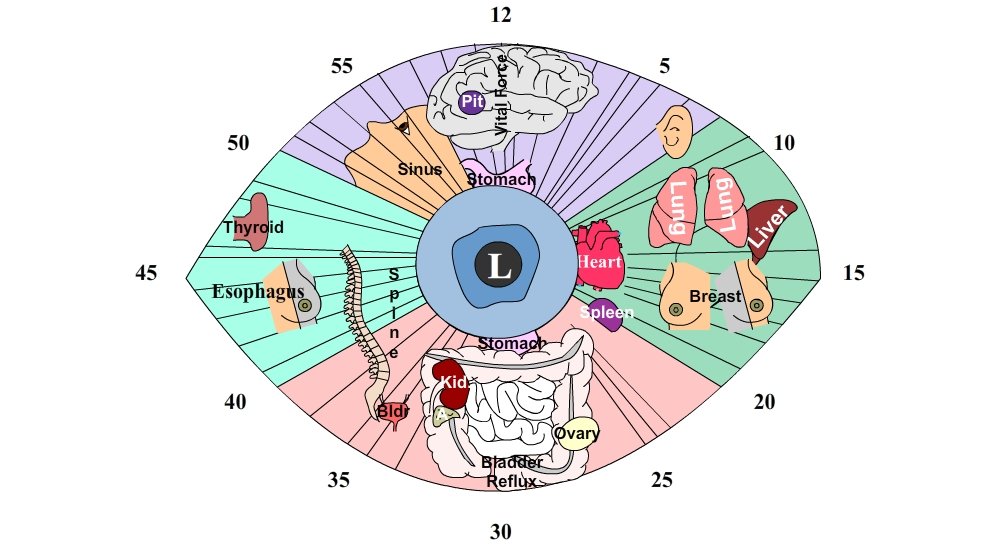
Most iridology charts use a circular clock-face design. The iris divides into 12 major sectors, similar to clock hours. Each sector subdivides further into rings moving outward from the pupil toward the iris edge.
The innermost ring represents your digestive system—the stomach occupies the area immediately surrounding the pupil. Moving outward, subsequent rings correspond to various organs, glands, and body systems. The outermost edge relates to your skin and elimination pathways.
How the Chart Divides Iris Zones
Zone mapping follows specific anatomical logic. The chart divides iris regions both radially (like pie slices) and concentrically (like tree rings). This creates a grid system where any point on the iris connects to a specific body location.
The upper iris portions generally relate to upper body structures—brain, head, neck, and chest regions. The lower iris sections correspond to lower body areas including intestines, reproductive organs, and legs. The right side body appears on the left side of each iris, and the left side body appears on the right side of each iris. This creates a mirror-image relationship.
Understanding this spatial relationship proves essential. When you examine the left eye iridology chart, remember that organs on your body’s left physical side appear toward the right edge of the left iris. This reflexive mapping pattern remains consistent across all established iridology systems.
Essential Zones in the Left Eye Iridology Map
Certain areas demand special attention when working with the iridology left eye chart. These zones provide particularly valuable information about left-sided organs and left-dominant body functions. Let me share the critical regions we emphasize in our training materials at MAIKONG.
The Heart Zone in Left Eye Mapping
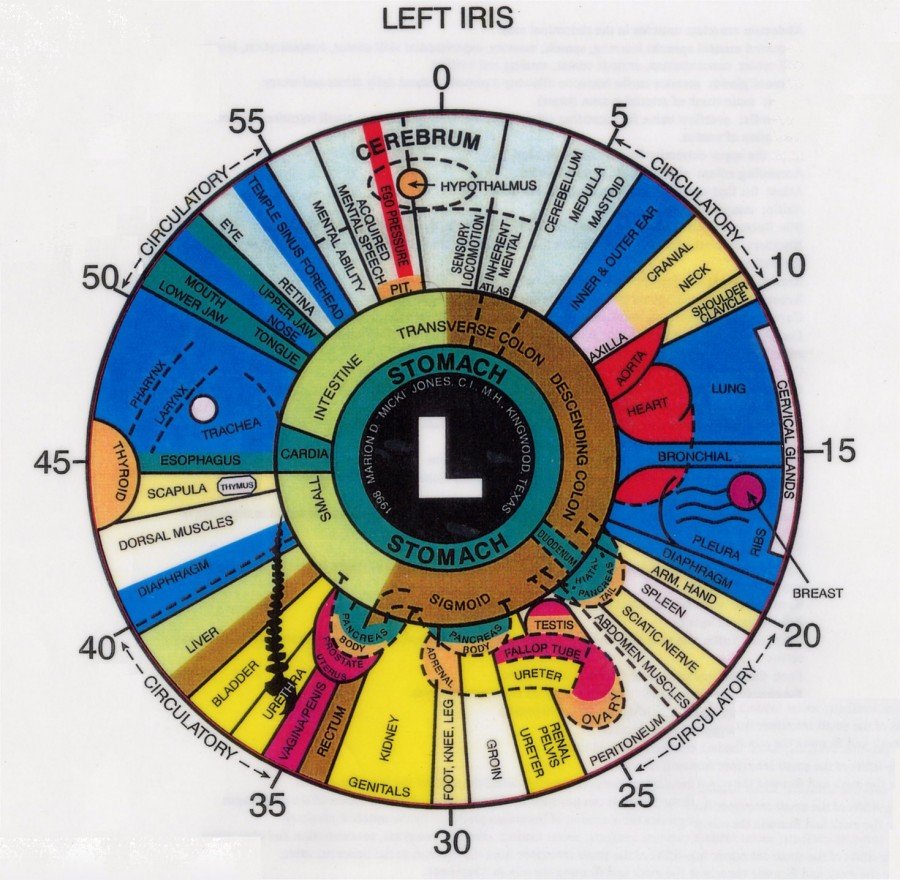
The heart area appears in the upper-left quadrant of the left iris (approximately 2-3 o’clock position when viewing the eye straight-on). This sector reveals patterns that practitioners associate with cardiovascular function. Color variations, fiber structure, and any markings within this zone receive careful examination.
Practitioners look for specific iris patterns in this region. Darkened areas, white stress rings, or unusual pigmentation may indicate stress on the cardiovascular system. However, it’s crucial to understand that iridology serves only as a traditional observation tool for wellness assessment—not medical diagnosis.
Medical Compliance Notice: Iridology charts and iris analysis serve educational and traditional wellness observation purposes only. They cannot diagnose diseases, replace professional medical examinations, or substitute for FDA-approved diagnostic tools. Always consult qualified healthcare providers for medical concerns.
Digestive System Representation
The stomach occupies the innermost ring surrounding the pupil in both eyes. In the left eye, the descending colon and left portions of the transverse colon appear along specific sectors. The small intestine zones encircle the stomach area in the second ring outward.
The digestive system receives primary focus in iridology practice. Most practitioners begin their assessment here because digestive health influences many other body systems. The iridology chart how to read guides we provide through our iridology software highlight these digestive zones prominently.
Spleen and Left Kidney Locations
The spleen zone appears in the left iris at approximately the 7 o’clock position. This area provides insights into immune function and blood health according to iridology theory. The left kidney maps to the lower portion of the left iris, typically around the 5-6 o’clock region.
Both organs play crucial roles in filtering and cleansing your body. Practitioners examine these zones for color changes, spots, or structural variations. Our best iridology camera models capture these subtle details with 12-megapixel resolution, ensuring nothing escapes notice during analysis.
Zone 11 and Special Interest Areas
Zone 11 left eye iridology jewel refers to a specific sector that some practitioners associate with particular body functions. Different iridology schools sometimes assign varying meanings to numbered zones. The Bernard Jensen system, for example, uses specific zone numbering that practitioners worldwide recognize.
When we discuss zone 11 left eye iridology jewel in our training materials, we’re referencing the lower-left quadrant region (approximately 7-8 o’clock position). This area relates to elimination pathways and certain glandular functions. Practitioners look for what appear as small markings or color variations—sometimes called “jewels” due to their appearance.
How to Read the Iridology Chart Left Eye: Step-by-Step Methods
Learning proper chart reading technique takes practice and quality tools. I’ve trained hundreds of practitioners in iridology assessment, and everyone starts with the same foundation. Let me share our systematic approach that works consistently for beginners and experienced practitioners alike.
Equipment Requirements for Accurate Analysis
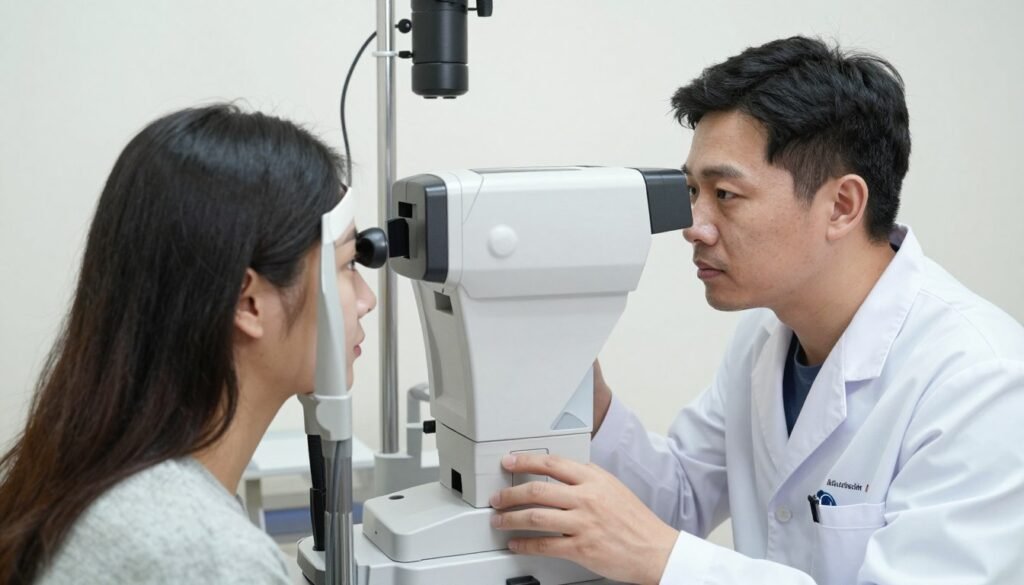
Quality imaging makes all the difference. You need excellent lighting and magnification to see iris details clearly. At MAIKONG, we manufacture professional-grade iriscope systems specifically designed for precise iris examination and documentation.
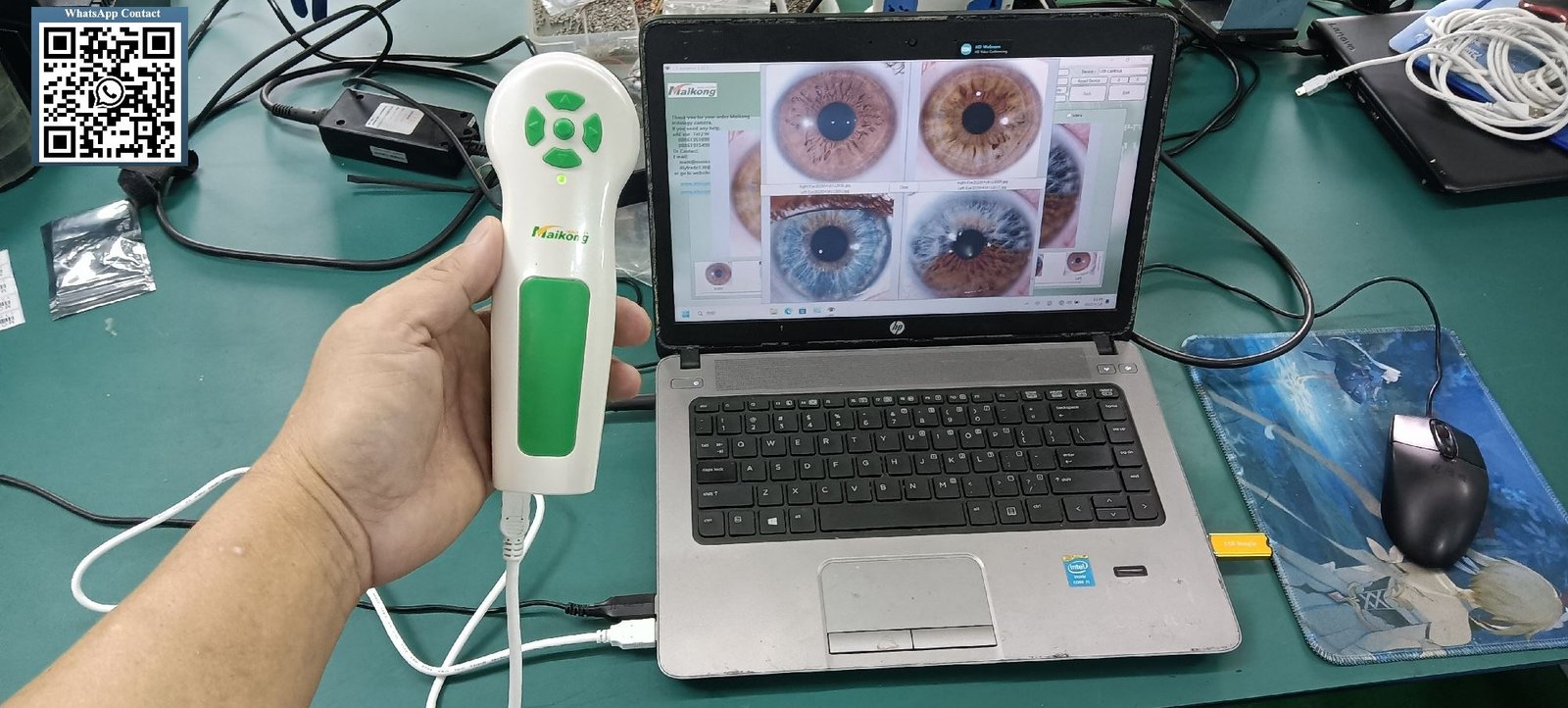
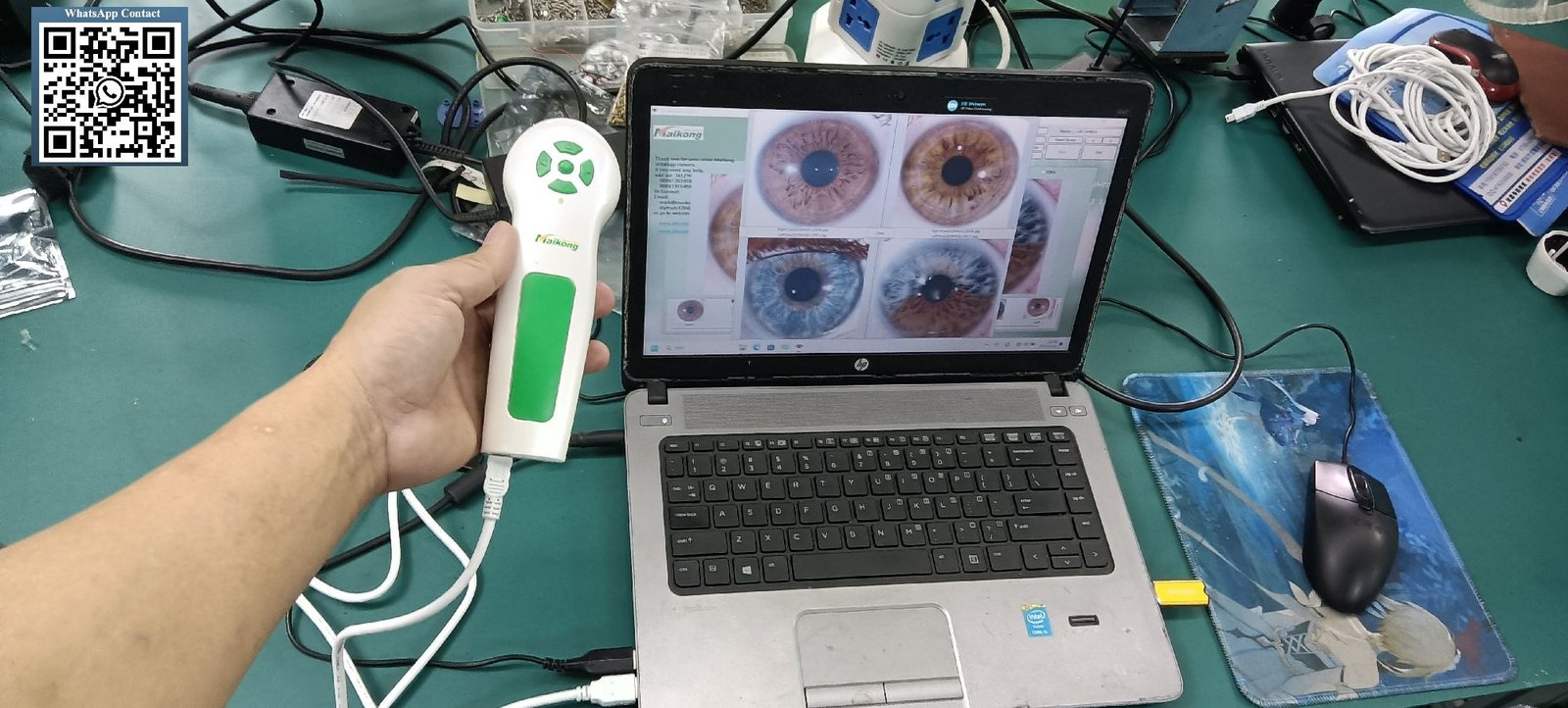
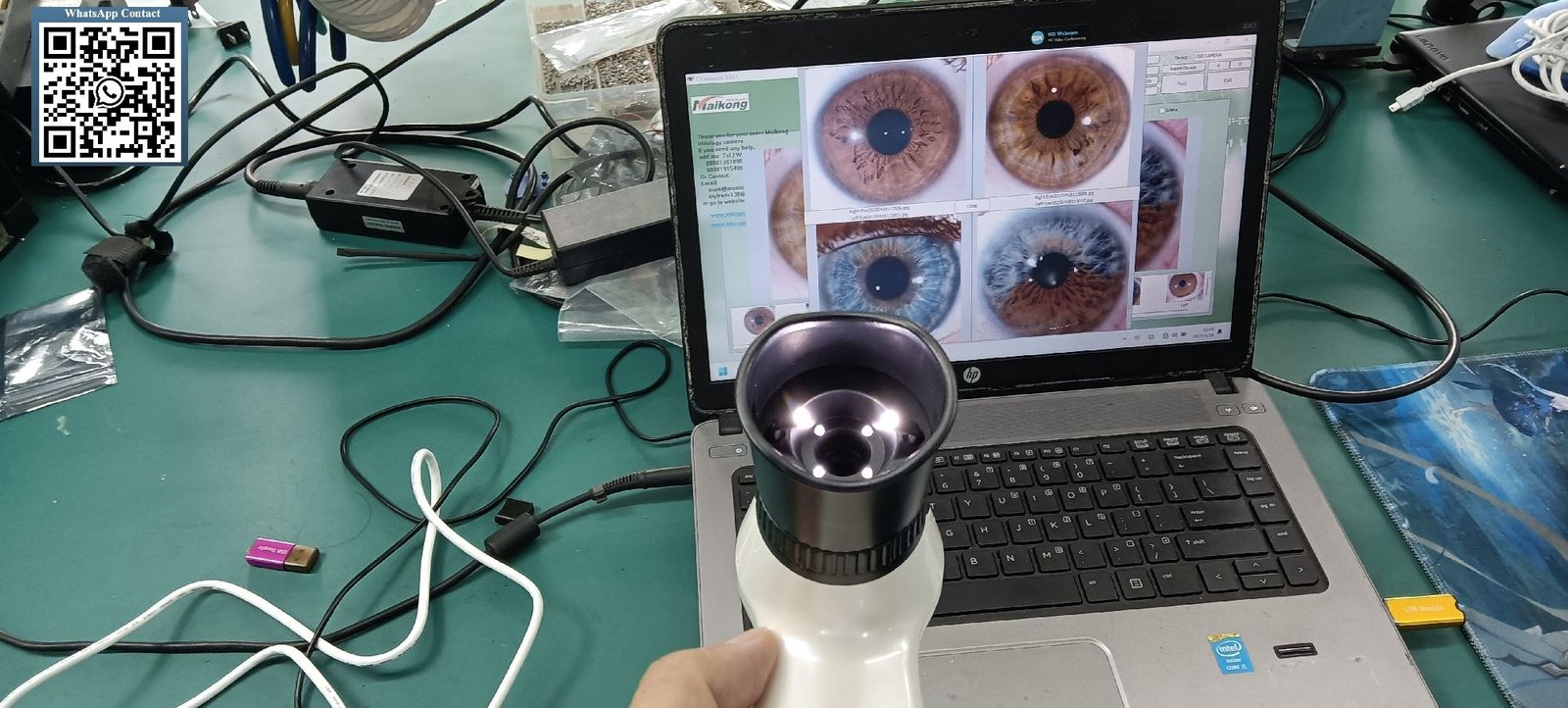
Our MK-9822U model features 12-megapixel resolution with specialized LED illumination around the lens. This setup eliminates shadows and provides even lighting across the entire iris surface. The optical image stabilizer ensures sharp, clear captures even with slight hand movements.
| MAIKONG MK-9822U Iriscope Specifications | Details |
| Image Sensor | 12.0 Megapixel CCD |
| Lens System | 30X Iris Lens + Hair Analysis Lens |
| Illumination | LED Ring Light with Adjustable Brightness |
| Focus Type | Adjustable Manual Focus |
| Connection | USB 2.0/3.0 Compatible |
| OS Support | Windows XP/7/8/10/11 (32/64-bit), macOS 10.14+ |
| Software Included | MAIKONG 2024 Analysis Suite (17 languages) |
| Warranty | 1 Year Manufacturer Warranty |
The Systematic Examination Process
Start with proper patient positioning. Ensure adequate lighting in the examination room, but dim enough that the iris camera’s illumination provides the primary light source. Position the camera approximately 2-3 inches from the eye for optimal focus with our standard 30X lens.
Capture multiple images of the left iris. Take shots from slightly different angles to ensure you haven’t missed any areas due to reflections or shadows. Our software allows you to store multiple images per client session, making comparison over time straightforward.
Begin your analysis at the pupil and work outward in concentric circles. Note the pupillary border’s condition first. Is it smooth or irregular? Are there any distortions? Then examine each ring moving toward the periphery. Compare what you observe against your iridology chart left eye reference.
Initial Assessment Checklist
- Overall iris color and tone
- Pupil size, shape, and border condition
- Autonomic nerve wreath visibility and location
- General fiber structure and density
- Presence of rings, arcs, or unusual patterns
- Color variations or pigmentation spots
- Structural irregularities or lesions
Interpreting Patterns and Colors
Color interpretation requires understanding constitutional iris types. Blue eyes show a different baseline than brown eyes. Our MAIKONG software includes automatic color analysis that adjusts for constitutional variations, helping standardize assessments across different iris colors.
Dark spots or areas often indicate what practitioners call “closed” areas where iris fibers appear more densely packed or darkened. Lighter areas or white markings might suggest what’s termed “acute” conditions or inflammation patterns. However, remember these are traditional iridology interpretations used for educational wellness observation—not medical diagnoses.
The autonomic nerve wreath (ANW) deserves special attention. This wavy ring typically appears about one-third of the distance from the pupil to the iris edge. Its shape, position, and integrity provide information about nervous system balance. Deviations from a smooth, circular ANW pattern indicate stress on specific body areas based on where the irregularity appears on the chart.
Using Digital Tools for Enhanced Analysis
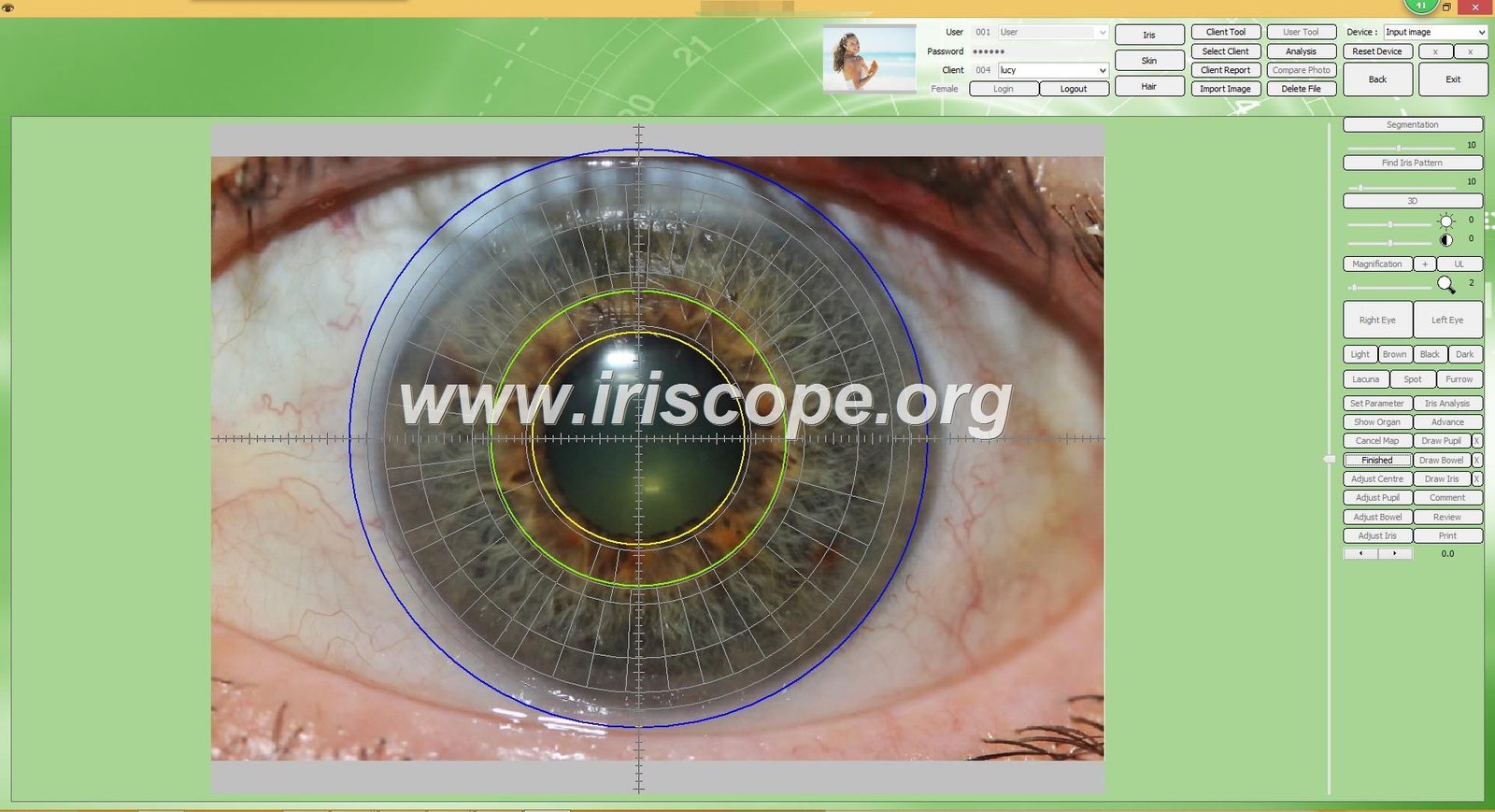
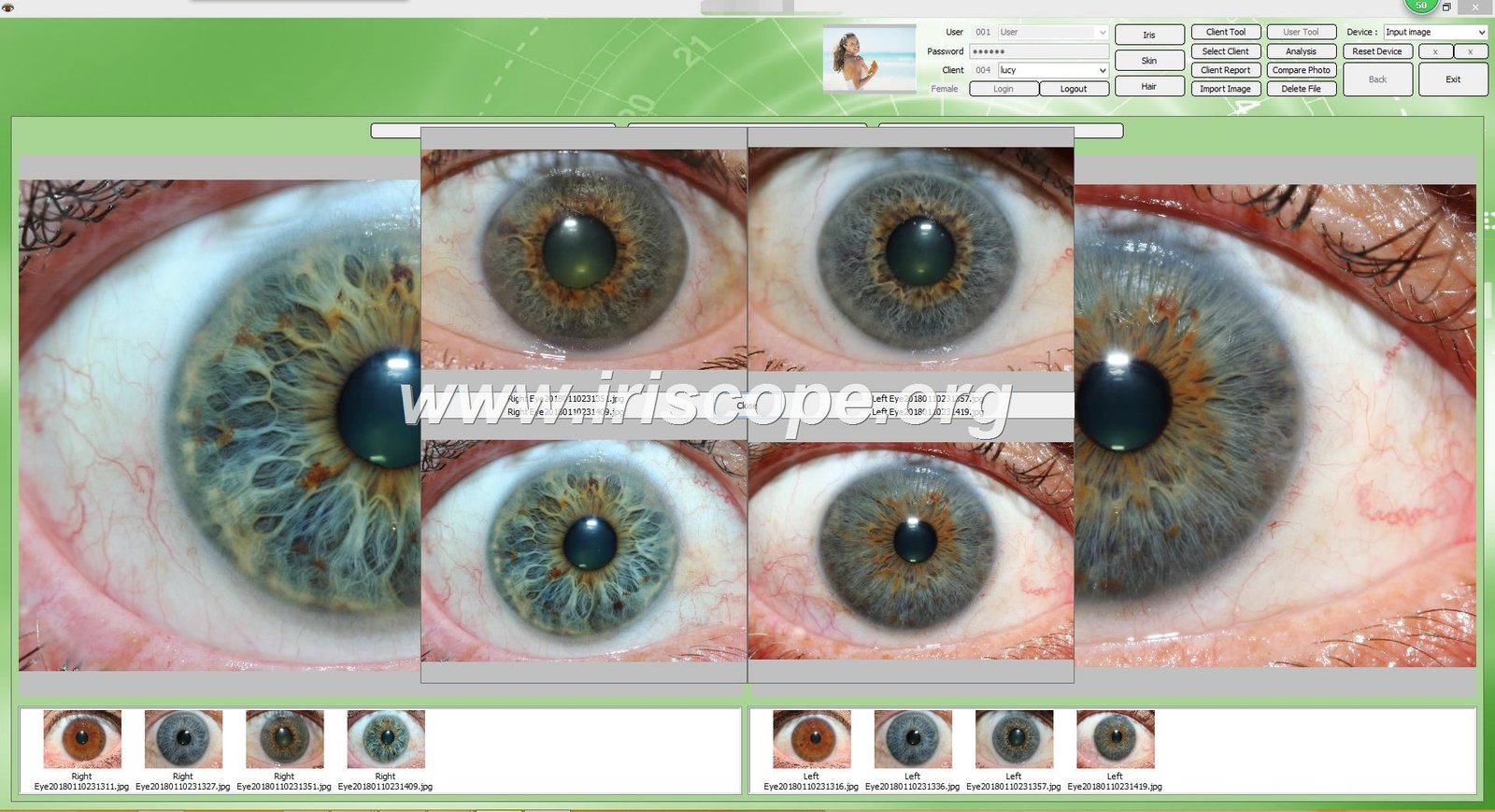
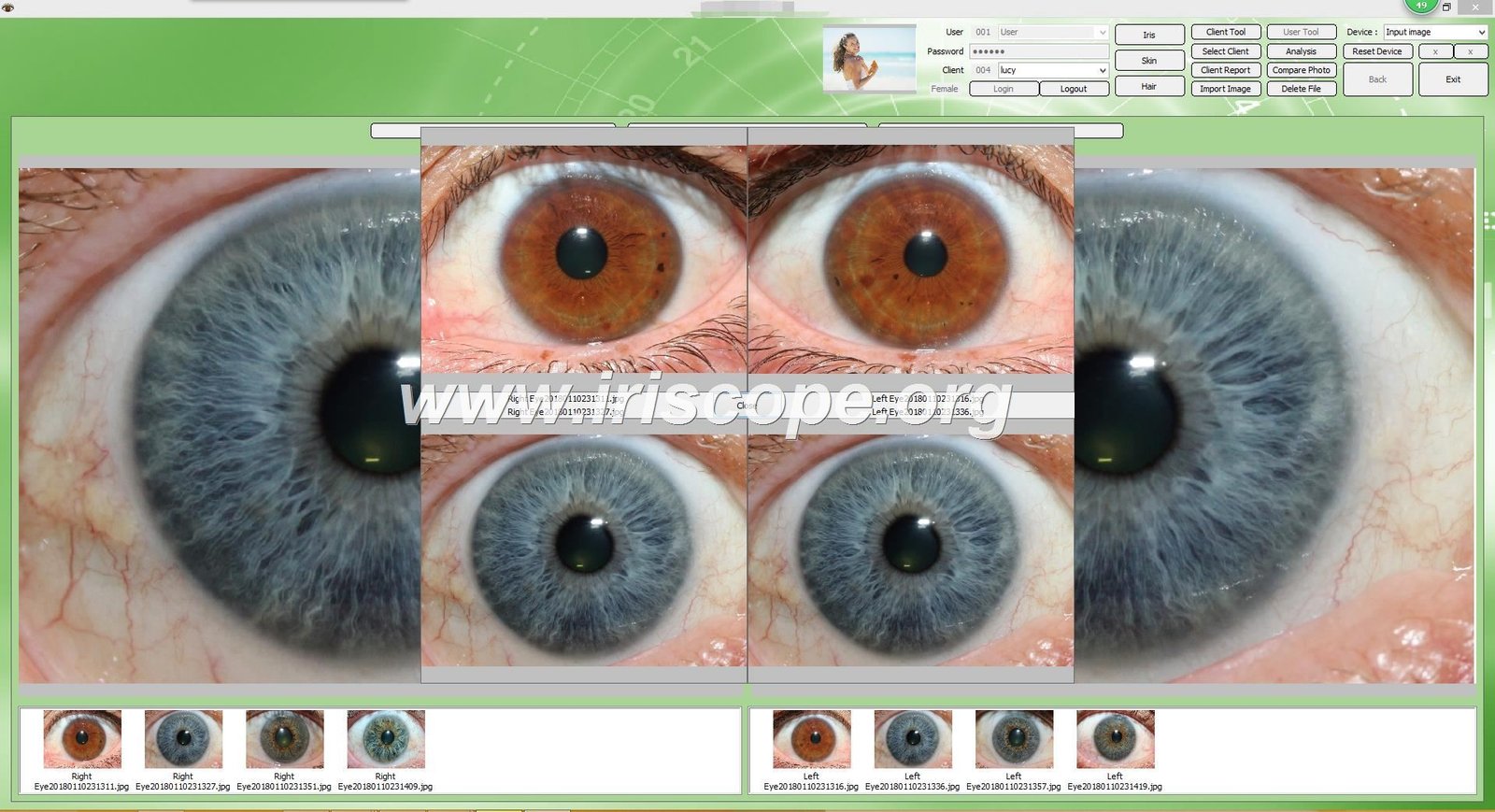
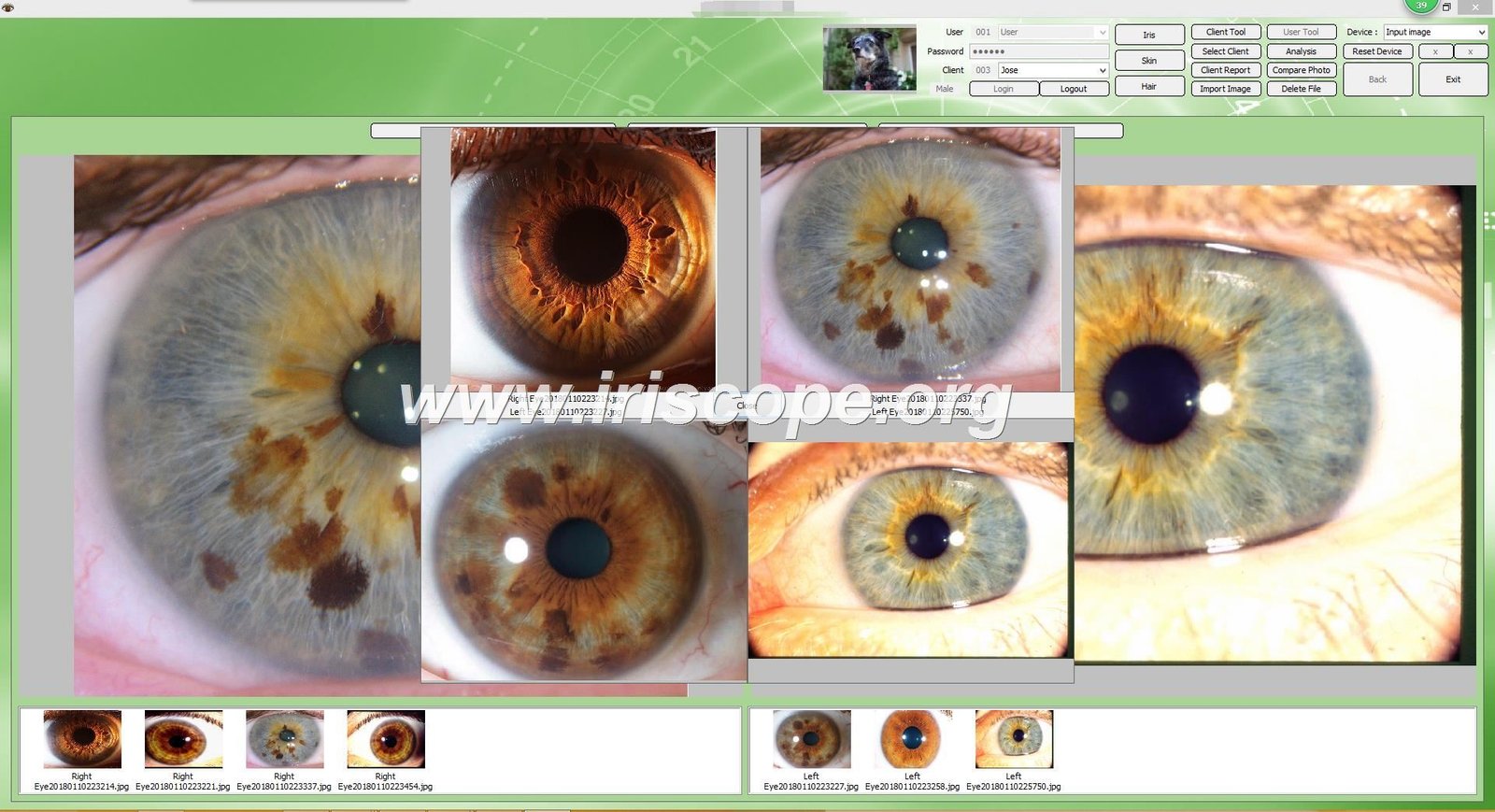
Modern iridology practice increasingly relies on sophisticated software. Our MAIKONG 2024 software suite offers AI-based automatic analysis that identifies patterns faster than manual assessment alone. The system overlays the appropriate chart (left or right eye) directly onto your captured image.
This digital overlay eliminates guesswork about zone locations. You can click any iris area, and the software immediately tells you which body system corresponds to that location according to multiple established chart systems including Bernard Jensen, European, and modern integrated models.
Experience Professional Iridology Analysis Software
Our MAIKONG 2024 software works seamlessly with Windows and macOS systems. Download includes left eye and right eye charts, automatic zone detection, client management, and detailed reporting in 17 languages. Compatible with any USB iridology camera.
The software’s comparative analysis feature proves invaluable for tracking changes over time. You can load a client’s previous left iris images alongside current captures. The system highlights any changes in color, pattern, or structure, making progress assessment objective and measurable.
Practical Applications of Left Eye Iridology Charts in Professional Settings
Theory becomes meaningful only through practical application. Let me share how practitioners in clinics, wellness centers, and training institutions worldwide use the left eye iridology map in their daily work. These real-world applications demonstrate why accurate charts and quality equipment matter so much.
Clinical Assessment Workflows
Most practitioners incorporate iridology into a broader wellness assessment approach. The left iris examination typically occurs early in the client session, providing insights that guide further questioning and evaluation. This initial screening helps practitioners identify areas warranting closer attention.
A typical workflow involves capturing both iris images, performing preliminary analysis with software assistance, then conducting detailed manual examination of notable areas. The practitioner compares findings against the client’s reported wellness concerns and health history. This integrative approach provides context for interpretation.
Our clients at naturopathic clinics report that iris analysis serves as an excellent conversation starter. When clients see their own iris magnified on screen with the iridology chart overlay, they engage more actively in discussing their health. This visual element makes abstract wellness concepts concrete and personal.
Educational and Training Uses
Iridology training institutions use standardized charts extensively. Students learn anatomy, zone locations, and pattern recognition by studying numerous iris examples against standard iridology chart printable references. Having consistent, high-quality charts ensures all students learn the same foundational system.
We supply many training schools with both hardware and educational software. Our system includes a comprehensive case study library showing various iris patterns, constitutional types, and marking examples. Students can practice identifying zones and patterns before working with actual clients.
Student Learning Benefits
- Standardized chart references for consistency
- Software overlay for zone identification practice
- Case study library with expert interpretations
- Progress tracking through repeated assessments
- Comparison tools for before/after analysis
Practitioner Training Features
- Multi-system chart comparison (Jensen, European, modern)
- AI-assisted pattern recognition guidance
- Client management and documentation systems
- Report generation with professional formatting
- Continuing education resources and updates
Integration with Other Wellness Modalities
Chiropractors, nutritionists, and functional medicine practitioners often combine iridology with their primary discipline. The left eye iridology map helps identify which body systems might benefit most from nutritional support, lifestyle modifications, or other wellness interventions.
A nutritionist might notice markings in the digestive zones of the left iris and use this observation to guide dietary recommendations. A chiropractor observing patterns in the musculoskeletal areas might adjust their treatment plan accordingly. This complementary use enhances the overall wellness strategy.
The key remains understanding iridology’s proper role—it serves as one assessment tool among many, providing insights that complement but never replace conventional medical evaluation. Our training materials and software consistently emphasize this appropriate scope of practice.
Left Eye vs Right Eye: Understanding the Mirror Relationship
The relationship between left and right eye charts confuses many beginners. Both eyes provide valuable information, but they focus on different body sides and sometimes different organ systems. Understanding this bilateral relationship strengthens your overall assessment skills.
Organ Distribution Between Eyes
The left eye iridology chart emphasizes organs predominantly on your body’s left side. The right eye focuses on right-side organs. However, some organs appear in both eyes because they span the body’s midline or have bilateral representation.
Your heart shows primary representation in the left eye due to its left-sided position in your chest. The liver appears prominently in the right eye chart. Your brain, being centrally located, has representation in both eyes but different areas—left brain hemisphere reflects in the right eye, right hemisphere in the left eye.
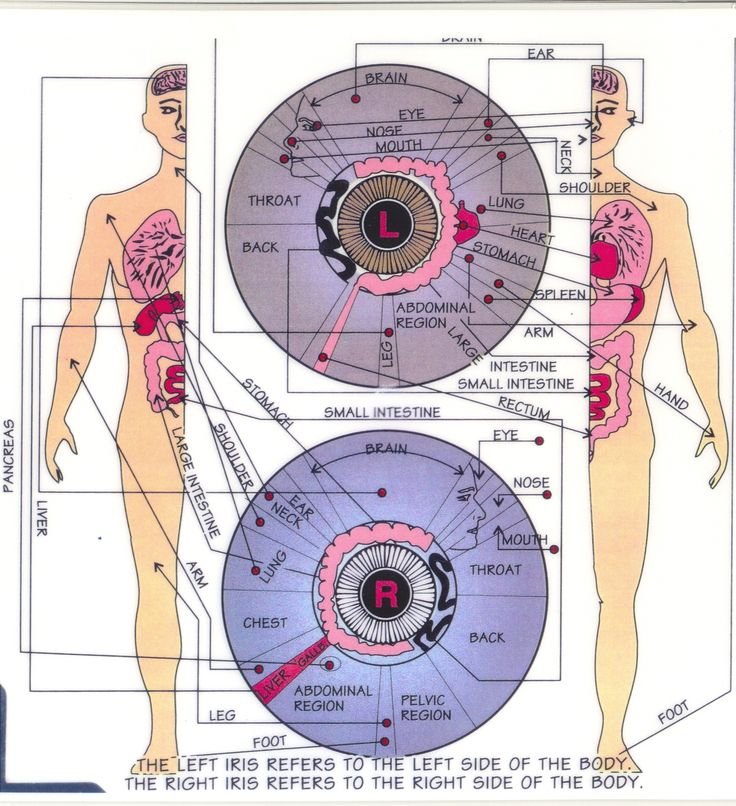
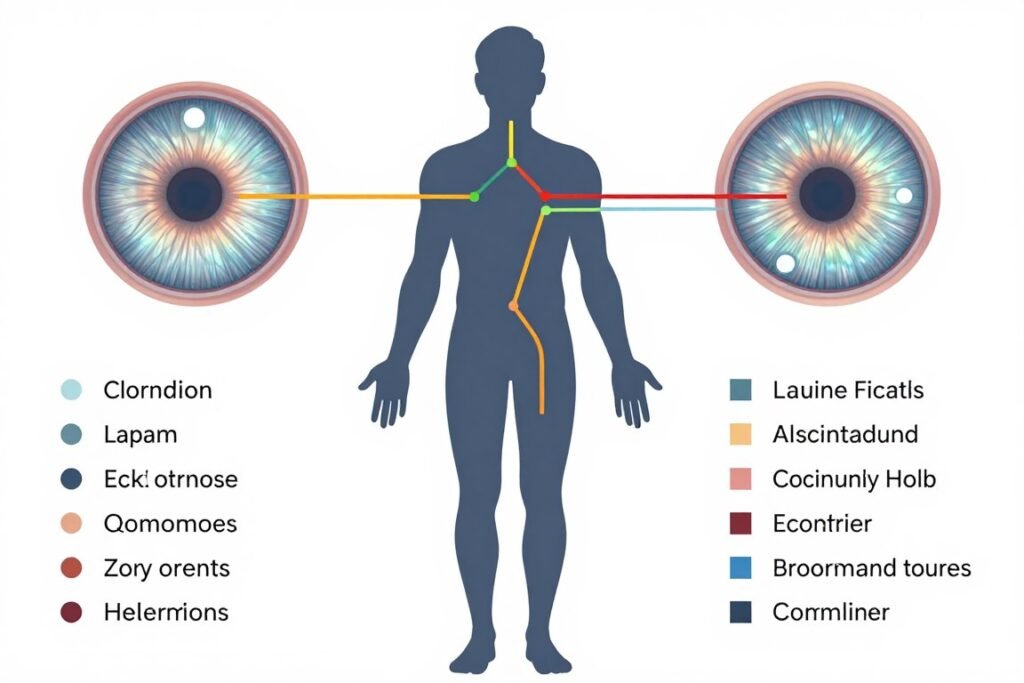
Your digestive system runs through both charts but different sections appear in each. The ascending colon shows in the right eye, the descending colon in the left eye. Your stomach and small intestine appear in both eyes’ central zones because they occupy the body’s midline.
Comparative Analysis Techniques
Examining both eyes together provides the most complete assessment. Practitioners capture and analyze both iris images during every session. The comparison reveals whether patterns appear unilaterally (one eye only) or bilaterally (both eyes), providing context for interpretation.
Unilateral findings might suggest localized issues on that body side. Bilateral patterns often indicate more systemic conditions affecting the whole body. This distinction helps practitioners understand whether observations relate to specific organs or represent broader constitutional factors.
Our software facilitates side-by-side comparison with synchronized viewing. You can examine the same zone position in both eyes simultaneously, making pattern correlation straightforward. The system can also generate comparison reports highlighting similarities and differences between eyes.
| Body System/Organ | Primary Chart Location | Reason for Placement |
| Heart | Left Eye (upper left quadrant) | Anatomically positioned on body’s left side |
| Liver | Right Eye (right side zones) | Anatomically positioned on body’s right side |
| Spleen | Left Eye (lower left region) | Located on body’s left side |
| Left Kidney | Left Eye (lower zones) | Left-side organ |
| Right Kidney | Right Eye (lower zones) | Right-side organ |
| Brain Left Hemisphere | Right Eye (upper zones) | Contralateral nerve crossing |
| Brain Right Hemisphere | Left Eye (upper zones) | Contralateral nerve crossing |
| Descending Colon | Left Eye (specific sectors) | Runs down body’s left side |
| Ascending Colon | Right Eye (specific sectors) | Runs up body’s right side |
| Stomach | Both Eyes (central pupil ring) | Central midline organ |
When to Focus on Each Eye
Client presentation often guides which eye receives primary attention. Someone reporting concerns about their left shoulder, left hip, or digestive issues affecting the descending colon would warrant detailed left iris examination. The practitioner still reviews both eyes but emphasizes the left eye iridology map in such cases.
Some practitioners prefer examining the right eye first as a standard protocol, then moving to the left. Others base their sequence on client symptoms. Either approach works provided you maintain consistency within your practice. Our software saves both images with timestamps, so examination order doesn’t affect documentation or later review.
For comprehensive wellness assessments, equal attention to both eyes remains ideal. The bilateral comparison provides the fullest picture of someone’s constitutional type, inherent tendencies, and current wellness patterns. Complete documentation supports better long-term tracking as clients return for follow-up sessions.
MAIKONG’s Advanced Technology for Professional Iridology Practice
After two decades manufacturing iridology equipment, we understand what practitioners truly need. Quality imaging, reliable software, ongoing support, and customization options separate adequate tools from professional-grade systems. Let me share what makes MAIKONG equipment the choice for serious practitioners and institutions worldwide.
Hardware Excellence and Customization
Our MK-9822U iriscope represents 20 years of refinement. The 12-megapixel CCD sensor captures iris details that lesser cameras miss. The specialized lens coating reduces glare while our proprietary LED ring illumination provides shadow-free, even lighting across the entire iris surface.
But standard equipment is only the beginning. We offer comprehensive OEM customization for clinics, distributors, and brands wanting their own specialized systems. You can customize the model designation, housing color, even the internal functionality to match your specific workflow requirements.
Hardware Customization Options
- Model designation OEM
- Housing mold and color customization
- LED brightness adjustment ranges
- Focus mechanism modifications
- Cable length and connection types
- Carrying case and accessory packages
Software Customization Options
- Custom logo and branding throughout interface
- Language additions beyond our standard 17
- Additional chart systems integration
- Your product recommendations database
- Report template customization
- Feature additions and workflow modifications
Complete System Packages
- Camera with preferred specifications
- Software with your customizations
- Professional iridology camera stand
- Protective carrying case
- Training materials in your language
- Ongoing technical support
Multi-Platform Software Leadership
We made history as the first iridology software developer to support macOS alongside Windows systems. Our 2024 version runs natively on both platforms with identical functionality. Whether you use Windows 11 or macOS Sequoia, the experience remains consistent and professional.
The software supports 17 languages currently, with more added regularly based on client demand. Every interface element, report template, and help document appears in your selected language. This localization extends to date formats, measurement units, and cultural preferences in presentation style.
| Software Feature Category | Capabilities |
| Image Capture & Management | Multi-image capture per session, automatic date/time stamping, client database with unlimited records, search and filter functions, backup and restore across devices |
| Analysis Tools | AI-based automatic pattern detection, manual markup tools, multiple chart system overlays (Jensen, European, modern), zone identification with body system information, color analysis with constitutional adjustment |
| Reporting | Customizable report templates, automatic chart integration in reports, before/after comparison reports, multi-language report generation, PDF export with practitioner branding |
| 3D Visualization | 3D iris texture analysis, negative film view for enhanced contrast, adjustable visualization parameters, side-by-side 3D comparison, enhanced detail in difficult-to-see areas |
| Product Integration | Custom product database, automatic recommendation based on findings, product information and images in reports, inventory tracking for clinic use, direct links to ordering systems |
| Educational Resources | Built-in case study library, video tutorials, chart reference guides, pattern recognition training mode, continuing education tracking |
Quality Certifications and Compliance
Our manufacturing facility in Shenzhen operates under ISO 9000 certification. Every device follows strict quality control protocols from initial design through final inspection. This systematic approach ensures consistent quality across all units whether you order one camera or one thousand.
We hold CE certification for European markets and comply with various international standards for electronic medical devices. These certifications matter especially for distributors and clinics needing compliant equipment for their regions. Documentation for regulatory purposes is available with every order.
Our 20-year track record demonstrates reliability. We’ve supplied over 1,000 OEM/ODM clients including major direct-selling health companies, nutrition brands, training institutions, and clinic networks. This extensive experience means we understand diverse market requirements and can adapt our solutions accordingly.
Practical Steps to Implement Left Eye Iridology Charts in Your Practice
Understanding theory is one thing. Implementing practical iridology analysis requires the right equipment, training, and workflows. Whether you’re just starting or upgrading your current system, following a structured implementation process ensures success.
Choosing the Right Equipment Package
Start by assessing your needs. Solo practitioners require different equipment than multi-practitioner clinics or training institutions. Volume, portability requirements, and integration with existing systems all factor into the best equipment choice.
For individual practitioners, our standard MK-9822U USB iridology camera package provides everything needed. It includes the camera, 30X iris lens, protective case, USB cable, and full software license. The compact design allows easy transport between locations if you work at multiple sites.
Clinics with multiple rooms benefit from multi-station licenses and additional camera units. Our volume pricing makes equipping an entire clinic affordable. We also offer flexible software licensing that allows installation on multiple computers while maintaining centralized client database access.
Training institutions require special consideration. You need enough equipment for hands-on student practice plus demonstration systems for classroom instruction. We provide educational institution packages with multiple units, extended software licenses, and comprehensive teaching materials including case study libraries.
Training and Skill Development Resources
Equipment alone doesn’t make an effective practitioner. Proper training in both technique and interpretation forms the foundation of valuable iridology practice. We provide multiple learning pathways to support skill development at every level.
Our software includes built-in tutorials covering basic camera operation, image capture technique, chart navigation, and fundamental pattern recognition. These self-paced modules allow new users to gain confidence before working with clients.
We also maintain an online video library accessible to all registered users. These videos cover advanced topics like comparing constitutional types, tracking changes over time, and integrating iridology with other wellness modalities. New content appears regularly based on user questions and industry developments.
Essential Training Topics
- Equipment Operation: Camera handling, focus adjustment, lighting optimization, capturing quality images consistently
- Chart Fundamentals: Understanding zone systems, left vs right eye differences, organ correspondences, mirror-image relationships
- Pattern Recognition: Identifying fiber structures, color variations, markings, constitutional types, acute vs chronic indicators
- Software Proficiency: Database management, report generation, comparative analysis, customization options, backup procedures
- Client Communication: Explaining findings appropriately, maintaining proper scope, recommending next steps, documentation standards
- Practice Integration: Workflow development, time management, combining with other modalities, building client trust through consistent practice
Building Your Practice Systems
Successful integration requires thinking beyond just the equipment. You need client communication strategies, documentation protocols, report templates, and follow-up procedures. These systems separate hobbyist practice from professional operation.
Start with standardized intake forms that gather relevant health history before iris examination. This context helps interpretation and provides comparison points for discussing findings. Our software includes customizable intake form templates you can modify for your specific practice style.
Develop consistent reporting formats. Clients appreciate professional-looking reports that explain findings clearly without overwhelming them with technical jargon. The MAIKONG software offers multiple report templates ranging from simple one-page summaries to comprehensive multi-page detailed analyses.
Create a schedule for follow-up assessments. Tracking changes over time provides the most valuable information to clients. Many practitioners recommend initial assessment, then follow-up at 3 months, 6 months, and yearly thereafter. Our software’s comparison features make documenting progress straightforward and visually compelling.
Frequently Asked Questions About Left Eye Iridology Charts
What’s the difference between left eye and right eye iridology charts?
The left eye iridology chart maps organs and systems predominantly on the body’s left side, including the heart, spleen, left kidney, left lung, and descending colon. The right eye chart focuses on right-side organs like the liver, gallbladder, right kidney, and ascending colon. Some organs appear in both eyes because they’re centrally located or have bilateral representation. The brain’s hemispheres show contralaterally—left brain in right eye, right brain in left eye. Using both charts together provides the most complete assessment of body systems and wellness patterns.
Can iridology diagnose diseases or replace medical examinations?
No, absolutely not. Iridology serves only as a traditional wellness observation tool for educational purposes. It cannot diagnose diseases, is not FDA-approved for medical diagnosis, and cannot replace professional medical examinations. Practitioners use iridology to assess wellness patterns and identify areas that might benefit from lifestyle support, but any health concerns require proper medical evaluation by qualified healthcare providers. We emphasize this limitation in all our training materials and software to ensure appropriate scope of practice.
What equipment do I need to read left eye iridology charts effectively?
Professional iridology practice requires a high-resolution camera (minimum 10-12 megapixels), specialized iris lens with appropriate magnification (typically 30X), even LED illumination, and analysis software with accurate chart overlays. The MAIKONG MK-9822U system includes all these components—12MP camera, 30X lens, LED ring light, and comprehensive software supporting both Windows and macOS. Quality imaging is essential because subtle iris details significantly affect interpretation accuracy. Lesser equipment may miss important patterns or introduce distortions that lead to incorrect assessments.
How long does it take to learn iridology chart reading?
Basic competency typically requires 40-80 hours of focused study and practice with supervised feedback. You’ll learn zone locations, basic pattern recognition, and proper imaging technique relatively quickly. However, developing advanced interpretation skills that recognize subtle variations and constitutional differences takes years of regular practice. Most practitioners continue learning throughout their careers as they encounter diverse iris presentations. Our software accelerates the learning curve through AI-assisted pattern identification and extensive case study libraries that let you practice recognition skills with expert feedback.
What does zone 11 left eye iridology jewel mean?
Zone 11 in the left eye iridology chart (approximately 7-8 o’clock position) relates to elimination pathways and certain glandular functions according to various iridology systems. The term “jewel” refers to small markings or color variations that appear gem-like in that region. Different iridology schools assign somewhat varying meanings to numbered zones, so interpretation depends on which system your training follows. The Bernard Jensen chart remains most widely recognized, but European and modern integrated systems sometimes use different zone numbering or emphasis.
Are printable iridology charts as effective as digital overlays?
Printed charts work for initial learning and quick reference, but digital overlays provide superior accuracy during actual client assessments. Our software projects the appropriate chart directly onto the captured iris image with perfect alignment, eliminating positioning errors. You can zoom, adjust transparency, and switch between multiple chart systems instantly. However, we recommend keeping printable charts available as backup and for client education—people often find physical charts easier to understand when you’re explaining findings.
How often should iris examinations be repeated?
Initial baseline documentation followed by reassessment after 3-6 months provides the most useful comparison. The iris changes slowly, so examinations more frequent than quarterly rarely show significant differences. Many practitioners follow a schedule of initial assessment, 3-month follow-up, then 6-month and yearly intervals afterward. This timing allows changes to become visible while maintaining regular client contact. Our software’s comparison features make tracking these changes straightforward, highlighting any differences between sessions automatically.
Can I use MAIKONG equipment with other iridology software?
Yes, our cameras function as standard USB video devices compatible with any software that accepts webcam or USB camera input. However, you’ll miss the integrated features designed specifically for our hardware-software ecosystem—automatic chart overlay alignment, AI pattern recognition, synchronized database management, and optimized image processing. Most practitioners find the MAIKONG software superior to alternatives due to its comprehensive features, regular updates, and multi-language support. We offer free trials so you can evaluate functionality before committing.
What customization options does MAIKONG offer for distributors?
We provide extensive OEM/ODM customization for distributors, agents, and brands. Hardware options include custom model designations, housing colors, molding modifications, and functional adjustments. Software customization includes your logo throughout the interface, additional language support, custom chart systems, integrated product recommendations from your catalog, modified report templates, and feature additions specific to your market. Minimum order quantities vary by customization complexity. We’ve successfully partnered with over 1,000 OEM clients worldwide, supporting their market entry and growth with flexible, competitive solutions.
What’s included in MAIKONG’s warranty and support?
Every MAIKONG iriscope includes a one-year manufacturer warranty covering material and workmanship defects. Software licenses include lifetime updates and access to our technical support team. We maintain warehouses in both China and the United States for faster shipping and service. Technical support responds within 24 hours to inquiries via email, WhatsApp, or phone. We also provide free online training resources, video tutorials, and regular webinars covering new features and advanced techniques. Distributors receive additional support including marketing materials, product training, and priority technical assistance.
Your Path Forward with Professional Iridology Practice
Mastering the left eye iridology chart opens remarkable insights into wellness assessment. The systematic approach, combined with quality equipment and comprehensive training, transforms how you serve clients and understand body systems. Whether you’re starting fresh or upgrading your current practice, the foundation remains consistent—accurate charts, reliable imaging, and ongoing skill development.
The iris patterns tell stories that unfold gradually. Each client’s unique presentation teaches you something new. This continuous learning makes iridology practice both challenging and rewarding for those committed to excellence in natural wellness support.
Technology continues advancing our field. The AI-assisted analysis, 3D visualization, and comprehensive database management available today would have seemed impossible just a decade ago. We’re committed to staying at the forefront of these developments, continuously improving our hardware and software to serve practitioners better.
Your success matters to us. When you succeed with your clients, when your practice grows, when you become the trusted wellness resource in your community—that’s what drives our innovation and support efforts. We’re not just equipment manufacturers; we’re partners in your professional development and practice success.
Become a MAIKONG Partner or Distributor
We’re actively seeking agents, distributors, and partners throughout the United States and globally. As a MAIKONG partner, you’ll receive competitive wholesale pricing, comprehensive marketing support, technical training, and access to our full customization capabilities. Whether you’re an established medical equipment distributor, a wellness center looking to offer equipment to your practitioners, or an entrepreneur entering the health device market, we provide the support and products you need to succeed.
Our 20 years of manufacturing experience, ISO 9000 certified production facility, extensive OEM/ODM capabilities, and proven track record with 1,000+ partners worldwide make MAIKONG the reliable choice for your business. We maintain inventory in both China and US warehouses for fast fulfillment and support.
Direct Contact: WhatsApp +86 135 1090 7401
Email: Lucy@myiridology.us
The journey from understanding your first iridology chart to confidently assessing complex iris presentations takes time, patience, and the right tools. With MAIKONG equipment in your hands, comprehensive training resources at your fingertips, and our support team behind you, that journey becomes smoother and more rewarding. We look forward to supporting your success in professional iridology practice.