
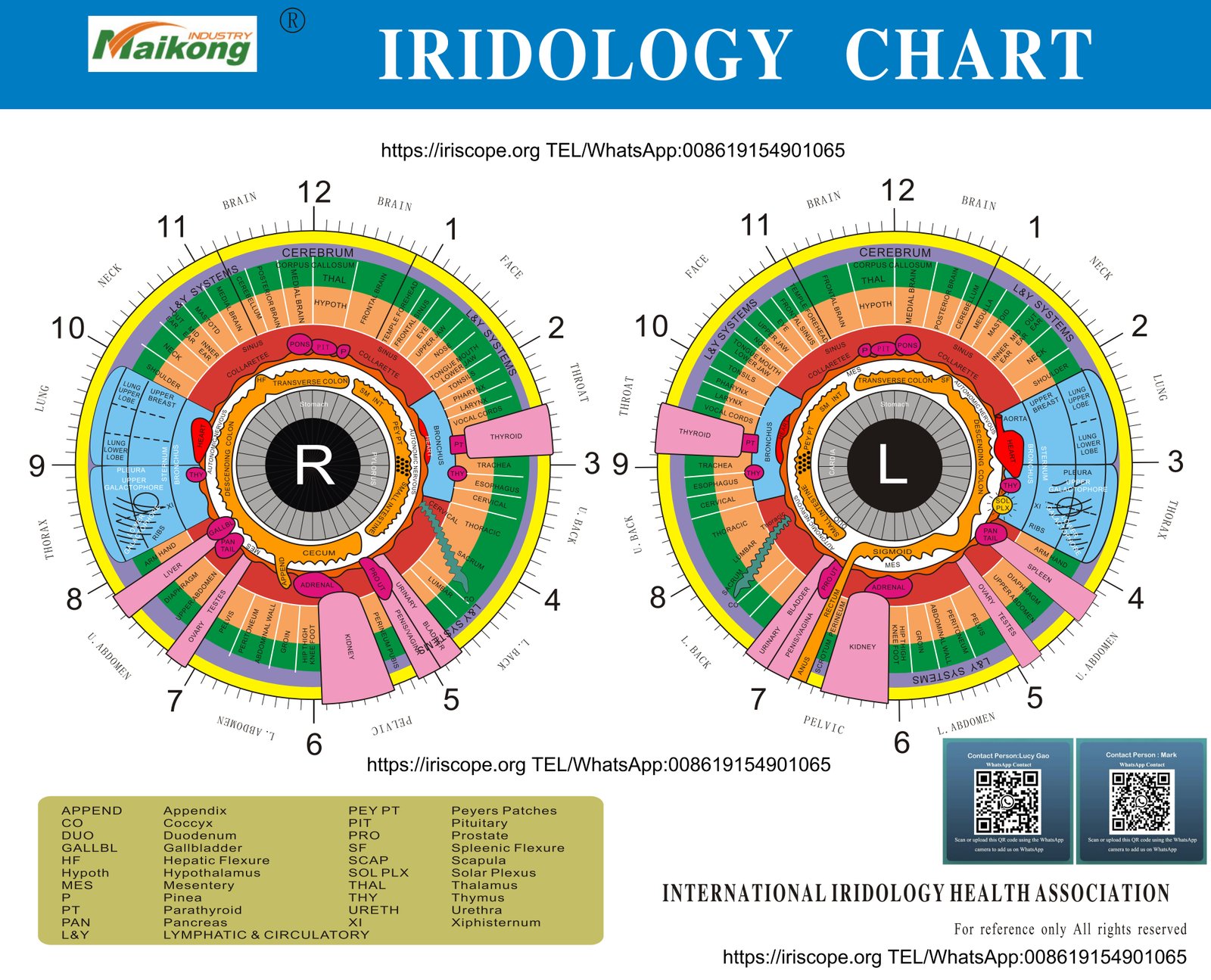
 An iridology chart is a visual reference tool that divides the iris into specific zones. Each zone corresponds to different organs, body systems, and tissues according to traditional iridology principles. Think of it as a roadmap where different sections of your iris relate to different parts of your body.This guide will walk you through everything you need to know about iridology charts. You’ll learn about different chart types, how to read zone divisions, the differences between left and right eye maps, and how modern practitioners integrate these charts with digital analysis systems.
What Is an Iridology Chart and Why Do Practitioners Use It?
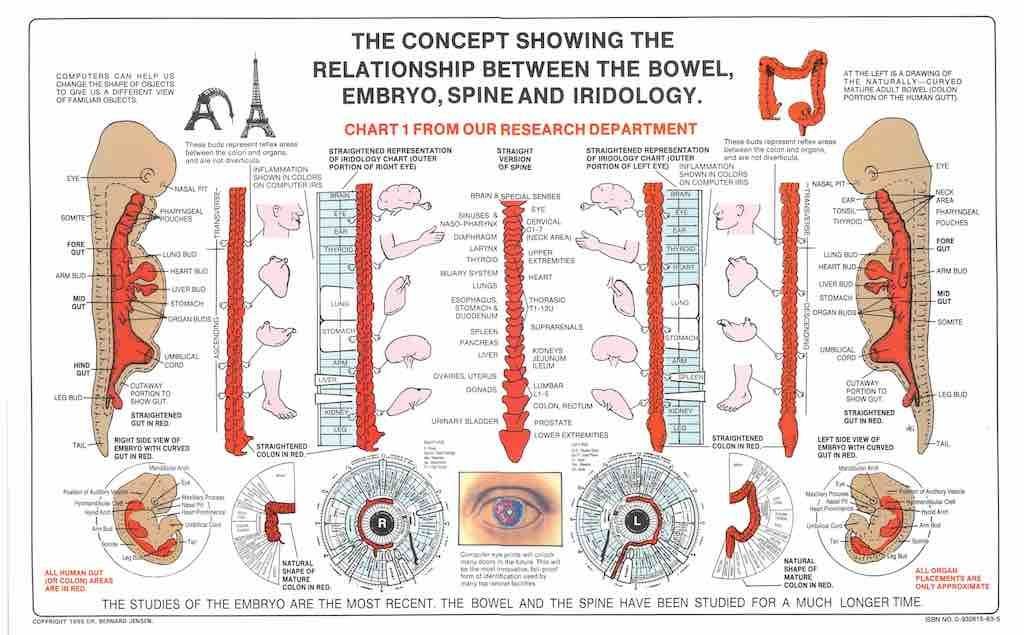
The iridology chart serves as the foundational reference in traditional iris analysis. It represents a systematic mapping developed over decades of observation by practitioners who study patterns, colors, and structures in the iris.
Most charts display the iris as a circle divided into sections. These sections radiate outward from the pupil to the outer iris edge. Each segment corresponds to specific body regions based on traditional iridology theory established by pioneers like Ignaz von Peczely in the 1800s.
Practitioners use these charts during client consultations. They compare what they observe in a person’s iris to the zones marked on the chart. The iris chart iridology approach provides a consistent framework for noting iris characteristics across different clients and time periods.
I’ve worked with clinics and wellness centers across the United States. They tell me charts help them communicate observations to clients in a visual way. When someone can see which iris zone relates to which body area, educational discussions become much more engaging.
Traditional Chart Applications
- Student training and iridology education programs
- Client consultations in natural health practices
- Reference during iris photography sessions
- Teaching materials for wellness workshops
- Documentation in client health records
Modern Digital Chart Uses
- Integrated display in iridology software systems
- Overlay comparison with captured iris images
- Interactive zone selection for detailed analysis
- Multi-language chart versions for international practice
- Customizable templates for specialized practices
It’s important to note that iridology charts are used for traditional observational practice and educational purposes. They are not diagnostic tools in the medical sense. The information serves as a reference framework within the practice of iridology, which is considered an alternative observation method.
Different Types of Iridology Charts: Finding the Right Map for Your Practice
Not all iridology charts look identical. Over the years, different schools of thought have developed distinct mapping approaches. Understanding these variations helps you choose the most appropriate chart for your specific needs.
Bernard Jensen Iridology Chart
The Bernard Jensen iridology chart is perhaps the most recognized in North America. Dr. Bernard Jensen refined this chart through decades of practice. His map emphasizes specific organ placements and includes detailed zone subdivisions.
I’ve noticed that training institutions teaching American-style iridology typically start students with Jensen’s chart. It offers clear delineation of body systems and has stood the test of time in practice settings.
European and Holistic Iridology Charts
European practitioners often use holistic iridology charts that incorporate slightly different zone interpretations. These maps may show variations in organ placement or include additional constitutional type indicators.
The holistic approach tends to view the iris more in terms of overall constitution and tendency patterns rather than specific organ correlation alone. Some practitioners prefer this broader interpretive framework.
Specialized Chart Variations
| Chart Type | Primary Focus | Common Applications | Geographic Origin |
| Bernard Jensen Chart | Organ-specific zones with detailed subdivisions | Clinical practice, student training, North American schools | United States |
| German Holistic Chart | Constitutional types and system relationships | European natural therapy, integrative wellness centers | Germany |
| Russian Chart | Neurological and reflex zone emphasis | Eastern European practice, research institutions | Russia |
| Chinese Iridology Chart | Integration with Traditional Chinese Medicine principles | TCM clinics, Asian wellness practices | China |
| Simplified Educational Chart | Basic zone overview for beginners | Introductory courses, public education | International |
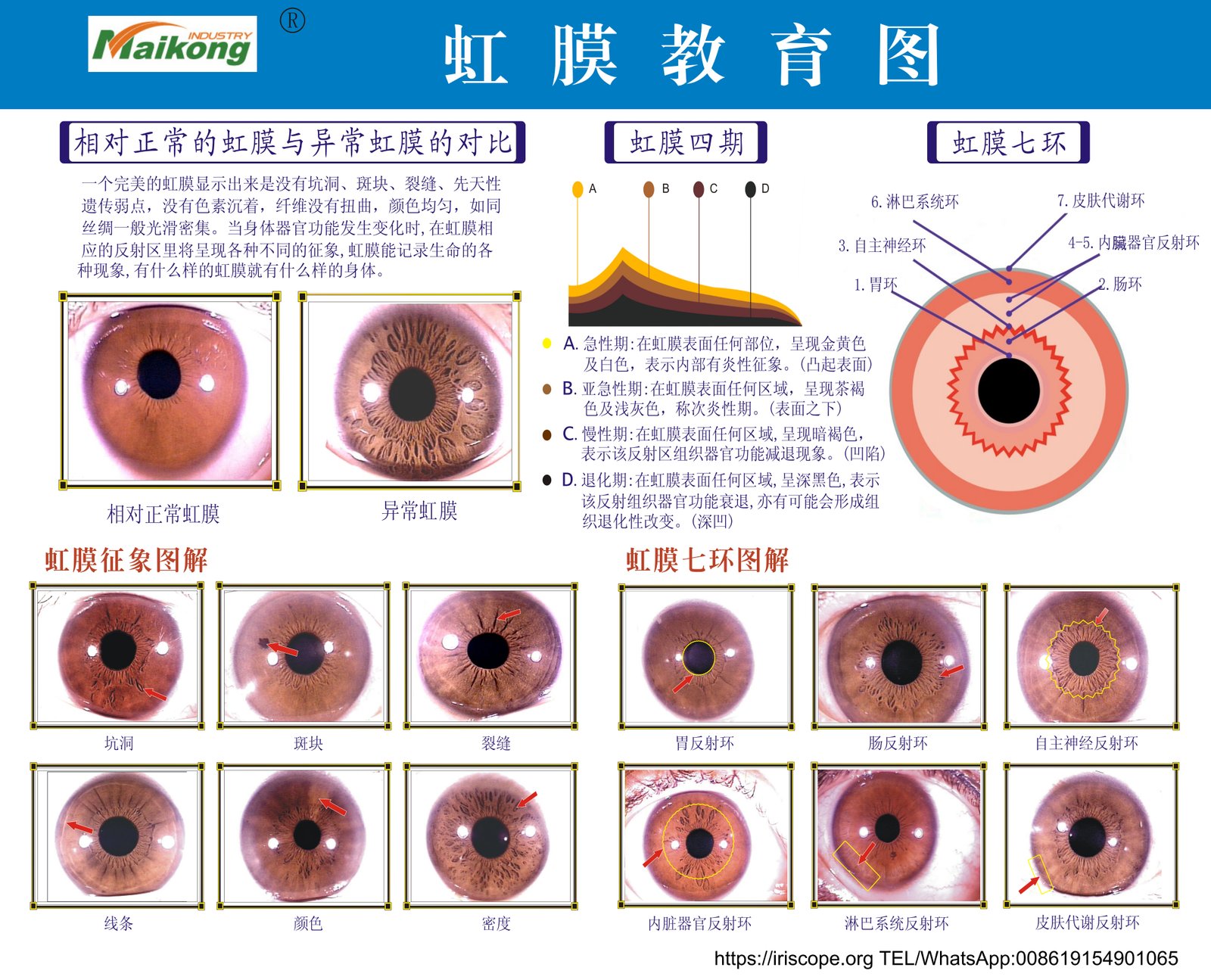
The chinese iridology chart represents an interesting fusion. It attempts to correlate traditional iris zones with concepts from Traditional Chinese Medicine such as meridians and energy flow. Some practitioners working in integrative settings find this approach valuable.
Professional iridology software systems, such as MAIKONG’s MK-2024 platform, typically include multiple chart formats. This allows practitioners to switch between Bernard Jensen maps, holistic charts, and specialized variations depending on their training background and client needs.
Left Eye vs Right Eye: Understanding the Iridology Map Differences
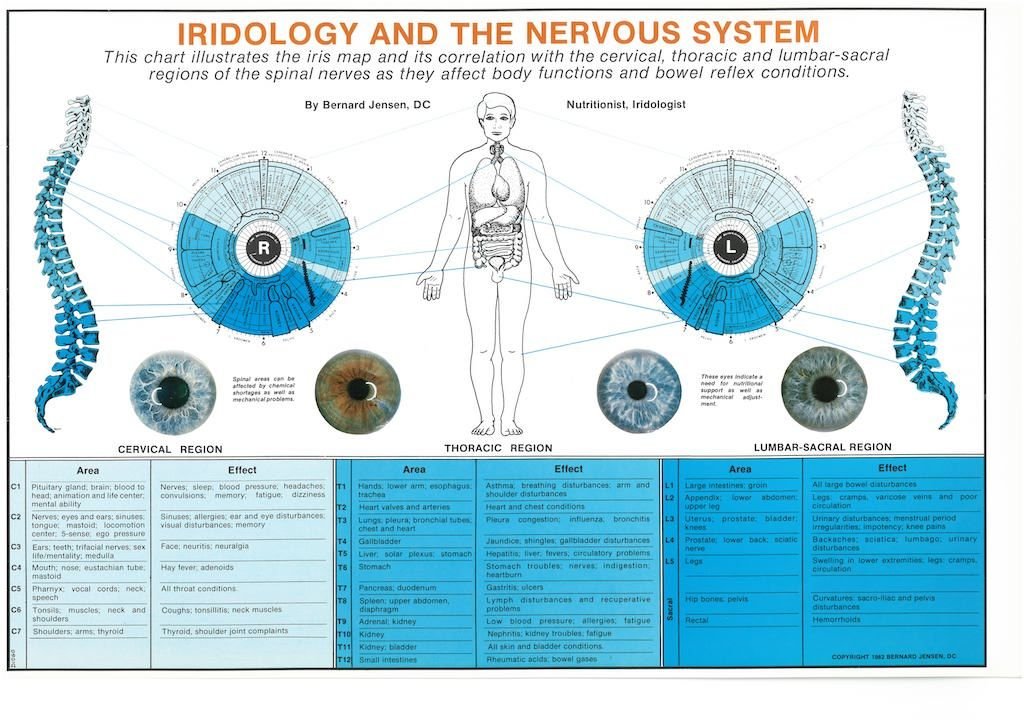
One question I hear constantly from students is: “Why do we need separate charts for each eye?” The answer lies in the fundamental principle of body-side correlation in iridology.
The left eye iridology chart corresponds primarily to the left side of the body. Similarly, the iridology chart right eye maps to the right body side. This creates a mirrored relationship between the two eyes.
How Body Sides Map to Each Eye
According to traditional iridology theory, certain organs appear in both eyes because we have them on both sides. Examples include lungs, kidneys, and adrenal glands. Other organs that exist only on one body side appear only in the corresponding iris.
For instance, the heart typically appears in the left eye chart around the 2-3 o’clock position. The liver shows up in the right eye chart around the 7-8 o’clock zone. The stomach usually appears in both eyes since it occupies a central position in the body.
Left Eye Predominant Zones
- Heart (upper left quadrant)
- Spleen (lower left area)
- Left lung (upper outer section)
- Left kidney (mid-lower section)
- Descending colon (lower zones)
Right Eye Predominant Zones
- Liver (upper right quadrant)
- Gallbladder (adjacent to liver zone)
- Right lung (upper outer section)
- Right kidney (mid-lower section)
- Ascending colon (lower zones)
- Appendix area (lower right)
When I work with practitioners setting up their consultation spaces, I always recommend displaying both eye charts. This helps during client education sessions. Clients can see why the practitioner examines both eyes and how information from each iris contributes to the complete observation.

Modern iridology camera systems capture images of both irises separately. The software then displays the appropriate chart overlay for each eye. This technological integration makes the side-specific correlation immediately visible during analysis sessions.
Iridology Chart Zone Divisions: The Clock Method and Ring System
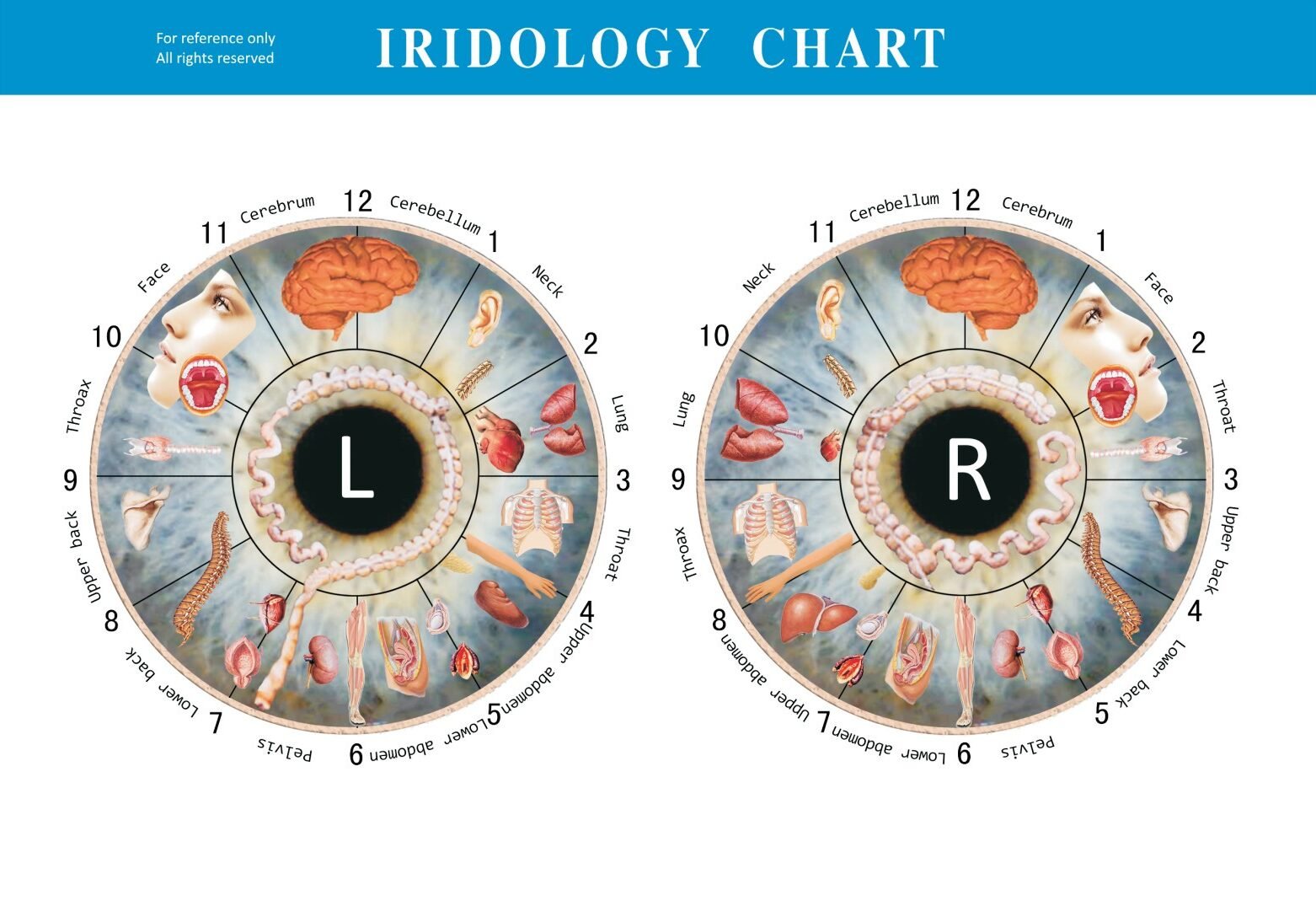
Understanding how zones are organized on an iridology map is essential for effective chart reading. Two primary systems divide the iris: the clock-position method and the concentric ring approach.
Clock Position Method
The iris circle is divided like a clock face into 12 sections. Practitioners describe locations using time positions. “The marking appears at 3 o’clock in the right iris” immediately tells another practitioner exactly where to look.
This eye map iridology approach creates 12 pie-shaped sections radiating from the pupil. Each section spans 30 degrees of the iris circle. Organ zones may occupy one or more of these sections depending on their size on the chart.
Concentric Ring Divisions

Moving outward from the pupil, traditional iridology charts identify several rings:
- Pupillary Zone: The innermost ring immediately surrounding the pupil. This area relates to digestive system organs in many chart interpretations.
- Collarette: A slightly elevated ring that circles the iris partway out from the pupil. It serves as an important anatomical landmark dividing inner and outer zones.
- Ciliary Zone: The broader middle region between collarette and iris periphery. Most organ zones occupy space in this area.
- Peripheral Zone: The outermost ring near the iris edge. This zone often relates to skin, circulation, and elimination systems in traditional charts.
The combination of clock positions and ring levels creates a grid reference system. A practitioner might note “a marking in the right eye at 8 o’clock in the ciliary zone.” This pinpoints an exact location that corresponds to a specific body area on the chart.
Educational Note: The iridology diagram zone system is based on traditional observational practices developed over many years. Different chart versions may show slight variations in exact zone boundaries. Practitioners typically learn one primary chart system thoroughly before exploring alternative mapping approaches.
How to Read an Iridology Chart: Step-by-Step Guide
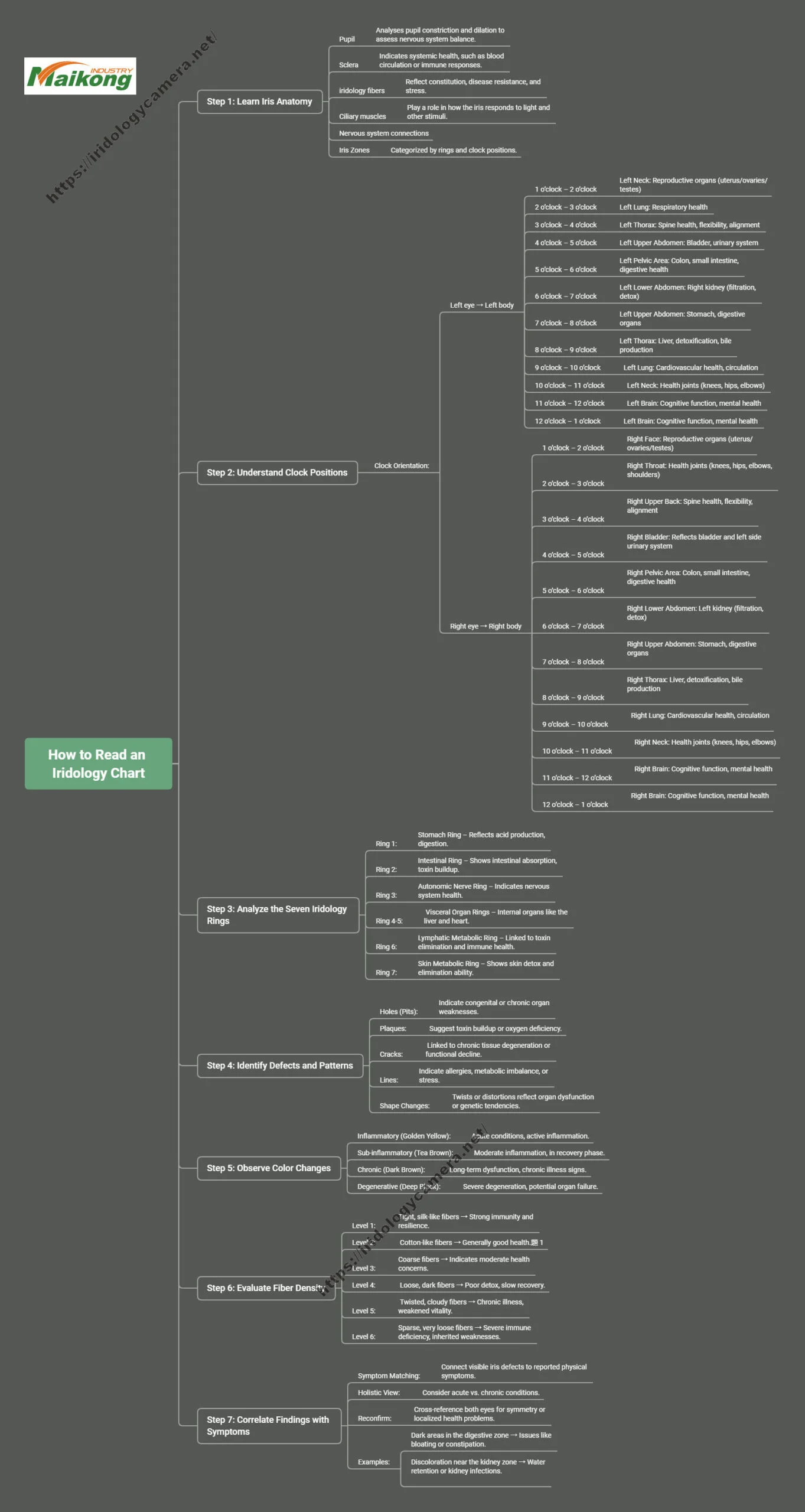
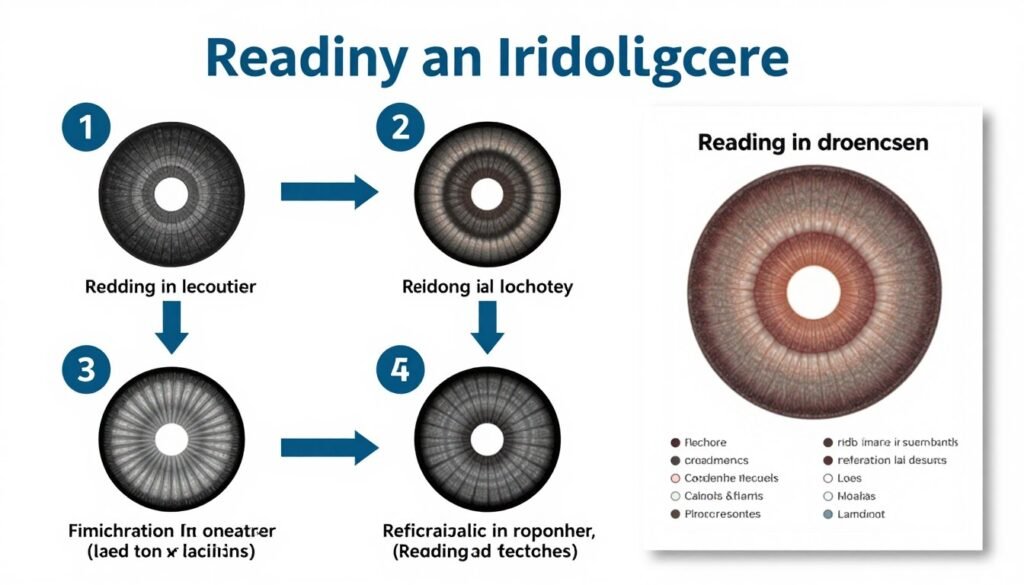
Learning iridology chart how to read effectively takes practice. I’ll share the approach I teach to new practitioners and students in our training programs.
Step 1: Orient the Chart Correctly
First, ensure you’re looking at the correct eye chart. Left eye charts and right eye charts display organ placements differently due to body-side correlation. Match your chart to the eye you’re observing.
Most charts show the iris as if you’re looking directly at a person facing you. The 12 o’clock position is at the top, 6 o’clock at bottom, 3 o’clock on the right side of the chart, and 9 o’clock on the left side.
Step 2: Identify the Collarette Landmark
Locate the collarette ring on both the actual iris and the chart. This anatomical structure serves as your reference point for judging whether a marking appears in the inner or outer iris regions.
The collarette typically appears as a slightly raised, zig-zag border roughly one-third of the way from pupil to iris edge. Its exact position varies slightly between individuals.
Step 3: Use Clock Positions to Locate Zones
When you notice something in the iris you want to identify, determine its clock position. Imagine the iris as a clock face. Is the marking at 2 o’clock? 7 o’clock? This immediately narrows down which organs or body systems occupy that sector on your reference chart.
Step 4: Determine Ring Level
Next, assess which concentric ring the observation falls within. Is it in the pupillary zone close to the pupil? The middle ciliary zone? Or the outer peripheral ring?
Combining clock position with ring level gives you a precise grid reference. For example, “3 o’clock position in the outer ciliary zone of the right iris” points to a specific chart location.
Step 5: Cross-Reference with Chart
Find that exact position on your chart of iridology. Note which body area or organ occupies that zone according to the chart’s mapping system. This correlation forms the basis of traditional iris observation practice.
“The chart is your reference roadmap, but the iris itself is the territory you’re exploring. Over time, you’ll develop familiarity with common zone locations and won’t need to check the chart for every observation.”
Using Digital Chart Overlays
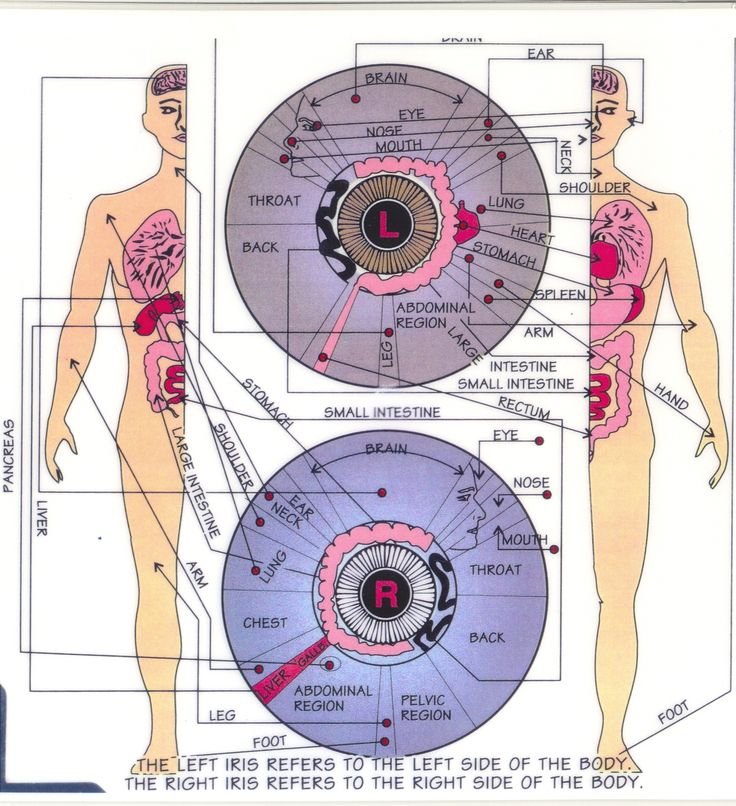
Modern practitioners often use iridology software that displays chart overlays directly on captured iris images. The software aligns the chart zones with the photograph, making correlations immediately visible.
This digital approach offers several advantages I’ve observed in clinic settings:
- Precise alignment eliminates manual chart positioning
- Zoom functions allow detailed examination of specific zones
- Multiple chart types can be toggled for comparison
- Clients can see the chart-to-iris relationship on screen during consultations
- Analysis sessions become more efficient and interactive
Professional systems like the MAIKONG MK-2024 software include built-in chart libraries with multiple mapping styles. Practitioners can select Bernard Jensen charts, European holistic maps, or other variations depending on their preference and training background.
Practical Applications: How Practitioners Use Iridology Charts Daily

In my two decades working with health practitioners worldwide, I’ve seen how iridology charts integrate into various practice settings. Let me share the most common real-world applications.
Educational and Training Environments
Iridology training schools rely heavily on charts for student education. Large wall-mounted charts in classrooms allow instructors to demonstrate zone locations to entire classes. Students reference charts constantly during their learning phase.
I’ve supplied chart resources to institutions teaching natural health modalities. They report that visual chart references accelerate student comprehension. When students can physically point to chart zones while learning anatomy correlations, retention improves significantly.
Many schools now integrate iridology chart printable resources into study materials. Students can have personal copies for home study and practice sessions with fellow students.
Clinical Practice Settings

Natural health practitioners, nutritionists, and wellness consultants use charts during client sessions. A common setup includes:
- Wall-mounted reference charts visible to both practitioner and client
- Laminated desk charts for close examination during analysis
- Digital charts displayed on computer monitors alongside iris images
- Printed handout charts given to clients for home reference
The chart serves as a communication bridge. When a practitioner explains observations to a client, pointing to the relevant chart zone makes the discussion more concrete and understandable.
Integration with Iridology Cameras
The combination of iriscope photography and chart reference creates a powerful observation workflow. Here’s how practitioners typically work:
- Capture high-resolution images of both irises using a professional iridology camera
- Display images on screen with chart overlay or reference chart visible nearby
- Systematically review each iris zone, comparing observations to chart correlations
- Document findings by zone location for client records
- Print reports showing iris images with chart zone annotations for client education
Professional usb iridology camera systems from manufacturers like MAIKONG include software with integrated chart functions. The MK-9822 model, for example, allows practitioners to overlay multiple chart types directly on captured iris photographs.
| MAIKONG Software Feature | Chart-Related Functionality | Practitioner Benefit |
| Multi-Chart Library | 12+ chart types including Bernard Jensen, holistic, constitution maps | Flexibility to use preferred mapping system or compare chart variations |
| 17-Language Chart Support | Charts available in English, Spanish, German, Chinese, Japanese, and 12 other languages | Serve international clients or practice in multilingual communities |
| Overlay Transparency Control | Adjust chart overlay opacity from 0-100% | See iris details clearly while maintaining zone reference visibility |
| Zone Click Information | Click any chart zone to display traditional body area correlations | Instant reference without consulting separate chart documentation |
| Custom Chart Upload | Import your own chart designs or specialized mapping systems | Use proprietary chart versions developed through clinical experience |
| Print Templates | Generate client reports with iris images and chart zone annotations | Professional documentation and educational handouts for clients |
For distributors and health equipment wholesalers evaluating iridology systems, chart integration is a key differentiator. Systems that seamlessly combine quality imaging with comprehensive chart libraries provide better value to end-user practitioners.
Important Professional Note: All iridology chart applications are for traditional observational practice and educational reference only. Charts and observations do not constitute medical diagnosis. Practitioners should always advise clients to consult qualified healthcare providers for medical concerns. This practice serves as a complementary observation method within natural health approaches.
Product Customization for Training and Practice
As a manufacturer, we’ve developed chart customization options based on practitioner feedback. Training institutions can request charts with their branding and translated into their primary teaching language. Clinic chains can standardize chart versions across multiple locations.
Our OEM/ODM services extend to chart resources as well as hardware. For established distributors, we can create custom chart packages that align with your target market’s preferences. This has proven valuable for partners in regions where specific chart styles dominate local practice traditions.
Accessing Iridology Chart Resources: Digital, Printable, and Software Options

One of the most frequent questions I receive is: “Where can I get professional-quality iridology charts for my practice or studies?” Let me guide you through the available options.
Printable Chart Resources
Many practitioners seek iridology chart printable versions for physical reference. High-resolution printable charts serve multiple purposes:
- Large format prints for clinic wall mounting
- Letter-size handouts for client education
- Study materials for certification courses
- Laminated desk references for consultation tables
- Teaching aids for group workshops
When selecting printable charts, resolution matters. Professional-quality charts should be at least 300 DPI for clear printing at larger sizes. Charts downloaded from low-quality sources often appear pixelated when printed above standard page sizes.
Digital Chart Libraries
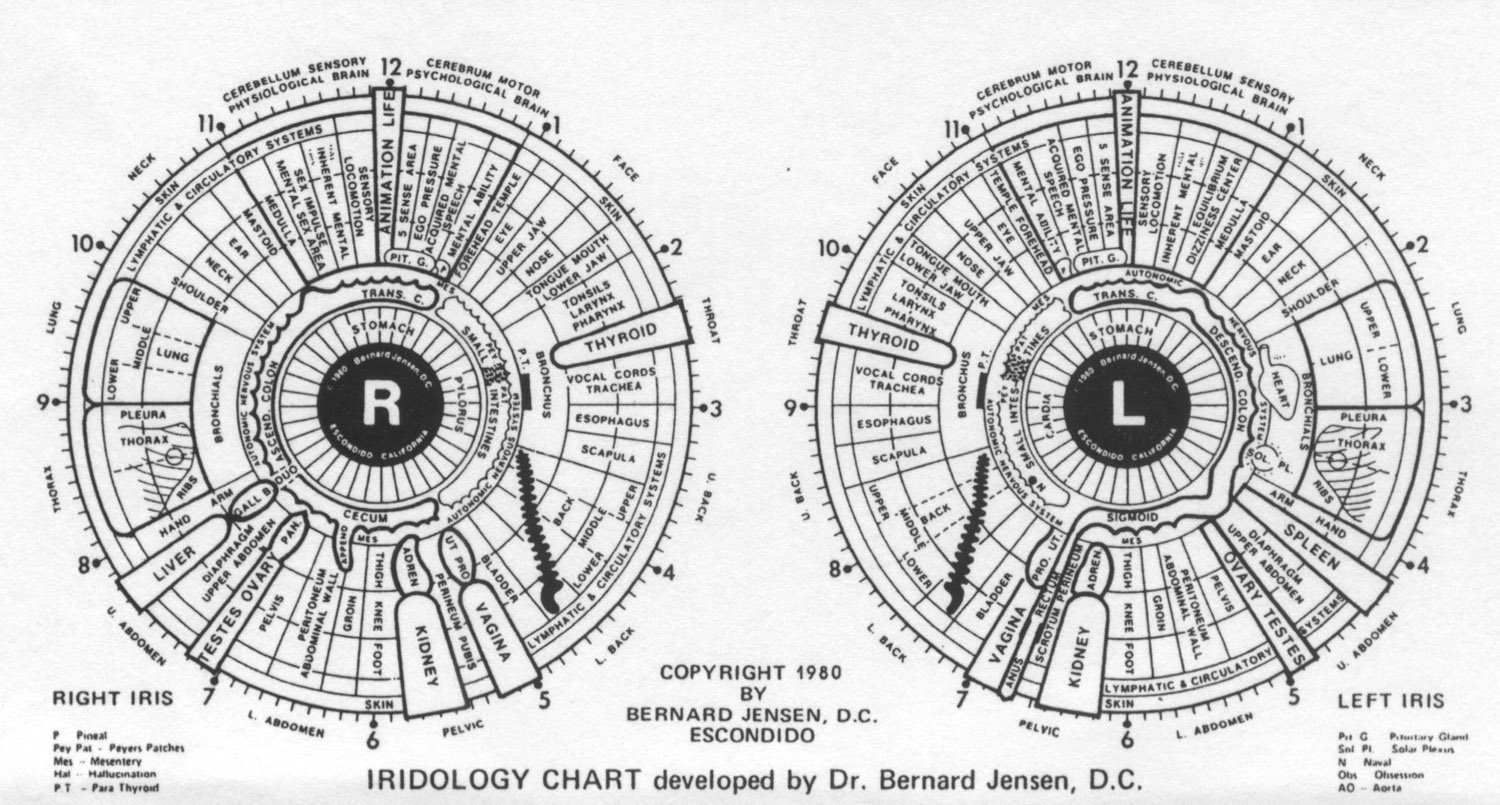
Modern practitioners increasingly rely on digital chart access integrated with their analysis software. Digital libraries offer advantages over physical charts:
Digital Chart Benefits
- Instant access to multiple chart types without physical storage
- Easy switching between chart versions during analysis
- Always available when using mobile or laptop systems
- Regular updates to chart libraries as new versions release
- Integration with iris image overlays for precise correlation
- Searchable annotations and zone information
Physical Chart Advantages
- No technology required – instant reference anytime
- Large wall charts visible from across the room during teaching
- Client interaction – pointing directly at physical chart zones
- No learning curve for non-technical practitioners
- Professional appearance in consultation spaces
The ideal approach for most practices combines both. Wall-mounted physical charts provide constant visual reference and client education value. Digital charts in software enable precision during detailed analysis sessions with captured iris images.
Chart Availability in Professional Software
Professional iridology software platforms include comprehensive chart libraries as standard features. The MAIKONG 2024 software version, for example, includes:
- 12 distinct chart mapping systems (Bernard Jensen, European holistic, constitutional, organ-specific)
- Left and right eye versions for each chart type
- 17 language translations for international practice
- Customizable chart overlay opacity and color schemes
- Zone annotation tools for marking observations directly on charts
- Export functions for creating printable chart references
For practitioners investing in best iridology camera systems, confirming that software includes comprehensive chart libraries is essential. The camera captures the iris images, but without integrated chart reference tools, analysis efficiency suffers.
Access Professional Iridology Chart Resources
MAIKONG provides comprehensive chart libraries to iridology practitioners, educators, and health equipment distributors. Our digital chart collections include printable PDFs, software-integrated formats, and customizable templates in 17 languages. Whether you’re setting up a new practice, teaching iridology courses, or supplying wellness centers, we offer chart resources tailored to your specific requirements.
Custom Chart Development
Training schools and established practices sometimes need customized chart versions. Common customization requests we fulfill include:
- Translation to languages not commonly available (regional dialects, indigenous languages)
- Branding with institution logos and color schemes
- Simplified versions for introductory student materials
- Specialized charts emphasizing specific practice focuses (nutritional emphasis, structural focus, etc.)
- Integration of proprietary zone interpretations developed through clinical experience
As a manufacturer with 20 years of experience, MAIKONG offers chart customization services to qualified partners. We work with iridology training institutions, health equipment distributors, and established clinic chains to develop chart resources aligned with their specific educational or clinical approaches.
For distributors interested in offering branded chart packages to your customer base, our OEM services can integrate your company identity into both physical and digital chart resources. This adds value to your product offerings and strengthens brand presence in your market.
Common Mistakes When Reading Iridology Charts (And How to Avoid Them)
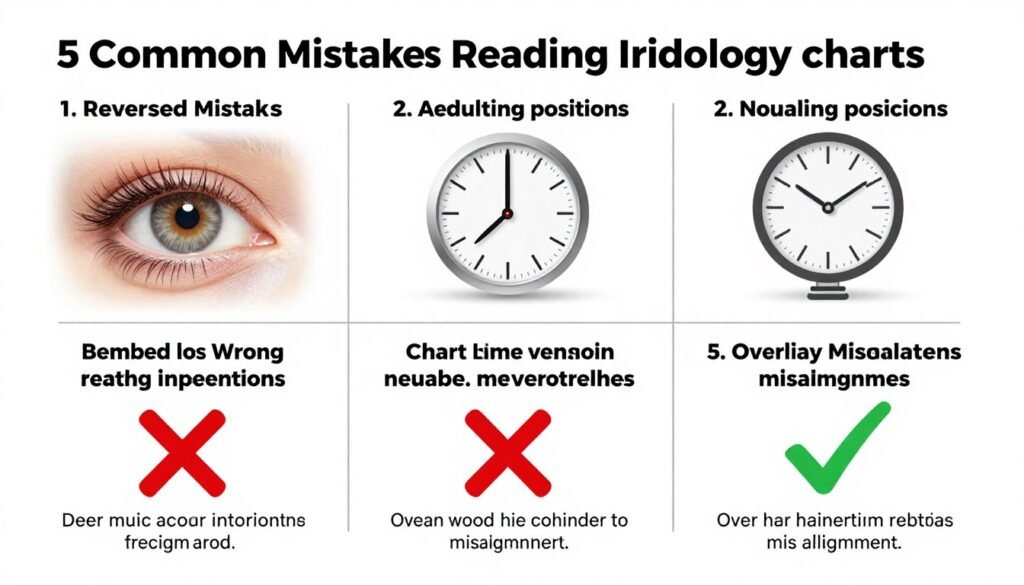
Through years of training practitioners and students, I’ve identified patterns of errors that beginners commonly make when learning chart reading. Recognizing these mistakes early accelerates learning.
Mistake 1: Using the Wrong Eye Chart
The most frequent beginner error is referencing a right eye chart while examining a left iris, or vice versa. Since organ placements differ between eyes due to body-side correlation, this produces completely incorrect zone identifications.
Solution: Always double-check that your reference chart matches the eye you’re observing. Label your charts clearly if working with physical prints. Digital software typically manages this automatically by displaying the appropriate chart based on which eye image is loaded.
Mistake 2: Incorrect Clock Position Orientation
Students sometimes mirror the clock positions incorrectly. They might place 3 o’clock on the left side of the chart instead of the right, leading to 180-degree errors in zone location.
Solution: Remember that iridology charts display the iris as if you’re looking directly at someone facing you. The chart orientation matches what you see when looking into a person’s eyes. Twelve o’clock is always at the top, six o’clock at bottom.
Mistake 3: Ignoring Ring Level Distinctions
Focusing only on clock positions while neglecting which concentric ring a marking occupies causes imprecise zone identification. A marking at 3 o’clock in the pupillary zone corresponds to a different body area than a marking at 3 o’clock in the peripheral zone.
Solution: Always identify both the clock position AND the ring level. Develop the habit of noting “3 o’clock, outer ciliary zone” rather than just “3 o’clock.” This complete grid reference ensures accuracy.
Mistake 4: Over-Interpreting Chart Information
Some practitioners, especially those new to the field, treat chart zone correlations as absolute diagnostic indicators. This misapplies the purpose of traditional iridology charts.
Solution: Remember that charts represent traditional observational frameworks used in iris analysis education and practice. They are reference tools, not diagnostic instruments. Observations are noted according to chart zones, but this process is part of traditional natural health observation methods, not medical diagnosis.
Educational Perspective: The relationship between iris characteristics and body areas as shown on iridology charts is based on traditional practice observations developed over many decades. This represents an alternative approach to health observation. It should never replace professional medical examination and diagnosis by qualified healthcare providers.
Mistake 5: Inconsistent Chart Versions
Switching between different chart types (Bernard Jensen one day, European holistic the next) without noting which version you’re using creates inconsistent documentation and confusion when reviewing past observations.
Solution: Select a primary chart system aligned with your training and stick with it for consistency. If you explore alternative chart versions, clearly document which chart type you’re referencing in your records. Professional software often allows you to set a default chart that loads automatically.
Mistake 6: Poor Image-to-Chart Alignment
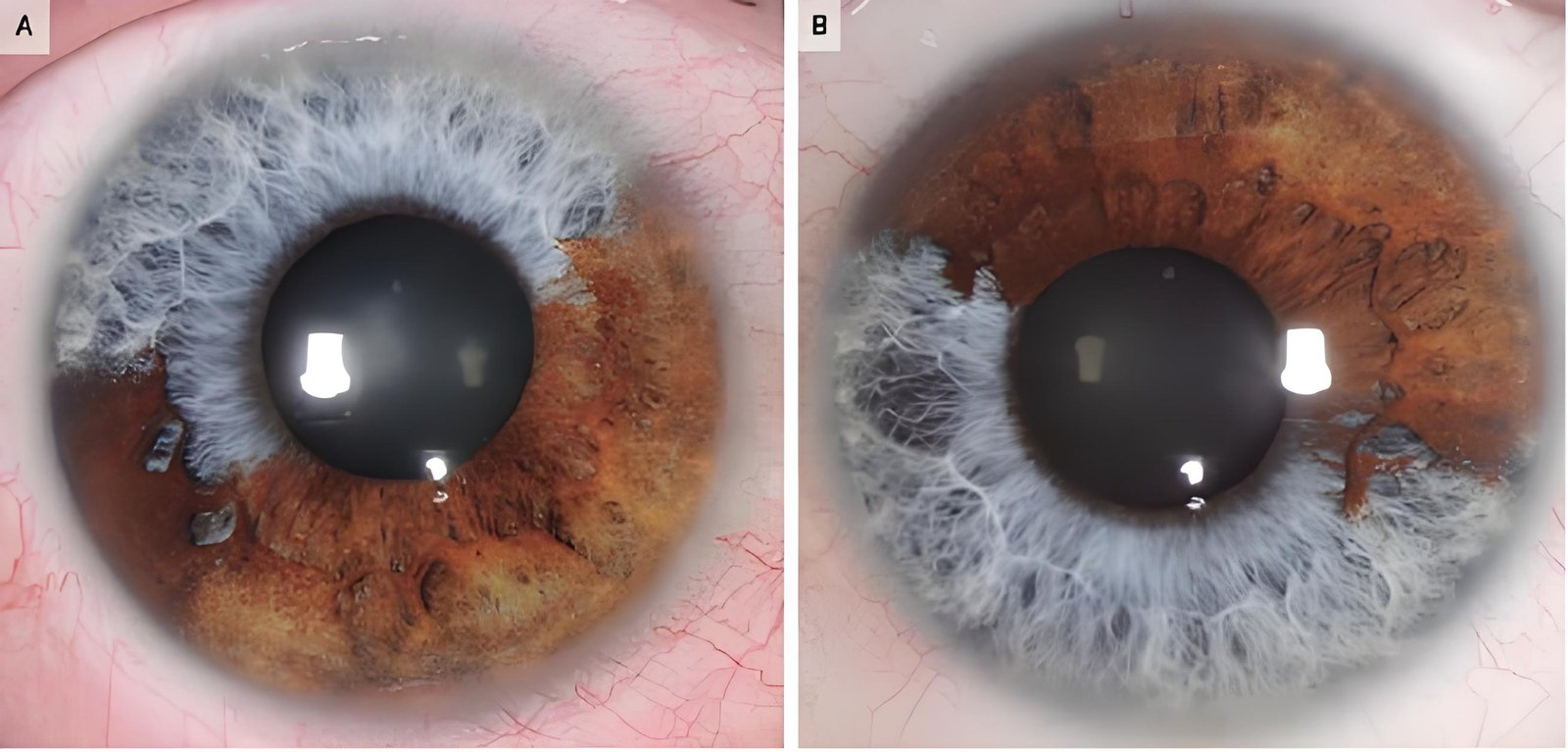
When using digital chart overlays, poor alignment between the captured iris image and the chart overlay leads to incorrect zone correlations. If the chart center doesn’t match the actual pupil center, all zone identifications shift.
Solution: Quality iridology camera software includes alignment tools. Always verify that the chart overlay pupil matches the actual iris pupil position before beginning analysis. Most professional systems allow you to adjust chart position, rotation, and scale for precise alignment.
The MAIKONG iridology software includes an auto-alignment feature that detects pupil position and automatically centers the chart overlay. For cases requiring manual adjustment, intuitive controls allow fine-tuning in seconds.
Frequently Asked Questions About Iridology Charts
What is an iridology chart used for?
An iridology chart is a reference tool used in traditional iris observation practice. It maps different zones of the iris to corresponding body areas and organ systems according to iridology principles. Practitioners use charts to identify which body regions correlate with specific iris locations during observational assessments. Charts serve educational purposes in training programs and provide visual reference during client consultations in natural health settings. The chart functions as a systematic framework for noting iris characteristics in a consistent, organized manner.
Can I download a free iridology chart?
Basic educational iridology charts are available from various sources for study purposes. However, professional-quality charts suitable for clinical practice typically require licensing or purchase. High-resolution printable charts that maintain clarity at large print sizes generally come from professional suppliers. Many iridology software systems include comprehensive chart libraries as part of the software package. For example, professional systems like MAIKONG iridology software provide 12+ chart variations in multiple languages as integrated features. Educational institutions and equipment distributors can contact manufacturers about chart resource packages tailored to professional training and practice applications.
What’s the difference between left and right eye iridology charts?
Left and right eye charts differ in organ placement due to body-side correlation principles in iridology. The left eye iridology chart primarily shows organs and body areas on the left side of the body, while the right eye chart maps right-side body regions. For instance, the heart typically appears in the left eye chart, while the liver shows on the right eye chart. Bilateral organs like lungs and kidneys appear in both eyes but in mirrored positions. This creates a complementary relationship where examining both eyes provides a complete traditional observation framework. Always ensure you’re using the correct chart for the eye you’re examining to avoid reversed zone identifications.
How do I read an iridology chart correctly?
Reading an iridology chart involves several systematic steps. First, orient the chart correctly (12 o’clock at top) and verify you’re using the appropriate left or right eye version. Identify the collarette landmark on both the actual iris and chart as your reference point. Use the clock-position method to determine the angular location of any iris characteristic you’re observing (for example, 3 o’clock position). Then determine which concentric ring the observation falls within (pupillary zone, ciliary zone, or peripheral zone). Cross-reference this grid position on your chart to identify the corresponding body area according to traditional iridology mapping. With practice, this becomes a rapid, intuitive process. Professional iridology software streamlines this by overlaying charts directly on iris images, making zone correlation immediately visible.
Which iridology chart type should I use as a beginner?
For beginners, the Bernard Jensen iridology chart is widely recommended, especially in North American training programs. Jensen’s chart provides clear organ zone delineations and has extensive educational resources available. It’s the most commonly taught system in introductory iridology courses. Once you develop proficiency with one chart system, you can explore alternative mapping approaches like European holistic charts or specialized variations. Consistency is more important than chart selection when learning. Choose a chart aligned with your training source and use it consistently until you develop strong zone familiarity. Professional software systems often include multiple chart types, allowing you to explore variations while maintaining a primary reference system.
Can iridology charts diagnose diseases?
No, iridology charts and iris observation do not diagnose diseases in the medical sense. Charts are reference tools used in traditional iridology practice, which is an alternative observational approach. Iridology is not recognized as a diagnostic method by mainstream medical science. The charts map traditional zone correlations used by practitioners as part of holistic health assessments and educational programs. Any observations made using iridology charts should be understood as part of traditional natural health observation methods, not medical diagnosis. People should always consult qualified medical professionals for health concerns, proper diagnosis, and treatment. Iridology charts serve educational and complementary observation purposes within natural health practices.
Do I need special equipment to use iridology charts?
For basic chart study and education, you only need the chart itself (printed or digital). However, for practical iris observation using charts, most modern practitioners use specialized equipment. An iriscope or iridology camera captures high-quality iris images that can then be compared to chart references. Professional systems combine cameras with software that displays chart overlays directly on captured images, making zone correlation precise and efficient. This integration significantly improves analysis accuracy compared to trying to memorize chart positions while examining an iris visually. For training institutions and professional practices, investing in quality imaging equipment alongside comprehensive chart resources creates an effective workflow for both education and client sessions.
Are there iridology charts in languages other than English?
Yes, professional iridology charts are available in many languages. Traditional chart translations exist in Spanish (mapa iridológico), German, French, Italian, Chinese, Japanese, and numerous other languages. The availability reflects iridology’s international practice community. When selecting professional equipment and software, multilingual chart support is an important consideration, especially for practitioners serving diverse populations. The MAIKONG iridology software, for example, includes chart libraries in 17 languages with full translation of zone labels and annotations. This allows practitioners to work in their native language or switch languages when serving international clients. For distributors and wholesalers, offering multilingual chart resources expands your addressable market significantly.
Moving Forward: Integrating Iridology Charts into Your Practice or Studies
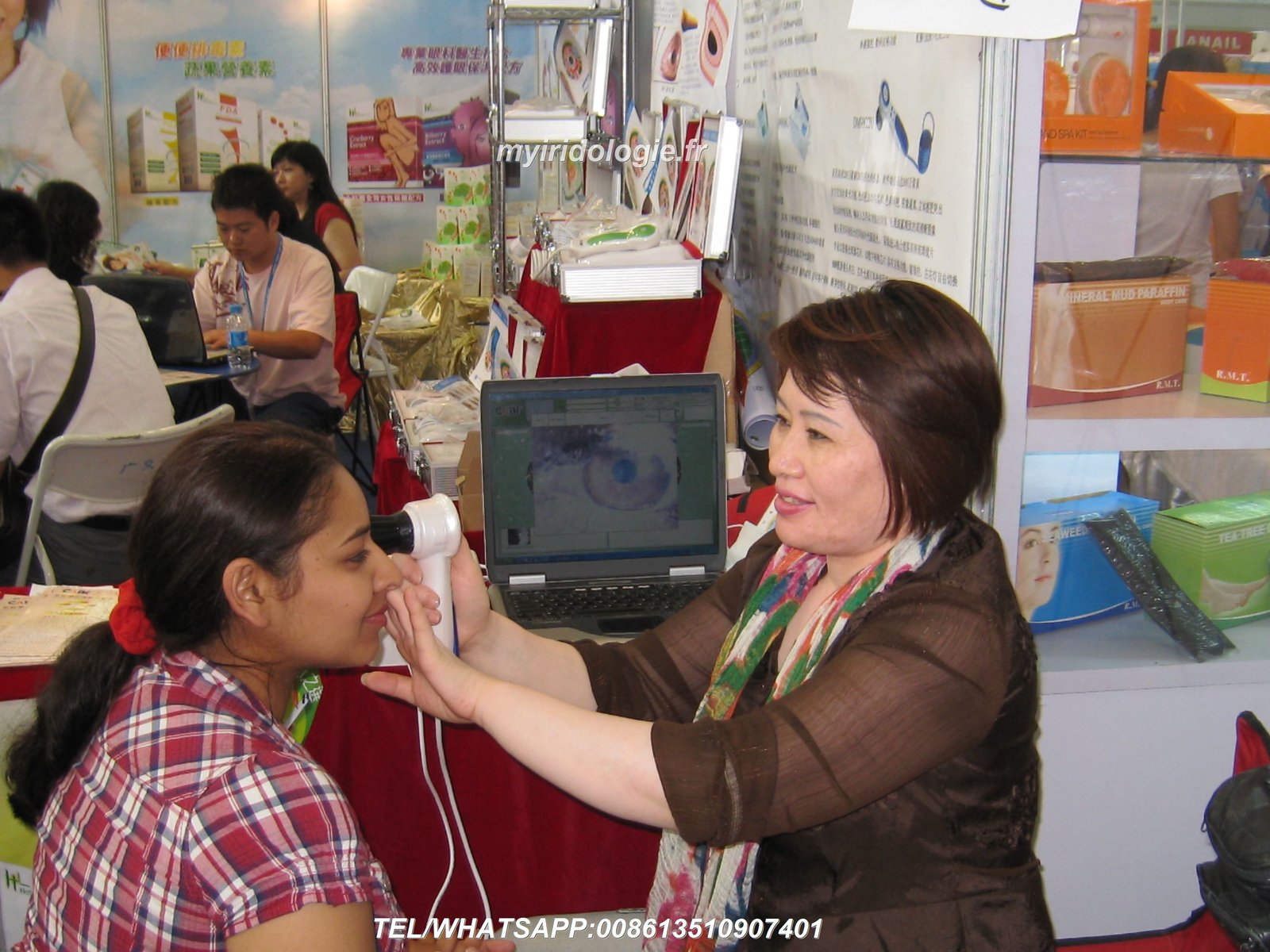
Understanding iridology charts opens doors to a fascinating field of traditional health observation. Whether you’re a student beginning your iridology education, a practitioner expanding your natural health practice, or a distributor evaluating product lines for your market, quality chart resources form a foundational component.
The evolution from physical printed charts to integrated digital chart systems has transformed how practitioners work. Modern iridology software with comprehensive chart libraries provides unprecedented efficiency and precision in iris observation sessions.
For those entering the field, I recommend starting with a solid understanding of one primary chart system. Master the zone divisions, clock positions, and ring levels thoroughly. As your knowledge deepens, explore alternative chart mapping approaches to broaden your perspective.
Practitioners already working in natural health fields can enhance their offerings by incorporating iris observation with professional chart references. The visual, interactive nature of iris consultation using charts creates engaging client education opportunities that complement other wellness modalities.

Training institutions benefit from standardized chart resources across their curriculum. When all instructors and students use consistent chart versions, learning becomes more systematic and confusion decreases. Custom chart packages branded for your institution create professional cohesion in your educational materials.
Professional Reminder: All iridology chart usage and iris observation should be clearly positioned as traditional natural health observation methods used for educational and complementary wellness purposes. These practices do not constitute medical diagnosis or treatment. Always maintain appropriate professional boundaries and refer clients to qualified medical practitioners for health concerns requiring diagnostic evaluation or medical treatment.
Partner with MAIKONG: Leading Iridology Equipment and Chart Resource Manufacturer
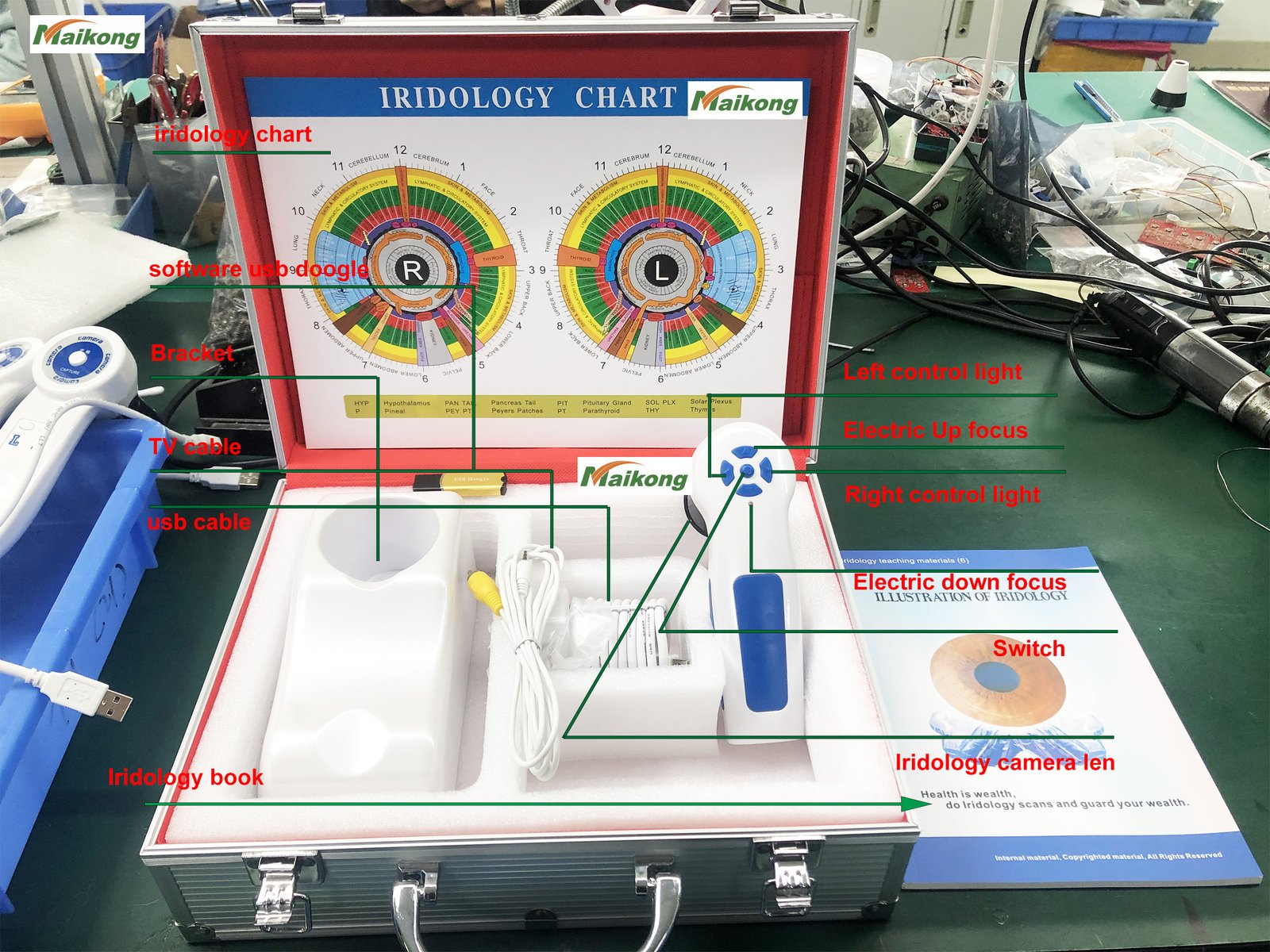
For over 20 years, MAIKONG has served as a trusted manufacturer of professional iridology equipment, software, and educational resources. Based in Shenzhen, Guangdong Province, China, we operate advanced production facilities with ISO9000 certification and maintain quality control standards that meet international market requirements.
Our product line includes:
- Professional Iridology Cameras: USB iriscopes with 12MP high-resolution sensors, adjustable focus, LED illumination, and ergonomic designs for extended clinical use
- Advanced Software Systems: MK-2024 software with 17-language support, comprehensive chart libraries (12+ chart types), automatic analysis features, and client management tools compatible with Windows XP through 11 and macOS systems
- Chart Resources: Digital chart libraries, printable professional charts, customizable chart templates in multiple languages and mapping styles
- Complete Systems: Integrated camera-software packages with training materials, chart resources, and ongoing technical support
Why Distribution Partners Choose MAIKONG
Manufacturing Advantages
- 20 years of specialized iridology equipment production experience
- In-house R&D team developing cutting-edge imaging technology
- ISO9000 certified quality management systems
- CE certification for international market compliance
- Production capacity supporting large volume orders
- Warehouses in China and USA for efficient distribution
Partnership Benefits
- Comprehensive OEM/ODM customization services
- Software localization in your target market languages
- Custom chart development aligned with regional preferences
- Competitive wholesale pricing for volume orders
- Technical training and ongoing support resources
- Marketing materials and educational content support
OEM/ODM Customization Capabilities
MAIKONG has successfully delivered customized solutions for over 1,000 clients globally, including:
- Hardware Customization: Model designation, exterior design, color schemes, functional specifications tailored to your market requirements
- Software Customization: Logo integration, language localization, feature modifications, product recommendation integration, user interface adjustments
- Chart Resources: Translation to specific languages, branding with your company identity, custom zone emphasis for specialized practices, educational format variations
- Packaging and Documentation: Custom packaging design, branded user manuals, training materials in your specified languages

We work closely with distributors, training institutions, clinic chains, and health equipment importers to develop solutions that perfectly match their market positioning and customer needs. Our flexible manufacturing approach accommodates orders from initial evaluation quantities through to large-scale production runs.
Established Partner Network
Our global partnership network includes:
- Natural health product distributors (companies like Amway, Herbalife, USANA, Nu Skin)
- Medical equipment importers and wholesalers across North America, Europe, Asia, and Latin America
- Iridology training schools and certification institutions
- Natural therapy clinics and integrative wellness centers
- Beauty and spa chains incorporating holistic health services
- Cross-border e-commerce sellers specializing in health equipment
These partnerships thrive because we provide more than products. We deliver complete solutions including technical support, training resources, chart libraries, marketing materials, and ongoing product development that keeps our partners competitive in their markets.
Become a MAIKONG Distribution Partner
We invite established health equipment distributors, medical device importers, training institutions, and wellness industry entrepreneurs to explore partnership opportunities with MAIKONG. Whether you’re looking to add professional iridology systems to your existing product line, launch a private-label equipment brand, or establish an iridology education program, our team provides the manufacturing expertise, product quality, and customization flexibility to support your success. Our USA and China warehouses ensure reliable fulfillment. Our 20-year track record demonstrates our commitment to partner success and customer satisfaction.
Contact our partnership team directly:
We look forward to discussing how MAIKONG’s manufacturing capabilities, comprehensive product line, and chart resource libraries can support your business growth in the expanding natural health and wellness equipment market.