
Iridology Chart for Sale: Complete Resource Guide for Health Practitioners
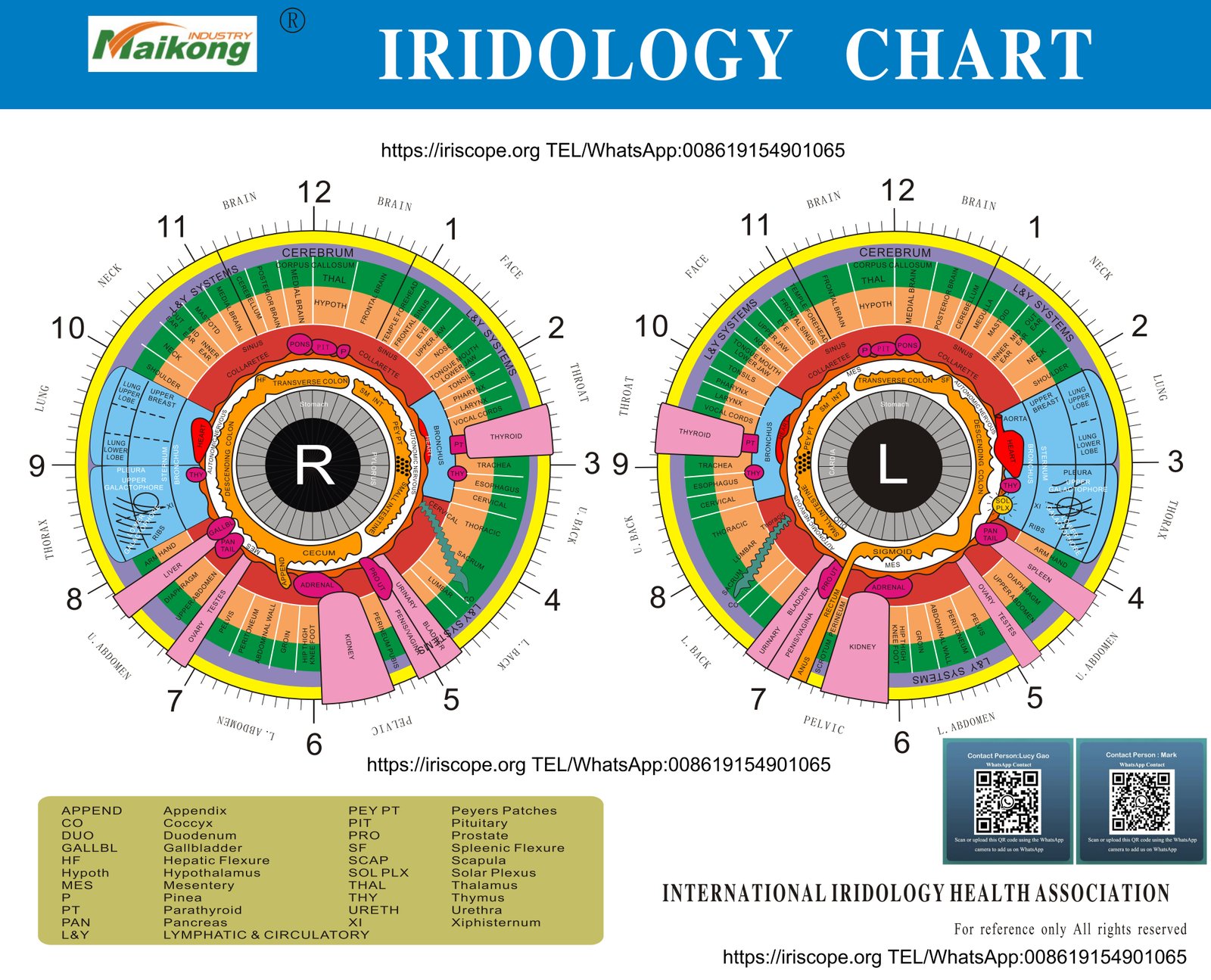
When practitioners search for an iridology chart for sale, they need more than just a visual reference. They require accurate zone mappings, clear anatomical correlations, and materials that work across teaching environments and client consultations.
An iridology chart maps specific iris areas to body systems and organs according to traditional iridology principles. The right chart serves multiple purposes in your practice. It educates clients during consultations. It supports student learning in training programs. It integrates with modern iris imaging systems for enhanced analysis.
Today’s market offers everything from simple printed posters to sophisticated digital resources embedded in professional software. Understanding the differences helps you select tools that match your specific needs. This guide walks through chart types, reading fundamentals, and practical selection criteria for both individual practitioners and wholesale buyers.
We focus on answering the core questions practitioners face: What makes one chart different from another? How do left and right eye charts vary? Which format works best for your setting? What integration options exist with iridology camera systems?
What Is an Iridology Chart and Why Do Practitioners Need One?
An iridology chart provides a visual map dividing the iris into zones. Each zone corresponds to specific body areas, organs, or systems according to traditional iridology theory. These charts stem from decades of observational practice, with various lineages developing slightly different mapping systems.
The chart serves as your reference during iris examination. When you observe markings, color variations, or structural features in specific iris locations, the chart helps identify which body area that zone traditionally represents. This framework guides practitioners in their holistic health assessments.
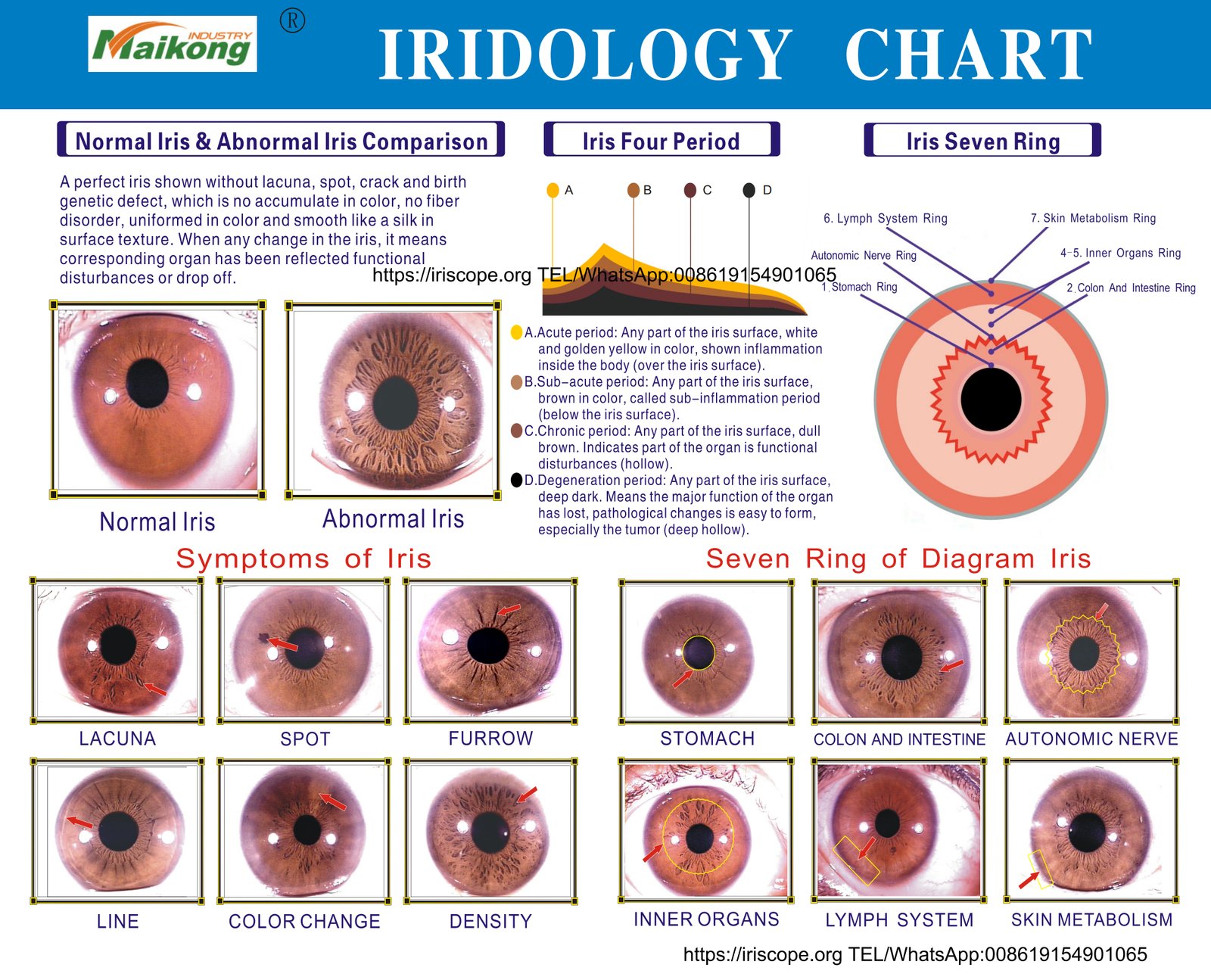
Modern practice requires charts for several scenarios. During client consultations, wall-mounted charts provide visual reference while explaining observations. In training environments, students need detailed charts showing zone boundaries and organ correlations. For practitioners using iridology software, digital charts overlay directly on captured iris images.
Different chart styles exist because various schools of iridology have developed their own mapping systems. The Bernard Jensen chart remains one of the most widely recognized in North America. European charts often show different zone divisions. Some practitioners prefer simplified charts for client education, while others need highly detailed versions for professional analysis.
Educational Reference Only
Iridology charts represent traditional observational frameworks used in holistic health education. These tools support practitioners in their wellness consultations but do not diagnose medical conditions or replace professional medical examination by licensed physicians.
Types of Iridology Charts Available for Different Practice Needs
Chart selection depends on your intended use, practice environment, and technical integration requirements. Each format offers distinct advantages for specific situations.
Printed Wall Charts and Posters
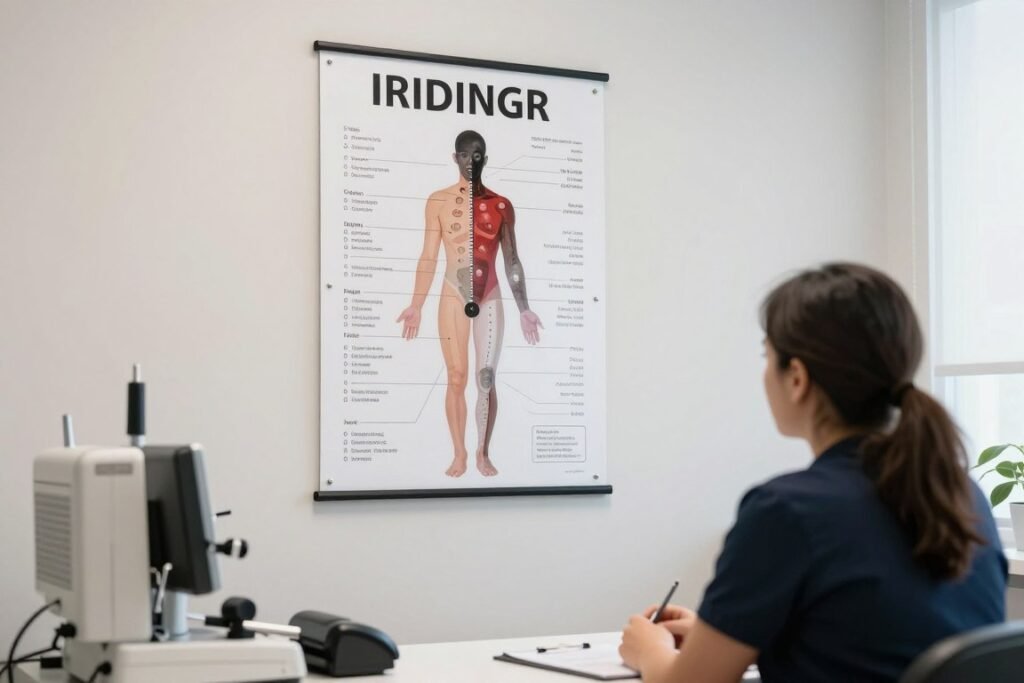
Physical wall charts remain popular in consultation rooms and classrooms. These large-format prints provide constant visual reference without requiring electronic devices. Practitioners point to specific zones during client discussions, making explanations more tangible and understandable.
Quality varies significantly among printed charts. Professional-grade prints use high-resolution imaging and fade-resistant inks. Laminated versions withstand years of use in busy practices. Standard poster sizes range from 18×24 inches for individual offices to 24×36 inches for training rooms.
Digital Charts for Software Integration
Software-embedded charts offer functionality beyond static images. When integrated with iris imaging systems, digital charts overlay zone divisions directly onto captured photographs. This overlay helps practitioners identify which zones contain observed features without manual cross-referencing.
MAIKONG iridology software includes multiple chart formats within its analysis tools. The system supports various mapping traditions, allowing practitioners to switch between chart styles based on their training background. Software charts update with zoom capabilities, making detailed zone examination easier during analysis sessions.
Printable PDF Resources
Downloadable PDF charts provide flexibility for practitioners who need multiple copies or customized sizing. These digital files print at various scales depending on your needs. Small handouts work well for client education packets. Full-size prints serve as backup references or travel materials for practitioners teaching workshops.
Many practitioners maintain both physical wall charts and printable resources. The combination ensures access to reference materials across different settings without investing in multiple expensive printed versions.
Left Eye and Right Eye Chart Differences
Iridology tradition holds that the left eye and right eye reflect different body sides and systems. Left eye charts typically map the left side of the body, while right eye charts correspond to right-sided organs and structures. Some body systems appear in both eyes but in different positions.
This bilateral mapping means comprehensive iris assessment requires examining both eyes with appropriate chart references. Complete chart sets include both left and right versions, with clear labeling to prevent confusion during examinations.
Physical Chart Advantages
- No technology required during use
- Always visible in consultation space
- Multiple people can reference simultaneously
- No learning curve for basic viewing
- Works in any lighting condition
Digital Chart Advantages
- Direct overlay on iris photographs
- Zoom capability for detailed zones
- Multiple chart style options in one system
- Easy updates as mapping evolves
- Integration with analysis software features
Need Chart Specifications for Your Practice?
We provide detailed specifications for printed charts, digital formats, and software-integrated options. Contact our team to discuss chart materials, sizing options, and volume pricing for training institutions.
How to Read an Iridology Chart: Zone Navigation Fundamentals
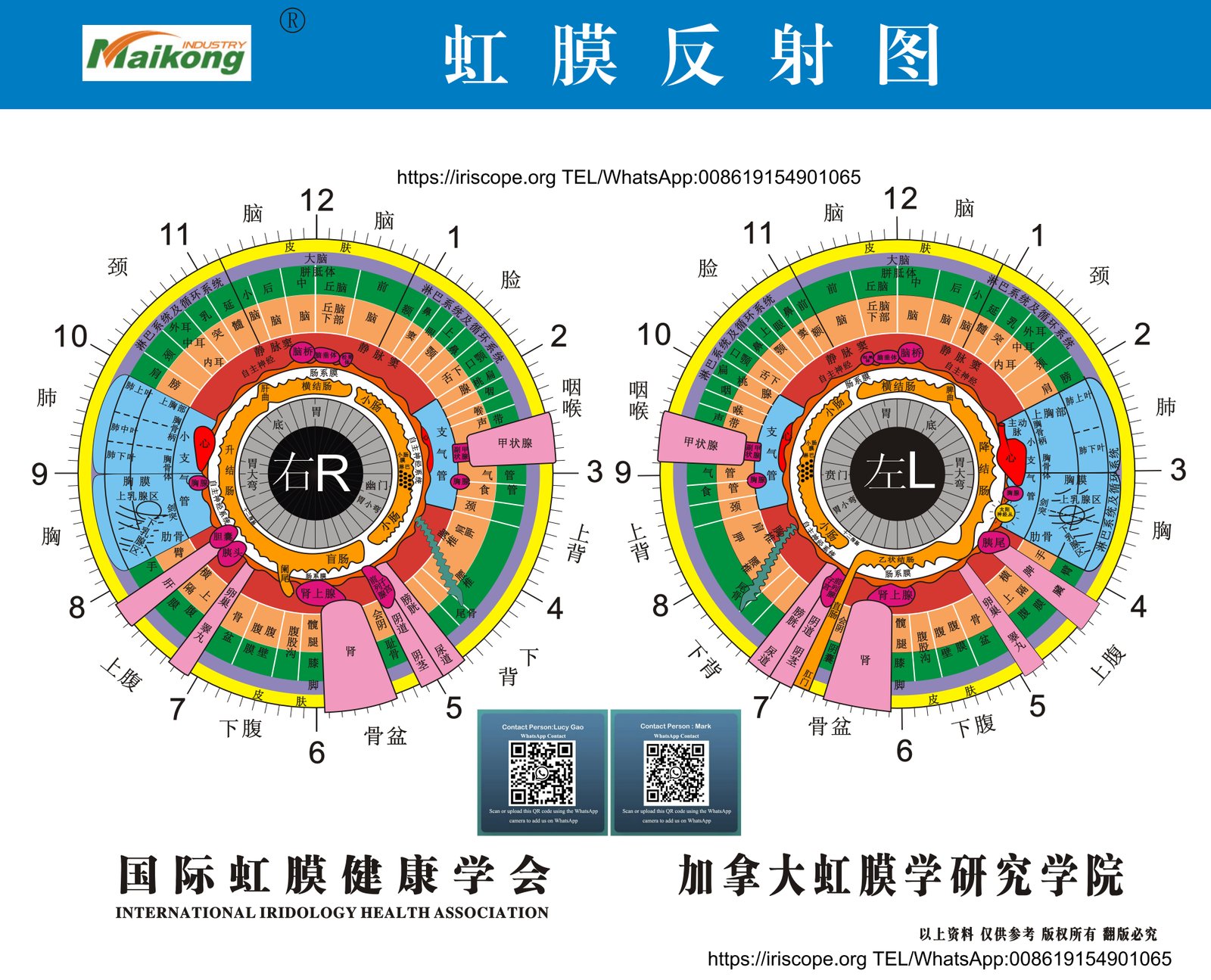
Reading an iridology chart requires understanding its organizational structure. Most charts divide the iris into 12 major sectors, similar to a clock face. Each sector then subdivides into smaller zones representing specific body areas.
The Clock Position System
Charts use clock positions as primary orientation markers. The 12 o’clock position typically starts at the top of the iris, with positions progressing clockwise. Practitioners reference zones by their clock position and radial distance from the pupil. For example, “3 o’clock position, mid-iris zone” provides precise location information.
This standardized positioning system allows practitioners worldwide to communicate observations consistently. When documenting findings or discussing cases with colleagues, clock positions provide unambiguous location references.
Concentric Ring Zones
Beyond clock sectors, charts show concentric rings moving outward from the pupil. Traditional mapping typically includes at least three main rings. The area closest to the pupil often correlates with digestive system organs. Middle rings map to various body systems and glands. Outer rings near the iris periphery traditionally correspond to skin, lymphatic system, and structural elements.
Different chart versions show varying numbers of rings and subdivisions. More detailed professional charts may include five or more ring divisions. Simplified educational charts might show only major ring zones to avoid overwhelming new learners.
Left-Right and Top-Bottom Orientation
Traditional iridology holds that the top portion of the iris reflects upper body areas like brain and head. Lower iris sections correspond to lower body regions including legs and reproductive organs. This vertical mapping combines with the left-right body side correlation mentioned earlier.
Understanding these orientations prevents confusion during chart use. When examining a client’s right iris, remember that chart positions reflect the right side of their body, not a mirror image of what you observe.
Common Chart Reading Mistakes to Avoid
New practitioners sometimes confuse which eye chart applies to which client eye. Always verify you’re using the correct left or right eye reference. Double-check clock position orientation, as some chart designs reverse the standard clockwise progression.
Another frequent error involves assuming all charts use identical zone divisions. Different mapping traditions place organs in slightly different positions. When switching between chart systems or training schools, review the specific zone locations carefully.
Practice Tip: Start with broader zone identification before attempting precise small-area mapping. Master the major organ sectors and ring divisions first. Detailed subsector work develops with experience and repeated chart reference.
Practical Applications: Using Charts Across Different Health Practice Settings
Chart utility extends across various professional scenarios. Understanding these applications helps determine which chart formats and features your practice requires.
Client Consultation and Education
During wellness consultations, charts transform abstract iris observations into understandable information. When you note a marking in a specific zone, pointing to that area on a wall chart helps clients visualize the connection to body systems. This visual component enhances client comprehension and engagement.
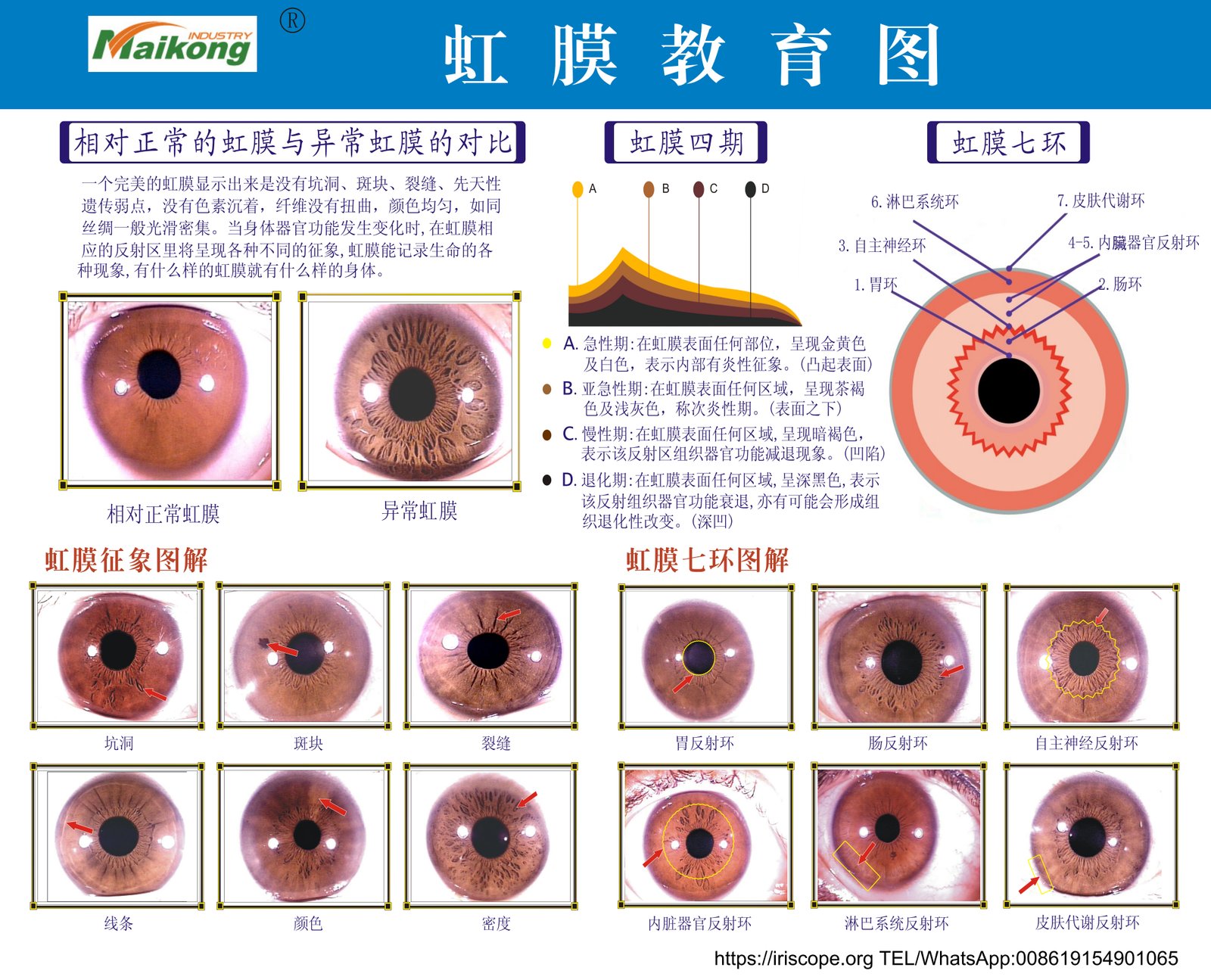
Many practitioners provide small printed chart copies for clients to take home. These reference materials support ongoing wellness discussions and help clients understand recommendations in context of their iris observations.
Training and Educational Environments
Iridology training programs require detailed charts for student learning. Instructors use large format charts during lectures to demonstrate zone locations and mapping principles. Students need individual chart copies for study and practice sessions.
Training institutions often purchase charts in bulk quantities. Each student receives their own reference copy, while classroom walls display oversized teaching versions. Digital chart access through software platforms supplements physical materials, allowing students to practice analysis techniques with captured iris images.
Integration with Iris Imaging Systems
Modern iris examination combines traditional chart knowledge with digital imaging technology. Practitioners capture high-resolution iris photographs using specialized cameras. Software then overlays chart zone divisions directly onto these images.
This integration streamlines the analysis process. Instead of manually comparing a photograph to a separate chart, the overlay shows exactly which zones contain observed features. Practitioners click specific zones to access detailed information about traditional correlations for that area.
MAIKONG systems include chart overlay capabilities across multiple mapping traditions. Practitioners select their preferred chart style, and the software applies those zone divisions to every captured image. This flexibility accommodates different training backgrounds and practice philosophies.
Research and Documentation
Practitioners building case study libraries use charts to document observation locations precisely. Standardized chart references allow tracking changes over time and comparing findings across multiple clients. Digital systems with embedded charts facilitate this documentation through automatic zone tagging and database organization.
| Practice Setting | Recommended Chart Format | Key Features Needed | Typical Quantity |
| Individual Practitioner Office | Wall chart plus digital software | Laminated, large format, software overlay | 2-3 physical, 1 software license |
| Training Institution | Classroom charts plus student handouts | Extra large teaching size, bulk printables | 3-5 teaching charts, 20+ student copies |
| Multi-Practitioner Clinic | Multiple wall charts plus shared software | Consistent style across rooms, network software | 1 per consultation room, multi-user software |
| Wellness Spa | Client-facing educational charts | Simplified design, aesthetic quality | 2-3 display charts |
Quality Factors: What Separates Professional Charts from Basic Resources
Not all iridology charts offer the same level of accuracy, clarity, or durability. Several quality factors distinguish professional-grade resources from basic educational materials.
Accuracy and Source Lineage
Professional charts trace their zone mappings to established iridology traditions. Reputable charts clearly identify their source mapping system, whether Bernard Jensen, European schools, or other recognized lineages. This transparency allows practitioners to select charts matching their training background.
Accuracy extends to precise zone boundaries and correct anatomical correlations. Quality charts undergo review by experienced practitioners before publication. They avoid oversimplification that might create confusion or misrepresent traditional mapping principles.

Visual Clarity and Resolution
Chart effectiveness depends on visual clarity. Professional printed charts use high-resolution source files ensuring sharp zone boundaries and legible text even at large sizes. Poor resolution creates fuzzy lines and unclear labels that frustrate users and reduce educational value.
Color accuracy matters for charts that use color-coding systems. Quality printing processes maintain consistent color reproduction across different print runs. Fade-resistant inks preserve chart appearance over years of use in well-lit offices.
Material Durability
Physical charts face regular handling and environmental exposure. Professional charts use tear-resistant paper stock or synthetic materials. Lamination protects surfaces from moisture, fingerprints, and general wear. Reinforced edges and proper finishing prevent fraying and corner damage.
For wall-mounted charts, hanging hardware quality affects long-term usability. Professional products include reinforced hanging points or mounting strips that support the chart’s weight without tearing.
Software Chart Features
Digital charts within analysis software require additional quality considerations. The chart overlay must align precisely with captured iris images across different photo resolutions. Zoom functions should maintain clarity at various magnification levels.
Quality software includes multiple chart options, allowing practitioners to switch between mapping systems. Update capabilities ensure charts reflect current understanding as traditional knowledge evolves. Integration with analysis tools should feel seamless rather than requiring awkward workflow steps.
Customization Options for Professional Use
Advanced practitioners and training institutions sometimes need customized charts. Professional suppliers offer options including:
- Practice branding addition to printed charts
- Custom sizing for specific wall spaces
- Simplified versions for client education materials
- Bilingual or multilingual labeling
- Specific mapping tradition emphasis
These customization capabilities particularly benefit wholesale buyers establishing branded product lines or institutions standardizing educational materials across locations.
Considerations for Wholesale Buyers and Distributors
Healthcare equipment distributors, training institutions, and practice management companies often purchase iridology charts in volume. Wholesale considerations extend beyond individual practitioner needs.
Volume Pricing and Minimum Orders
Wholesale pricing structures typically require minimum order quantities. These thresholds vary based on chart format and customization level. Standard printed charts may have lower minimums than fully customized versions with institution branding.
Understanding cost breakpoints helps buyers optimize orders. Larger quantities reduce per-unit costs but require storage capacity and demand confidence. Balancing immediate needs against volume discounts requires careful market assessment.

Supply Chain Reliability
Wholesale buyers need consistent product availability. Reliable manufacturers maintain inventory levels supporting regular reorder cycles. They provide clear lead times for standard products and communicate realistic timelines for custom orders.
International suppliers offer advantages including competitive pricing and manufacturing flexibility. However, buyers must evaluate shipping times, customs processes, and communication reliability. Established manufacturers with US warehouse presence reduce these logistical concerns while maintaining cost benefits.
OEM and White Label Opportunities
Many distributors and branded wellness companies seek private label iridology charts. OEM (Original Equipment Manufacturer) partnerships allow buyers to resell charts under their own brand names. This approach builds brand recognition while leveraging manufacturing expertise.
Quality OEM partners provide customization across multiple dimensions. Beyond adding logos, they adjust chart designs, modify labeling languages, alter color schemes, and adapt sizing specifications. These capabilities help buyers serve diverse markets without managing multiple supplier relationships.
Technical Support and Training Resources
Wholesale buyers often require more than just products. They need supplier support for their own customer base. Quality manufacturers provide chart reading guides, digital resources for buyer training teams, and technical documentation supporting product questions.
For charts integrated with software systems, technical support becomes critical. Buyers need responsive assistance when their customers face installation issues, compatibility questions, or usage challenges. Manufacturers offering multi-language support better serve international wholesale markets.
| Wholesale Feature | Standard Offering | Premium/Custom Option |
| Minimum Order Quantity | 50-100 units for standard charts | 25-50 units for custom designs |
| Customization Scope | Logo addition, basic sizing | Full design modification, multi-language, branded packaging |
| Lead Time | 1-2 weeks for stock items | 4-6 weeks for custom production |
| Support Resources | Basic product documentation | Training materials, reseller support, technical assistance |
| Shipping Options | Standard international freight | US warehouse stock, expedited options, drop shipping |
Building a Complete Iridology Practice Ecosystem
Charts function as one component within a broader iridology practice system. Understanding how charts integrate with other tools helps practitioners and buyers make coordinated equipment decisions.
Chart and Camera Compatibility
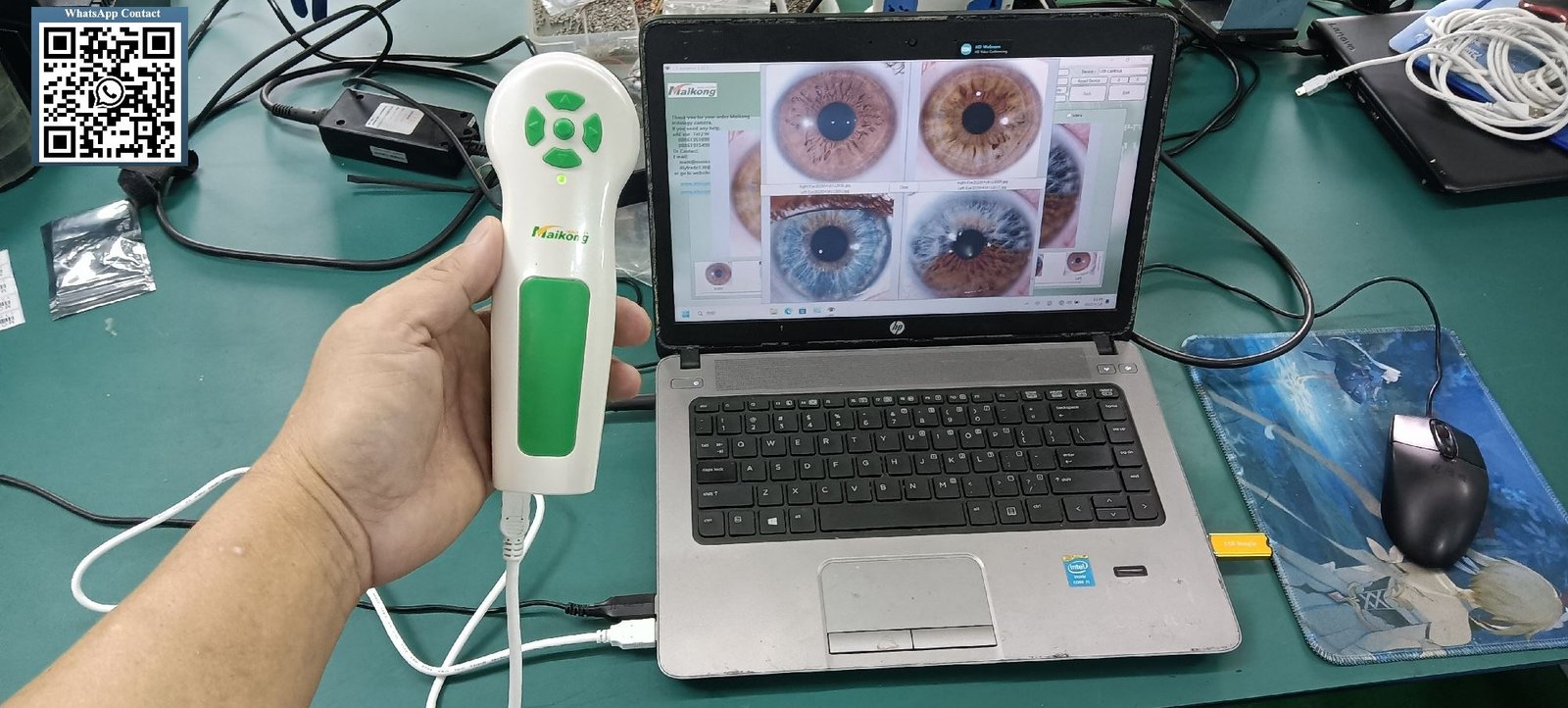
Iris imaging systems capture the photographs that practitioners analyze using chart references. Camera resolution directly impacts how clearly zone details appear in images. Professional cameras like the MAIKONG MK-9822 iriscope provide 12-megapixel resolution, ensuring captured images show fine iris structures corresponding to small chart zones.
When software overlays chart zones onto photographs, image quality determines overlay precision. Low-resolution photos may not align accurately with detailed chart divisions. This mismatch frustrates analysis efforts and reduces confidence in zone identification.
Software Platform Integration
Modern practice workflows center on analysis software platforms that unite imaging, charting, and documentation functions. These systems capture iris photographs, apply chart overlays, store client records, and generate reports from a single interface.
Chart functionality within software varies significantly. Basic platforms may offer only one chart style with limited overlay features. Professional systems like MAIKONG software include multiple traditional chart options, precise overlay alignment tools, and zoom capabilities maintaining chart clarity at high magnification.
Software chart libraries should support your training background and practice philosophy. If you learned Bernard Jensen mapping, ensure the software includes accurate Jensen charts. Practitioners working with multiple traditions need systems offering various chart styles with easy switching between options.
Physical and Digital Chart Coordination
Many practices benefit from both wall-mounted physical charts and software-based digital versions. Physical charts support client discussions without requiring screen viewing. Digital charts enable precise analysis during image examination sessions.
Consistency between physical and digital chart versions prevents confusion. Ensure both formats reflect the same mapping tradition and zone divisions. Mismatched chart styles force practitioners to mentally translate between systems, introducing potential errors and slowing workflow.
Complete Practice System Components
- High-resolution iris imaging camera (12MP minimum)
- Professional analysis software with multiple chart options
- Wall-mounted reference charts (left and right eye)
- Printable chart resources for client education
- Client database with image storage capabilities
- Report generation tools with chart integration
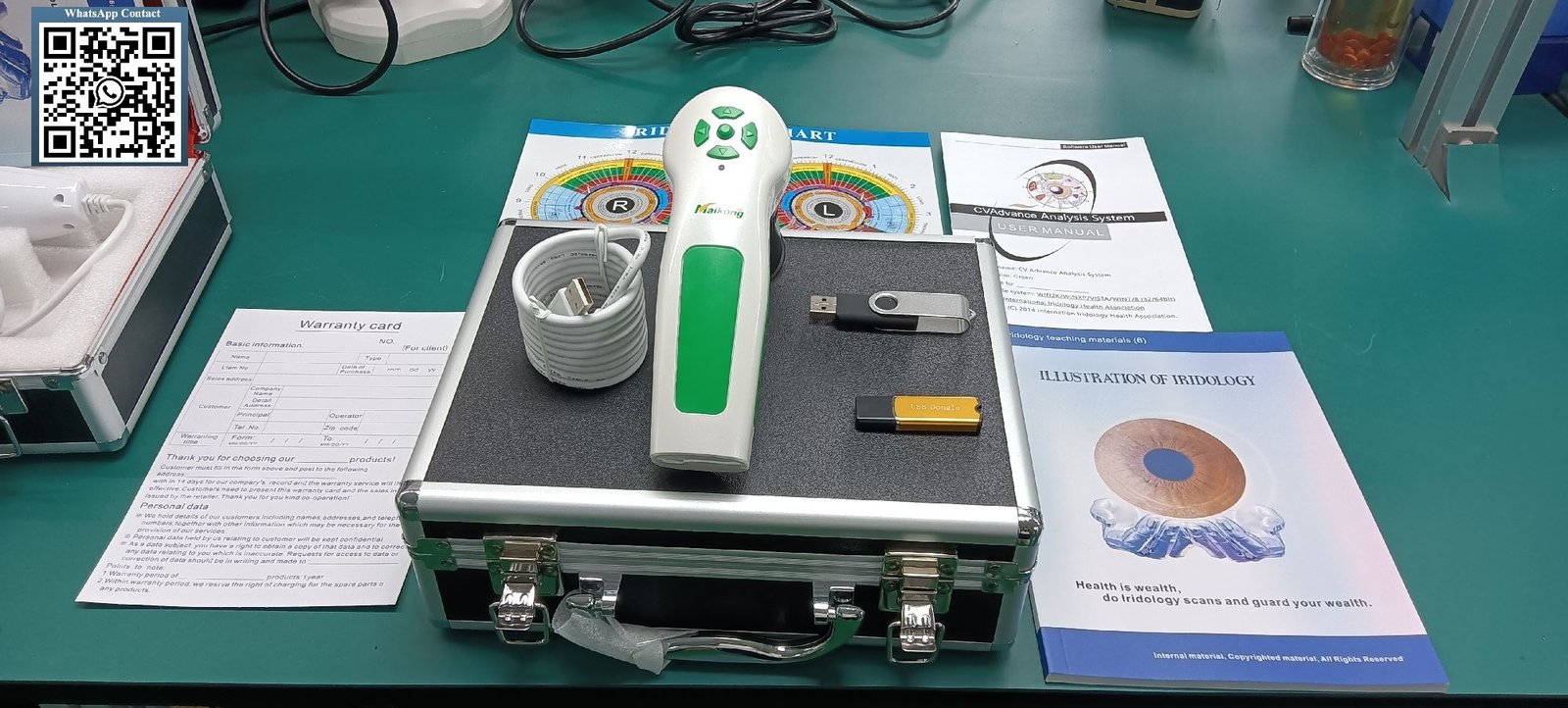
Professional Chart Solutions: MAIKONG Manufacturing Capabilities
For over 20 years, MAIKONG has manufactured iridology equipment and educational resources serving practitioners and institutions worldwide. Our chart solutions reflect this extensive experience in supporting iris analysis practices.
We offer iridology charts in multiple formats addressing different practice needs. Printed charts range from standard consultation room sizes to large-format teaching materials. Our printing process uses fade-resistant inks and professional-grade materials ensuring years of reliable use. Lamination options protect charts in high-traffic environments.
MAIKONG software includes comprehensive chart libraries supporting various traditional mapping systems. Practitioners access Bernard Jensen charts, European tradition charts, and other recognized mapping styles through a single interface. Chart overlays align precisely with images captured using our camera systems, creating seamless analysis workflows.
OEM and ODM Customization Services
We provide extensive customization supporting private label and branded chart programs. Our OEM capabilities include logo integration, custom sizing, modified color schemes, and multilingual labeling. These services help distributors and training institutions create cohesive branded product lines.
ODM partnerships allow deeper customization including chart design modifications, packaging development, and software feature adaptation. We have completed custom projects for over 1000 clients, creating tailored solutions matching specific market requirements and institutional standards.
Global Support Infrastructure
MAIKONG maintains inventory in both China manufacturing facilities and US warehouse locations. This dual-presence structure supports various shipping timelines. Stock items ship quickly from US inventory for domestic buyers needing fast delivery. Custom orders benefit from direct factory production ensuring specification accuracy.
Our technical support team assists with product selection, software installation, chart usage questions, and integration challenges. We provide documentation in 17 languages supporting our international customer base. This multilingual capability particularly benefits distributors serving diverse practitioner communities.
| Product Category | Specifications | Customization Options |
| Printed Wall Charts | 18×24″ to 36×48″, laminated, fade-resistant ink | Logo addition, sizing, language, mapping tradition |
| Software Chart Library | Multiple mapping traditions, precise overlay, zoom capable | Chart selection, interface language, analysis features |
| Printable Resources | High-resolution PDF, scalable sizing | Branding, language, simplified versions |
| Integrated Systems | MK-9822 camera (12MP) with software and charts | Hardware finish, software configuration, chart library selection |
Quality Certifications and Standards
MAIKONG manufacturing follows ISO9001 quality management standards throughout design, production, and quality control processes. Our products hold CE certification for international markets. These certifications provide assurance to wholesale buyers regarding manufacturing consistency and safety standards.
We maintain detailed product specifications and provide comprehensive documentation supporting regulatory requirements in different markets. This documentation helps distributors navigate import processes and meet local health product standards.
Explore Partnership Opportunities with MAIKONG
We support distributors, training institutions, and health equipment wholesalers with customized chart solutions, volume pricing, and comprehensive technical support. Our team helps you build branded iridology product lines backed by 20+ years of manufacturing expertise and quality certifications.
Email: Lucy@myiridology.us | Website: myiridology.us
Frequently Asked Questions About Iridology Charts
What is the difference between left eye and right eye iridology charts?
Traditional iridology holds that the left eye reflects the left side of the body while the right eye corresponds to right-sided structures. Chart zone positions differ between the two eyes, with some organs appearing in both eyes but at different locations. Complete iris analysis requires examining both eyes using appropriate charts for accurate zone identification. Most professional chart sets include both left and right versions with clear labeling to prevent confusion during practice.
Can I use printable iridology charts instead of expensive wall posters?
Printable charts work well for personal study, client handouts, and practices with limited budgets. However, professional wall charts offer advantages including larger size for group viewing, superior print quality, lamination protection, and consistent color accuracy. Many practitioners use both formats. Wall charts serve consultation and teaching spaces, while printable versions provide flexible resources for various situations. The best approach depends on your specific practice needs and how you interact with clients.
Do iridology charts work with all iris camera and software systems?
Physical wall charts work independently of camera systems. Digital chart compatibility varies by software. Professional iridology software includes built-in chart libraries that overlay on captured images. When purchasing separate software or camera systems, verify that the software supports chart overlay features and includes mapping traditions matching your training. Integrated systems from manufacturers like MAIKONG ensure camera, software, and chart components work together seamlessly without compatibility concerns.
What chart format is best for iridology training programs?
Training institutions benefit most from multiple chart formats serving different educational purposes. Large wall charts support classroom instruction where instructors demonstrate zone locations to groups. Individual student copies (printed or digital) allow personal study and practice. Software-integrated charts enable hands-on analysis training with real iris images. Complete training programs typically include all three formats. Bulk pricing for educational chart packages makes multi-format approaches cost-effective for institutions training multiple students.
Are Bernard Jensen iridology charts more accurate than other chart types?
The Bernard Jensen chart represents one well-established mapping tradition widely used in North America. Different iridology schools developed alternative mapping systems based on their observational experiences. No single chart claims absolute accuracy, as iridology represents traditional observational frameworks rather than medically validated diagnostic systems. The most appropriate chart for your practice matches your training background and the traditions you studied. Many practitioners choose charts from the same lineage as their educational program for consistency.
Can I purchase iridology charts in bulk for my wellness center or clinic?
Wholesale chart purchasing offers significant cost advantages for multi-practitioner facilities, training institutions, and distributors. Manufacturers provide volume pricing with minimum order quantities typically starting at 25-100 units depending on customization level. Bulk orders support branding options including logo addition, custom sizing, and modified labeling. Contact suppliers directly to discuss volume pricing, customization capabilities, and delivery timelines. Established manufacturers offer dedicated support for wholesale accounts including technical assistance and product documentation.
Making Informed Chart Selection Decisions
Selecting the right iridology chart starts with understanding your specific practice requirements. Individual practitioners need different resources than training institutions. Digital-focused practices prioritize software integration while traditional practitioners may emphasize quality printed materials.

Quality considerations matter regardless of format. Accurate zone mapping, visual clarity, durable materials, and reliable manufacturing separate professional resources from basic educational tools. Invest in charts that will serve your practice for years rather than requiring frequent replacement.
For wholesale buyers and institutions, partnership with experienced manufacturers provides advantages beyond simple product purchase. OEM capabilities, customization options, technical support, and reliable supply chains contribute to successful long-term relationships. These factors become especially important when building branded product lines or standardizing educational materials across locations.
Modern iridology practice increasingly integrates physical charts with digital systems. This combination offers flexibility across different client interaction scenarios while supporting precise analysis during examination sessions. Coordinated systems where cameras, software, and charts work together seamlessly improve workflow efficiency and analysis confidence.
Remember that iridology charts serve as educational and consultation tools within traditional wellness frameworks. They support practitioner observations and client discussions but do not provide medical diagnoses or replace examination by licensed healthcare professionals. This understanding keeps practice boundaries appropriate and maintains client trust.
Whether you need individual practitioner resources or wholesale quantities for distribution, the right chart supplier combines quality products with responsive support. Take time to evaluate options, request samples when possible, and discuss specific requirements with manufacturers who understand professional iridology practice needs.